


I remember walking into kitchens where the counters stayed dark even with the ceiling lights on, and it always made the room feel less practical for daily tasks.
Adding strips under the cabinets changed that completely in my experience because the light lands right where hands and tools need it most.
The difference shows up right away at night.
I have seen setups where the color temperature was too cool and it made the whole area feel clinical rather than warm and ready for use.
Trying a warmer tone first seems like the safer starting point when adapting these ideas to an existing kitchen.
Warm LEDs Under Open Shelves

Running warm LED strips under open kitchen shelves gives the room a soft glow that feels much more inviting than a single overhead light. The light gently highlights dishes and plants without creating glare, and it keeps the space feeling open rather than closed in by cabinets.
This works especially well in kitchens that flow into living areas. Tuck the strips toward the back of the shelf so the source stays hidden, and pair them with a similar tone under the upper cabinets if you want the whole workspace to feel cohesive.
Under Cabinet LEDs With Open Wood Shelves

Running under cabinet LEDs right beneath open wooden shelves gives a kitchen a gentle layer of warmth that feels natural rather than added on. The light catches the grain of the wood and softly lights whatever sits on the counter below, which keeps the whole area from going flat once the sun goes down.
This approach works best in kitchens that already mix painted cabinets with natural wood tones. Keep the LEDs on a dimmer so the glow stays low and even in the evening, and make sure the light washes across the backsplash rather than shining straight into your eyes while you work.
Under-Cabinet LEDs For Dark Cabinet Kitchens

Kitchens with dark cabinets often need extra help to feel welcoming. The warm LED strip tucked under these open shelves casts a steady glow across the counter and backsplash, softening the heavy gray tones without adding clutter or extra fixtures.
This setup works best in spaces that already lean industrial or minimalist, where you want light but still need to preserve the mood. Run the LEDs along the full length of the shelf and keep the color temperature around 2700K so the light feels natural rather than stark.
Under Cabinet LEDs For Everyday Kitchen Warmth
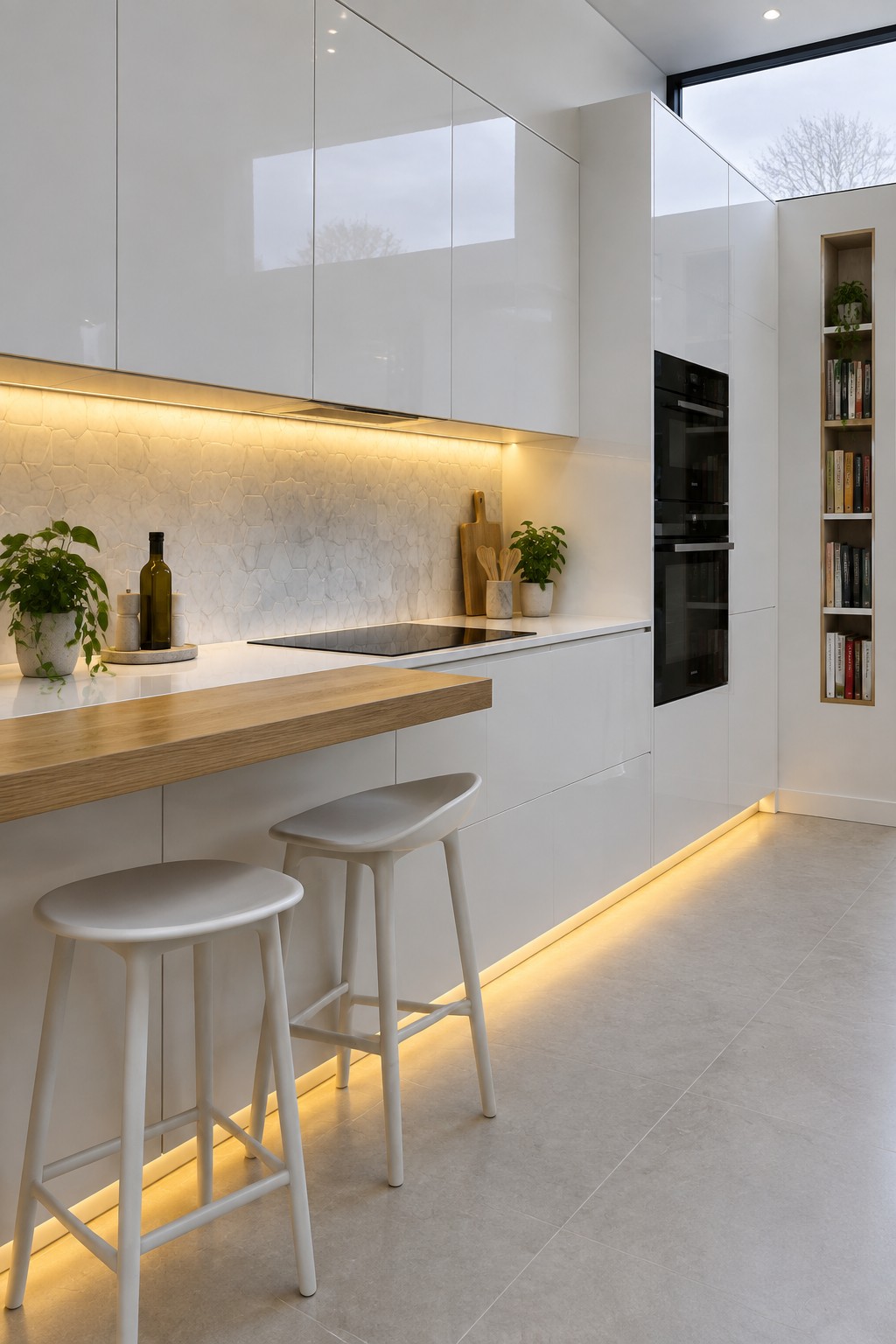
Many kitchens look clean but still feel a bit stark once the main lights go on. A simple line of warm LEDs tucked under the cabinets fixes that without adding clutter. The light stays low and close to the work surface, so it feels useful instead of decorative.
This approach suits homes that get regular use. Run the LEDs along the full length of the counter and island edge so the glow stays even. It works best with lighter cabinetry and backsplashes that reflect the warmth instead of fighting it.
Under Cabinet LEDs That Warm Up A Kitchen

Kitchens with cooler cabinet colors often need a little extra help to feel welcoming. Warm under cabinet LEDs can fill that gap by casting a soft glow across the counter and backsplash, turning what might feel stark into something much cozier.
This approach works best in spaces that already get daylight from nearby windows. Keep the strips tucked under the upper cabinets so the light stays low and focused on the work surface. It suits older homes or any kitchen where you want everyday comfort over a bright, high-contrast look.
Under Cabinet LEDs in Rustic Kitchens

Under cabinet LEDs work especially well in kitchens built around wood and simple finishes. The light brings out the texture of the cabinets and counters while keeping the overall feel soft and usable at night.
This setup suits homes that already lean toward natural materials and open shelving. Run the LEDs along the front edge of the upper cabinets so the glow lands on the backsplash and work surface without creating harsh reflections on metal or glass.
Under Cabinet LEDs Over Marble Counters

Under cabinet LEDs give marble kitchens a warmer look without much effort. The light travels across the stone and softens what can otherwise feel cold and bright, especially when the counters run long like they do here.
This works best in kitchens that already have light stone and some glass cabinetry to help bounce the glow around. Keep the LEDs on a dimmer so you can adjust them from bright task light in the morning to a low evening wash that still shows the veining in the marble.
Under Cabinet Leds That Add Everyday Warmth

Many kitchens feel more usable once a strip of warm LEDs goes in under the cabinets. The light hits the counters directly, cuts down on shadows while you cook, and gives the whole room a softer look once the sun goes down.
This setup works best in narrower kitchens or spaces with darker cabinetry. Run the lights on a separate dimmer so you can keep them low in the evening, and choose a color temperature around 2700K so the glow stays gentle rather than clinical.
Under Cabinet LEDs That Keep A Kitchen Feeling Soft

Under cabinet LEDs give the counters a steady wash of light that stays useful long after the overheads are off. In a room with wood cabinets and textured backsplash, the low strip prevents the whole space from going flat once daylight fades.
Run the LEDs toward the front of the cabinet so the glow spreads across the work surface instead of creating a hard line. This setup suits most wood or mixed-material kitchens and pairs easily with one warmer pendant over a nearby table.
Under Cabinet Lighting In Dark Kitchens

Many kitchens with deep navy cabinets end up feeling heavier than planned. Under cabinet LEDs fix that by sending a steady line of warm light across the counters and backsplash so the dark surfaces still read as cozy instead of closed in.
This approach works best in homes that already lean moody or traditional. Keep the LEDs on a warm color temperature and place them close to the front edge of the cabinets so the light grazes the wall rather than pooling straight down.
Under Cabinet LEDs That Highlight Tile

Under cabinet LEDs give you a simple way to add warmth right where the counter meets the wall. The hidden strip of light runs along the bottom of the upper cabinets and spreads a soft glow across the backsplash so the colors in the tile stay visible even after dark.
This approach works best in kitchens that already have interesting tile or older cabinetry you want to keep. Run the lights on a separate dimmer so you can adjust the brightness for morning coffee or evening cleanup without turning on the overheads.
Under Cabinet LEDs For Soft Evening Light

One simple way to warm up a kitchen is to run LED strips under open shelves right above the main counter. The light stays low and even, so you can see what you are doing without turning on harsh overhead fixtures. It works especially well in spaces that already lean rustic or earthy because the glow softens the wood and clay tones instead of fighting them.
This approach suits kitchens where you spend time in the evening prepping or cleaning up. Keep the strip hidden behind a small lip or inside a shallow channel so the source stays out of sight. It is an easy addition during a refresh and pairs nicely with warmer bulb temperatures around 2700K.
Under Cabinet Lighting Over Tile Backsplash

Under cabinet LEDs work especially well when there is a patterned tile backsplash to catch the light. The glow brings out the colors in the tile without needing extra fixtures, and it keeps the counters usable after dark. This approach feels natural in kitchens that already have some color or pattern on the walls.
It suits older homes or cottage style spaces where the cabinets are painted rather than left natural. Keep the LEDs on the warmer end of the spectrum so the light does not fight with the tile. Avoid placing them too close to the edge if the counter is narrow, since that can create glare on the surface.
Warm Under Cabinet Lighting In Rustic Kitchens
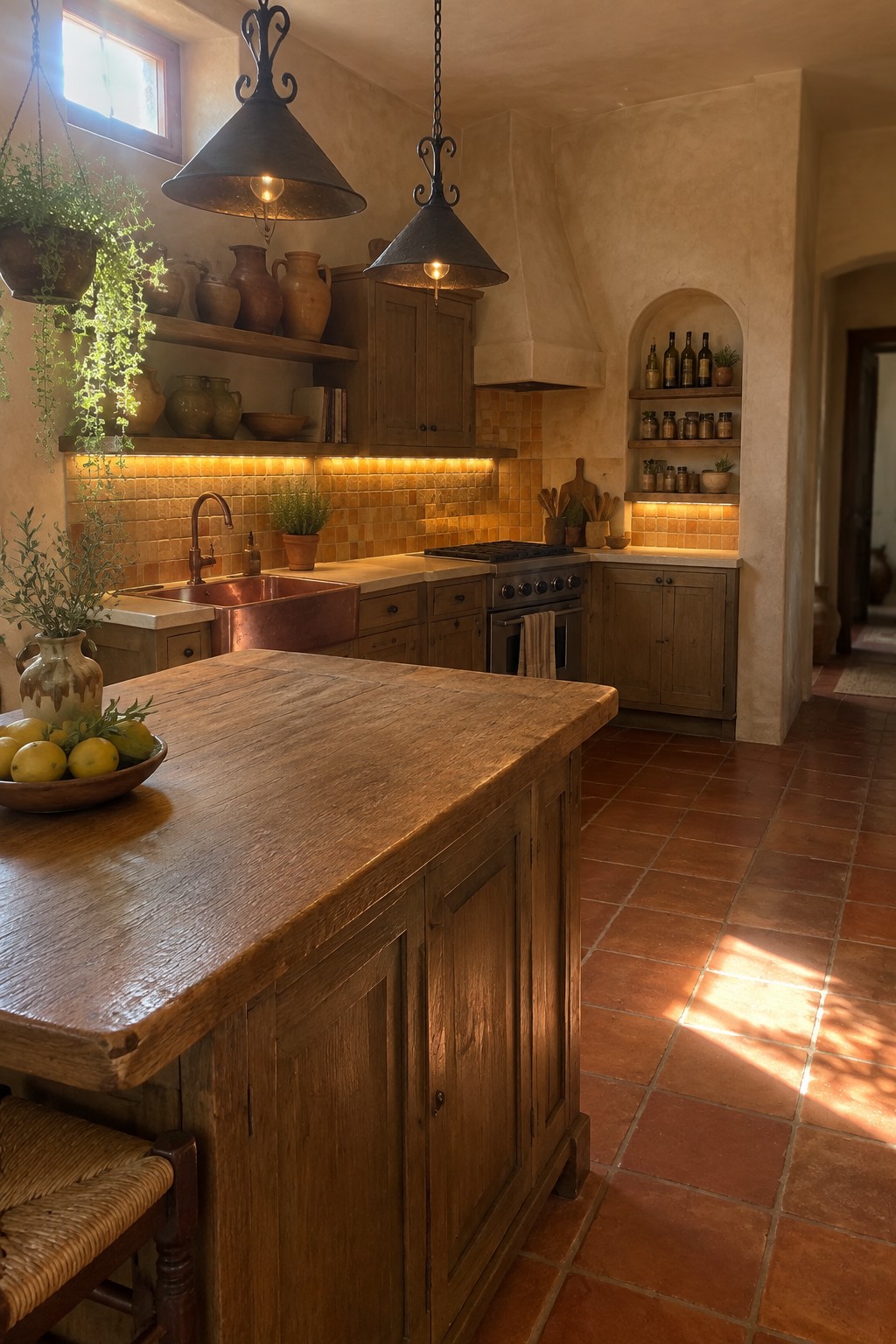
Warm under cabinet lighting works well when the goal is to keep a kitchen feeling soft and lived in rather than bright and stark. The gentle glow it casts across the backsplash adds just enough light for evening tasks while bringing out the natural colors in tile and wood. Many people find this approach more comfortable than relying only on overhead fixtures.
This setup fits homes with older or textured materials where you want the surfaces to feel inviting. Run the LEDs close to the wall so the light spreads evenly, and stick with bulbs that lean warm rather than cool white. It is especially useful in smaller or galley kitchens that can start to feel flat without that extra layer of light.
Warming Dark Cabinets With Under Cabinet LEDs

Kitchens with deep green cabinets can start to feel heavy once the sun goes down. Under cabinet LEDs fix that by casting a steady, warm line of light along the counters and backsplash, which lifts the whole space without changing the cabinet color.
This works best in homes that already have darker cabinetry and want to keep it. Run the LEDs the full length of the workspace and pick a warm temperature so the light blends with any other fixtures in the room.
Under Cabinet LEDs That Balance Cool Metal Surfaces

Stainless steel kitchens can look sharp but often feel cold once the cooking stops. A continuous strip of warm under cabinet LEDs softens that chill by casting a gentle glow along the backsplash and counter edge.
Place the LEDs on the underside of the upper cabinets so the light washes downward rather than outward. This approach suits modern layouts with lots of metal and works best when the fixtures sit behind a small lip so the source stays hidden.
Under Cabinet LEDs For A Gentle Kitchen Glow

One simple way to add warmth to a kitchen is to run LED strips under the upper cabinets. The light creates a soft golden wash over the backsplash and makes the counters feel more welcoming at night without extra fixtures.
This works well in smaller or galley kitchens where overhead lights can feel too harsh. Place the strips near the front edge of the cabinets so the light reaches the work surface evenly, and pick a warm color temperature to keep the overall tone cozy.
Cluster Pendants Over The Island
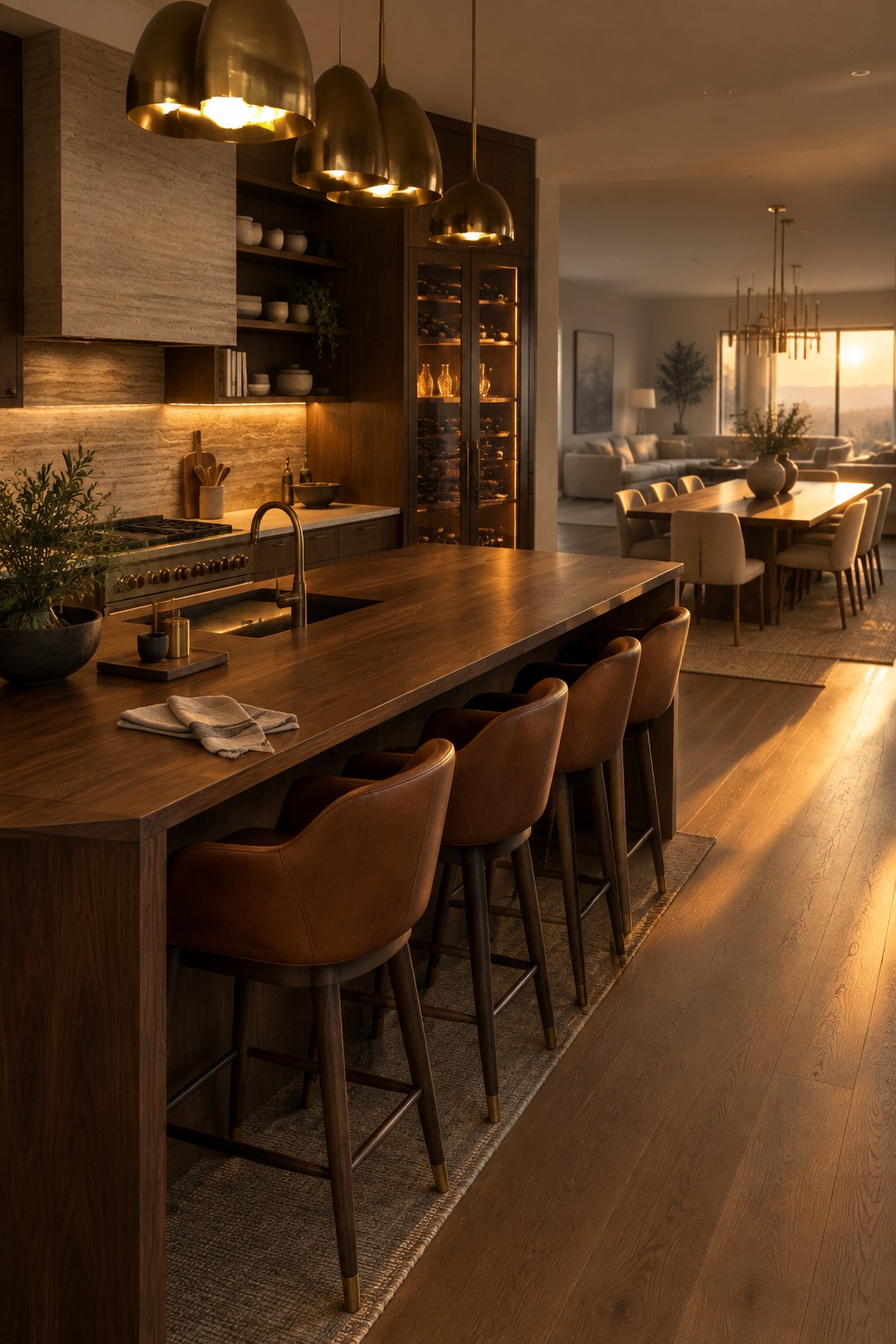
Many kitchens feel more welcoming when you hang several pendant lights above the island. The warm glow from the fixtures adds a layer of light that works well with under-cabinet LEDs, especially in the evening when the main overheads are off.
This setup works best in open kitchens where the island serves as the main workspace and gathering spot. Keep the pendants in a similar finish and scale so they read as one group rather than scattered pieces.
Under-Shelf LEDs That Add Quiet Warmth
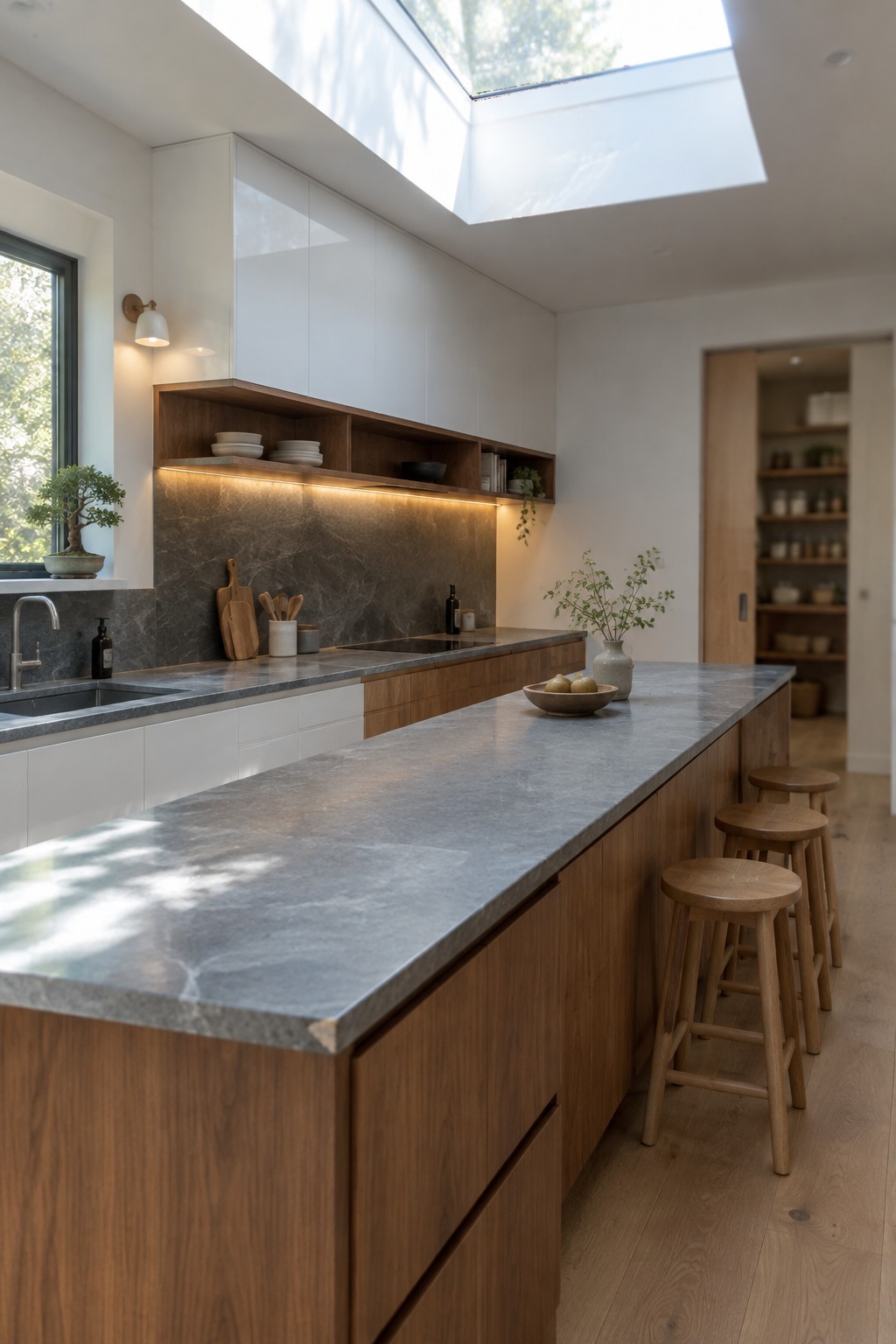
Open shelving in a kitchen often needs a little extra help to feel finished. A simple strip of warm LEDs tucked under the shelves gives the area a soft glow that highlights both the wood and whatever sits on the counter below without adding another lamp or fixture.
This approach works best in kitchens that already have a mix of wood and stone. Run the lights on a warm setting so the stone does not look too cool, and keep the strip hidden behind a small lip so the source stays out of sight while the light still reaches the work surface.
Under Cabinet Lighting In Dark Kitchens

Dark cabinets can make a kitchen feel heavy if the counters stay in shadow. A simple line of warm LEDs tucked under the upper cabinets lifts that weight without changing the color scheme. The light stays low and focused, so the room still feels calm at night instead of brightly lit like a workspace.
This approach suits smaller kitchens or any layout where the main counters sit against a wall. Keep the LEDs on a dimmer so the glow can stay soft in the evening. The result is a kitchen that stays practical for cooking but feels comfortable once the meal is done.
Under Cabinet LEDs Over Terracotta Backsplashes

Warm under cabinet LEDs work especially well when the backsplash has texture and color variation. The light sits low and close to the surface, so it brings out the natural tones in the tile instead of washing them out or creating harsh spots.
This setup suits kitchens that already use earthy materials and simple cabinetry. It keeps the evening light soft and usable for cooking without needing overhead fixtures on all the time. Just make sure the LEDs run the full length of the counter so the glow stays even.
Warm Under Cabinet Lighting Over Wood
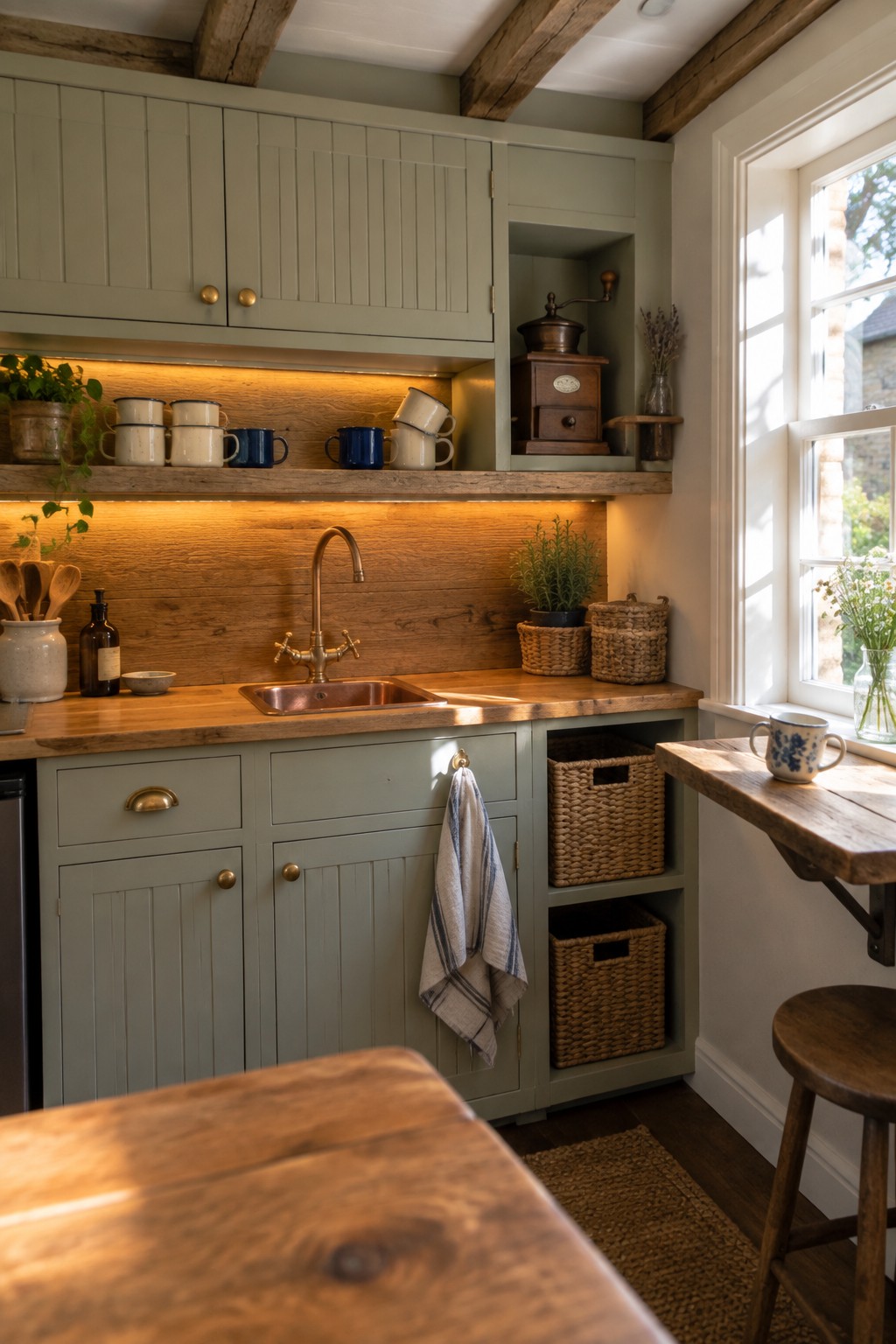
Running a strip of warm LEDs under the cabinets is one of the simplest ways to make a wood countertop feel inviting after dark. The light sits low and close to the surface, so it brings out the grain without needing extra lamps or overhead fixtures.
This works best in kitchens that already lean toward natural materials and painted cabinetry. Place the LEDs toward the front edge of the cabinet so the glow reaches the counter evenly, and choose a soft 2700K tone that stays gentle rather than clinical.
Under Cabinet LEDs For Gentle Warmth
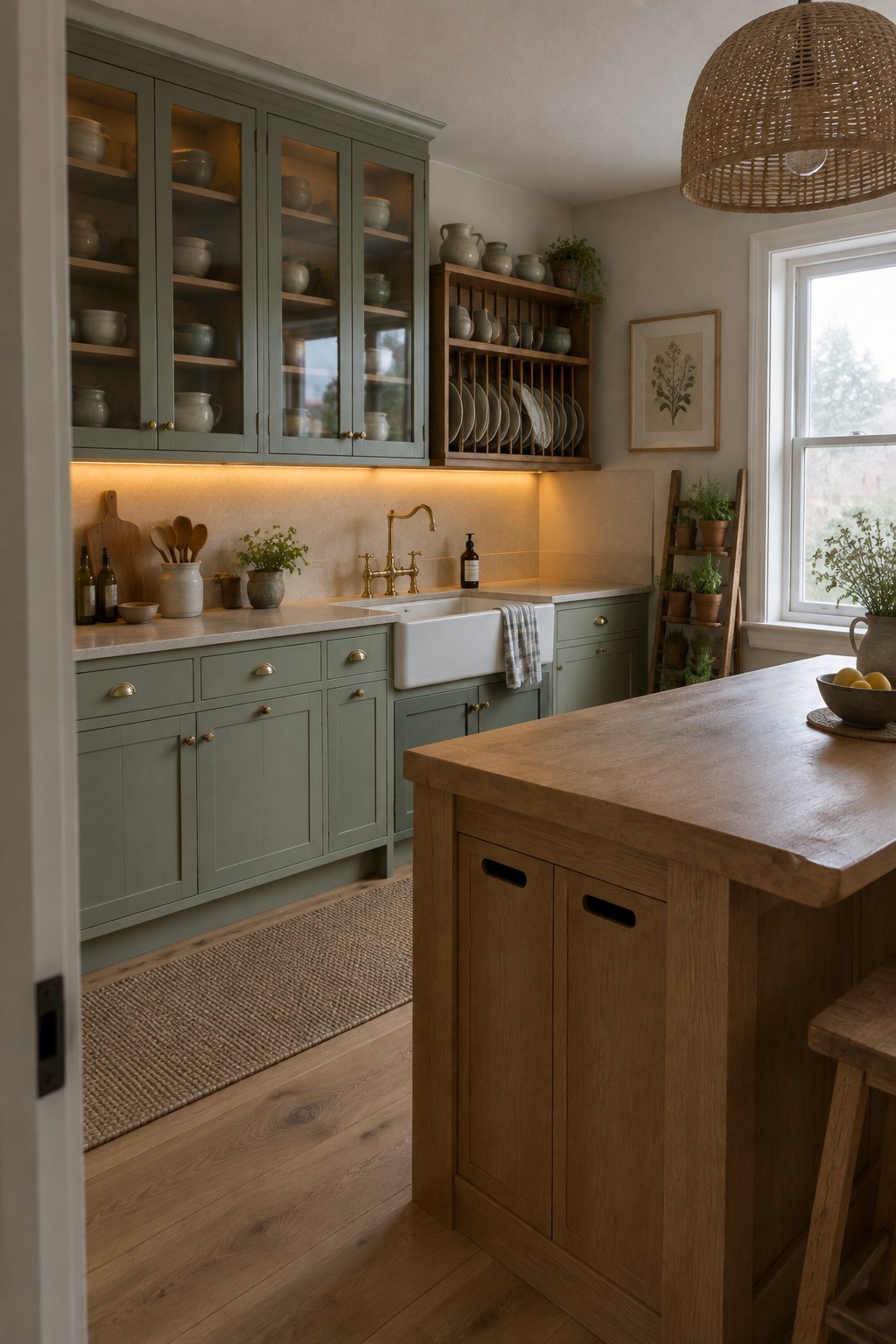
Many kitchens rely too much on ceiling lights that can feel harsh at night. A simple row of warm LEDs tucked under the upper cabinets fills that gap nicely. The light spreads across the counters and backsplash without shining straight into your eyes.
This setup suits homes that want practical lighting that still feels calm. It works especially well with painted cabinets or glass doors because the glow brings out the color and texture. Keep the tone around 2700K so it stays soft rather than clinical.
Under Cabinet LEDs That Highlight A Patterned Backsplash

Pairing warm under cabinet LEDs with a colorful tile backsplash gives the whole work area a softer feel. The light picks up the tones in the tiles and spreads a gentle glow across the counters without needing extra fixtures.
This approach works best in kitchens that already mix wood and painted cabinets. It suits homes that want the backsplash to stand out while keeping the lighting practical for daily use. Keep the LEDs on a dimmer so the effect stays warm rather than harsh.
Under Cabinet LEDs For A Gentle Counter Glow

Under cabinet LEDs give the workspace a steady, low light that makes the counter feel more usable at night. The glow stays close to the surface instead of casting harsh shadows from above, which helps when you are prepping food or washing dishes after dark.
This approach suits older kitchens or any layout where the counters run along a wall with open space above. Run a warm white strip just under the cabinets and add a simple dimmer so the light can stay soft during dinner and brighten only when needed for cleanup.
Frequently Asked Questions
Q: What kind of power source works best for under-cabinet LEDs? A: Plug-in strips are simple and reliable for most kitchens. They let you control each run separately if you want. Hardwired options stay hidden better but need more planning upfront.
Q: How do I keep the lights from showing dust and fingerprints? A: Wipe the strips with a microfiber cloth every couple weeks. The warm light hides minor smudges better than cool white.
Q: Can I add these lights to an existing kitchen without rewiring? A: Yes, adhesive-backed LED strips stick right under the cabinets. Run the cord along the back and plug it into a nearby outlet. Many of the article ideas use exactly this approach for quick updates.
