


I often notice that flexible living spaces start to feel more practical once the lighting can change with the room’s purpose.
When I rearranged my own living area last year, adding a few adjustable lights helped it serve as both a workspace and a quiet spot in the evenings.
Color choices matter too because they can highlight different zones without needing walls or big furniture moves.
Smart controls keep things simple so you do not end up fiddling with switches every time the layout shifts.
One or two of these ideas seem especially useful to try first.
Colorful Accent Lighting For Built-In Shelves

Many living rooms feel flat when the only light comes from a ceiling fixture or a few lamps. Adding color-changing LEDs to built-in shelves gives you a simple way to shift the mood without rearranging anything. You can keep the light low and warm for quiet nights or switch to brighter tones when guests come over.
This approach works well in rooms that already have open shelving or a media wall. Run LED strips along the back of each shelf and inside a ceiling cove so the colors wash gently over books and objects. Most people find it easiest to control everything through one app rather than separate remotes.
Colorful Underlighting Along Kitchen Bases

One simple way to add color without repainting or buying new pieces is to run a strip of smart accent lighting along the base of a kitchen island or cabinets. It creates a low glow that shifts the mood of the whole area while still leaving the main surfaces clean and functional.
This approach works especially well in open layouts where the kitchen connects to living space. You can change the color and brightness through an app, so the same strip can stay subtle during the day or turn into a deeper tone at night. Just keep the light low enough that it does not compete with your main overhead fixtures.
Color Changing Lights Behind The Bed

Many bedrooms stay simple with neutral walls and bedding, but adding a color changing LED strip behind the headboard gives the space more flexibility. The light creates a soft glow that can shift through different hues without needing extra lamps or fixtures.
This works best in rooms where you want to change the feel quickly, like for reading, winding down, or just adding a bit of color at night. It suits homes with plain backdrops since the light becomes the main accent, and most strips now come with app controls or timers to keep things easy.
Colorful Accent Lighting Under Shelves

One easy way to add flexible color to a kitchen is by running LED strips under open shelves. The light picks up the items on display and gives the whole area a soft lift without changing the main overhead fixtures.
This approach works well in homes where the kitchen flows into living space. Smart controls let you shift from bright task light during the day to a low color glow at night, and it fits most layouts that already have floating shelves above a counter or island.
Using Colorful LED Strips at a Desk

Many people add a strip of colorful LEDs behind a desk because it brings life to a small work area without adding clutter. The lights can change from cool blues to warmer tones, which helps the space feel less static during long hours at the computer.
This setup works best in apartments or smaller homes where one room has to handle work, study, and downtime. Run the strip along the back edge of the desk or the wall above it, and pair it with a simple smart plug so the colors can be adjusted without getting up.
Colored Lighting Tucked Into Ceiling Coves

One simple way to add flexible color to a room is by running LED strips inside a ceiling cove. The light stays hidden but still fills the upper part of the space with a soft glow that can shift from pink to warmer tones or cooler shades as needed.
This approach suits dining rooms or living areas where you want to change the feel without moving furniture or adding lamps. Just keep the cove deep enough so the strips stay out of sight and the light spreads evenly.
LED Lighting Around Mirrors for Quick Color Shifts
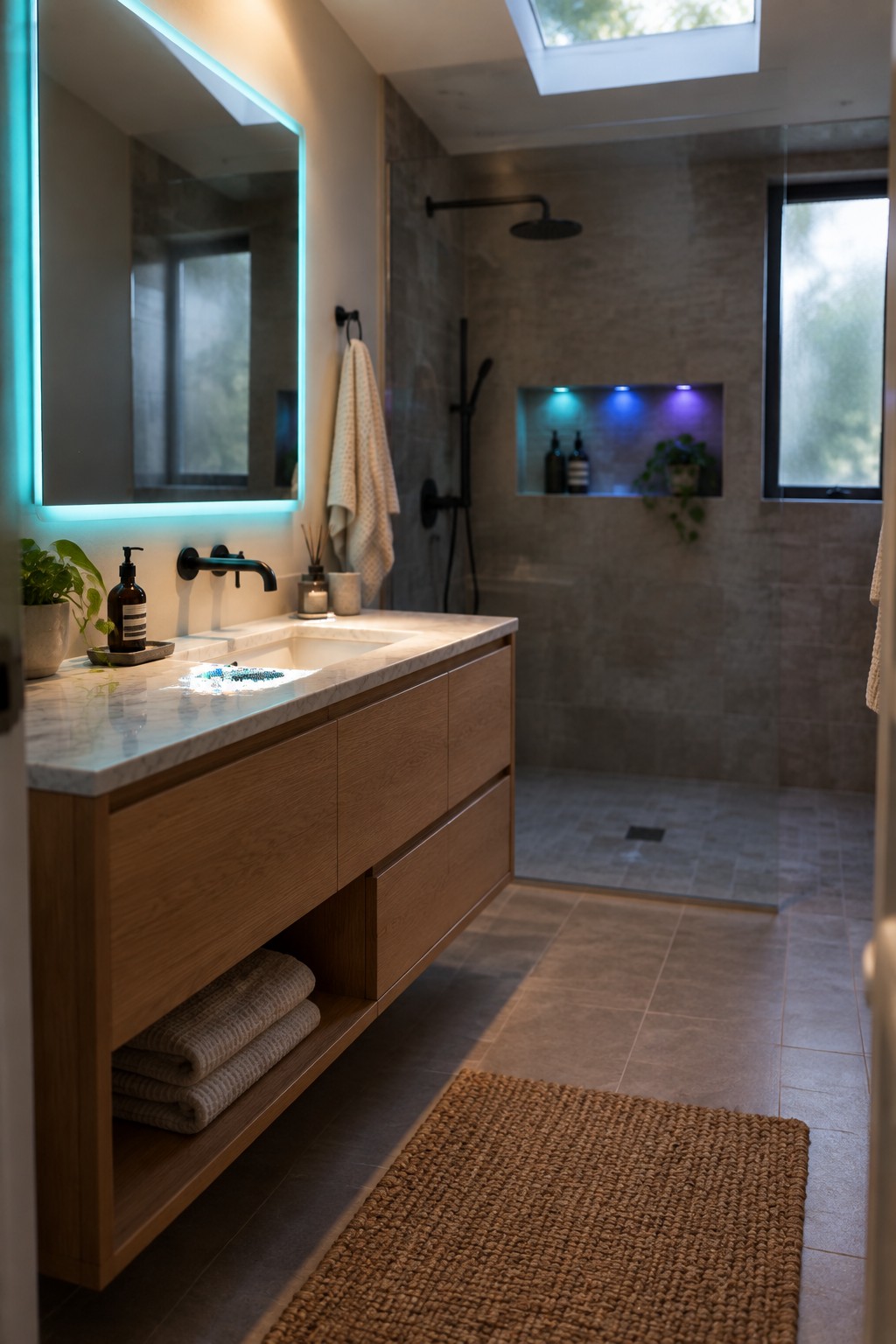
One simple way to add flexible color without much effort is to run LED strips behind or around a mirror. The light bounces off the wall and creates a clean glow that you can change from cool tones to warmer ones as needed.
This works especially well in bathrooms where fixed lighting can feel too harsh. Tuck similar strips into a recessed shelf or niche to keep the color accents low and easy to control with a basic app or remote.
Add Colorful LED Strips Along the Base of the Walls
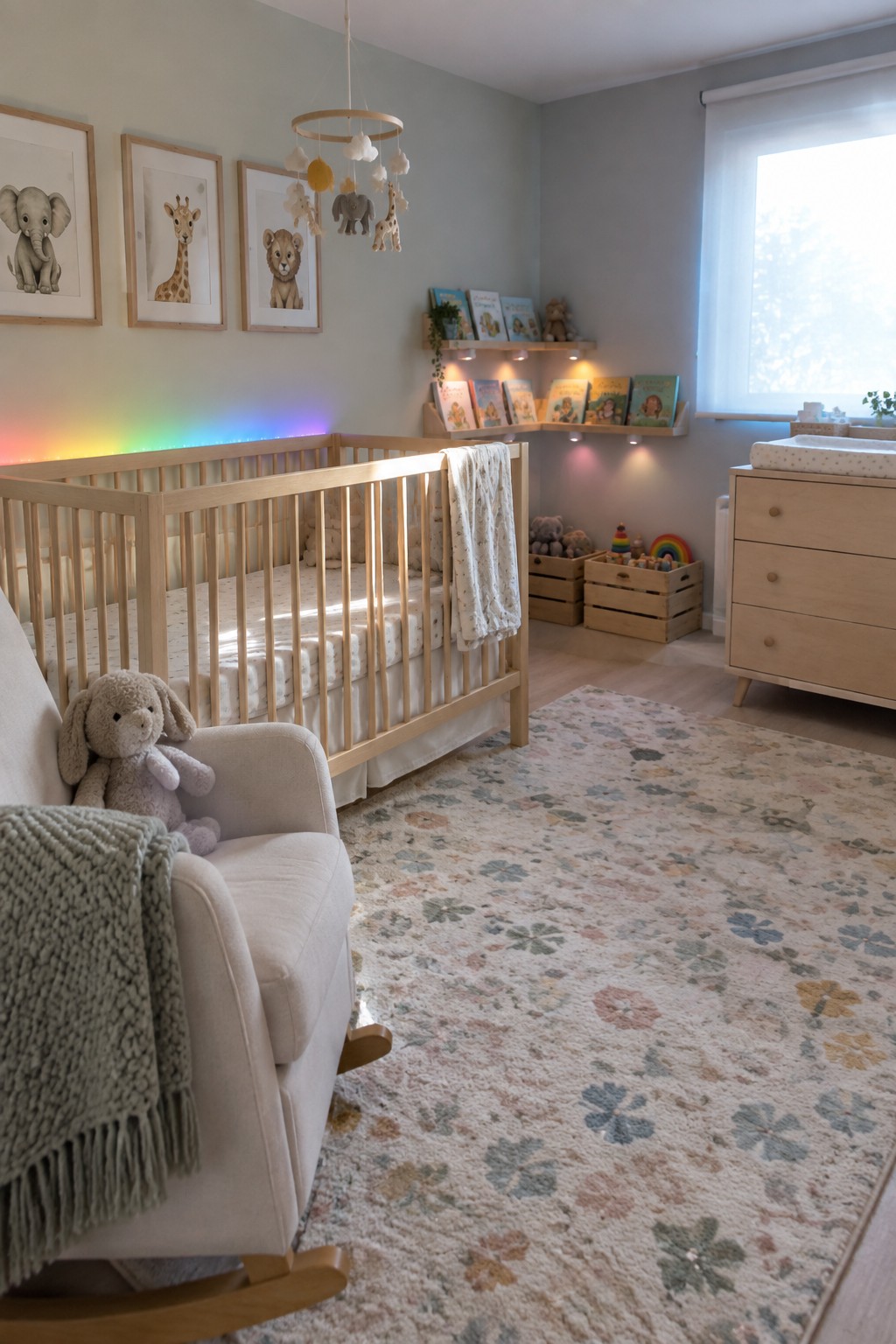
Many parents like running a simple LED strip along the bottom of the walls in a nursery. It gives off a soft wash of color that feels calm at night and playful during the day without needing extra lamps or bright overhead lights.
This setup works best in rooms where you want flexible lighting that can shift with the time of day or the child’s age. Keep the strip tucked behind furniture so the light stays even and the cords stay out of sight.
Colorful LED Accent Lights In Storage Units

Tucking small LED strips into open shelving gives you an easy way to add color without much effort. In spaces like mudrooms or utility rooms, these lights turn plain cubbies into something more interesting while still keeping everything practical and easy to find.
The setup works best in areas that get used every day but often feel a bit plain. You can change the colors to match the season, brighten the space in the evening, or simply keep it neutral most of the time. Just make sure the lights are on a dimmer or app so they do not become too bright for daily use.
Colorful LED Strips for Living Room Walls
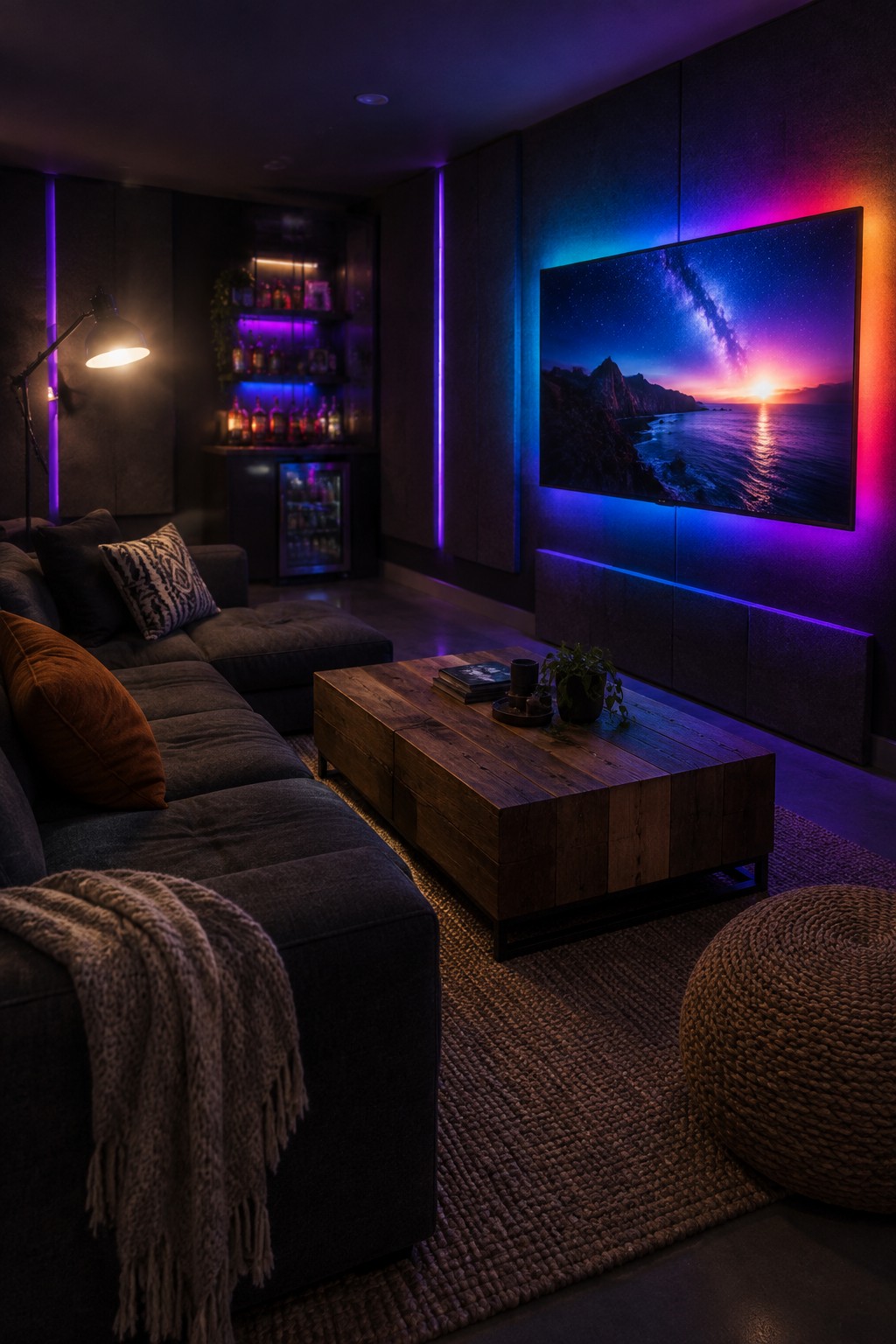
Running colorful LED strips along walls and behind a large screen gives a living room an easy way to shift the mood without moving furniture or repainting. The lights create a soft glow that fills the space and makes evenings feel more relaxed, especially when the main lights are turned down.
This works best in rooms used for movies or quiet nights in, where you want light that can change from calm blues to warmer tones. Keep the strips hidden behind trim or furniture so the color stays the focus instead of the hardware itself.
Colorful LED Strips in Built-In Shelves

Many people add LED strip lights to open shelving because it gives them an easy way to change the feel of a room without moving furniture or repainting. The lights can stay soft and neutral during the day then shift to brighter colors when the space is used for crafts or evening downtime.
This approach works best in smaller rooms that serve more than one purpose. Run the strips along the front of each shelf and pair them with a simple smart plug or app so you can adjust the colors as needed. Just keep the rest of the palette calm so the lights stay the main feature.
Colored Accent Lighting Along Hallways

Hallways tend to stay dim and forgettable unless you give them some extra attention. Adding colored accent lights along one wall brings in warmth and makes the space feel more lived in, especially when you layer a few different tones instead of sticking to plain white.
This approach works best in homes with long or narrow corridors that get little daylight. Use smart bulbs or strips that let you shift the colors easily, and keep the main overhead lights low so the accents do the work without feeling harsh.
Colorful Lighting In Built-In Shelves

One simple way to make storage feel more lively is to add smart accent lights inside the cubbies themselves. The lights can shift colors throughout the day or evening, which keeps the space from looking flat even when the toys are put away.
This approach works especially well in rooms that need to serve different ages or activities over time. Set the lights on a schedule or change them with an app when you want a calmer tone for reading time or brighter colors for play.
Colorful LED Strips Under Kitchen Islands

Running a strip of colored LED lights beneath a kitchen island gives an open space a quick way to shift its mood. The light bounces off the floor and creates a soft wash of color that feels separate from the main overhead lighting.
This works best in homes where the kitchen flows into the living area. Keep the strip tucked under the overhang so the color shows without revealing the source, and choose fixtures that connect to a simple app or voice control. That way you can change the tone for cooking, entertaining, or winding down without touching anything else in the room.
Accent Lighting Above Built-In Entry Storage

A simple strip of warm lighting tucked above a row of hooks can turn an ordinary mudroom bench into something that feels more finished. It highlights the wall without needing extra lamps or floor space, and it makes the whole area easier to use when you come home after dark. The light stays soft and focused, so it does not overpower the room.
This approach works especially well in smaller entryways or homes that need the space to stay tidy. You can run the strip on a smart switch so it turns on at dusk or dims when you want less glare. Just keep the light color warm and the placement high enough that it does not shine straight into your eyes.
Colorful Lighting In Closet Shelving

Adding smart accent lights to built-in shelves gives a closet or dressing area more life without much extra effort. The lights sit behind the glass and shift through different colors, which makes the space feel brighter and more interesting while still keeping everything easy to see.
This works well in rooms that double as storage and display, like walk-in closets or dressing rooms in newer homes. You can set the colors to change with the time of day or your mood through a simple app, though it helps to keep the rest of the room fairly simple so the lights stay the focus.
Shelf Lighting With Colorful LEDs

LED strips built into shelving give storage a useful lift in a home gym or studio space. The light highlights rolled mats and gear while adding a soft color wash that makes the whole wall feel more finished and less like plain storage.
This approach works best in flexible rooms that shift between workout use and everyday living. Keep the color temperature or hue adjustable so it can feel energizing during exercise or calmer for stretching, and place the controls on a simple smart switch for easy changes.
Colorful Backlighting Around The TV

One easy way to make a media space feel more engaging is to add a strip of color-changing LEDs behind the television. The lights pick up on the colors from the screen and spread a soft glow across the wall, which helps reduce eye strain and makes the room feel less flat when the lights are low.
This works especially well in rooms used for gaming or movie watching, since you can shift the colors through an app to match the mood or game. Just keep the strip hidden behind the TV frame so the effect stays clean and the focus stays on the screen rather than the hardware itself.
Frequently Asked Questions
Q: How can I keep the lights from looking messy with all the cords when the room changes? A: Go for battery powered options that hide easily behind shelves. Charge them up once a month and they stay out of sight.
Q: What colors work best for making a small space feel bigger at night? A: Cool blues and greens bounce light around nicely. Stick to one main color per wall to avoid a cluttered feel.
Q: Do I need a hub for all this smart stuff? A: Most new bulbs connect straight to your phone. Skip the hub unless you want extra features like voice control.
