


Stairs tend to disrupt the flow of a home when they stay dark after sunset and people start reaching for walls or switches.
I have found that low lights tucked near the treads make evening movement feel steadier without turning the whole space into a spotlight zone.
Safety comes first but the look matters too.
When I redid the stairs in my last house I tried one small fixture on the bottom step first to check whether it eased the drop off without clashing with the handrail finish.
Fixtures that sit close to the wood or carpet usually blend better once the rest of the lighting in the hall is adjusted around them.
Step Lights Built Into Carpeted Stairs
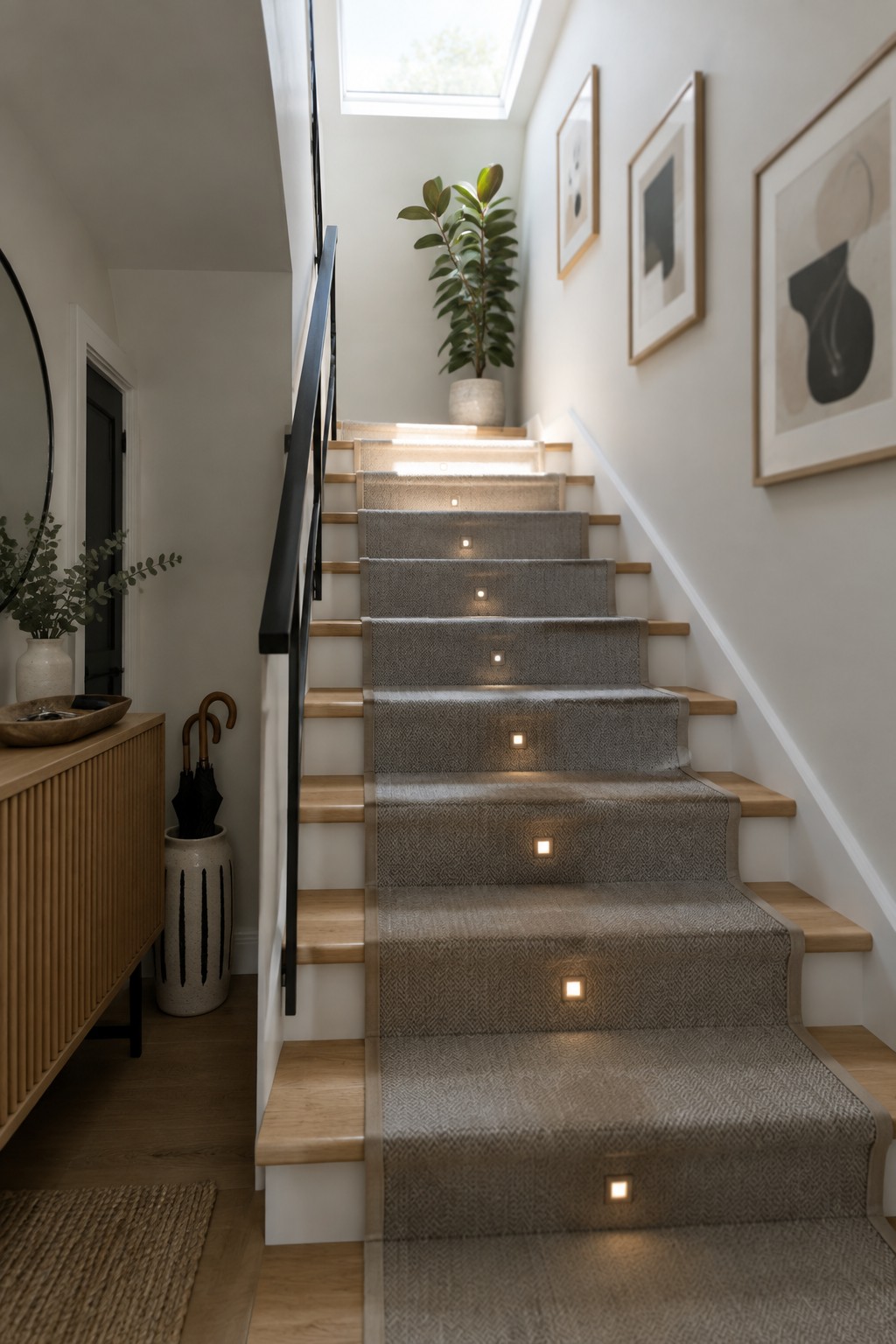
Small lights set right into the steps give just enough glow to see each tread without lighting up the whole stairwell. This approach works especially well on stairs that get used after dark, since the light stays low and focused where it is needed most. It cuts down on the chance of missing a step while still keeping the space feeling calm and uncluttered.
This setup suits homes with carpet runners over wood treads, since the lights sit neatly along the edge of the carpet without getting in the way. It works best in family houses or any place where people move through the stairs at night. Just make sure the lights are spaced evenly and not too bright, so they guide rather than distract.
Recessed Step Lights On Exterior Stairs
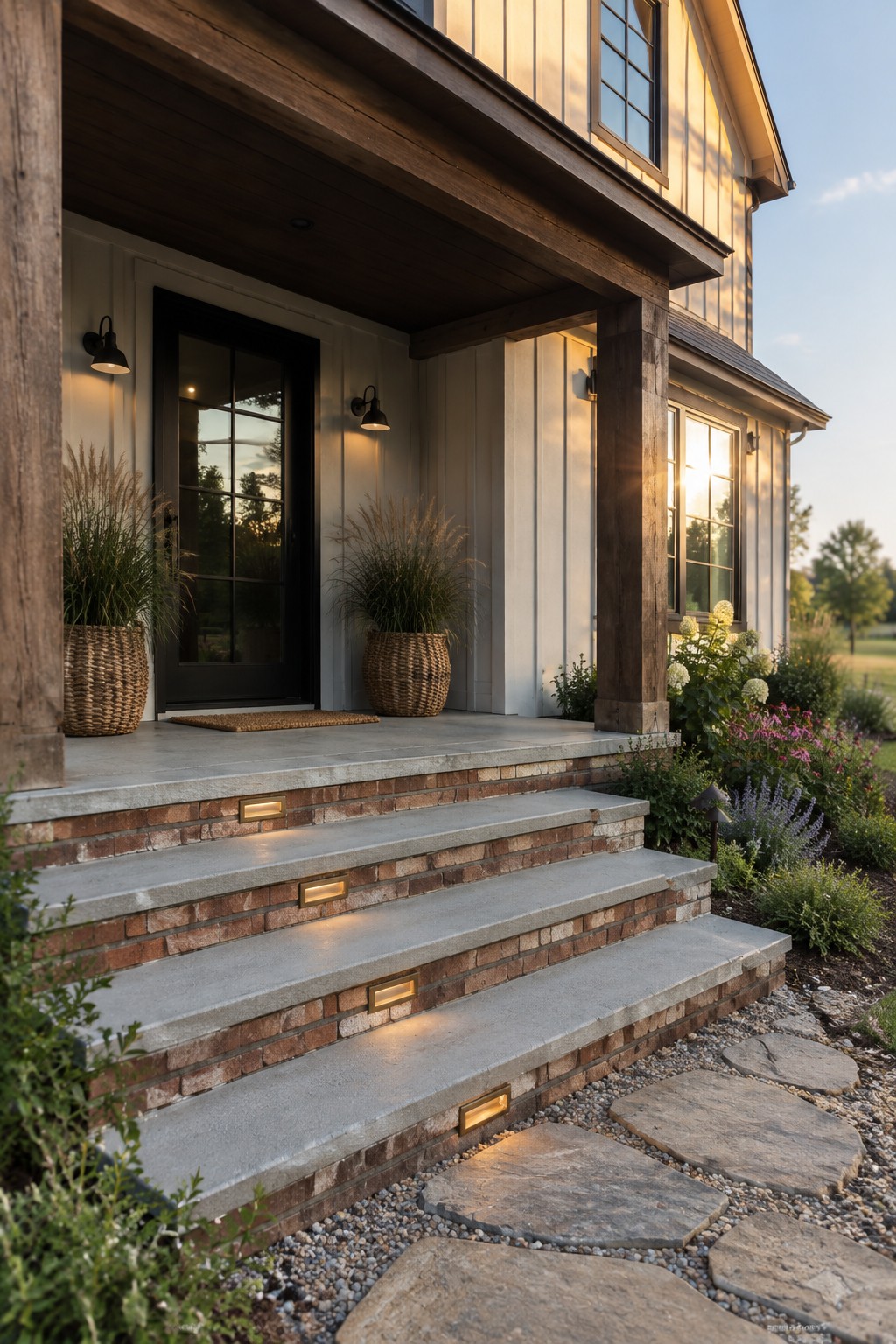
Low lights built into the stair risers give just enough glow to see each step without lighting up the whole porch. The effect stays soft and close to the walking surface, which helps at night when overhead lights can feel too harsh.
This setup works best on front entry stairs that see regular use after dark. Place the lights in the vertical face of the steps, keep the wiring protected, and choose fixtures made for outdoor conditions. It pairs well with brick or masonry details and keeps the look simple without adding wall sconces or rail lights.
Low-Level Step Lights For Wooden Deck Stairs

Small recessed lights built into the risers give outdoor stairs a clear path at night without any harsh glare. They sit low enough to mark each step while keeping the overall look simple and clean.
This approach works well on wooden decks where you can hide the wiring underneath the treads. Use fixtures rated for wet locations and space them evenly so every step stays visible after dark.
Low Step Lights On Shower Steps Improve Night Safety
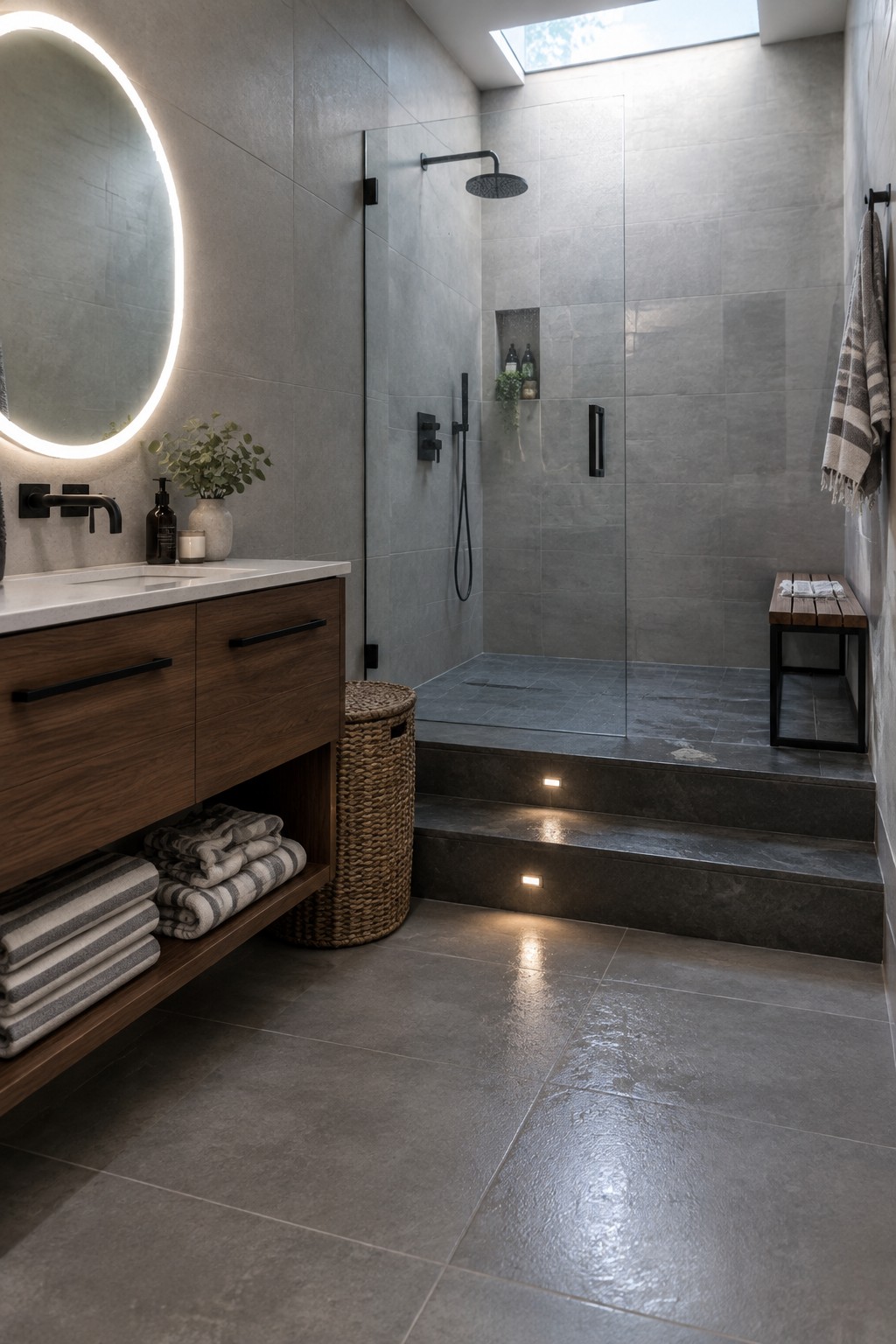
Small lights set right into the front of each step give just enough glow to mark the change in height. This keeps the area easy to use after dark without bright overhead lights or extra fixtures on the walls.
The approach works well in any tiled bathroom that has a raised shower base or a short run of steps. Keep the lights small, space them evenly, and match the finish to the tile so the look stays simple and the main focus stays on the floor plane.
Low Level Step Lights For Indoor Stone Stairs

Small recessed lights along the side of each stair give just enough glow to mark the edge without brightening the whole space. This approach feels especially useful on stone steps where a runner already adds some texture and you want the lighting to stay subtle.
It works best in homes where the stairs sit between living areas that stay in use after dark. Keep the fixtures low and evenly spaced, and choose a warm tone so the light blends with the rest of the room rather than standing out on its own.
Low Level Lights Built Into The Stair Wall

Low level lights set right into the base of the wall give just enough glow to see each step without lighting up the whole hallway. This setup works especially well on darker stairs where overhead lights can feel too bright at night. The small fixtures stay out of the way and keep the focus on the steps themselves.
This approach suits homes with traditional wood trim or wainscoting, since the lights tuck neatly into the existing wall detail. Place them every two or three steps so the path stays clear from top to bottom. Avoid spacing them too far apart or the lower steps can fall into shadow.
Low-Level Lights Built Into Pool Steps

Low-level lights set into the steps make it easy to see where you are going when stepping in or out of the pool at night. They stay close to the surface so they do not create bright spots or reflections on the water.
This approach works on any set of outdoor stairs that lead into water, whether it is a pool, spa, or raised deck edge. Use fixtures rated for constant moisture and space them evenly so each tread stays visible without extra fixtures higher up.
Low-Level Step Lights On Deck Stairs

Low-level lights built into the steps make outdoor stairs much safer after dark. They mark each tread clearly without throwing light up into the seating area or across the whole deck.
These fixtures suit wooden decks and rooftop terraces best, especially where you want a calm evening feel. Place them centered on the riser or near the edge of the tread, and choose warm LEDs that match any other lanterns you already use.
Low-Level Lights For Wooden Porch Entry Stairs

Setting small lights right into the front of each stair riser gives a clear path at night without bright overhead lights. The glow stays low and focused on the edges of the steps, which helps when coming home after dark.
This approach works best on wooden exterior stairs that lead to a porch or deck. Use fixtures made for outdoor use and space them evenly so every step stays visible.
Low Level Lights On Garden Steps

These small lights sit right in the steps so the path stays easy to follow after dark. They give just enough glow to see the edge of each tread without lighting up the whole yard or shining in your eyes.
They suit stone or concrete stairs in backyard gardens and along sloped walkways. Place them near the front of each tread, keep the fixtures low and weatherproof, and space them evenly so every step is visible.
Recessed Riser Lights For Indoor Family Stairs

Low lights tucked into the riser of each step give just enough glow to see the way without turning on overhead fixtures. This setup feels especially useful on stairs that get used after dark, since the light stays low and directed downward instead of shining straight into anyone’s eyes.
It works well in homes with kids or older adults who move around at night. The lights can be added during a remodel or retrofit on most stair types, though carpeted steps like these need a little extra care around the edges so the fixtures stay secure over time.
Low-Level Lights Built Into Brick Steps

Many older homes add small lights directly into the stair risers to make the steps easier to see after dark. This keeps the walkway safe without needing tall fixtures or bright overhead lights that can glare.
The approach suits brick or masonry stairs best because the lights sit flush and stay protected from weather. It works well on front entries or side paths where people come and go often, and the warm glow stays gentle enough not to disturb neighbors.
Low Level Lights On Each Stair Tread

Small lights set right into the front of each step give just enough glow to mark the edge without flooding the whole staircase with light. This approach feels especially useful on wider or curved stairs where shadows can hide the next tread at night.
It suits traditional homes with stone or wood steps and works best when the lights stay warm in tone rather than bright white. Keep the spacing even so the path stays easy to follow from top to bottom.
Low-Level Lights For Concrete Garden Path Steps
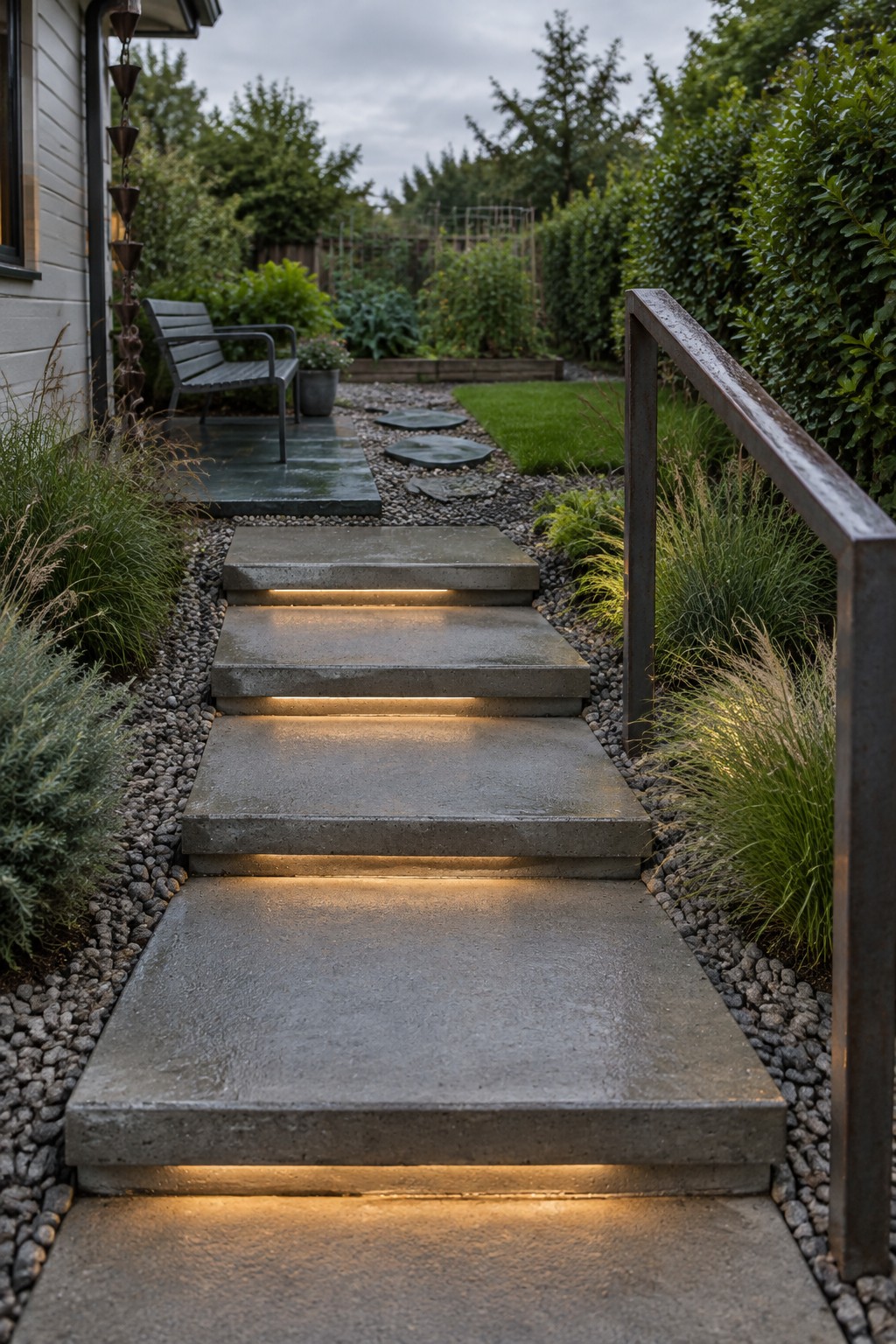
Embedding small lights right under the front edge of each step gives just enough glow to see where you are stepping without any harsh glare. This approach works especially well on concrete stairs set into a garden path because the light stays low and focused on the surface itself.
It suits homes with sloped yards or side entrances where people walk after dark. Make sure the fixtures are rated for outdoor use and angled slightly downward so the light does not spill into neighboring areas or shine into windows.
Low Step Lights on Mudroom Stairs
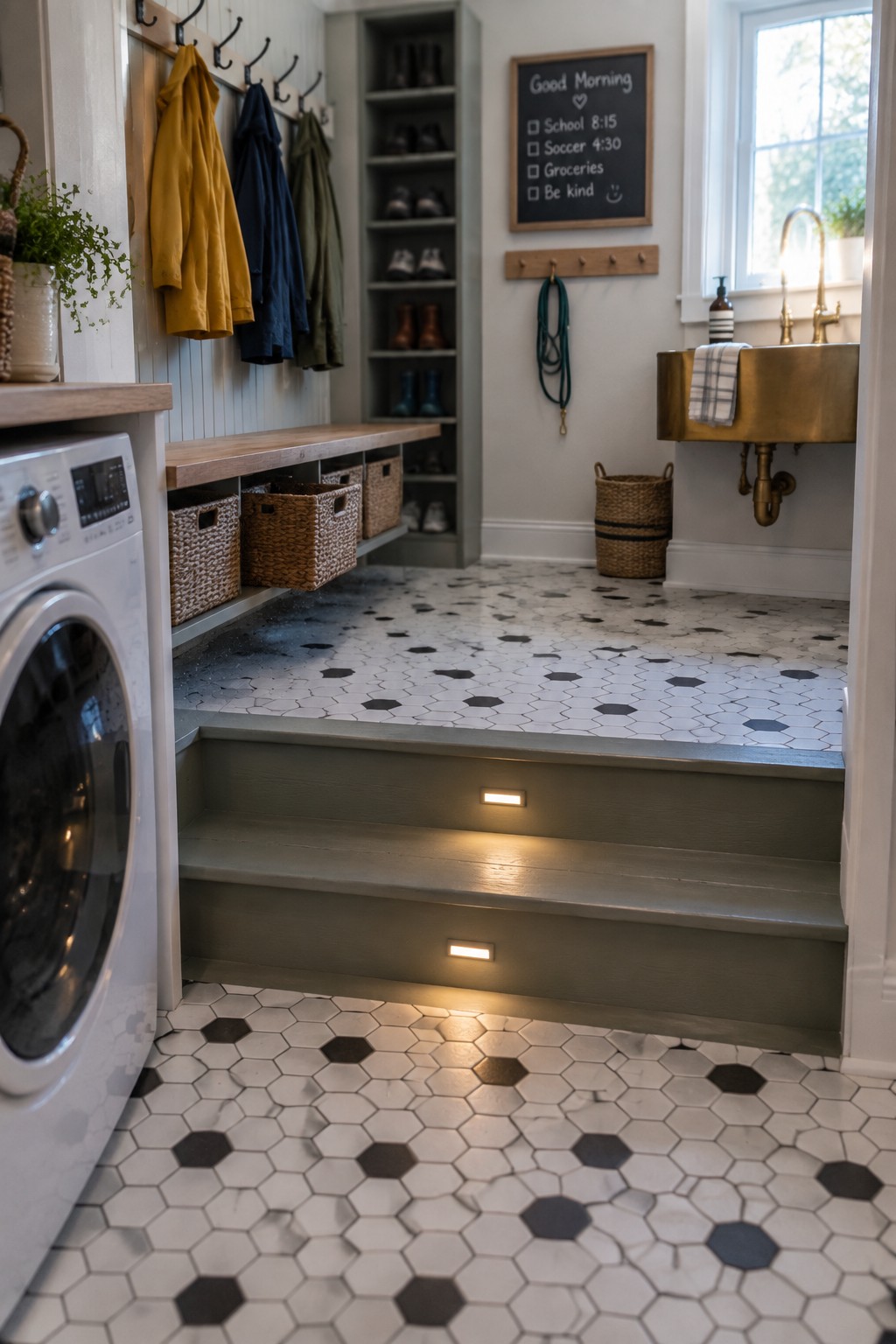
Small lights set into the stair risers give just enough glow to see each step without turning on a big overhead fixture. In a space that gets used constantly for laundry, coats, and coming in from outside, this kind of lighting keeps things practical and safer at night.
It suits homes with kids or anyone who moves through the area after dark. The lights can be added during a stair update and work best on straight runs where the steps see regular foot traffic.
Low Level Step Lights For Stone Front Walkway Stairs

Low level lights built into the risers give just enough glow to mark the edge of each step at night. This approach keeps the path easy to use without tall fixtures or bright overhead lights that can feel harsh in a yard.
Stone steps take this kind of lighting well because the material already has a solid, grounded look. The same setup works on front walkways, side paths, or any set of outdoor stairs where safety matters more than drama.
Frequently Asked Questions
Q: What if I want the lights to come on only when someone walks by at night? A: Add a motion sensor to the setup so the lights activate just for a few minutes at a time. This keeps the stairs visible without leaving them lit all night long. Most low-level kits work with simple sensors you can add yourself.
Q: How do I keep the steps from looking patchy if one light goes out? A: Space the lights evenly from the start and pick models that let you swap a single unit easily. Test them together before final install so you know the coverage stays balanced.
Q: Can I use these on carpeted stairs without damaging the material? A: Pick lights with a low profile that sit right against the riser and secure them with the adhesive pads that come in most kits. Check the backing every few months and press it down again if it starts to lift.
Q: Do I need to worry about the lights getting kicked or stepped on? A: Go for recessed or shielded versions that sit below the tread surface. They stay out of the way and hold up better under regular foot traffic.
