

Have you ever wondered how much solar power you need to keep your 400Ah lithium battery charged? You’re not alone. Many people face this challenge, especially those who rely on solar energy for off-grid living, RVing, or camping. It can be tricky to figure out the right solar setup that meets your energy needs without overspending.
In this article, you’ll find straightforward guidance to help you determine the ideal solar panel capacity for your battery. By understanding your energy consumption and the factors that affect solar charging, you’ll be better equipped to make informed decisions. Let’s simplify the process so you can enjoy reliable power wherever you go.
Key Takeaways
- Lithium Battery Benefits: 400Ah lithium batteries provide advantages such as a long lifespan (10-15 years), lightweight design, fast charging, deep discharge capability, and high efficiency, making them ideal for solar energy setups.
- Calculating Energy Needs: Understanding your daily energy consumption is crucial. Assess the wattage and usage duration of all devices to accurately determine the total watt-hours required for your solar setup.
- Solar Panel Sizing: To meet charging needs, use the formula: Required Power = Daily Consumption / Sunlight Hours. Factor in efficiency losses (approx. 20%) when selecting the panel size and total wattage.
- Optimal Solar Configuration: Aim for a minimum output of 540 watts through high-efficiency solar panels, adjusting panel orientation and using monocrystalline panels for optimal performance.
- Additional Components: Essential components for your solar setup include a solar charge controller, inverter, battery management system, quality cabling, and robust mounting equipment to ensure safe and efficient charging.
- Consider Local Sunlight Conditions: The number of sunlight hours in your area significantly influences energy generation, so tailor your solar setup based on local weather patterns and seasonal variations.
Understanding Lithium Batteries
Understanding lithium batteries helps you make informed decisions about solar charging for your 400Ah battery. Lithium batteries offer advantages that enhance your off-grid experiences.
What Is a 400Ah Lithium Battery?
A 400Ah lithium battery stores up to 4,800 watt-hours of energy. This capacity allows you to power devices efficiently over extended periods. For example, a 200-watt device can run for about 24 hours on a fully charged 400Ah lithium battery. This capacity ensures you meet your energy needs on camping trips or in off-grid scenarios.
Benefits of Lithium Batteries
Lithium batteries provide several key benefits:
- Long Lifespan: Lithium batteries typically last 10 to 15 years, making them a cost-effective choice.
- Lightweight: They weigh significantly less than lead-acid batteries, improving portability.
- Fast Charging: Lithium batteries can charge faster, especially with adequate solar input.
- Deep Discharge Capability: You can discharge lithium batteries down to 20% without harming their performance, maximizing usable capacity.
- Efficiency: Lithium batteries feature a higher charge and discharge efficiency, around 95%, compared to 85% for lead-acid options.
These attributes make lithium batteries ideal for solar setups, ensuring you get reliable energy storage for your applications.
Factors Affecting Charging
Several factors affect how much solar power you require to charge a 400Ah lithium battery. Understanding these elements ensures you optimize your solar setup for your specific needs.
Recommended Products
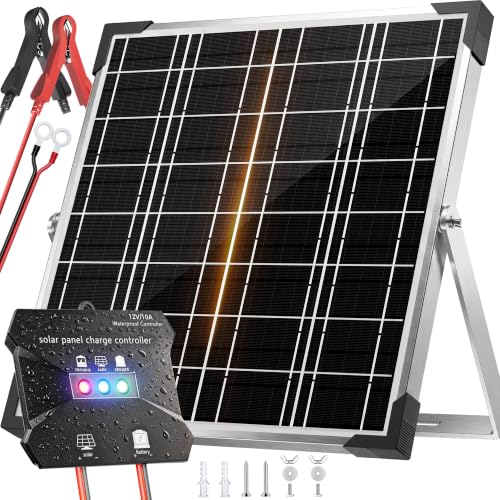
High-Efficiency MPPT Solar Charger - Advanced tracking technology delivers 20-30% faster charging for 12V batteries. A+ monocrystalline panels maximize power conversion. Perfect 20W solar trickle charger for cars, RVs, boats, and trailers. More sun captured, less time waiting.

【High Conversion Rate】This 20W solar panel with monocrystalline A+ solar cell has an excellent cell efficiency of 21%-30%. Designed to charge and maintain 12V rechargeable batteries like LiFePO₄, Lithium Ion, AGM, SLA, GEL, EFB, MF, etc. Keep batteries in charged for trailer, tractor, truck, boat, motorcycle, RV, car, lawn mower, water pump, gate opener, electric fence, etc

Superior MPPT Technology: Renogy MPPT Solar Charge Controller achieves a 98% conversion rate&99% tracking efficiency, ensuring maximum solar panel charging even in low-light or partial shade. Advanced MPPT algorithm rapidly adapts to changing conditions.
Solar Panel Output
Solar panel output varies based on panel quality and efficiency. Higher efficiency panels convert more sunlight into usable energy. For instance, a 300W solar panel produces approximately 1.2kWh per day under ideal conditions. If you’re focusing on charging a 400Ah lithium battery, consider using multiple panels to increase total output. Combining panels with a higher wattage maximizes daily energy production, allowing for faster charging times.
Sunlight Hours
Sunlight hours influence how much energy your solar panels generate. Location and season determine the number of effective sunlight hours. For example, areas with consistent sun may receive 5 to 8 hours of sun daily, while regions with frequent cloud cover might only see 3 to 5 hours. Calculating your average sunlight hours helps you determine the solar panel capacity needed for adequate charging. In optimal conditions, you’ll want to align your solar output with the energy demands of your battery.
Battery Management System
A Battery Management System (BMS) plays a crucial role in how effectively your lithium battery charges. The BMS oversees factors like battery temperature, charging rate, and voltage. It ensures safe and efficient charging, preventing overcharging and prolonging battery life. When selecting solar panels, verify their compatibility with your BMS. This compatibility enhances performance and ensures the battery charges within safe parameters, optimizing the overall solar charging setup.
Calculating Solar Needs
To effectively charge a 400Ah lithium battery, calculating your solar needs involves knowing your daily energy consumption and determining the appropriate panel size and capacity.
Recommended Products

Upgraded MPPT Controller: This latest solar battery charger is engineered with eight advanced safety protections to safeguard your batteries. It includes crucial safeguards against over charge, discharge, reverse polarity, over current, over voltage, backflow, short circuits, and high temperatures, giving you complete peace of mind during use

[Powerful Energy Generation]The Premium 400W Kit can produce an average of 1.6KWH of electricity per day (depending on sunlight availability). Each solar panel comes with a pair of 35 inches cables. By-pass diodes are pre-installed in waterproof IP-65 rated junction box to minimize power drop caused by shade and ensure excellent performance in low-light environments.

【High Conversion Efficiency, Fast Charging】The upgraded A+ grade monocrystalline solar cells achieve a conversion rate of 24%, maximizing solar energy capture. With ample sunlight, they can generate a maximum output power of 400W. The latest ETFE laminated case offers a light transmission rate of over 95%, significantly improving the performance of the solar cells.
Determining Daily Energy Consumption
Start by assessing your daily energy usage. List all devices you plan to power, including their wattages and usage duration. For example:
- Refrigerator: 100 watts, running 24 hours = 2400 watt-hours
- Laptop: 50 watts, running 5 hours = 250 watt-hours
- Lights: 10 watts, running 5 hours = 50 watt-hours
Add these values to find your total daily consumption:
- Total consumption = 2400 + 250 + 50 = 2700 watt-hours
Knowing your daily energy consumption is crucial for sizing your solar system correctly.
Solar Panel Size and Capacity
To charge your 400Ah lithium battery, you need to determine the solar panel size based on your energy consumption. Consider the following steps:
- Calculate Required Solar Power: Divide your daily energy needs by the average sunlight hours. If your total daily consumption is 2700 watt-hours and you receive an average of 5 sunlight hours, the required solar power is:
[
\text{Required Power} = \frac{\text{Daily Consumption}}{\text{Sunlight Hours}} = \frac{2700 \text{ watt-hours}}{5 \text{ hours}} = 540 \text{ watts}
]
- Select Panel Size: Choose solar panels that match your total wattage requirement. For example, if you opt for 180-watt panels, you’ll need:
[
\text{Number of Panels} = \frac{540 \text{ watts}}{180 \text{ watts}} \approx 3 \text{ panels}
]
- Consider Efficiency and Losses: Account for system inefficiencies—commonly around 20%. Adjust your calculations to:
[
\text{Adjusted Power} = \frac{540 \text{ watts}}{0.8} = 675 \text{ watts}
]
You might then need about 4 panels or a combination of panels to meet your needs effectively.
By calculating both your energy consumption and selecting appropriately sized solar panels, you ensure your 400Ah lithium battery charges efficiently in any off-grid setting.
Recommended Solar Setup
A proper solar setup ensures sufficient energy for charging a 400Ah lithium battery. This section covers the optimal solar configuration and the additional components needed for efficient operation.
Recommended Products

SMART SOLAR CHARGE CONTROLLER: Solar charge the smart way with the Victron Energy SmartSolar MPPT charge controller, to ensure that every ray of available sunlight is converted into usable energy, while optimizing battery longevity.
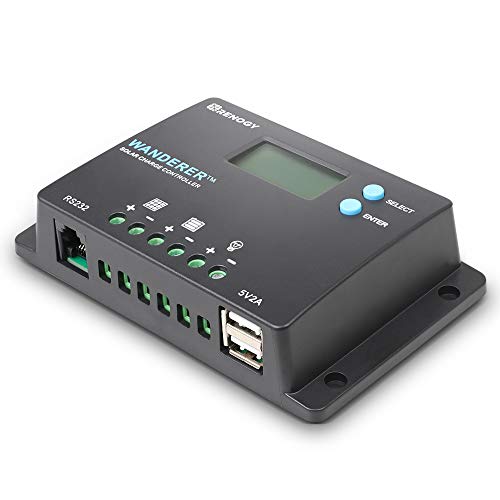
𝐒𝐦𝐚𝐫𝐭 𝟒-𝐒𝐭𝐚𝐠𝐞 12V/24V Solar Charge Controller: Renogy charge controller 𝐦𝐚𝐱𝐢𝐦𝐢𝐳𝐞𝐬 𝐁𝐚𝐭𝐭𝐞𝐫𝐲 𝐋𝐢𝐟𝐞 & 𝐒𝐨𝐥𝐚𝐫 𝐄𝐟𝐟𝐢𝐜𝐢𝐞𝐧𝐜𝐲, this advanced pwm solar charge controller utilizes intelligent 4-stage charging (Bulk/Boost/ Float/Equalization) to optimize power delivery for AGM, Gel, Flooded and Lithium batteries. RV solar charge controller prevents overcharging and gas buildup while 𝐚𝐜𝐡𝐢𝐞𝐯𝐢𝐧𝐠 𝟑𝟎% 𝐥𝐨𝐧𝐠𝐞𝐫 𝐛𝐚𝐭𝐭𝐞𝐫𝐲 𝐥𝐢𝐟𝐞𝐬𝐩𝐚𝐧 compared to basic charge controllers.

HASSLE-FREE PLUG & PLAY: Skip the confusing setups. With smart 12V/24V auto-recognition, installation is a breeze. Simply connect your battery first (ensuring a base charge for auto-detection) followed by your solar panels, and let the controller do the rest.
Optimal Solar Panel Configuration
To maximize charging efficiency, select high-efficiency solar panels. Aim for solar panels with a total output of at least 540 watts, based on your daily energy consumption and average sunlight hours. For instance, using three 180-watt panels can provide the necessary capacity.
Consider these factors when configuring your solar panel system:
- Panel Orientation: Position panels towards the sun for optimal exposure. Adjust angles according to the season for better energy capture.
- Panel Type: Choose monocrystalline panels for their efficiency and space-saving benefits. They perform well in limited space and lower light conditions.
- Number of Panels: Assess your energy needs to determine the quantity of panels. More panels lead to faster charging times, particularly in less sunny regions.
Additional Components Needed
A successful solar setup includes more than just panels. Essential components ensure safety and efficiency in charging your lithium battery. Here’s what you need:
- Charge Controller: Invest in a solar charge controller to regulate battery charging. This device prevents overcharging and maximizes battery lifespan. A MPPT (Maximum Power Point Tracking) charge controller adapts to varying temperature and sunlight conditions, increasing efficiency.
- Inverter: An inverter converts DC power from solar panels to AC power for household use. Choose a pure sine wave inverter for sensitive appliances to ensure safe operation.
- Battery Management System (BMS): A BMS monitors battery health and performance. It helps balance cell charging and discharging, enhancing safety and battery lifespan.
- Cabling and Connectors: Use high-quality cables to minimize energy loss. Connectors should be weather-resistant to ensure durability in outdoor environments.
- Mounting Equipment: Secure solar panels with sturdy mounting brackets or racks. This ensures stability and optimal positioning.
By implementing this recommended solar setup, you can efficiently charge your 400Ah lithium battery, keeping your off-grid adventures powered and hassle-free.
Conclusion
Getting the right solar setup for your 400Ah lithium battery can really enhance your off-grid experience. By understanding your energy needs and the factors that affect solar charging, you can confidently choose the right solar panel capacity.
With a bit of planning and the right equipment, you’ll ensure that your battery stays charged and ready for use. Whether you’re camping or living off the grid, a well-designed solar system can provide you with the reliable power you need. Enjoy your adventures knowing you’ve got the energy to back you up!
Frequently Asked Questions
What size solar panel do I need to charge a 400Ah lithium battery?
To charge a 400Ah lithium battery, you’ll need a solar panel setup with a minimum output of about 540 watts. This ensures efficient charging by compensating for average energy usage and varying sunlight hours.
How do I calculate my daily energy consumption for solar charging?
Calculate your daily energy consumption by listing all devices you plan to use, noting their wattages and how many hours each device runs daily. Sum up the total watt-hours needed to understand your energy requirements.
What factors affect solar panel output?
Solar panel output is influenced by panel efficiency, sunlight hours, and environmental conditions. Higher efficiency panels can produce more energy, while the amount of daily sunlight varies by location and season.
Why is a Battery Management System (BMS) important?
A BMS optimizes charging efficiency and safety for your lithium battery. It ensures compatibility with solar panels and helps prolong battery life while managing charge cycles effectively.
How can I improve my solar charging efficiency?
To improve charging efficiency, use high-efficiency solar panels, ensure proper orientation, and consider multiple panels for increased output. Also, select a quality charge controller and use appropriate cabling and mounting equipment.
How long do lithium batteries last in solar setups?
Lithium batteries typically last 10 to 15 years in solar applications, thanks to their deep discharge capability and fast charging. Proper usage and maintenance can further extend their lifespan.
