


I have found that the way light hits an accent wall can completely shift how a room feels once the sun goes down.
In my own house the walls often looked flat until I started paying attention to where a single sconce could add depth without needing a full renovation.
Some placements just work better.
Trying out different heights and styles on paper never quite matches what happens in the actual space.
That is why I keep coming back to ideas that focus on simple adjustments anyone can make to improve the daily experience.
Sconces on Both Sides of the Fireplace

Placing matching sconces on either side of the fireplace gives an accent wall a finished, balanced feel. The two lights sit at the same height and create a quiet symmetry that works even when the fireplace itself stays simple.
This approach suits living rooms with darker or textured walls where you want a bit of warmth after dark. Keep the sconces modest in size so they highlight the wall without competing with the fire.
Wall Sconces Next To The Bed

Wall sconces work nicely in bedrooms when you want light without crowding the nightstand. They keep the surface clear for books or a glass of water and give a steadier glow than a small table lamp.
This approach suits rooms where space is limited or where you prefer a simpler look at the bedside. Hang them at a height that puts the light over the shoulder when reading, and pick shades that direct the beam downward rather than straight out into the room.
Sconces On Either Side Of Artwork

Placing sconces next to a large piece of art helps balance the wall and gives the painting a gentle lift without needing overhead lights on all the time. The warm glow from the shades keeps the dark wall color from feeling heavy while still letting the artwork stand out.
This setup works best in dining rooms or living rooms where you want the wall to feel finished but not overly bright. Try matching the sconce finish to other metal details in the room and keep the shades simple so they do not compete with the painting itself.
Sconces on a Kitchen Accent Wall
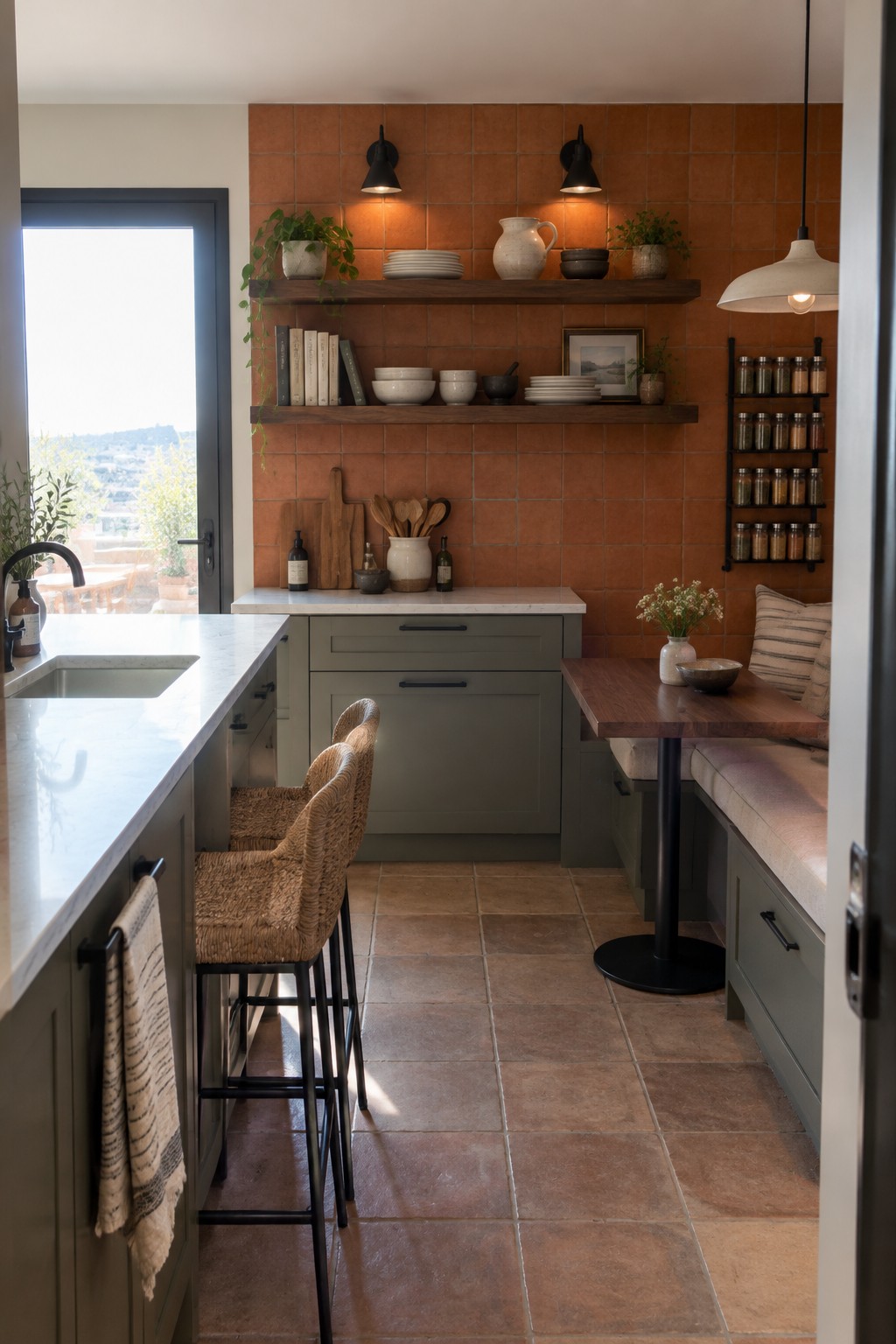
Mounting a pair of sconces on a tiled accent wall gives the kitchen a gentle layer of light that feels useful without being harsh. The tiles reflect the glow softly and help the open shelves stand out in the evening.
This approach works best in a compact kitchen or breakfast spot where you want some warmth without adding more ceiling fixtures. Keep the sconces simple in shape and place them high enough that they clear the shelves below.
Frame The Mirror With Matching Sconces
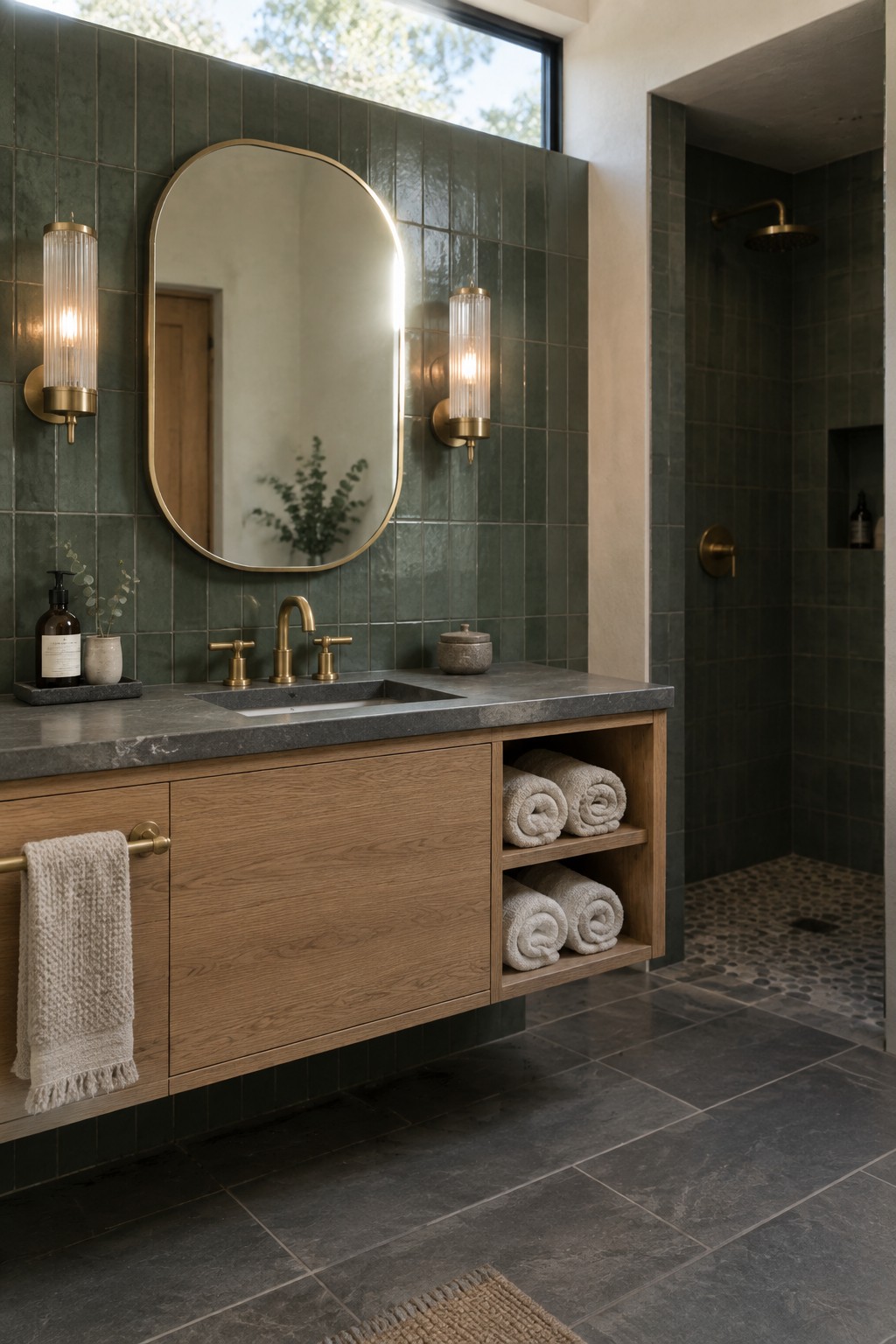
Placing a pair of sconces on either side of a bathroom mirror gives balanced task lighting while making the wall feel more finished. The vertical shape of the fixtures adds height without taking up extra room, and the soft glow they cast works better than a single overhead light for daily routines.
This layout suits compact bathrooms where you need both function and a bit of warmth. Keep the sconces simple in shape and match their finish to the faucet and hardware so the whole area feels pulled together. It works especially well on a tiled accent wall that can handle the extra detail.
Sconces That Light A Hallway Gallery Wall

Many hallways end up with a row of framed photos that never quite look finished. Adding a sconce on each side of the grouping gives the pictures a soft wash of light and keeps the space from feeling dim between overhead fixtures.
This approach works best in older homes where the hallways are long and narrow. Choose smaller sconces with simple shades so they sit comfortably beside the frames without crowding the wall.
Sconces on Both Sides of the Crib

Placing a pair of wall sconces on either side of a crib gives steady, low light that feels calmer than a single overhead fixture. The light spreads evenly across the wall and avoids casting strong shadows in the middle of the room.
This setup works best in smaller bedrooms or nurseries where floor or table lamps take up too much space. It suits homes that already use warm bulbs and simple wall colors, and it keeps the area around the crib clear for rocking chairs or storage.
Sconces On A Dark Accent Wall
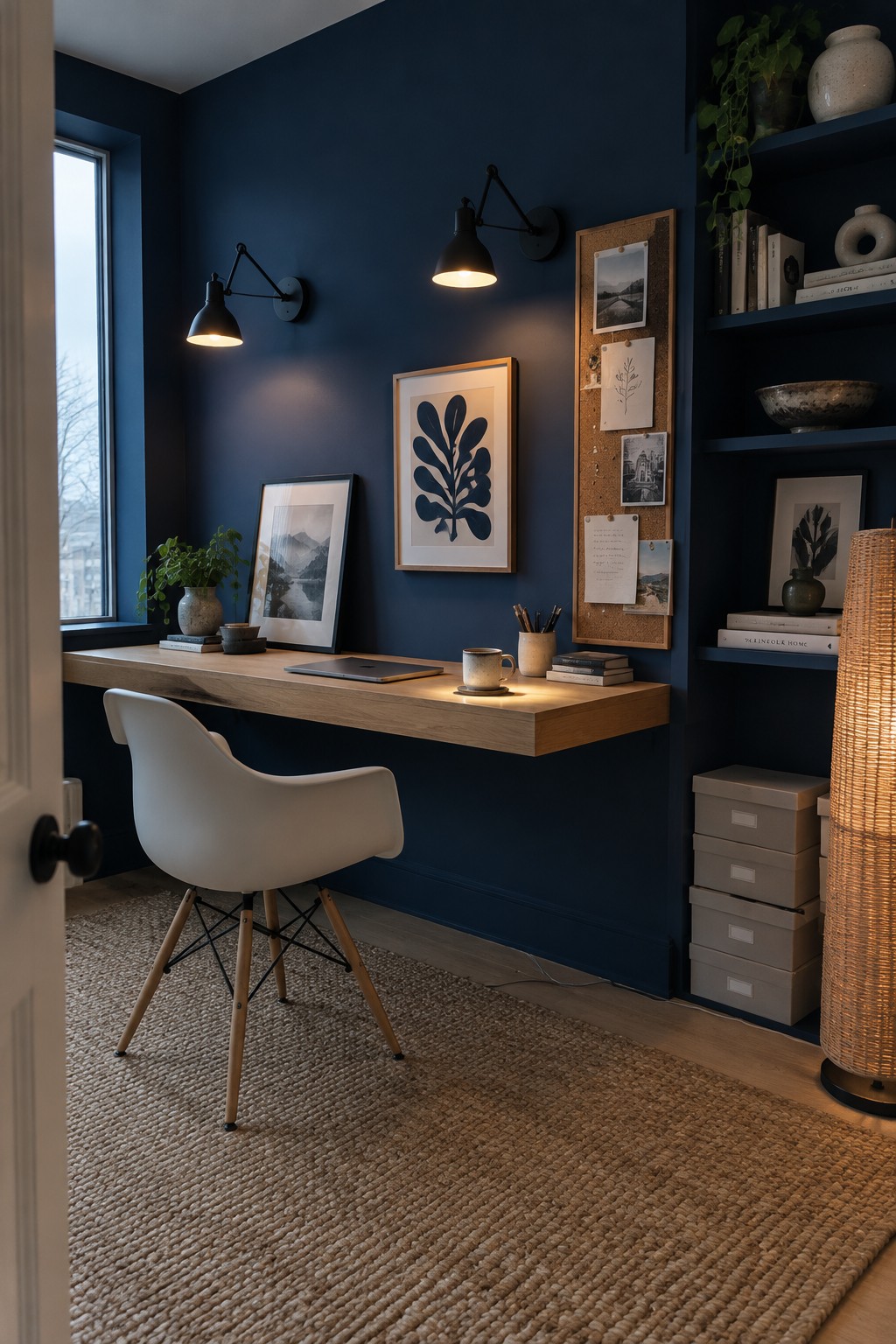
Sconces work well on a deep colored wall because they give direct light exactly where you need it for desk work. The dark background makes the light stand out and keeps the room from feeling too bright or harsh at night.
This approach suits smaller home offices or any workspace that needs flexible lighting without a big ceiling fixture. It works best with a simple color scheme and a few other wall pieces so the sconces stay the main focus.
Sconces In The Laundry Room

Wall sconces can turn a plain laundry sink area into something that feels more put together. They give focused light for tasks without needing a big overhead fixture, and the style adds a bit of character to a room that often gets ignored.
This setup works especially well in smaller homes or older houses where the laundry space shares room with storage or a back entry. Keep the fixtures simple and sturdy, and place them so the light falls evenly across the counter without glare.
Sconces With Patterned Wallpaper

Placing wall sconces on a busy floral wallpaper gives the pattern a gentle lift once the sun goes down. The light hits the flowers and leaves at different angles and keeps the wall from feeling flat or heavy in a small space.
This setup works best in a reading nook or above a built-in bench where people sit for longer stretches. It suits older homes or rooms that already lean traditional. Keep the sconce arms fairly simple so the wallpaper stays the main event.
Pairing Sconces Around a Bathroom Mirror

Placing two matching sconces on either side of a mirror gives even light across the face without needing a big overhead fixture. In smaller rooms with darker walls this setup keeps things bright where it matters most and adds a simple layered look that feels finished.
It works especially well in powder rooms or guest baths where the mirror is the main focal point. Try keeping the sconces at eye level and choose shades that diffuse the light so it stays soft rather than harsh.
Sconces On A Wood Accent Wall

Placing sconces right on a wood accent wall gives the room a clean, balanced look without crowding the bedside tables. The lights sit at a good height to cast a soft glow across the surface, which makes the wood grain stand out more than overhead lighting alone would.
This setup works especially well in bedrooms where you want fewer lamps on nightstands. It suits homes with taller headboards or anyone trying to keep surfaces clear. Just make sure the sconces are spaced evenly and the bulbs are warm so the wood does not look too dark at night.
Sconces Next To A Large Painting

Placing a pair of wall sconces on either side of a big painting gives the artwork a clear focal point and softens the look of a dark wall. The light spreads across the surface evenly and makes the colors feel warmer without any extra fixtures overhead.
This works best in rooms like studies or libraries where the walls are painted deep tones. Keep the sconces fairly simple so they support the art rather than compete with it, and test the height so the glow hits the upper half of the painting.
Sconces on Either Side of a Mirror

Placing a pair of sconces on both sides of a mirror gives even light across the face without the shadows that come from a single overhead source. It works especially well in bathrooms where people need clear, flattering light for daily routines.
This layout suits smaller or medium vanities best. Keep the sconces at roughly eye level and choose shades that direct light outward rather than straight down.
Sconces That Highlight Art On A Textured Wall

Wall sconces work well when you want to give a small group of framed pieces more presence without adding clutter. The light stays low and focused, so the art stands out even in a narrow space like a stairwell where overhead lighting often falls flat.
This approach suits homes with textured walls and traditional or transitional details. Mount the sconces slightly above the frames and space them evenly so each piece gets its own soft pool of light. Keep the fixtures simple and dark so they recede during the day and only come forward once they are turned on.
Sconces Beside a Vanity Mirror
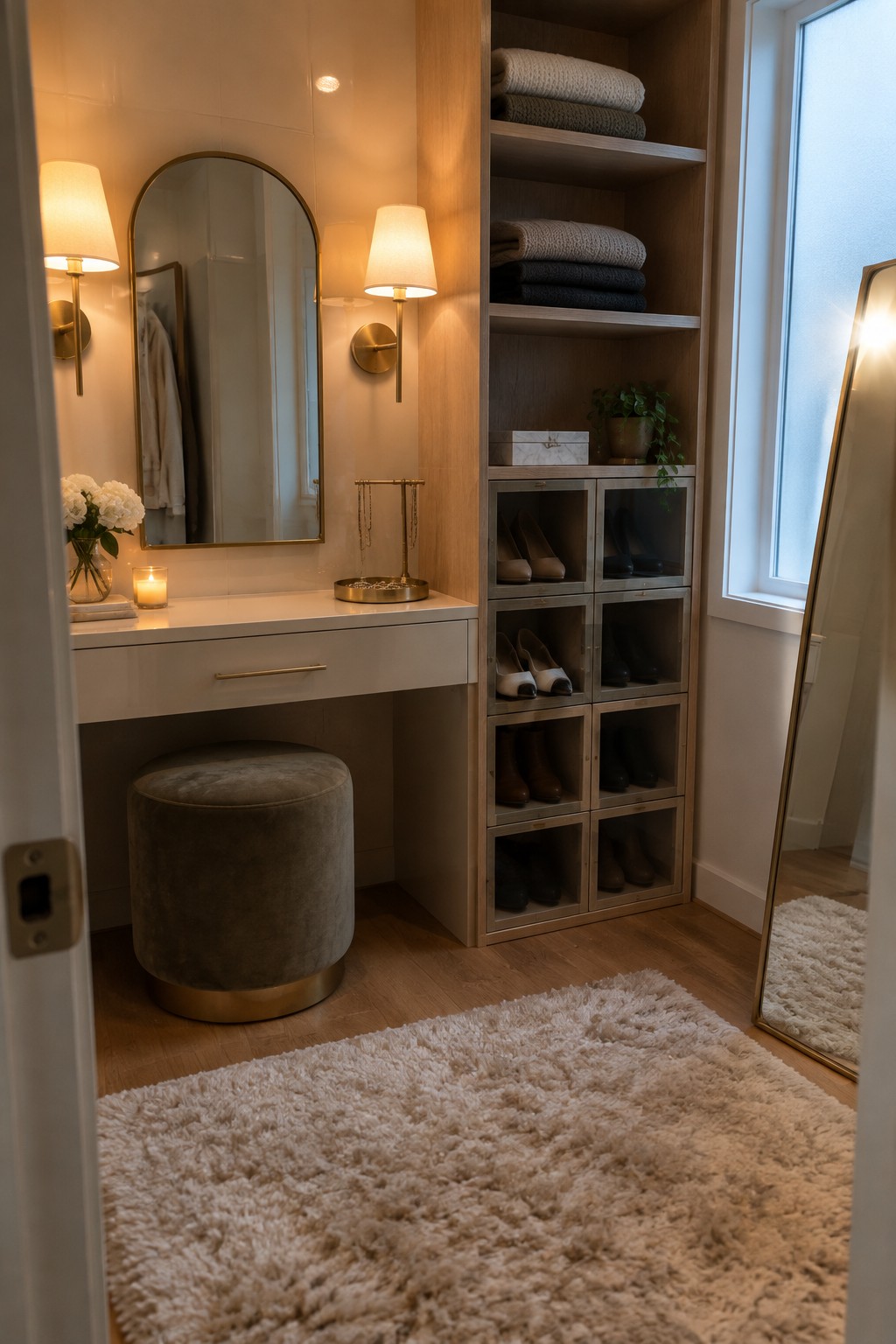
Placing a pair of wall sconces on either side of a mirror creates steady, even light that makes a small dressing area feel more useful. The light sits at the right height for tasks like applying makeup or fixing hair, and it avoids the flat overhead glow that often leaves shadows on the face.
This works especially well in compact spaces where you want soft, warm lighting without crowding the counter. Choose shades that diffuse the bulbs gently, and keep the sconces fairly simple so they blend with the rest of the room rather than compete for attention.
Sconces Above A Mudroom Bench

Placing sconces directly above a bench and row of hooks gives steady light right where people need it most. The fixtures keep the area bright for daily comings and goings without relying on one overhead light that often leaves shadows.
This setup works best in homes with an active entry or mudroom where coats, bags, and shoes collect. Space the sconces evenly so the whole wall feels balanced, and choose simple styles that match the storage below rather than compete with it.
Place Matching Sconces Beside The Mirror

Pairing two identical sconces on either side of a mirror gives even light across the face and keeps the whole wall from feeling lopsided. The round shapes here also add a soft curve against the straight lines of the sink and mirror frame, which helps the small space feel a little more finished.
This works especially well in powder rooms or narrow bathrooms where you need task lighting but still want something decorative. Keep the sconces at eye level, match the finish to your faucet, and choose a material like alabaster if you want the light to stay gentle rather than harsh.
Sconces On Textured Accent Walls

Mounting sconces directly on a textured wall gives the surface a softer, warmer look once the lights come on. The cork here picks up the glow from the two black fixtures and turns what could feel flat into something more inviting without any extra lamps or overhead lighting.
This setup works best in living rooms where the wall already serves as a focal point. Keep the sconces at the same height and distance from the center object so the light spreads evenly. It suits homes that mix natural materials with simple, dark fixtures.
Woven Pendants For Accent Wall Lighting

Woven pendants give off a soft, filtered light that works especially well on a warm terracotta wall. The texture of the baskets breaks up the glow and keeps it from feeling too harsh, while the plant cutouts on the wall catch the light in a simple way that adds interest without extra fixtures.
This approach suits smaller rooms or reading corners where you want gentle ambient light rather than bright overheads. Try hanging two or three at different heights above a bench or daybed, and keep the wall color earthy so the light feels natural. Just avoid overcrowding the space with too many other patterns.
Sconces Beside the Bed

Mounting sconces on the wall next to the bed gives you bedside light without taking up space on the nightstand. It keeps the area around the bed looking cleaner and puts the focus on the headboard and wall instead.
This setup works in most bedrooms, especially smaller ones or rooms where you want fewer things on surfaces. Place the sconces at a comfortable height for reading and pick ones with shades that direct light downward.
Sconces On Dark Walls Over Open Shelves

Placing a couple of wall sconces on a dark painted wall gives soft, useful light right where open shelves need it. The light hits the contents without glare and keeps the whole area from feeling too closed in.
This works best in pantries or kitchen areas with wood tones and simple storage. Keep the sconces at a height that casts downward across the shelves, and choose fixtures that feel at home with the wood and metal already in the space.
Sconces Beside Bathroom Mirrors

Placing a sconce on each side of a mirror gives even light across the face without the harsh shadows that come from a single overhead fixture. In rooms with darker walls, this setup also adds a warm vertical line that breaks up the surface and keeps the space from feeling flat.
It works best in bathrooms where the mirrors sit a little apart and there is room to mount the fixtures at eye level. Homeowners with stone or tile walls often like the look because the sconces add texture and a simple finished detail without needing extra trim or ledges.
Frequently Asked Questions
Q: How high should I hang sconces on an accent wall? A: Place them so the bottom of each fixture sits about 60 inches from the floor. This height lines up with most seating and spreads light across the wall without glare in your eyes. Check the spot with a tape measure and step back to see how it looks from your usual chair.
Q: What if my accent wall has no nearby outlets? A: Run a slim cord cover along the baseboard to hide the wire down to the nearest plug. Many people add a small table lamp on a nearby surface to balance the look without extra drilling. Battery versions work too if you want zero cords at all.
Q: Do the sconces need to match my other lamps? A: They work fine with a similar metal tone rather than an exact match. Focus on one shared detail like the arm shape or shade style to keep things feeling connected. This keeps the accent wall interesting without making the room look too matched.
Q: How far apart should I space several sconces? A: Keep them roughly four feet from center to center for even coverage. Closer spacing creates a softer wash while wider gaps let the wall color show more between lights.
