


When rooms feel off in the evening it is often the lighting that needs attention rather than the furniture layout itself.
Backlighting with adjustable colors gives options for different activities without installing new fixtures every time.
Placement makes the biggest difference in how the effect lands.
I prefer to experiment on one wall first to judge the real impact before expanding to other areas.
This way the ideas stay practical instead of turning into something that only works in controlled photos.
Built-In Shelves With Color-Changing Backlighting

Color changing LEDs behind built in shelves give a room an easy way to shift the mood without moving anything around. The lights sit in the back of the shelves so they highlight whatever is on display while adding a soft glow that changes from one color to another.
This approach works especially well in living rooms with darker walls and simple furniture. It suits homes that already have built ins or are planning to add them, and it keeps the look current without needing a full remodel. Just keep the colors from getting too bright if the room is meant for relaxing.
Color Changing LED Backlighting Behind The Bed

Many people like color changing LEDs behind the bed because they let you shift the mood of the room with just a few taps on a phone or remote. A soft gradient across the wall adds interest without needing extra lamps or bold paint. It works especially well when the headboard sits against a plain wall and you want a bit of light at night that does not feel harsh.
This kind of lighting suits bedrooms where you want flexibility. Cool tones can help with winding down while warmer shades feel cozier for reading. Keep the strip hidden behind the headboard or a floating shelf so the light stays even and does not shine straight into your eyes.
Color Changing LEDs Under The Kitchen Island

Running color changing LED strips along the base of a kitchen island gives the room a modern edge without much effort. The glow can shift from cool blue to purple or warmer tones, and it makes the island stand out even when the main lights are off. Many people like how it adds interest to darker cabinetry without needing extra fixtures.
This works best in open kitchens where the island sits between the cooking area and the seating space. Keep the strips tucked into a shallow channel so the light stays even and does not create harsh spots on the floor. It suits homes that already lean contemporary, and it is easy to control with a simple remote or app.
Color Changing LED Lighting Behind A Mirror

Many bathrooms feel flat with just overhead lights, but adding a ring of color changing LEDs behind a round mirror gives the whole space a softer, more adjustable feel. The light can shift from warm tones for morning routines to cooler or bolder hues when you want something different in the evening.
This works especially well in simpler bathrooms where the vanity and tiles stay neutral. Keep the rest of the lighting low so the backlighting becomes the main feature, and make sure the LEDs have a dimmer and color control so you can adjust them without much effort.
Color Changing LEDs In A Ceiling Cove

Color changing LEDs tucked into a ceiling cove give a dining room a completely different feel once the sun goes down. Instead of relying on one fixed light source, the cove lets you shift the mood from warm and quiet to bold and energetic without touching a thing on the table.
This works best in rooms where you entertain or host longer meals. Keep the colors low and slow if you want the space to still feel comfortable. Bright saturated tones are fine for parties but can start to feel loud if the room gets daily use.
Floating Consoles With Color Changing Backlighting
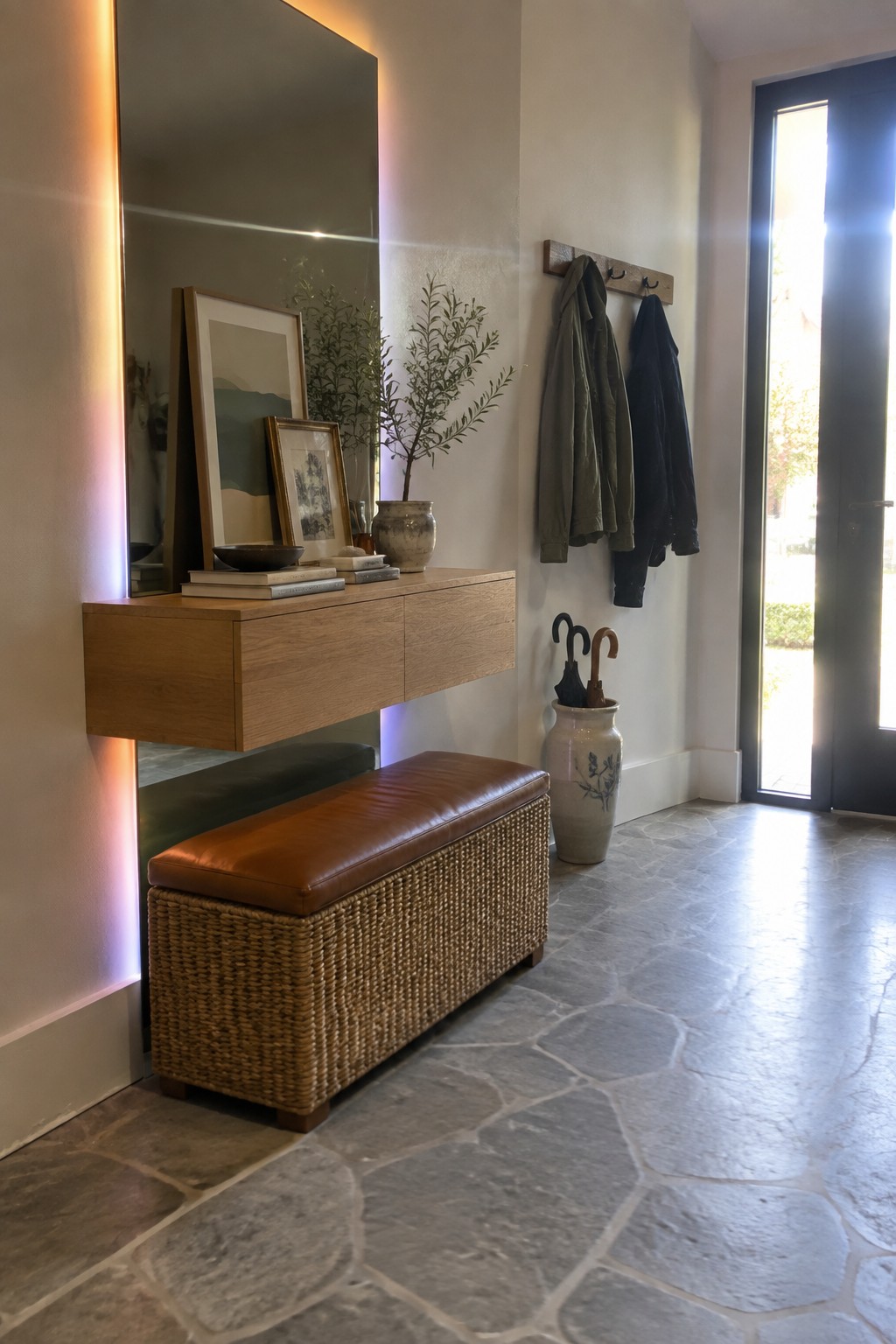
Running color changing LEDs behind a floating console gives an entryway a soft glow without adding extra lamps or clutter on the floor. The light bounces off the wall and creates a gentle wash that feels calm rather than bright, which works especially well in narrower hallways where overhead lighting can feel harsh.
This approach suits homes that already have clean lines and simple furniture. Keep the console fairly shallow so the light strip stays hidden, and test the colors during the day to make sure they still look good when natural light comes in from nearby doors or windows.
Color-Changing LEDs In Built-In Shelving

Color-changing LEDs behind built-in shelves give a room a soft, shifting glow without needing extra lamps or fixtures. The arched niche in this nursery shows how the lights can move from green to blue to purple, adding a gentle layer of interest that feels calm rather than busy.
This works best in spaces where you want lighting that adapts, like a child’s room or a quiet reading spot. Use slow transitions and keep the colors on the softer side so the effect stays relaxing instead of overwhelming the space.
Built-In Shelves With Color Changing LEDs

Built-in shelving looks more finished when you add LED backlighting that can shift colors. The lights turn ordinary books and objects into the main feature of the wall without taking up extra space.
This approach works best in a home office or study where you want the shelves to feel active at night. Keep the controller simple so you can change the colors without fuss, and avoid overloading the shelves so the light has room to show through.
Color Changing Backlighting For Open Shelving

Color changing LEDs behind open shelves give a laundry room or utility space a quick lift without much effort. The lights sit along the back edge and wash the wall and items in whatever hue you pick, so the space feels less like a chore zone and more like an intentional room. It works especially well when the shelves hold baskets or simple containers that let the light show through.
This setup suits homes where the laundry area sits near living spaces or gets used as a catch all. Keep the colors on a timer or pick a soft cycle if you want something calm during evening hours. Too many bright shifts can start to feel busy, so most people settle on two or three favorites that match the rest of the house.
Color Changing LEDs In Built In Shelving

Color changing LEDs behind open shelving give a closet or dressing area a completely different feel. Instead of plain storage, the lights turn the shelves into a feature that you can adjust whenever you want, whether that means a soft glow for everyday use or brighter colors for a change.
This approach works well in rooms where you keep smaller items on display, like shoes or folded accessories. It suits homes that already have built in cabinetry and want to highlight it without adding much clutter. Keep the controls simple so you can switch colors without fuss.
Color Changing LEDs Behind the TV

Many people like adding color changing LED strips behind their TV because it turns the screen into the main light source in the room. The glow fills the wall and reduces eye strain during long viewing sessions, especially in the evening when the rest of the room stays dim.
This setup works well in media rooms or living spaces where the TV is the focus. Hide the strips along the back of the console and frame so the colors wash the wall evenly, and keep the brightness adjustable so it does not overpower the picture on screen.
Color-Changing Lights Along Hallway Ceilings

A strip of color-changing LEDs tucked along the ceiling can turn a plain hallway into a space that feels more alive. The light washes the upper walls and ceiling in shifting tones, which adds interest without crowding the space or competing with art on the walls.
This works especially well in narrow or long corridors where you need something to break up the length. Keep the colors soft during the day and let them deepen at night. It suits homes that already have simple trim and painted walls, since the lighting itself becomes the main feature.
Color Changing Backlighting Around A Mirror

Wrapping a mirror with color changing LEDs gives a bathroom a bold focal point without needing much else. The light shifts through greens and purples along the edge, which adds interest to the space and works especially well against dark walls.
This setup suits smaller bathrooms or powder rooms where you want a modern touch that can change with the time of day or the mood. Use it on a simple mirror shape so the lighting stays the main feature, and pair it with a deep wall color that lets the glow stand out.
Color Changing Backlighting In Built In Bar Cabinets

Color changing LEDs inside cabinetry give a bar area a lively feel without much extra effort. The lights shift through different colors and highlight the glasses and bottles on the shelves, making the whole setup stand out even in the evening.
This approach works well in any home with a built in bar or display cabinet where you want to show off glassware. Keep the colors from getting too bright if the rest of the room uses softer tones, and test the settings before you settle on one look.
Color Changing Backlighting for Vanity Mirrors
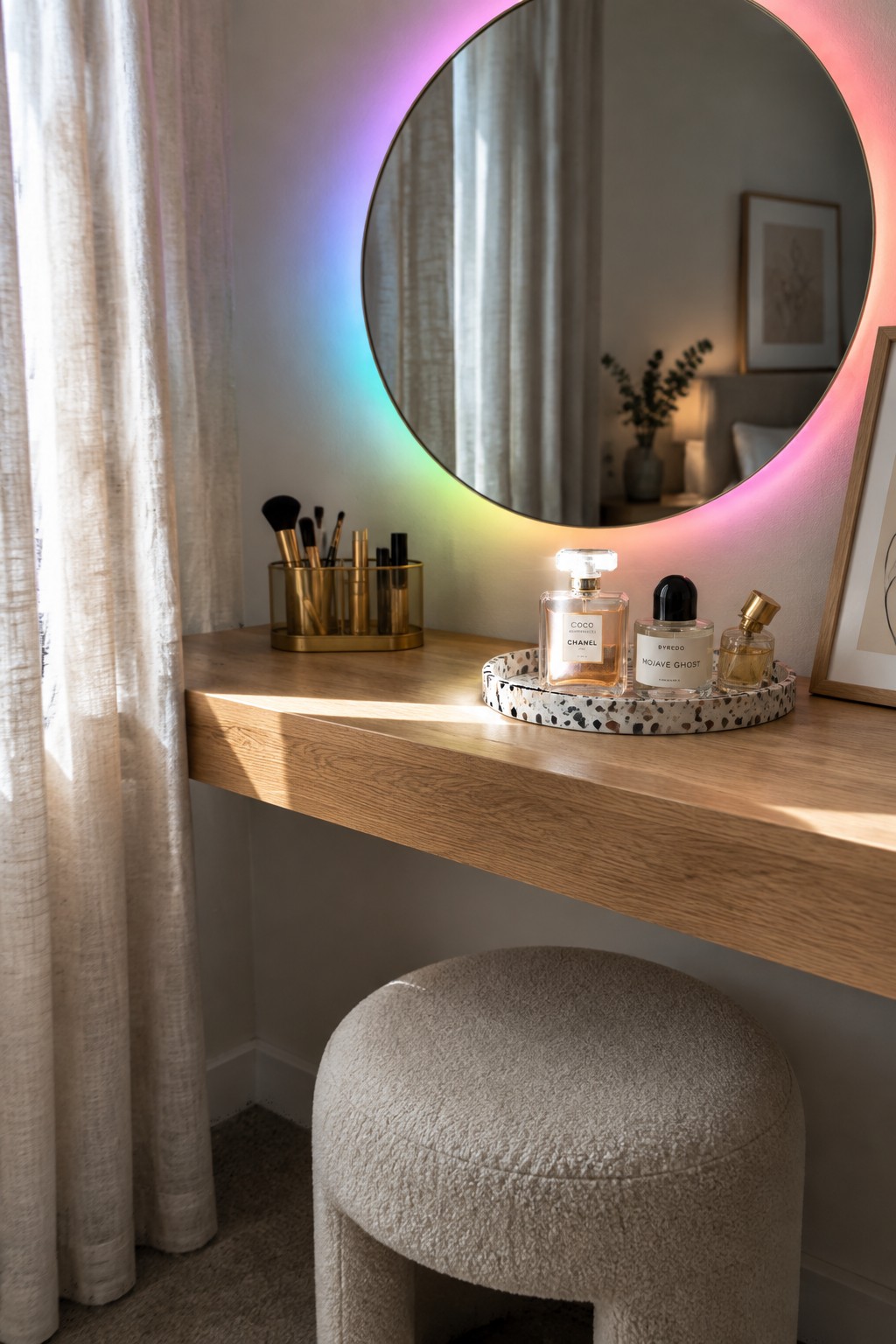
Adding a ring of color changing LEDs behind a vanity mirror gives the space a flexible accent without needing a full room makeover. The light wraps the mirror edge and shifts through different tones, which makes the area feel more personal and current while still keeping the rest of the furniture simple.
This setup works best in bedrooms or dressing rooms where the mirror gets daily use. Keep the LEDs on a dimmer and choose softer shades for morning routines so the light stays easy on the eyes.
Built-In Shelves With Color-Changing Backlights

Color-changing LEDs tucked into built-in shelves give you an easy way to shift the feel of a bedroom without repainting or buying new furniture. The lights turn plain storage into a focal point, and you can dial the colors up or down depending on the time of day or what you are doing in the room.
This approach works best on a solid wall behind the bed or around a TV where the shelving already has some depth. Keep the brightest or most saturated colors for one or two shelves at a time so the space stays calm enough for sleep. Darker wall colors help the lights stand out without needing extra fixtures.
Color Changing Backlighting Behind A Shelf

Color changing LEDs placed behind a mirror and along the edge of a floating shelf turn a plain wall into something much more lively. The effect works because the light stays contained and the colors shift without competing with the objects in front of them.
This approach suits narrow hallways or entry spots where you want a little mood at night. Keep the shelf styling simple so the light does the work, and choose a strip that lets you set a few favorite colors rather than cycling through everything at once.
Color Changing Backlighting On Built In Shelves

Color changing LED lights tucked under floating shelves give a simple built-in a warmer, more finished look. The light washes over books and small objects without needing extra lamps, and the shift between tones adds a bit of life to a quiet corner.
This works best in smaller seating areas where you already have open shelving. Keep the colors soft and let them change slowly so the light stays in the background rather than taking over the room.
Frequently Asked Questions
Q: How do I keep the wires from showing with backlighting behind a shelf? A: Run the strip along the back edge and tuck the cord behind the shelf lip. Use small clips to hold everything in place so nothing hangs out in plain view.
Q: Will these lights add much to my power bill if I leave them on most evenings? A: They draw very little electricity compared to regular bulbs. Run them on a timer if you want to cut usage without thinking about it.
Q: What happens if the color looks off in my room at night? A: Test a few settings with the lights dimmed low first. Warm tones often feel better in smaller spaces than bright blues or greens.
Q: Do I need special tools to install these behind my headboard? A: Peel and stick strips work fine with just a clean surface. Wipe the area first so the adhesive grabs without peeling later.
