

Have you ever wondered what would happen to your solar-powered home during a blackout? It’s a question many homeowners ask, especially when storms or power outages strike. You might be relying on solar panels to generate energy, but without the right setup, those panels won’t keep your lights on when the grid goes down.
In this article, you’ll learn how solar batteries can play a crucial role in maintaining power during outages. We’ll explore how they store energy and the steps you can take to ensure your home stays powered up when you need it most. Understanding this can bring peace of mind and help you make informed decisions about your energy needs.
Key Takeaways
- Solar batteries are essential for maintaining power during blackouts by storing excess energy generated from solar panels.
- Effective blackout performance requires a grid-tied solar system with a backup battery setup, allowing isolation from the grid during outages.
- Lithium-ion batteries are the most popular type due to their efficiency and longevity, while lead-acid, saltwater, and flow batteries offer various advantages and price points.
- Solar batteries enhance energy independence, allowing homeowners to rely less on the grid and maintain power for essential appliances.
- While solar batteries support sustainable energy use and reduce reliance on fossil fuels, upfront costs and limited energy storage capacity are important considerations for homeowners.
Understanding Solar Batteries
Solar batteries play a crucial role in ensuring your home stays powered during an outage. They store energy collected from your solar panels, allowing you to use it when the grid goes down.
Recommended Products

Portable Generator with 60W Solar Panel Included: with a big battery pack, ZeroKor 300W solar powered generator are powerful enough to charge smartphones,tablets,laptops,headphones or other outdoor small camping supplies(Tips:Using electrical appliances over 300W may damage the portable solar generator, especially some devices that are prone to heat or built-in air compressor such as coffee maker,Hair dryer, water pump etc )

HIGH-ACCURACY, HIGHLY DURABLE: High-accuracy voltage detection circuit, fine workmanship and durable, Effective life greater than 50000 hours.

【192Wh Capacity, 300W Pure Sine Wave Output】This portable power station delivers a reliable 300W (600W surge) output, perfect for phones, tablets, laptops, fans, CPAP machines, lights, and cameras under 300W. It’s a smart battery station for outdoor camping, travel, home backup, and emergencies. Note: Not suitable for high-power appliances such as rice cookers, hair dryers, or mini-fridges that exceed 300W or have high start-up surges.
What Are Solar Batteries?
Solar batteries are energy storage systems designed to store excess electricity generated from solar panels. These batteries come in various types, including lithium-ion and lead-acid, with lithium-ion batteries being the most common due to their efficiency and longer lifespan. The right solar battery can help you manage your energy independence and reduce reliance on the grid.
How Do Solar Batteries Work?
Solar batteries operate by charging during sunny periods when solar panels generate excess energy. At night or during a blackout, they discharge this stored energy to power your home. Here’s a simple breakdown of the process:
- Energy Collection: Solar panels absorb sunlight and convert it into electricity during the day.
- Energy Storage: Excess electricity not used by your home gets stored in the solar battery.
- Power Supply: When the grid is unavailable, the battery sends stored energy back to your home, powering essential devices.
For effective use, consider installing a battery system that integrates with your current solar setup. Some systems even have smart features that allow you to manage energy use effectively during a blackout.
The Role of Solar Batteries During Blackouts
Solar batteries serve as a critical lifeline during blackouts. They store energy from your solar panels, ensuring you have power even when the grid goes down.
Recommended Products

Ultra-Lightweight: At only 7.5 lbs, the Explorer 300 delivers a robust 292Wh capacity while remaining 17% lighter than the industry average. The sleek, integrated handle makes it effortless to carry on long hikes or pack with your camping gear, providing reliable off-grid power without adding bulk to your load.


Specific Conditions for Operation
Solar batteries operate effectively during blackouts under certain conditions. You must have a grid-tied solar system equipped with a backup battery setup. When a blackout occurs, the solar inverter automatically disconnects from the grid. This isolation allows your solar battery to supply power to your home.
To ensure your battery provides continuous power, it’s important to monitor your energy consumption. Prioritize essential appliances like refrigerators, lights, and medical devices. Consider calculating how long critical devices can run on your stored energy to manage usage wisely.
Types of Solar Batteries Suitable for Blackouts
Several types of solar batteries are available that perform well during blackouts. Here are the most common options:
- Lithium-Ion Batteries
Lithium-ion batteries charge quickly and offer high energy density. Their longevity makes them a popular choice for solar systems. - Lead-Acid Batteries
These batteries come in two main types: flooded and sealed. Though less efficient than lithium-ion models, they are more affordable for initial setups. - Saltwater Batteries
Saltwater batteries are eco-friendly and have a longer lifespan. Their lower energy density compared to lithium-ion makes them less common, but they provide a sustainable option. - Flow Batteries
Flow batteries excel in scalability and longevity. They are ideal for larger energy storage needs but come with a higher price tag.
When selecting a battery, consider factors like energy capacity, lifespan, and efficiency. Assessing these factors ensures your battery system meets your needs during outages.
Advantages of Using Solar Batteries in Blackouts
Solar batteries provide key benefits during blackouts. They ensure you maintain power, enhance energy independence, and contribute positively to the environment.
Recommended Products

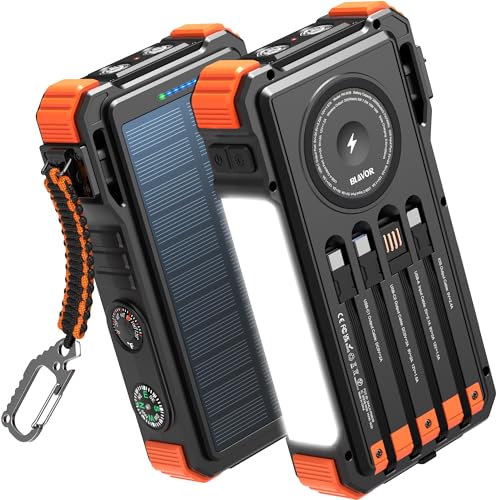
Simultaneously Charge 6 Devices: The BLAVOR solar charger is your ultimate charging solution! With its 4 built-in cables (including 2 USB-C, 1 iOS, and 1 USB-A) and 3 charging ports (USB-C, USB-A, and iOS), you can power up to 6 devices all at once. It even has a special wireless charging area for your phones and Apple Watch, making it a true multitasking marvel

【Powerful 600w Output For Daily Essentials】Delivering 600W continuous power (1200W surge) with 288Wh capacity, this portable power station reliably runs essential devices like a 60W car refrigerator for 4–5 hours, a CPAP machine for up to 6 hours, or multiple phones and laptops simultaneously—ideal for camping, RV trips, and short-term home backup during outages.
Energy Independence
Solar batteries empower you to rely less on the grid. When blackouts occur, you access stored energy from your solar system. This energy independence decreases vulnerability to utility outages. For example, if a storm knocks out the power for several hours, your solar batteries can keep essential devices running, such as refrigerators and medical equipment. You can keep your home comfortable and functional without external electricity sources.
Environmental Impact
Using solar batteries during blackouts also supports environmental sustainability. By storing clean energy generated from solar panels, you reduce reliance on fossil fuels. This action lowers carbon emissions, which is beneficial for the planet. Moreover, solar batteries contribute to a greener energy cycle, promoting renewable energy usage even when the grid is down. You play a part in creating a cleaner environment and supporting local solar initiatives.
Limitations of Solar Batteries in Blackouts
Solar batteries provide an essential backup during blackouts, but they come with limitations that homeowners should understand.
Cost Considerations
High upfront costs can deter many from installing solar battery systems. A typical lithium-ion battery system ranges from $7,000 to $15,000, depending on capacity and installation. Though these systems may reduce your electricity bills over time, the initial investment can be significant. Additionally, maintenance and replacement costs can add up, especially if the battery may need replacing after 5 to 15 years, depending on the type and usage.
Energy Storage Capacity
Not all solar batteries provide the same energy storage capacity. Most batteries store between 5 to 15 kilowatt-hours (kWh) of power, which may not suffice for long outages or larger homes. For example, if your essential appliances require 2 kWh each day, a 10 kWh battery could support your needs for about five days, assuming no additional solar generation during the blackout. Evaluating your daily consumption and selecting a battery with adequate capacity is crucial for ensuring you can maintain power when needed.
Conclusion
Solar batteries can be a game changer during blackouts. They not only keep your essential devices running but also give you peace of mind knowing you’re less dependent on the grid. By storing energy from your solar panels, these batteries ensure you have power when you need it most.
Choosing the right battery system is key. Consider your energy needs and how long you want to stay powered during an outage. With the right setup, you can enjoy the benefits of energy independence while contributing to a greener future. So take the time to evaluate your options and make an informed choice that fits your lifestyle.
Frequently Asked Questions
How do solar batteries work during blackouts?
Solar batteries store excess energy generated by solar panels during sunny periods. When the grid goes down, these batteries discharge the stored energy, providing power for essential appliances and devices in your home.
What types of solar batteries are best for blackouts?
The best types of solar batteries for blackouts include lithium-ion, lead-acid, saltwater, and flow batteries. Lithium-ion batteries are the most popular due to their efficiency, longevity, and ability to handle deeper discharges.
Are solar batteries expensive to install?
Yes, solar battery installation can be costly, with prices ranging from $7,000 to $15,000. While the upfront investment is significant, many homeowners find long-term savings and energy independence worthwhile.
Do I need a specific solar system for batteries?
Yes, to effectively use solar batteries during blackouts, you need a grid-tied solar system equipped with a backup battery setup. This allows for seamless energy transition during outages.
Can solar batteries reduce my reliance on the grid?
Absolutely! Solar batteries enhance energy independence by storing clean energy generated from solar panels. This allows homeowners to depend less on the grid, especially during outages.
How can I ensure my batteries meet my energy needs?
When selecting a solar battery, evaluate your daily energy consumption and choose a battery with adequate storage capacity. This ensures you have enough power to maintain essential functions during extended blackouts.
What are the environmental benefits of using solar batteries?
Using solar batteries contributes to a greener energy cycle by reducing reliance on fossil fuels and lowering carbon emissions. They help store clean energy, promoting sustainability and environmental responsibility.
