

Have you ever found yourself stranded on the water with a dead marine battery? It’s a frustrating situation that can ruin your day on the boat. Luckily, there’s a simple and eco-friendly solution: charging your marine battery with a solar panel.
Using solar power not only keeps your battery topped off but also saves you from the hassle of finding a power source. In this article, you’ll learn how to set up a solar charging system that’s efficient and easy to use. Get ready to enjoy worry-free adventures on the water, knowing you can harness the sun’s energy to keep your boat running smoothly.
Key Takeaways
- Types of Marine Batteries: Understand the different types—Starting, Deep Cycle, and Dual Purpose—to choose the optimal battery for your boating needs.
- Proper Charging Practices: Avoid overcharging and undercharging to maintain battery health. Use solar panels for controlled and steady charging.
- Solar Panel Selection: Choose the right solar panel based on efficiency, cost, and available space on your boat. Monocrystalline panels are ideal for limited space; polycrystalline are budget-friendly.
- Set-Up Steps: Follow a structured setup process involving collecting materials, securely installing the solar panel, connecting the charge controller, and ensuring tight connections to the marine battery.
- Safety Precautions: Always use quality equipment, ensure proper ventilation, wear protective gear, and regularly inspect connections to minimize hazards during charging.
- Maintenance Practices: Keep your solar charging system in top condition by conducting regular inspections, cleaning panels, and troubleshooting common issues to prevent performance drops.
Understanding Marine Batteries
Marine batteries are crucial for powering your boat’s electrical systems. Knowing the types and their charging needs helps you maintain optimal performance.
Recommended Products

【High Conversion Rate】This 20W solar panel with monocrystalline A+ solar cell has an excellent cell efficiency of 21%-30%. Designed to charge and maintain 12V rechargeable batteries like LiFePO₄, Lithium Ion, AGM, SLA, GEL, EFB, MF, etc. Keep batteries in charged for trailer, tractor, truck, boat, motorcycle, RV, car, lawn mower, water pump, gate opener, electric fence, etc
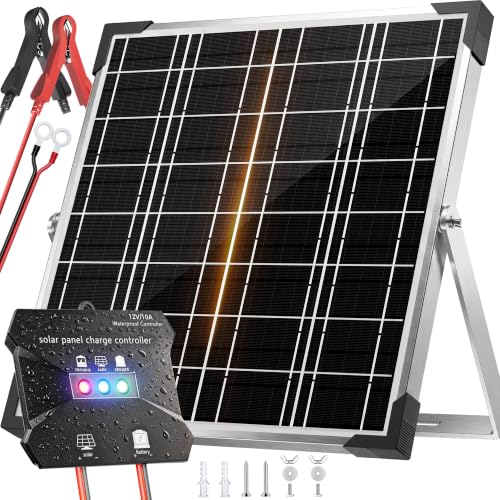
High-Efficiency MPPT Solar Charger - Advanced tracking technology delivers 20-30% faster charging for 12V batteries. A+ monocrystalline panels maximize power conversion. Perfect 20W solar trickle charger for cars, RVs, boats, and trailers. More sun captured, less time waiting.
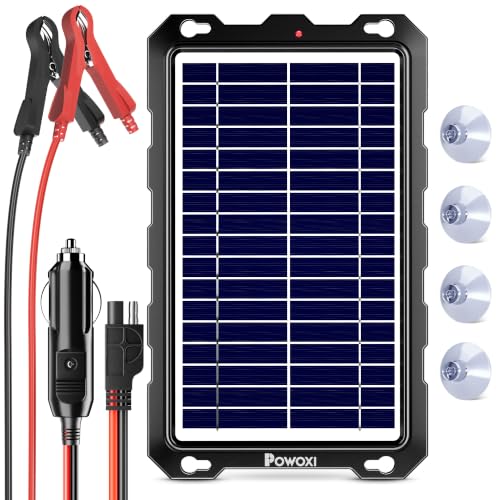
Upgrade Intelligent Charge Controller: Built-in internal protection system and smart fast charging Cooperate with Quality solar silicon material ensures high conversion and stable output the solar panel's energy conversion efficiency to 25-30%
Types of Marine Batteries
- Starting Batteries: These batteries provide a quick burst of power to start your engine. They discharge rapidly and recharge quickly, suitable for short usage.
- Deep Cycle Batteries: These batteries offer a steady amount of power over a longer period. They withstand repeated draining and recharging, making them ideal for running electronics.
- Dual Purpose Batteries: These batteries combine features of both starting and deep cycle batteries. They supply enough power for starting an engine and can handle deep cycling for devices.
Understanding these differences helps you choose the right battery type for your specific needs.
Importance of Proper Charging
Proper charging ensures your battery’s longevity and performance. Overcharging or undercharging can damage the battery and reduce its life span.
- Avoid Overcharging: Overcharging leads to excessive heat and gas, potentially causing battery failure.
- Prevent Undercharging: Undercharging may result in sulfation, which diminishes capacity and efficiency.
Using solar panels provides a controlled charging environment. They enable consistent power delivery, helping maintain battery health while you’re out on the water.
Solar Panel Basics
Understanding solar panels is essential for charging your marine battery efficiently. They convert sunlight into electricity, providing a renewable energy source while you enjoy your time on the water.
Recommended Products
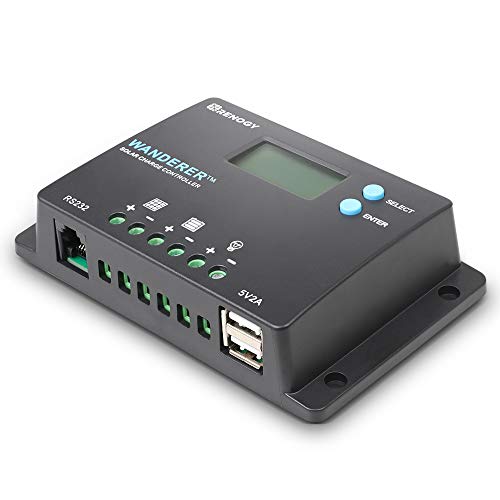
𝐒𝐦𝐚𝐫𝐭 𝟒-𝐒𝐭𝐚𝐠𝐞 12V/24V Solar Charge Controller: Renogy charge controller 𝐦𝐚𝐱𝐢𝐦𝐢𝐳𝐞𝐬 𝐁𝐚𝐭𝐭𝐞𝐫𝐲 𝐋𝐢𝐟𝐞 & 𝐒𝐨𝐥𝐚𝐫 𝐄𝐟𝐟𝐢𝐜𝐢𝐞𝐧𝐜𝐲, this advanced pwm solar charge controller utilizes intelligent 4-stage charging (Bulk/Boost/ Float/Equalization) to optimize power delivery for AGM, Gel, Flooded and Lithium batteries. RV solar charge controller prevents overcharging and gas buildup while 𝐚𝐜𝐡𝐢𝐞𝐯𝐢𝐧𝐠 𝟑𝟎% 𝐥𝐨𝐧𝐠𝐞𝐫 𝐛𝐚𝐭𝐭𝐞𝐫𝐲 𝐥𝐢𝐟𝐞𝐬𝐩𝐚𝐧 compared to basic charge controllers.
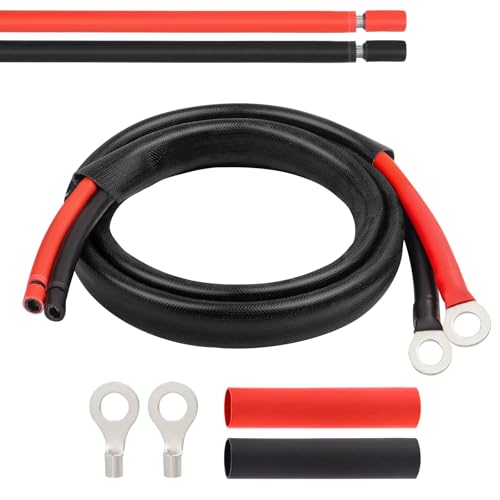
10AWG Tinned Copper Wire -- MOOKEERF solar battery cable is made of larger diameter 10AWG tinned copper wire which is minimize power loss in solar panel systems, the inner conductor consists of 84 tin-plated copper, well constructed and good conductive.

Superior Solar Efficiency: Our 10W solar panel offers a robust solution for outdoor power needs, providing higher conversion efficiency compared to similar-sized polycrystalline and amorphous panels. Ideal for maintaining a 12V battery in prime condition
Types of Solar Panels
- Monocrystalline Solar Panels
These panels are made from a single crystal structure. They offer high efficiency and take up less space, making them ideal for boats with limited surface area. - Polycrystalline Solar Panels
Made from multiple crystal structures, polycrystalline panels are generally less expensive but slightly less efficient. They work well if you have more available space. - Thin-Film Solar Panels
These lightweight panels use a variety of materials. While they have lower efficiency, they’re flexible and can be installed in various locations on the boat.
How Solar Panels Work
Solar panels function by absorbing sunlight, which excites electrons in the solar cells. This movement generates direct current (DC) electricity. Here’s how the process unfolds:
- Sunlight Absorption
Sunlight hits the solar panel’s surface, energizing electrons. - Electricity Generation
The energized electrons create a flow of electricity. In standalone systems, this DC electricity goes directly to the battery. - Charge Controller Regulation
A charge controller prevents overcharging. It regulates the voltage and current flowing into the marine battery. - Battery Storage
The battery stores the generated electricity for later use, ensuring you have power when needed.
When you understand these basics, setting up your solar charging system becomes more straightforward, allowing for worry-free boating experiences.
How to Charge a Marine Battery with a Solar Panel
Charging a marine battery with a solar panel makes use of renewable energy, ensuring you stay powered while boating. Follow the steps below for optimal results.
Recommended Products

【Start Every Trip Ready】 Built for 12V solar panels up to 10A and compatible with 12V LiFePO4, AGM, and GEL batteries, this solar charge controller helps keep your battery supported while your vehicle sits. When the road, water, or trail is calling, spend less time worrying about a dead battery and more time getting on your way.

[POWER EFFICIENCY & MPPT TECHNOLOGY] This 400W solar charge controller delivers 90-97% conversion efficiency with true boost capability, handling input voltages from 7-80V and outputting 1.4-79V. Ideal for off-grid solar systems requiring maximum power point tracking.
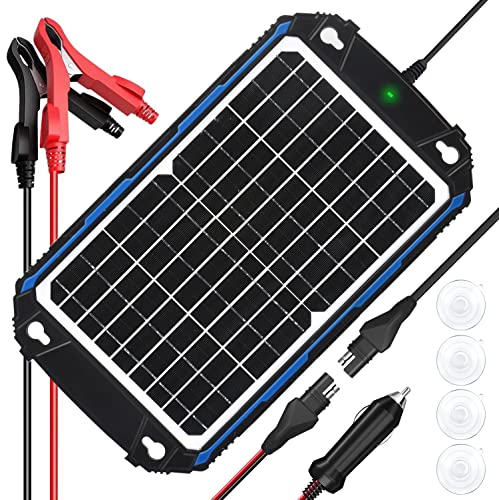
【Ultra-Smart MPPT Technology】This 12v solar panel battery charger is crafted with SUNER POWER's unique Ultra-Smart MPPT( Max Power Point Tracking) technology, the innovative MPPT allows to deliver high tracking efficiency of up to 99% and peak conversion efficiency of 98%, improving approximately 20%-30% utilization rate than other competitors
Choosing the Right Solar Panel
Selecting the right solar panel depends on your specific needs. Consider these factors:
- Efficiency: Monocrystalline panels offer high efficiency and perform better in low light. For example, a 100-watt monocrystalline panel may produce around 400 watt-hours per day under optimal conditions.
- Cost: Polycrystalline panels are generally more budget-friendly but slightly less efficient. You might find a 100-watt polycrystalline panel at a lower price, suitable for small applications.
- Size and Weight: If space is limited, consider lightweight thin-film panels. They’re flexible, making them easy to mount, but keep their lower efficiency in mind.
Assess your battery’s power requirements to choose a panel that meets your needs. Note the wattage of your marine battery and calculate the necessary solar output.
Setting Up the Solar Charging System
Establishing a solar charging system requires careful setup. Follow these steps:
- Gather Materials: You’ll need a solar panel, a charge controller, battery cables, and a marine battery. Ensure all components are compatible.
- Install the Solar Panel: Mount the solar panel on a stable surface with direct sunlight exposure. Use brackets or adhesive mounts for secure installation.
- Connect the Charge Controller: Connect the solar panel’s output to the charge controller. The charge controller regulates the voltage and prevents overcharging.
- Connect to the Marine Battery: Use battery cables to connect the charge controller to the marine battery. Ensure the connections are tight and secure to avoid power loss.
- Monitor the System: Keep an eye on the charge controller’s display. It shows the battery’s state of charge. Adjust the system as needed based on the output and performance.
Follow these practical steps to ensure a successful charging setup, keeping your marine battery powered and ready for your adventures on the water.
Safety Considerations
Safety plays a crucial role when charging a marine battery with a solar panel. Being aware of potential risks and taking precautions can ensure a smooth charging experience while minimizing hazards.
Precautions to Take
- Select Quality Equipment: Use high-quality solar panels, charge controllers, and connectors. Ensure that they are marine-grade to withstand the harsh marine environment.
- Ventilation: Position the battery in a well-ventilated area. This prevents gas buildup during charging, especially with lead-acid batteries, which can emit explosive gases.
- Wear Protective Gear: Use gloves and goggles when handling batteries. This protects you from acid spills and accidental shocks.
- Check Connections: Regularly inspect all connections for corrosion or wear. Tighten loose connectors to minimize the risk of sparks or shorts.
- Monitor Temperature: Avoid charging a battery in extreme temperatures. Overheating can damage the battery and increase risk.
- Ignoring Battery Type: Using the wrong charger for your specific battery type can lead to overcharging or undercharging. Make sure the solar panel is compatible with your marine battery.
- Overloading the System: Connecting too many devices to the battery can drain its power and lead to failures. Keep an eye on the total load and ensure it stays within limits.
- Neglecting Maintenance: Failing to clean the solar panels and check battery health reduces efficiency. Regular maintenance ensures optimal performance and longevity.
- Poor Solar Panel Placement: Placing solar panels in shaded areas limits charging capability. Always install them where they receive direct sunlight for the majority of the day.
- Rushing Installation: Taking shortcuts during setup can lead to improper connections. Follow all instructions meticulously to avoid hazardous situations.
Maintenance Tips for Solar Charging
Maintaining your solar charging system ensures optimal performance and extends the lifespan of your marine battery. Follow these tips for effective maintenance.
Regular Inspection and Cleaning
Regularly inspect your solar panel and components. Look for dirt, debris, or salt buildup on the solar panels, as these can reduce efficiency. Use a soft cloth or sponge with water to gently clean the panel surfaces.
Check all connections for corrosion or wear. Tighten loose connections to prevent power loss. Inspect the wiring for signs of damage, and replace any frayed or exposed wiring immediately.
Troubleshooting Common Issues
Troubleshoot common charging issues to maintain a reliable power supply. If your battery isn’t charging, first check the solar panel’s orientation. Ensure it’s facing the sun without any obstructions. If the panel appears clean and well-placed, test the charge controller for functionality.
Monitor the battery’s voltage. A voltage reading below 12.4 volts indicates the battery may not be adequately charged. If charging problems persist, inspect the solar panel output with a multimeter to verify it’s generating power.
Keep track of performance regularly. Document any changes in battery performance or charging times. Identifying patterns helps address potential issues before they escalate.
Conclusion
Charging your marine battery with a solar panel opens up a world of convenience and sustainability. You can enjoy worry-free boating knowing your battery is being topped up by the sun. By understanding your battery type and choosing the right solar panel, you’re setting yourself up for success on the water.
Remember to keep an eye on your system’s performance and follow safety tips to ensure everything runs smoothly. Regular maintenance and monitoring will help extend your battery’s life and keep your adventures powered up. Embrace the power of solar energy and make your time on the water even more enjoyable. Happy boating!
Frequently Asked Questions
What should I do if my marine battery is dead while on the water?
If your marine battery is dead, consider using a solar panel to recharge it. Solar panels provide an eco-friendly and convenient way to keep your battery charged without needing an external power source. They can help ensure you remain powered while enjoying your time on the water.
What types of marine batteries are there?
There are three main types of marine batteries: starting batteries, deep cycle batteries, and dual purpose batteries. Starting batteries give a quick power burst for starting engines, deep cycle batteries offer steady power for extended periods, and dual purpose batteries combine features of both. Understanding these types is crucial for efficient boating.
How does a solar panel charge a marine battery?
A solar panel converts sunlight into electricity, which is then stored in a marine battery. The process involves sunlight absorption, electricity generation, regulation through a charge controller, and finally, battery storage. This setup provides a renewable energy source for continuous battery charging while on the water.
What should I consider when choosing a solar panel for my marine battery?
When selecting a solar panel, consider efficiency, cost, size, and weight. Assess your battery’s power requirements and ensure the panel can meet them. Choosing the right solar panel is essential for optimal charging performance and to maximize your boating experience.
What safety precautions should I take when charging a marine battery?
Ensure you use quality, marine-grade equipment and provide proper ventilation while charging to prevent gas buildup. Wear protective gear, regularly inspect connections, monitor temperature, and avoid incompatible chargers. These precautions will help maintain safety during the charging process.
How can I maintain my solar charging system?
Regularly inspect and clean your solar panels to remove dirt and debris for optimal efficiency. Check connections for corrosion and monitor battery voltage. Document performance changes to identify potential issues early, ensuring reliable power supply for your boating adventures.
Can solar panels charge batteries in low light conditions?
Yes, solar panels can still generate electricity in low light conditions, but their efficiency will decrease. In such situations, it may take longer to charge the battery. However, positioning the solar panel for maximum sun exposure can help maintain charging performance even on cloudy days.
