

Have you ever wondered if you can use an 18V solar panel to charge a 12V battery? It’s a common question for anyone looking to harness solar power for their devices. You might have a solar panel lying around and a 12V battery that needs charging, but can they work together effectively?
Understanding the relationship between voltage and battery charging is crucial. This article will guide you through the essentials of using an 18V solar panel with a 12V battery, helping you maximize your solar setup. By the end, you’ll know how to make the most of your equipment and ensure your battery stays charged without any hassle.
Key Takeaways
- Compatibility: An 18V solar panel can effectively charge a 12V battery, provided the setup includes the right components such as a charge controller.
- Voltage Requirements: The solar panel’s output needs to be slightly higher than the battery’s nominal voltage (usually 13V to 14V) for effective charging.
- Charge Controllers: Utilize a charge controller (PWM or MPPT) to regulate voltage and prevent overcharging, which can damage the battery.
- Connection Setup: Properly connect the solar panel to the charge controller, then to the battery, making sure to follow correct polarity to avoid damage.
- Routine Maintenance: Regularly check connections and clean the solar panel and battery terminals to ensure optimal charging efficiency.
- Battery Type: Different battery types (lead-acid vs. lithium) may require specific charge controllers; always verify compatibility to prolong battery lifespan.
Overview of Solar Panel Charging
Charging a 12V battery with an 18V solar panel involves understanding how solar panels and batteries work together. Solar panels produce voltage based on sunlight exposure. An 18V panel generates a higher voltage than needed for a 12V battery but can effectively charge it.
Voltage Considerations
- Voltage Differences: An 18V panel produces voltage that can exceed the battery’s needs. Voltage needs to be one to two volts higher than the battery’s nominal voltage for effective charging.
- Overcharging Risk: Charging without proper regulation can lead to overcharging. A charge controller helps prevent this by regulating the voltage output.
Charge Controllers
- Purpose: Charge controllers protect batteries from overcharging and deep discharging.
- Types: There are several types of controllers available. PWM (Pulse Width Modulation) controllers maintain a steady charge, while MPPT (Maximum Power Point Tracking) controllers optimize power output for varying sunlight conditions.
Connection Setup
- Panel Placement: Place the solar panel in a sunny location, directing it towards the sun.
- Connect the Charge Controller: Connect the solar panel to the charge controller using appropriate cables.
- Connect the Battery: Attach the charge controller to the 12V battery. Make sure to follow correct polarity to avoid damage.
Real-World Example
For instance, if you use a 100W 18V solar panel, this setup provides enough power to charge a standard 12V lead-acid battery. In full sunlight, the panel could deliver around 5.56A, which is sufficient for charging a 100Ah battery in approximately 18 hours.
- Regular Checks: Inspect connections and clean the solar panel regularly to maintain efficiency.
- Battery Maintenance: Keep your battery terminals clean and check fluid levels if you use flooded lead-acid batteries.
Following these guidelines ensures successful charging of your 12V battery using an 18V solar panel, optimizing your solar power setup.
Understanding Voltage Compatibility
Understanding the relationship between the voltage of your solar panel and battery is key for effective charging. An 18V solar panel can charge a 12V battery, given the right conditions and equipment.
Recommended Products
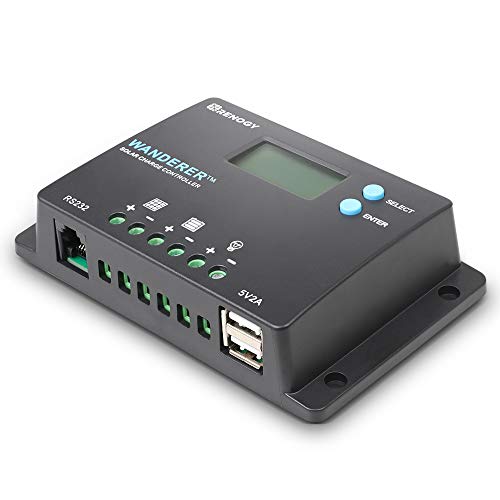
𝐒𝐦𝐚𝐫𝐭 𝟒-𝐒𝐭𝐚𝐠𝐞 12V/24V Solar Charge Controller: Renogy charge controller 𝐦𝐚𝐱𝐢𝐦𝐢𝐳𝐞𝐬 𝐁𝐚𝐭𝐭𝐞𝐫𝐲 𝐋𝐢𝐟𝐞 & 𝐒𝐨𝐥𝐚𝐫 𝐄𝐟𝐟𝐢𝐜𝐢𝐞𝐧𝐜𝐲, this advanced pwm solar charge controller utilizes intelligent 4-stage charging (Bulk/Boost/ Float/Equalization) to optimize power delivery for AGM, Gel, Flooded and Lithium batteries. RV solar charge controller prevents overcharging and gas buildup while 𝐚𝐜𝐡𝐢𝐞𝐯𝐢𝐧𝐠 𝟑𝟎% 𝐥𝐨𝐧𝐠𝐞𝐫 𝐛𝐚𝐭𝐭𝐞𝐫𝐲 𝐥𝐢𝐟𝐞𝐬𝐩𝐚𝐧 compared to basic charge controllers.

【High Conversion Rate】This 20W solar panel with monocrystalline A+ solar cell has an excellent cell efficiency of 21%-30%. Designed to charge and maintain 12V rechargeable batteries like LiFePO₄, Lithium Ion, AGM, SLA, GEL, EFB, MF, etc. Keep batteries in charged for trailer, tractor, truck, boat, motorcycle, RV, car, lawn mower, water pump, gate opener, electric fence, etc

✔️【Waterproof Solar Charge Controller】IP67 waterproof, suitable for outdoor use. Automatically identify voltage, 12V Max power: 150W, 24V Max power: 300W. The maximum current is 10A. Compatible with various 12V/24V deep-cycle batteries, such as AGM, GEL, Flooded. Adopting brand MCU chips to realize fast intelligent control and ultra-low standby power consumption.
The Importance of Voltage in Charging
Voltage plays a crucial role in the charging process. A solar panel must provide a voltage slightly higher than the battery’s nominal voltage to initiate charging. For a 12V battery, this typically means a minimum of 13V to 14V. The 18V output from the solar panel ensures enough voltage to push energy into the battery effectively. Without this higher voltage, the battery may not charge at all, or it might charge very slowly.
Difference Between 12V and 18V Systems
The difference between 12V and 18V systems boils down to their voltage ratings and applications. A 12V system is commonly used in automotive batteries, RVs, and off-grid solar setups. An 18V system, often seen in small solar panels, is designed for higher efficiency in charging lower-voltage batteries.
When using an 18V panel with a 12V battery, you’ll likely need a charge controller. This device helps regulate the voltage and prevents overcharging, ensuring the battery receives the appropriate amount of energy without damage. For example, a PWM (Pulse Width Modulation) controller adjusts the voltage output for optimal charging, while an MPPT (Maximum Power Point Tracking) controller maximizes the energy harvested from the solar panel.
By understanding the voltage relationship and implementing correct equipment, you can effectively charge a 12V battery with an 18V solar panel.
How to Safely Charge a 12V Battery with an 18V Solar Panel
Charging a 12V battery with an 18V solar panel involves careful planning and the right equipment. Follow these guidelines to ensure a safe and efficient charging process.
Recommended Products

UPGRADED SOLAR CONTROLLER: With the built-in industrial microcontroller, this PWM solar charge controller automatically helps you manage the working of solar panels and batteries in solar systems. When the battery runs out, it will memorize various parameters you set, so you don't need to reset it, which is easy and safe

【Ultra-Smart MPPT Technology】This 12v solar panel battery charger is crafted with SUNER POWER's unique Ultra-Smart MPPT( Max Power Point Tracking) technology, the innovative MPPT allows to deliver high tracking efficiency of up to 99% and peak conversion efficiency of 98%, improving approximately 20%-30% utilization rate than other competitors
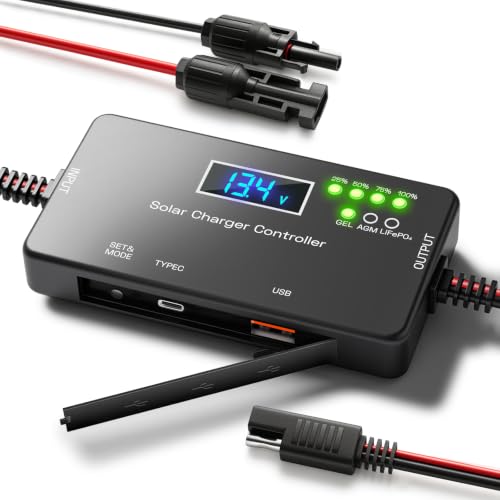
Works with All 12V Batteries: This solar charge controller is custom-made for 12V solar systems and is 100% compatible with Lithium (LiFePO4), AGM, and Gel batteries. It features a smart charging program that easily handles solar panels up to 300W, making sure your battery gets fully charged quickly and safely without any damage. (NOT for 24V/36V batteries)
Required Equipment
- 18V Solar Panel: Select a panel that provides sufficient wattage for your needs.
- Charge Controller: Use a PWM or MPPT charge controller to regulate the voltage and prevent overcharging.
- 12V Battery: Choose a compatible lead-acid or lithium-ion battery for your system.
- Cables: Use appropriate gauge wires for connections to minimize voltage drop.
- Multimeter: Keep a multimeter handy to check voltage levels while charging.
- Position the Solar Panel: Place the solar panel in direct sunlight to maximize energy absorption.
- Connect the Charge Controller: Wire the solar panel’s output to the charge controller’s input, observing correct polarity (positive to positive, negative to negative).
- Attach the Battery: Connect the charge controller’s output to the battery terminals, maintaining proper polarity.
- Monitor the Voltage: Use the multimeter to check the battery’s voltage during the charging process. Ensure it remains within safe levels (typically 12.6V to 14.4V).
- Check the Charge Controller: Review the charge controller’s indicators for charging status and safety alerts.
- Routine Maintenance: Regularly inspect connections and the battery condition. Clean terminals to prevent corrosion.
Following these steps allows you to charge a 12V battery safely and efficiently using an 18V solar panel.
Potential Risks and Considerations
Charging a 12V battery with an 18V solar panel presents some risks and considerations. Understanding these elements helps ensure efficient and safe operation.
Recommended Products

【Precise Compatibility + Upgraded 20A PWM Charging】 As the "core manager" of 12V solar systems, this controller is exclusively engineered for 12V batteries (NOT compatible with 24V/36V packs) and works seamlessly with all solar panels below 300W. Equipped with upgraded 20A PWM technology, it delivers double the current output compared to common 10A controllers, enabling faster and more stable battery charging. Please note: no polarity converter is included—please ensure correct positive/negative connection to avoid equipment damage.

[100% Waterproof] The solar charge controller is built to last in any weather. It has a waterproof seal that keeps it safe from rain, snow, and dust. It’s perfect for outdoor use.
![[Upgraded] 30A PWM Solar Charge Controller with Auto Parameter LCD Display](https://m.media-amazon.com/images/I/41opvkWthjL._SL500_.jpg)
【UPGRADED SOLAR CONTROLLER】This solar charge controller helps you manage the working of solar panels and batteries in solar systems automatically with the build-in industrial microcontroller. You don't need to reset it when the battery runs out cause it will memorize various parameters set by the user
Overcharging Risks
Overcharging occurs when the voltage supplied exceeds the battery’s capacity to accept charge. It results in battery damage and reduced lifespan. If an 18V solar panel connects directly to a 12V battery without a charge controller, the battery may overcharge. This situation can lead to overheating, swelling, or even leakage. Using a charge controller mitigates this risk as it regulates the voltage and current reaching the battery, maintaining safe charging levels. Always check the specifications of your charge controller to confirm compatibility with both the solar panel and the battery.
Battery Type Considerations
Different battery types react differently to charging methods. Lead-acid batteries often tolerate overvoltage better than lithium batteries. If you’re using lead-acid batteries, opt for a charge controller suitable for absorbed glass mat (AGM) or flooded cell types. For lithium batteries, a dedicated lithium charge controller is necessary to prevent damage due to excessive voltage. Always verify the battery type before charging. Knowing the specific requirements helps you select the right equipment and extends the lifespan of your energy storage system.
Conclusion
Using an 18V solar panel to charge a 12V battery can be a great way to harness solar energy. With the right setup and equipment like a charge controller you can ensure your battery charges efficiently and safely.
Just remember to keep an eye on the connections and battery health. Regular maintenance will help you get the most out of your solar system. By following the guidelines shared you can enjoy the benefits of solar power while keeping your battery in top shape. Happy solar charging!
Frequently Asked Questions
Can an 18V solar panel charge a 12V battery?
Yes, an 18V solar panel can effectively charge a 12V battery. The panel generates a higher voltage that is necessary for charging, usually between 13V to 14V, which is ideal for initiating the charging process.
What is a charge controller and why is it important?
A charge controller is a device that regulates the voltage and current coming from the solar panel to the battery. It prevents overcharging and deep discharging, protecting the battery and ensuring safe, efficient charging.
How do I connect an 18V solar panel to a 12V battery?
Connect the solar panel to a charge controller, then connect the charge controller to the 12V battery. Ensure the polarities match (positive to positive, negative to negative) to avoid any damage.
What types of charge controllers work best?
PWM (Pulse Width Modulation) and MPPT (Maximum Power Point Tracking) charge controllers are commonly used. MPPT controllers are more efficient and suitable for varying sunlight conditions, while PWM controllers are simpler and less expensive.
How long does it take to charge a 12V battery with an 18V solar panel?
Charging time varies based on the panel’s wattage and sunlight conditions. For example, a 100W 18V solar panel can charge a standard 12V lead-acid battery in approximately 18 hours under full sunlight.
What maintenance is required for solar charging systems?
Regular maintenance checks on connections, cables, and the battery are essential for ensuring efficient operation. Clean the solar panel surface and verify that the charge controller is functioning properly.
What are the risks of overcharging a 12V battery?
Overcharging can damage the battery, reducing its lifespan and potentially causing it to swell or leak. Using a charge controller minimizes these risks by regulating the charging process.
Can I use an 18V panel for lithium batteries?
Yes, but ensure you use a compatible charge controller specifically designed for lithium batteries. They have different charging requirements compared to lead-acid batteries, so appropriate regulation is crucial.
