


I have noticed that the way light falls into a ceiling niche often decides whether a room feels finished or still a bit bare once the furniture is in place.
Many homes end up with these recessed spots because they look neat on plans, yet they stay flat without some thought to how the light actually lands during evening hours.
Lighting choices matter more than they seem at first.
I tried a couple of understated recessed options in my own living room last year and found they gave the space a calmer feel without needing extra lamps or shelves.
Ideas that keep the glow soft and the lines clean tend to work better day after day, so those are the ones worth testing in real rooms.
Recessed Lighting in a Wall Niche

A recessed niche with hidden lighting gives a room a quiet focal point without adding shelves or extra pieces. The light stays tucked away, so the glow feels soft and the wall stays flat and calm. It works especially well when you want one object to stand out while everything else stays simple.
This idea suits living rooms or entry areas where you need a small accent but do not want visual clutter. Place it at eye level or slightly above, keep the niche depth shallow, and use a warm light source so the effect stays gentle rather than bright. Avoid filling the space with too many items.
Recessed Lighting in a Bedroom Ceiling Niche

One simple way to add recessed lighting is to run it inside a shallow ceiling niche right above the headboard. The light spreads evenly across the wall without adding any visible fixtures or clutter. It keeps the room feeling open while still giving a warm layer of light at night.
This approach works especially well in smaller bedrooms or spaces with lower ceilings where a bigger cove would feel heavy. Keep the niche depth just enough to hide the lights from view when you’re in bed. Pair it with a simple headboard so the light stays the main focus.
Recessed Lights Over Open Shelves
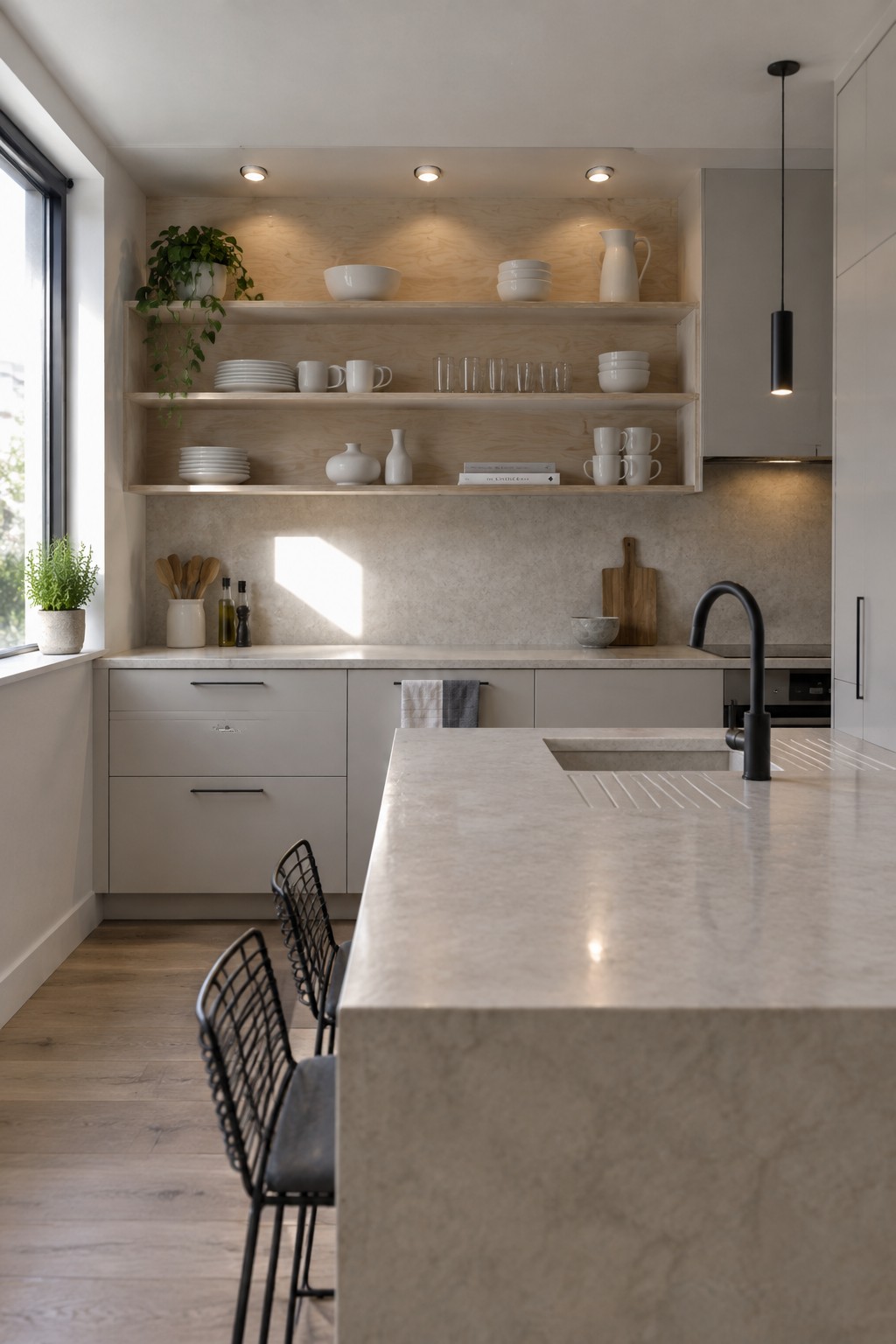
Recessed lights set into the ceiling above open shelving give a clean way to highlight what is on display without adding extra fixtures or clutter. The light stays tucked away, so the focus stays on the shelves and the items arranged there instead of on the lighting itself. This approach works especially well in kitchens or living areas where you want the space to feel calm and organized.
It suits homes that already use simple cabinetry and open storage, since the lighting keeps the look minimal rather than busy. Place the recesses close to the front edge of the shelf so the light reaches the items without creating harsh shadows behind them. Avoid spacing the lights too far apart or the effect can feel uneven.
Ceiling Niches With Integrated Accent Lighting

A curved ceiling detail with built-in lighting can give a bathroom a calm, even glow without needing lots of fixtures. It highlights the vanity area while keeping the overall look clean and simple. This approach feels especially useful in smaller spaces where overhead lights can feel too bright or direct.
It works best in minimalist bathrooms where you want soft task lighting near the mirror. Keep the niche shallow and the light source hidden so the effect stays subtle. Pair it with neutral tones and minimal hardware to avoid visual clutter.
Recessed Linear Lighting For Wall Art Niches
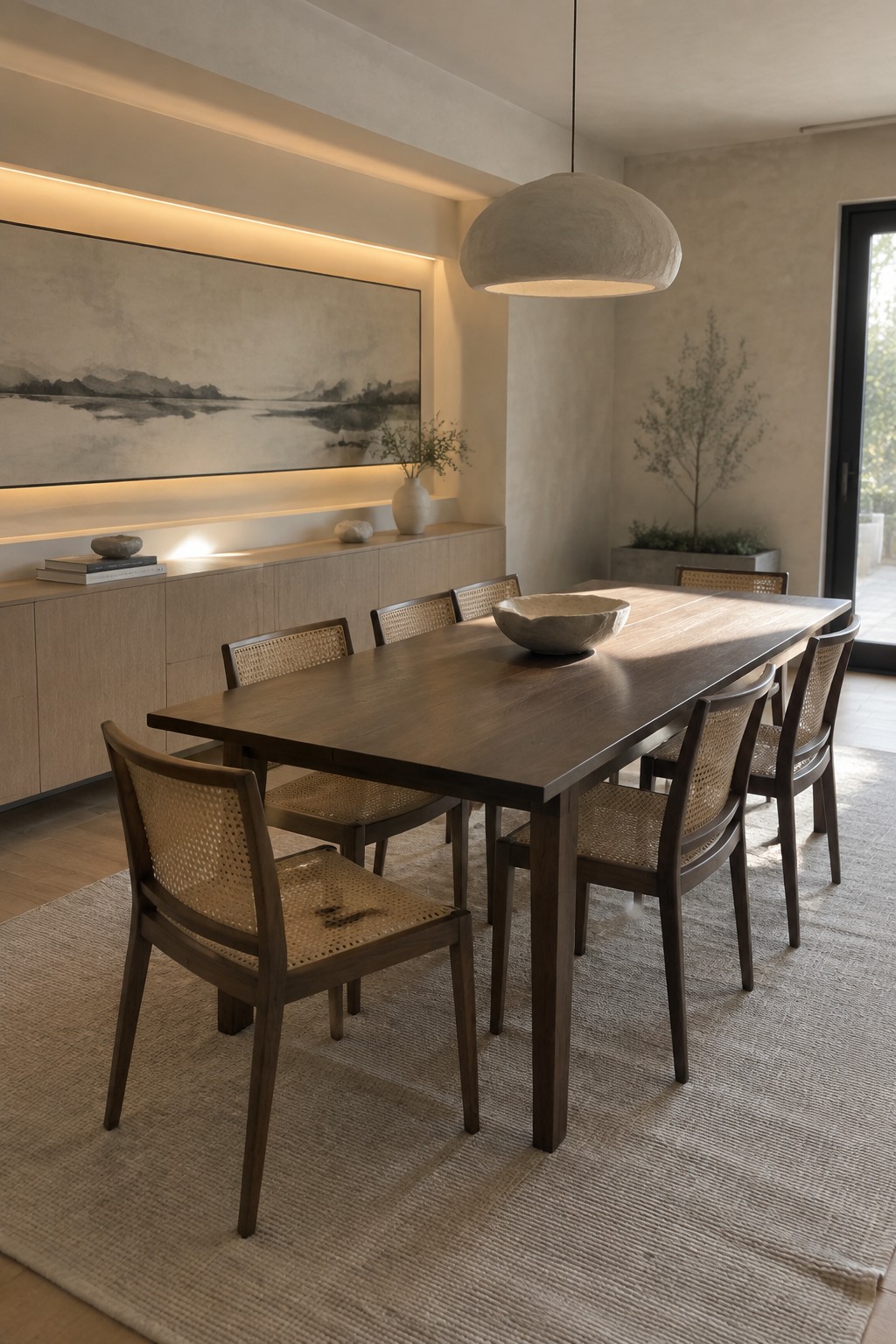
A shallow ceiling niche with a long recessed light strip gives artwork a quiet, even glow without any visible fixtures or clutter. This keeps the focus on the piece itself while adding a soft layer of warmth to the room.
It works best above a low console or sideboard in dining rooms and living spaces where you want a calm, minimalist feel. Keep the niche depth modest so the light spreads smoothly, and pair it with simple wall colors that let the glow do the work.
Recessed Accent Lighting In A Ceiling Niche

A single recessed light tucked into the top of a ceiling niche gives a soft wash of light across the wall without adding any visible hardware. This keeps the ceiling looking clean while still making the area below feel intentional and a little warmer.
It works especially well in entryways or hallways where you want a gentle highlight on a bench or textured wall. The light should sit far enough back in the niche so it does not glare, and it pairs best with matte or lightly textured surfaces rather than glossy ones.
Recessed Lighting In A Wall Niche
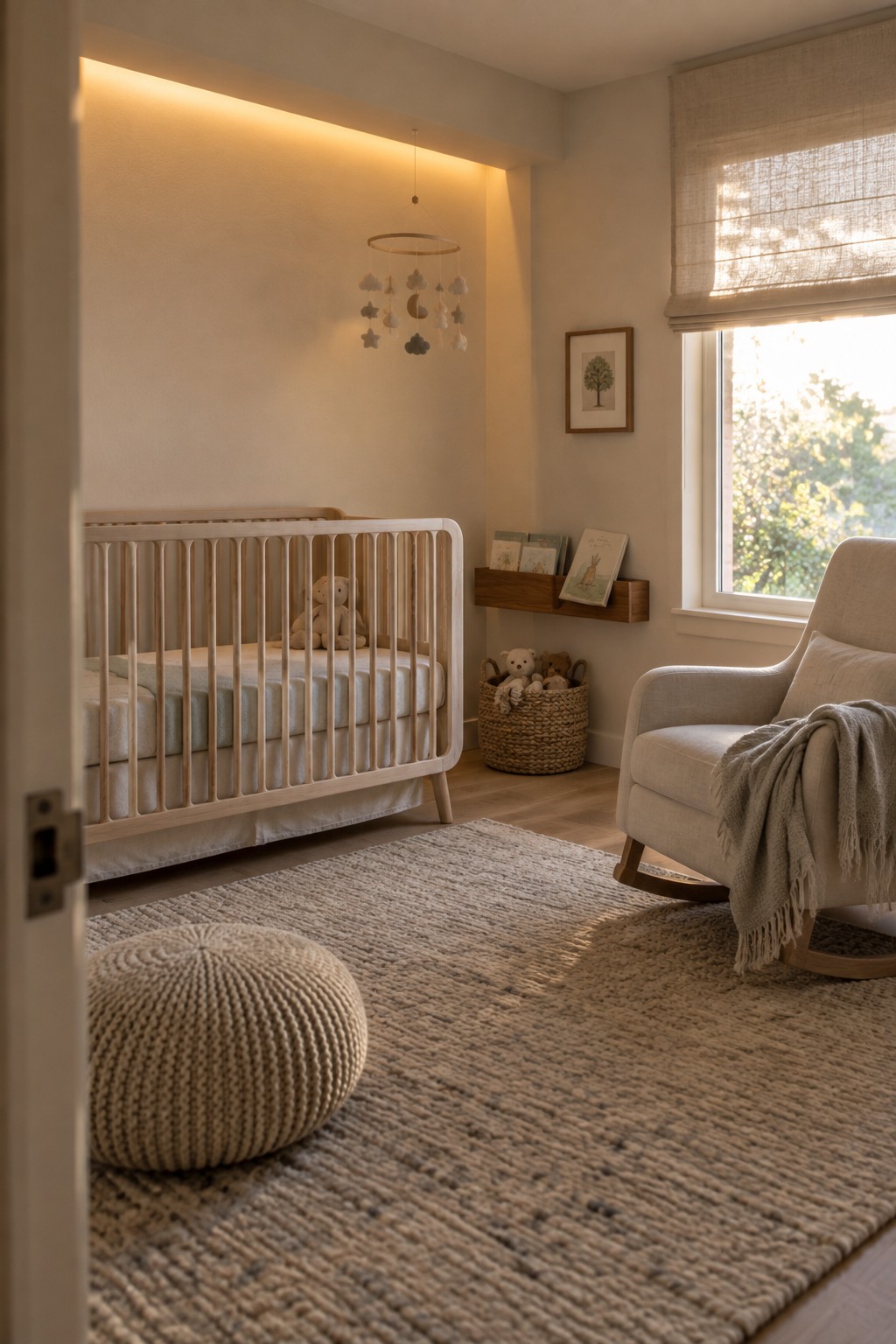
One simple way to add calm to a room is by tucking a light into a shallow ceiling niche. The glow stays soft and even, without any bright bulbs showing, which helps the space feel quieter and more settled at night.
This approach suits bedrooms or nurseries where you want low light for late hours. Keep the niche narrow and match the paint to the wall so the source stays out of sight and the effect stays clean.
Recessed Lighting in Built-In Shelves

Recessed lights tucked into the top of a built-in shelf give quiet, even light across whatever sits below. The effect feels calm because nothing sticks out. No lamps, no cords, just a soft glow that makes books and small objects easier to see without adding visual noise to the room.
This approach works best in offices or studies where you want the focus on the work surface rather than extra fixtures. It suits homes with simple built-ins and low ceilings, especially if you already have a long shelf running above a desk. Keep the shelf depth moderate so the light actually reaches what you want to highlight.
Recessed Linear Lights Over Open Shelves

Tucking a long recessed linear light into the ceiling niche above open shelves gives the whole area a clean wash of light without adding any visible fixtures. It keeps the focus on the storage itself and makes the space feel brighter and more usable even when the main lights are off.
This approach works best in utility rooms or laundry spaces where you already have built-in shelving and want simple, even illumination. It suits homes that favor minimal hardware and built-in details, and it avoids the clutter of hanging pendants or surface-mounted strips in tighter rooms.
Recessed Lighting in Hallway Ceilings

Recessed lighting set into a long ceiling channel works well in hallways because it keeps the space looking open while still giving enough light to show off the walls. The light stays out of sight, so nothing hangs down or breaks the clean line of the ceiling.
This approach suits homes with narrow corridors or simple trim work. It pairs best with light wall colors and a few pieces of art spaced evenly, rather than trying to light every surface at once.
Recessed Lighting In A Ceiling Niche

Recessed lights tucked into a ceiling niche give a clean way to highlight a feature wall without adding any visible fixtures or lamps. The light stays soft and focused, which works especially well when you want the wall itself to feel like the main element in the room.
This approach suits living rooms and bedrooms where you already have a built-in or a floating console along the wall. Keep the niche fairly shallow and use warm bulbs so the light feels gentle rather than harsh.
Recessed Linear Lights Above Built-In Storage

A continuous recessed linear light tucked into the top of a cabinet run gives soft, even light across open shelves without any visible fixtures or glare. It keeps the whole wall looking clean while making it easy to see what is stored there, especially in a space that gets used every day.
This approach works best in mudrooms or entry areas where you want storage to feel organized rather than cluttered. Run the light the full length of the cabinet and keep the finish the same as the ceiling so the niche almost disappears. It suits simple homes that already have built-ins and just need better lighting without adding more hardware.
Recessed Lights in Ceiling Niches for Built-In Shelves

Recessed lights tucked into ceiling niches give built-in shelving a clean, even glow without adding extra fixtures or clutter. This approach works especially well in spaces like closets where you want to see what is stored without relying on a single overhead light that can cast shadows across the shelves.
It suits minimalist homes that already use built-ins for storage and display. Keep the lights on a dimmer so the effect stays soft, and make sure the niche depth matches the shelf height so the light falls where you actually need it.
Recessed Lighting In A Bedroom Niche

One simple way to add a calm focal point in a bedroom is to build recessed lighting into a ceiling niche. The light sits hidden and casts a gentle wash over the wall, so the art feels softly lit without needing extra lamps or bright overhead fixtures.
This works best in minimalist rooms that already use neutral tones and clean lines. It suits smaller bedrooms especially, where you want the light to feel quiet and contained rather than filling the whole space.
Recessed Lighting Around Bathroom Mirrors

A recessed ceiling niche with integrated lighting can frame mirrors without adding any visible fixtures or clutter. The soft glow outlines the mirrors cleanly and keeps the whole area feeling open and simple. This approach works especially well when the vanity already has a floating look and you want the focus to stay on the mirrors themselves.
It suits smaller bathrooms or minimalist layouts where every surface needs to stay calm. Run the lighting on a dimmer so it can shift from bright morning light to a softer evening glow. Keep the niche depth shallow and the finish the same as the ceiling to avoid drawing attention to the detail.
Recessed Lighting in a Vanity Niche

Hiding a light source inside a recessed niche above the mirror keeps the look clean while still giving useful light for daily routines. The glow spreads evenly without bright spots or visible hardware, which helps the whole area feel calmer and less busy.
This setup suits small bathrooms or powder rooms where you want to avoid extra fixtures on the wall. Keep the niche depth shallow and match the finish to the surrounding wall so it stays subtle when the light is off.
Recessed Lighting In Shelving Niches

Recessed lights set into the ceiling work nicely over open shelves. They cast a steady glow across glassware and bottles without visible fixtures or cords, which keeps the whole area looking simple and uncluttered.
This setup works best in home bars or kitchen zones where the shelves sit against a wall with enough ceiling depth. It suits minimalist homes that already use concrete, wood, or similar materials, since the light stays low-key and does not compete with the surfaces.
Recessed Lighting in a Ceiling Niche

One simple way to make a built-in seat feel more finished is to tuck lighting into the ceiling niche right above it. The light stays hidden and spreads a soft glow across the wall and cushions without adding extra lamps or clutter.
This approach works best in small reading spots or guest rooms where you want calm evening light. It suits homes with low ceilings or tight corners because the source stays out of sight and the effect stays gentle.
Recessed Lights Over Built-In Plant Ledges

Many people tuck recessed lights into a ceiling niche when they want to show off a long plant ledge. The lights stay out of sight but still bring out the shape and color of the leaves without adding extra fixtures or clutter.
This approach works best in rooms that already get good daylight. It suits sunrooms, enclosed porches, or any space where you keep a lot of plants and want the area to feel calm and simple at night.
Frequently Asked Questions
Q: Will these recessed lights work if my ceiling is low?
A: Go with shallower fixtures that sit flush or just below the surface. This keeps the light from creating harsh shadows in tight spaces. Measure your niche depth first so nothing sticks out awkwardly.
Q: How often do I need to replace the bulbs in these setups?
A: LED options usually last years before any swap becomes necessary. Focus on ones with good heat sinking to avoid early burnout in enclosed niches.
Q: Can I use these ideas in a bathroom ceiling niche?
A: Moisture rated fixtures handle the humidity without issues. Pick ones with proper seals so they last longer in steamy conditions.
