

Are you looking to power your devices with solar energy but unsure what size panel you need to charge a 35Ah battery? You’re not alone. Many people want to harness the sun’s energy but often get confused by the numbers and technical details.
Choosing the right solar panel can make all the difference in how efficiently you charge your battery. This article will guide you through the essential factors to consider, helping you find the perfect solar panel size for your needs. By the end, you’ll feel confident in your choice and ready to enjoy the benefits of solar power.
Key Takeaways
- Understanding the capacity of a 35Ah battery is crucial for selecting the appropriate solar panel size, as it influences charging efficiency and energy storage.
- To effectively charge a 35Ah battery, a solar panel size in the range of 100 to 200 watts is recommended based on daily energy needs and usage scenarios.
- Key factors in choosing the right solar panel include daily energy usage, average sunlight hours, and panel efficiency, which collectively determine how much power your panel must produce.
- When calculating the required solar panel size, use the formula: Required Solar Panel Size (Watts) = Total Daily Energy (Wh) / Average Sunlight Hours (h) to ensure adequate energy capture.
- Selecting the right type of solar panel—monocrystalline, polycrystalline, or thin-film—affects performance and efficiency; each type has distinct advantages and suitability based on space and budget.
- To maximize solar panel efficiency, maintain a proper positioning and angle, keep panels clean, and regularly monitor for performance issues to ensure optimal energy production.
Understanding Battery Capacity
Understanding battery capacity is essential when selecting a solar panel for charging. A 35Ah (amp-hour) battery can store a specific amount of energy, influencing the size of the solar panel you’ll need.
What is a 35Ah Battery?
A 35Ah battery indicates its capacity to deliver 35 amps for one hour, or a proportionate amount for longer durations. For example, it can provide 1 amp for 35 hours or 2 amps for 17.5 hours. Knowing this helps determine how much energy can be stored and used for powering devices. Consider how you plan to use the battery. Devices with higher energy needs will require more frequent recharging.
Importance of Battery Capacity in Solar Charging
Battery capacity affects how efficiently a solar panel charges your battery. Higher capacity means you can store more energy, but it also means longer charging times. For a 35Ah battery, the solar panel size must produce enough energy to meet daily usage and account for inefficiencies.
Here’s a quick breakdown of how to calculate the necessary solar panel size:
- Daily Energy Use: Determine how much energy (in watt-hours) your devices consume each day.
- Panel Output: Know the solar panel’s wattage and average sunlight hours in your area. For example, a 100-watt panel receiving 5 hours of sunlight generates 500 watt-hours.
- Calculate Size: Divide daily energy use by the panel output to find the required panel size in watts.
By understanding battery capacity, you will make informed choices about solar panel size, ensuring efficient energy usage.
Solar Panel Basics
Understanding solar panels and their operation is essential for selecting the right size to charge your 35Ah battery. Knowing how solar panels function helps you make informed decisions about your energy needs.
How Solar Panels Work
Solar panels convert sunlight into electricity using photovoltaic cells. When sunlight hits these cells, it generates direct current (DC) electricity. This electricity flows from the panels to the battery, where it gets stored for later use. Solar inverters can convert this DC power to alternating current (AC) if needed. The efficiency of a solar panel depends on factors like sunlight availability, angle of installation, and temperature.
Key Factors in Choosing Solar Panels
Selecting the right solar panel requires considering several key factors:
- Daily Energy Needs: Assess your daily energy usage in watt-hours. For example, if your devices total 350 watt-hours daily, you’ll need a solar panel system capable of producing that much energy.
- Sunlight Hours: Evaluate your location’s average sunlight hours per day. If you receive 5 hours of full sun daily, you’ll need a panel that can generate enough wattage during that time.
- Panel Output: Look for panels with a suitable wattage output. For instance, a 100W panel generates approximately 500 watt-hours on a sunny day with enough sunlight hours.
- Battery Charging Rate: Consider the charging rate for your battery. A 35Ah battery typically needs approximately 420 watt-hours for a full charge. Plan for inefficiencies in the system, factoring in a higher energy capacity for your solar panel.
- System Losses: Account for energy losses in your calculations, due to factors such as wiring, inverter efficiency, and temperature fluctuations. A common estimate is a 20% reduction in effective output.
By determining these factors, you can confidently select the right solar panel size to effectively charge your 35Ah battery.
Calculating Required Solar Panel Size
Understanding how to calculate the needed solar panel size for charging a 35Ah battery is essential for effective solar energy use. This section highlights key factors and provides guidance on estimating your daily energy needs.
Recommended Products
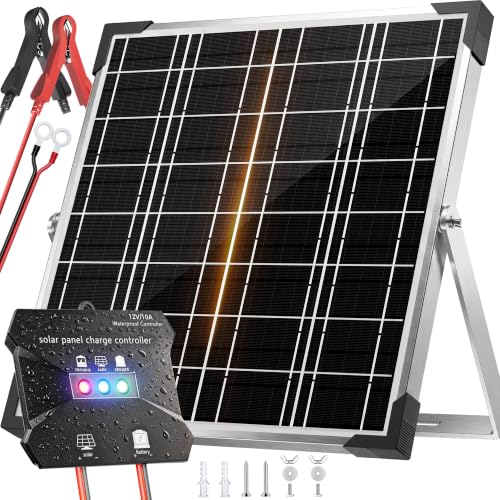
High-Efficiency MPPT Solar Charger - Advanced tracking technology delivers 20-30% faster charging for 12V batteries. A+ monocrystalline panels maximize power conversion. Perfect 20W solar trickle charger for cars, RVs, boats, and trailers. More sun captured, less time waiting.
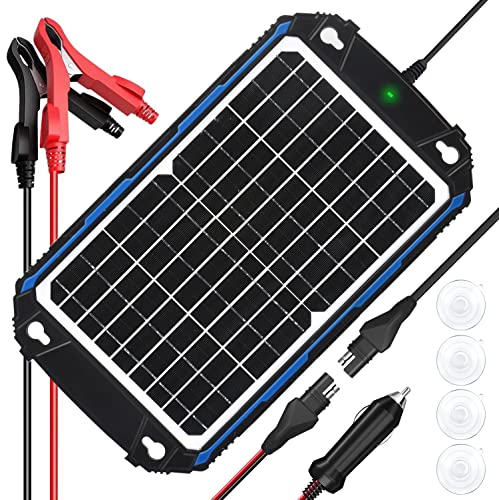
【Ultra-Smart MPPT Technology】This 12v solar panel battery charger is crafted with SUNER POWER's unique Ultra-Smart MPPT( Max Power Point Tracking) technology, the innovative MPPT allows to deliver high tracking efficiency of up to 99% and peak conversion efficiency of 98%, improving approximately 20%-30% utilization rate than other competitors

【High-Efficiency Monocrystalline Core 】 Precision-engineered with premium monocrystalline cells delivering 20%-25% photoelectric conversion efficiency (STC), outperforming polycrystalline and amorphous counterparts in energy yield under equivalent conditions.
Factors Influencing Solar Panel Size
- Battery Capacity: Your 35Ah battery stores a specific amount of energy. Larger batteries might require larger panels due to slower charge rates.
- Daily Energy Use: Devices consuming more energy require more power to charge the battery efficiently. Consider the total watt-hours consumed daily.
- Average Sunlight Hours: The amount of sunlight your location receives affects solar panel performance. More sunlight typically means better charging.
- Panel Efficiency: Different solar panels convert sunlight at varying efficiencies. Higher efficiency panels produce more energy in less space.
- System Losses: Account for energy losses in the system, including inverter inefficiencies and wiring losses. Plan for about 10-20% loss in energy system efficiency.
- Charge Rate: Determine how quickly you want to charge your battery. Faster charging might necessitate larger panels.
Estimating Daily Energy Needs
To estimate your daily energy needs, add up the wattage used by each device powered by the battery. Use the formula:
Total Daily Energy (Watt-hours) = Total Wattage × Hours Used Daily
For example, if a device uses 50 watts and runs for 4 hours, it consumes 200 watt-hours daily (50W × 4h = 200Wh).
Sum the energy requirements for all devices to find your total daily energy needs. Once you have this figure, use the average sunlight hours in your area to determine the necessary solar panel size with the formula:
Required Solar Panel Size (Watts) = Total Daily Energy (Wh) / Average Sunlight Hours (h)
This calculation provides a solid starting point for selecting the right size solar panel to charge your 35Ah battery effectively.
Recommended Solar Panel Sizes for a 35Ah Battery
Selecting the right solar panel size for charging a 35Ah battery involves understanding several key factors. Below are the primary considerations to help you determine the ideal wattage and types of solar panels to use.
Recommended Products

[Industry-Leading 25% Efficiency] 16BB N-Type cells deliver more power from the same sunlight, supporting RV trips, camping, blackout backup, and off-grid use in limited or cloudy conditions.

【TRAVEL LIGHT, POWER ANYWHERE】 Weighing only 9.7lb and folding to 20×27×1.1in, this 200W panel is slim, portable, and easy to carry or mount—perfect for RVs, vans, boats, trailers, or emergency backup power.

23.5% HIGH CONVERSION EFFICIENCY - Designed by 6-layer ETFE lamination technology and built-in monocrystalline silicon solar cells, which are more heat, chemical resistant with excellent 97% transparency, Portable 200Watt Solar Panel can convert up to 23.5% of solar energy into free energy for power station generation, 4% outperforming comparable solar panels on the market and more than 1.2 times that of conventional polysilicon solar panels.It is a ready-to-go solution for the outdoor off-grid.
Ideal Wattage Range
To efficiently charge a 35Ah battery, aim for a solar panel in the range of 100 to 200 watts. This range accommodates various usage scenarios, ensuring sufficient energy for recharging and maintaining battery health.
Here’s a quick breakdown:
- 100 Watts: Suitable for minimal usage, providing about 30Ah of energy over a day.
- 150 Watts: Offers a balanced option, generating 45Ah daily in optimal sunlight, ideal for everyday devices.
- 200 Watts: Best for high energy consumption, capable of delivering up to 60Ah daily in peak conditions.
Comparison of Solar Panel Types
When selecting a solar panel, consider the following types to maximize efficiency and suitability for your 35Ah battery:
- Monocrystalline Panels: Known for their high efficiency and space-saving designs, these panels offer greater power output per square foot, making them a preferred choice for limited space applications. They typically yield about 15-20% efficiency rates.
- Polycrystalline Panels: Slightly less efficient than monocrystalline, these panels are often more affordable. They provide adequate performance for larger setups while occupying more space.
- Thin-Film Panels: Lightweight and flexible, these panels are versatile but less efficient. They’re viable in niche applications where weight and flexibility are priorities, but they require larger surface areas to produce similar outputs.
Choosing the right panel type affects overall performance. Consider your specific needs, space limitations, and budget constraints when making your selection.
Tips for Optimizing Solar Panel Efficiency
Optimizing solar panel efficiency enhances energy capture and maximizes battery charging. Here are essential tips to consider.
Recommended Products

No.1 CLEANER FOR SOLAR PANELS: This ultra concentrated value formula is the best way to restore photovoltaic efficiency for solar panels.

All-in-One TONYINGO Kit for Solar Panel Cleaning & Snow Removal:This versatile kit features a 5-24FT telescopic extendable extension pole with Dual Action Flip-lock & Screw Fixing Design, engineered for daily solar panel dirt cleaning and efficient light snow removal. It’s the ultimate outdoor cleaning tool for high-reach care of windows, RV exteriors, boats, decks, roofs, gutters, car windshields and house exterior walls, meeting all multi-scenario cleaning needs for outside surfaces

No.1 CLEANER FOR SOLAR PANELS: This ultra concentrated value formula is the best way to restore photovoltaic efficiency for solar panels.
Positioning and Angle
Position solar panels toward the sun for maximum exposure. Tilt panels at an angle equal to your latitude for optimal performance. Adjusting the angle seasonally captures more sunlight. Use a solar tracker to automatically follow the sun’s path, boosting energy production. Regularly evaluate the placement; shading from trees or buildings significantly reduces output.
Maintenance and Cleanliness
Keep solar panels clean to enhance efficiency. Dust and debris block sunlight, reducing energy conversion. Schedule regular cleaning, ideally every few months, using a soft cloth and mild detergent. Inspect panels for damage and ensure wiring is intact. Monitor performance; a sudden drop in output may indicate an issue that requires attention.
Conclusion
Choosing the right solar panel size for your 35Ah battery can make a big difference in how efficiently you charge it. By considering your daily energy needs and the average sunlight hours in your area you can find a panel that fits your lifestyle.
Whether you opt for a 100-watt panel for light use or a 200-watt panel for heavier demands you’ll be well on your way to harnessing solar energy effectively. Don’t forget to keep your panels clean and positioned for maximum sunlight to get the most out of your setup. With the right approach you’ll enjoy the benefits of solar power while keeping your battery charged and ready for action.
Frequently Asked Questions
What size solar panel do I need to charge a 35Ah battery?
To charge a 35Ah battery efficiently, you typically need a solar panel size between 100 to 200 watts. For minimal usage, a 100-watt panel is recommended, while a 150-watt panel is suitable for balanced daily use. For higher energy needs, consider a 200-watt panel.
How does battery capacity affect solar panel selection?
Battery capacity, such as a 35Ah rating, determines how long the battery can supply power to devices. A larger capacity allows for more energy storage but may require a larger solar panel to charge efficiently, especially for devices with high energy consumption.
What factors should I consider when choosing a solar panel?
Consider your daily energy needs, average sunlight hours, the solar panel’s output, battery charging rate, and potential system losses. These factors will help you determine the ideal panel size for efficient charging of your 35Ah battery.
How do I calculate my daily energy use?
To calculate daily energy use, multiply the wattage of each device by the hours it runs each day. Add the total watt-hours for all devices to find your overall daily energy requirement. This will guide you in figuring out the solar panel size you need.
What are the key types of solar panels?
The three main types of solar panels are monocrystalline, polycrystalline, and thin-film. Monocrystalline panels offer high efficiency and space savings, polycrystalline panels are cost-effective with decent efficiency, and thin-film panels are lightweight and flexible but generally less efficient.
How can I optimize the efficiency of my solar panels?
To maximize the efficiency of your solar panels, ensure they are positioned at the optimal angle for sunlight exposure, keep them clean and well-maintained, and consider using solar trackers for better alignment with the sun throughout the day.
Why is regular maintenance important for solar panels?
Regular maintenance ensures that solar panels remain clean and free from debris, which can obstruct sunlight. Routine inspections can also identify potential issues early, ensuring optimal performance and prolonging the lifespan of the system.
