

Are you considering going solar but unsure what size battery you need for your 100-watt solar panel? You’re not alone. Many people face this challenge when trying to maximize their solar energy use.
Choosing the right battery can make all the difference in how efficiently you store and use solar power. A well-matched battery ensures you get the most out of your solar setup, whether you’re powering your home or taking your adventures off-grid.
In this article, you’ll find straightforward guidance on selecting the perfect battery size for your needs. With the right information, you can make an informed decision that boosts your solar experience.
Key Takeaways
- Daily Energy Generation: A 100-watt solar panel can produce up to 500 watt-hours daily with 5 hours of sunlight; understanding this helps in battery sizing.
- Battery Capacity Requirements: Opt for a battery with at least 100 amp-hours (Ah) for optimal performance with a 100-watt solar panel, considering daily energy use.
- Usable Power Consideration: Not all generated energy is usable due to inefficiencies—aim for a battery capacity that exceeds daily needs by about 50% to account for these losses.
- Battery Type Matters: Choose between lead-acid (affordable, heavier, 3-5 years lifespan) and lithium-ion (lightweight, efficient, 10-15 years lifespan) to match your application and budget.
- Calculation Methodology: Calculate your daily energy consumption and adjust for solar panel output to determine the appropriate battery size in amp-hours (Ah).
- Adjust for Real-World Variations: Always select a battery size slightly larger than the calculated capacity to ensure reliable power supply during fluctuations in solar energy production.
Understanding Solar Panel Power
To effectively use a 100-watt solar panel, grasp the basics of solar panel power. A solar panel’s wattage indicates its maximum power output under ideal conditions. In this case, a 100-watt panel generates 100 watts per hour when exposed to full sunlight. Here’s what you need to consider about solar power production:
- Daily Energy Generation: Calculate potential daily energy based on sunlight hours. For example, a 100-watt panel in an area with 5 sunlight hours can produce up to 500 watt-hours daily.
- Battery Capacity: Choose a battery with adequate capacity to store the energy generated. Batteries are typically rated in amp-hours (Ah) or watt-hours (Wh). A common guideline states a 100-watt panel pairs well with a 12V battery of at least 100Ah for optimal storage.
- Usable Power: Factor in that not all generated power is usable. Charging inefficiencies or conversion losses may reduce available energy. Aim for a battery system that exceeds daily needs to account for these losses.
- Energy Needs Assessment: Evaluate your power requirements. List devices you plan to use and their wattage ratings. For instance, if you need to run a 60W light bulb for 5 hours, your daily consumption totals 300 watt-hours. Matching batteries to needs ensures reliable power.
- Choosing the Right Battery Type: Select a battery type that suits your application. Lithium-ion batteries are lighter and have higher efficiency but come at a higher price. Lead-acid batteries are a budget-friendly option, although heavier and with shorter lifespans.
By understanding these key factors, you position yourself to make informed decisions regarding battery selection and solar panel optimization.
Factors Affecting Battery Size
Selecting the right battery for a 100-watt solar panel involves understanding several key factors that impact battery size and capacity. Consider the following aspects:
Recommended Products

High-Efficiency Monocrystalline Silicon: The 100W solar panel uses premium monocrystalline silicon cells, providing up to 30% higher efficiency than ordinary silicon, ensuring maximum power output even in low-light environments

【Efficient Performance】This Starter Kit can generate an average of 500Wh of electricity per day (varies with sunlight). The solar panel boasts a 22.5% cell efficiency, 1.3% higher than other counterparts. Each panel dispatched from our facility undergoes 100% EL testing, ensuring that your panel is completely free from any hidden cracks.

Energy Requirements
Evaluate your energy needs by determining the total wattage of devices you plan to power. For instance, if you have a laptop using 50 watts for four hours daily, this amounts to 200 watt-hours per day. To calculate the appropriate battery size, use the formula:
[
\text{Battery Capacity (Ah)} = \frac{\text{Daily Energy Usage (Wh)}}{\text{Battery Voltage (V)}}
]
For a 12V battery, dividing 200 watt-hours by 12 volts results in roughly 16.67 amp-hours. Factor in additional energy requirements for other devices.
Solar Panel Efficiency
Solar panel efficiency affects how much energy your panel generates. On average, a 100-watt solar panel produces around 400 watt-hours on a sunny day, given about four hours of peak sunlight. If your daily energy usage is 200 watt-hours, your panel can cover those needs, provided it’s in optimal conditions.
Consider real-world variations such as weather conditions and shading, which can reduce efficiency. Thus, it’s wise to use a battery with a capacity that exceeds your daily requirements to account for fluctuations and inefficiencies. A battery with approximately 50% more capacity can ensure consistent power availability.
Recommended Battery Sizes
Choosing the right battery size for a 100-watt solar panel involves understanding battery types and their capacities. Here’s a breakdown of the most suitable battery options.
Recommended Products

【COMPACT & TRAVEL-READY】 Folds down to 19.3x20.9x1.1in and just 7.3lb—light enough to pack, carry, and set up solo. Perfect for RVs, vans, camping, or backup power.

【 25% High Efficiency 】ECO-WORTHY 100 watt solar panel features advanced N-Type monocrystalline cells, delivering an impressive 25% conversion efficiency. This 12v solar panel outperforms traditional PERC panels, providing more power in the same footprint for your off-grid system

Higher Efficiency & Durable: This solar panel charger is powered by high-efficiency monocrystalline silicon cells with a conversion rate of up to 30%, allowing you to charge faster. The corrosion-resistant aluminium frame and toughened glass coating ensure resistance to weathering and wear and tear, and the IP67 waterproof certification means it stands up to all weather conditions. Built to last with a 25-year lifespan, allowing you to enjoy reliable and stable green energy for a long time
Lead-Acid Batteries
Lead-acid batteries are a common choice due to their affordability. They work well for solar systems, especially if you’re on a budget. For a 100-watt solar panel, 100 amp-hours (Ah) capacity generally fits well. This capacity allows you to run devices without draining the battery completely.
Consider the following points:
- Depth of Discharge: Lead-acid batteries should not be discharged below 50% to maintain their lifespan. Therefore, if you need 200 watt-hours per day, opt for a 200 Ah lead-acid battery.
- Weight: Lead-acid batteries are heavier than lithium-ion batteries. Ensure your setup can accommodate the extra weight.
- Life Expectancy: Expect around 3-5 years of life from these batteries, provided you maintain them properly.
Lithium-Ion Batteries
Lithium-ion batteries are gaining popularity for their efficiency and lightweight design. They outperform lead-acid batteries in energy density and lifespan. A 100-watt solar panel ideally pairs with a lithium-ion battery ranging from 50 Ah to 100 Ah.
Keep these factors in mind:
- Depth of Discharge: You can discharge lithium-ion batteries up to 80-90%, which means a 50 Ah battery provides around 40-45 usable Ah.
- Charging Rates: Lithium-ion batteries charge faster than lead-acid options, enhancing daily power availability.
- Longevity: These batteries typically last 10-15 years, making them a cost-effective choice over time despite higher initial costs.
Selecting the right battery size is crucial for maximizing the efficiency of your 100-watt solar panel. Always consider your daily energy needs, battery type, and intended usage to ensure a reliable power supply.
Battery Calculations and Sizing Guide
To choose the right battery for a 100-watt solar panel, you’ll need to consider several factors, including daily energy needs, battery type, and efficiency.
Recommended Products
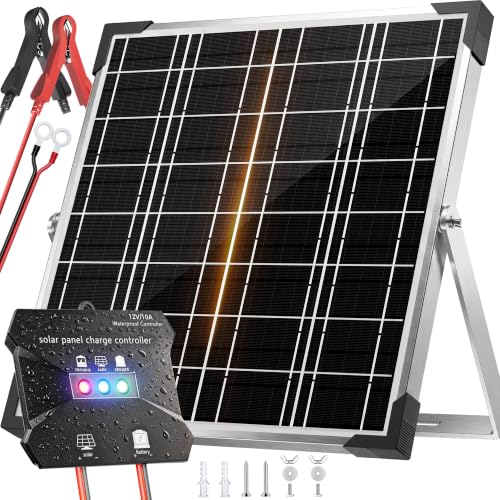
High-Efficiency MPPT Solar Charger - Advanced tracking technology delivers 20-30% faster charging for 12V batteries. A+ monocrystalline panels maximize power conversion. Perfect 20W solar trickle charger for cars, RVs, boats, and trailers. More sun captured, less time waiting.
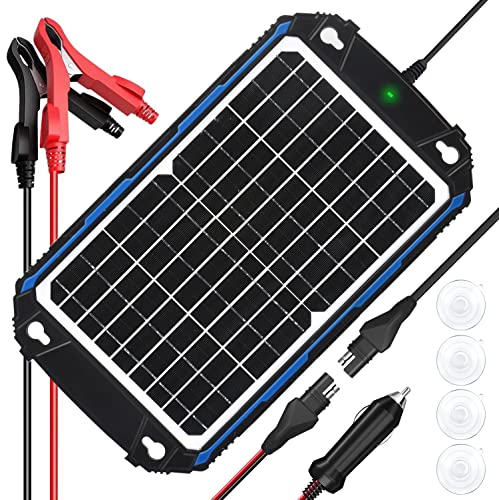
【Ultra-Smart MPPT Technology】This 12v solar panel battery charger is crafted with SUNER POWER's unique Ultra-Smart MPPT( Max Power Point Tracking) technology, the innovative MPPT allows to deliver high tracking efficiency of up to 99% and peak conversion efficiency of 98%, improving approximately 20%-30% utilization rate than other competitors
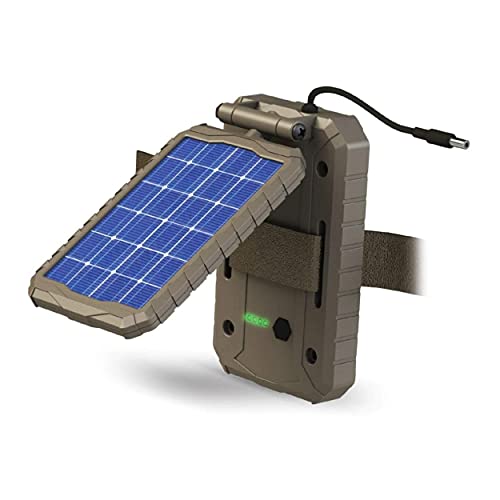
EXTENDED CAMERA FIELD LIFE - Embrace renewable energy, eliminating the need for traditional batteries and ensuring a cost-effective approach to keeping your trail cameras charged; A 3000mAh Li-ion Battery extends the field life of your trail camera
Step 1: Determine Daily Energy Needs
Calculate your daily energy consumption by listing devices you plan to power. Multiply the wattage of each device by the hours of operation to find total watt-hours (Wh).
Example Calculation:
- LED Light Bulb: 10 watts for 5 hours → 10W × 5h = 50Wh
- Laptop: 60 watts for 4 hours → 60W × 4h = 240Wh
- Total Daily Consumption: 50Wh + 240Wh = 290Wh
Step 2: Adjust for Solar Panel Output
A 100-watt solar panel typically generates about 400 watt-hours on a sunny day. Factor in efficiency loss due to energy conversion and storage. Aim for a battery that stores 50% more than your total energy needs to ensure reliable power.
Example Adjustment:
- Daily Needs: 290Wh
- Adjusted Capacity: 290Wh × 1.5 = 435Wh
Step 3: Choose Battery Type
Select a battery based on efficiency and cost.
Lead-Acid Batteries:
- Recommended Capacity: 100 amp-hours (Ah)
- Notes: Maintain a depth of discharge below 50% to enhance lifespan.
Lithium-Ion Batteries:
- Recommended Capacity: 50Ah to 100Ah
- Notes: Allow deeper discharges and quicker charging.
Step 4: Calculate Battery Size in Ah
Convert the watt-hour requirement to amp-hours using your battery voltage (typically 12V).
Formula:
[
\text{Ah} = \frac{\text{Wh}}{\text{Voltage}}
]
Example Calculation:
- Adjusted Capacity: 435Wh
- Battery Voltage: 12V
- Battery Size: 435Wh ÷ 12V = 36.25Ah
Tip for Real-World Application
Choose a battery size that exceeds the calculated Ah to cover inefficiencies. If using a lead-acid battery, consider a 100Ah capacity. For lithium-ion, a minimum of 50Ah suffices.
| Battery Type | Recommended Capacity | Depth of Discharge | Lifespan |
|---|---|---|---|
| Lead-Acid | 100Ah | <50% | 3-5 years |
| Lithium-Ion | 50Ah – 100Ah | Up to 80% | 10+ years |
By following these steps, you can effectively match your battery choice to your solar panel’s output, ensuring an efficient solar energy system.
Conclusion
Choosing the right battery size for your 100-watt solar panel can make all the difference in your energy efficiency. By understanding your daily energy needs and accounting for potential losses you’ll ensure a reliable power supply whether you’re at home or off the grid.
Remember to weigh your options between battery types and sizes to find the best fit for your lifestyle. With the right setup you can enjoy the benefits of solar energy without any hiccups. Happy solar powering!
Frequently Asked Questions
What size battery do I need for a 100-watt solar panel?
To effectively use a 100-watt solar panel, aim for a battery capacity that’s approximately 50% greater than your daily energy needs. For lead-acid batteries, you should consider a size of about 100 amp-hours (Ah). For lithium-ion, sizes between 50 Ah and 100 Ah are recommended.
How do I calculate my daily energy needs?
Calculate your daily energy needs by listing all devices you intend to power, noting their wattage, and then multiplying each device’s wattage by the number of hours you’ll use it each day. Finally, sum these numbers to find your total daily watt-hours.
Why is battery capacity important for solar energy?
Battery capacity is critical for storing energy generated by your solar panel. It ensures you have enough power available when sunlight is insufficient, such as during cloudy days or at night. Adequate capacity also compensates for charging inefficiencies.
What are the differences between lithium-ion and lead-acid batteries?
Lithium-ion batteries offer higher efficiency, longer lifespan, and are lighter, making them suitable for portable uses. However, they are generally more expensive. Lead-acid batteries are more affordable but heavier, have a shorter lifespan, and lower efficiency.
How much energy can a 100-watt solar panel produce?
On a sunny day, a 100-watt solar panel can generate approximately 400 watt-hours. This capacity is usually enough to meet daily energy needs for small devices, assuming optimal conditions and sun exposure.
