

Ever wondered why your solar lights aren’t shining as bright as they used to? One common culprit could be the batteries. Knowing the right size can make all the difference in keeping your outdoor space illuminated and inviting.
You might find yourself frustrated when it’s time to replace those batteries, only to realize you’re unsure what size you need. This article will help you identify the correct battery sizes for your solar lights, ensuring you choose the right ones for optimal performance. With this knowledge, you’ll keep your lights glowing and your evenings bright.
Key Takeaways
- Battery Size Matters: Common battery sizes for solar lights include AA, AAA, and 18650; knowing your solar light specifications is essential for optimal performance.
- Type of Batteries: Optimal battery choices are NiMH for most applications, lithium-ion for high-performance needs, and lead-acid for larger systems.
- Regular Maintenance: Inspect batteries for corrosion or damage and replace them every 1-2 years to ensure your solar lights remain bright.
- Capacity Awareness: Battery capacities vary widely; select higher-capacity options for longer runtime and better efficiency.
- Design and Usage Considerations: Battery choice is influenced by the light fixture design and intended usage; larger fixtures need more powerful batteries, while decorative lights can use smaller ones.
Overview of Solar Lights
Solar lights utilize sunlight to power their operation, making them an eco-friendly lighting solution for outdoor spaces. They consist of several key components: solar panels, LED lights, and batteries.
Solar Panels
Solar panels collect sunlight during the day. They convert solar energy into electricity. This electricity charges the batteries, which store the energy for use at night.
LED Lights
LED lights consume minimal energy. They produce bright light while ensuring longer illumination times. Their durability and efficiency make them ideal for solar lighting applications.
Batteries
Batteries play a crucial role in solar lights. They store energy collected during the day. The most common battery types for solar lights include:
- NiMH (Nickel-Metal Hydride): These batteries offer good performance and longevity.
- Li-ion (Lithium-ion): Known for high energy density, these batteries charge quickly and last longer than other types.
- Lead-acid: Sometimes used for larger solar lighting systems, these batteries are heavier and provide a cost-effective solution.
Understanding the right size of batteries for your solar lights ensures optimal performance. Typically, solar lights use AA, AAA, or 18650 size batteries. Check your solar light specifications to select the correct size.
- Check Battery Condition: Regularly inspect your batteries for corrosion or damage.
- Replace Batteries: Swap out batteries every 1-2 years for peak performance.
- Store Batteries Properly: If you’re not using your solar lights, store batteries in a cool, dry place.
By knowing how solar lights work and the importance of battery size, you can maintain bright outdoor lighting effectively.
Types of Batteries for Solar Lights
Selecting the correct type of battery is crucial for optimizing the performance of solar lights. Three common battery types are NiMH, lithium-ion, and lead-acid. Here’s what you need to know about each.
NiMH Batteries
NiMH batteries, or nickel-metal hydride batteries, are popular in solar lights due to their efficiency. They’re rechargeable and offer a higher capacity than traditional nickel-cadmium batteries.
- Capacity: NiMH batteries typically range from 600 mAh to 2500 mAh. The higher the capacity, the longer the light stays lit.
- Advantages: They perform well in various temperatures and have a lower environmental impact compared to some other types.
- Usage: Most solar garden lights utilize AA or AAA NiMH batteries. Check your lights to confirm the size.
Lithium-Ion Batteries
Lithium-ion batteries are becoming increasingly common in solar lights. They boast several benefits that enhance solar lighting performance.
- Capable: These batteries can hold a charge longer than NiMH batteries. They also maintain efficiency over a broad temperature range.
- Capacity: Lithium-ion batteries typically offer capacities of 1500 mAh to 3500 mAh. Higher capacity batteries mean brighter lights and longer runtime at night.
- Usage: Look for lithium-ion batteries in solar security lights and larger outdoor applications. They often come in 18650 sizes or custom configurations.
Lead-Acid Batteries
Lead-acid batteries are the traditional choice for larger solar lighting systems, particularly those requiring substantial power over extended periods.
- Heavyweight: These batteries are heavier and bulkier than others, making them suitable for fixed installations.
- Capacity: Depending on the model, lead-acid batteries have capacities ranging from 7Ah to 200Ah. The right size depends on the light’s power requirements.
- Usage: You’ll typically find lead-acid batteries in solar streetlights and larger garden light systems. Regular maintenance is necessary for optimal performance.
Understanding these battery types helps you select the right one for your solar lights. Choose based on your lighting needs and the efficiency of the battery in various conditions.
Common Battery Sizes for Solar Lights
Understanding the common battery sizes for solar lights helps ensure optimal performance and longevity. Here are the primary types used in solar lights:
Recommended Products

Note: It’s rechargeable Ni-MH AA Battery, 1.2V battery, designed exclusively for use with 1.2V devices. For charging, please use the EBL AA NiMH charger. For safety during transportation, the batteries are not fully charged, pls kindy charge it before first use. 【Perfect Solar Batteries】 Exact size AA batteries designed for solar lights, outdoor garden lights, mouse, keyboards, TV remotes, toys, game controllers, digital camera, will fit all your device perfectly in daily life usage, high quality AA rechargeable batteries supply long lasting power, great convenience and good performance.

Solar PRO technology – Tenergy engineered solar AA batteries with technology addressing common solar light battery performance problems: leaking due to over-charging from long sunny summer days, dead batteries due to over-discharging from extended rainy or cloudy days. Tenergy is a Silicon Valley based company with over 15 years of experience in batteries.

RELIABLE PERFORMANCE: 8-pack of AA rechargeable NiMH batteries (2,000 mAh)
AA Batteries
AA batteries typically provide reliable power for many solar lights. Their capacity ranges from 600 mAh to 3000 mAh, depending on the type. These batteries offer easy replacement options, making them widely accessible. You can find both NiMH and alkaline AA batteries; however, NiMH variants are recommended for solar applications due to their rechargeability and efficiency. For your solar lights, consider checking the battery type before purchasing replacements.
AAA Batteries
AAA batteries are smaller than AA batteries, which means they fit into slimmer solar light designs. They generally have capacities between 800 mAh and 1200 mAh. While they may not produce the same power as AA batteries, they are perfect for garden lights or decorative fixtures where space is limited. Like AA batteries, NiMH AAA batteries outperform alkaline versions due to their rechargeability. When replacing AAA batteries, always opt for high-capacity NiMH versions for better performance.
18650 Batteries
18650 batteries are cylindrical lithium-ion batteries widely used in high-performance solar lights. They typically have capacities ranging from 1500 mAh to 3500 mAh. Known for their longer life and excellent charge retention, 18650 batteries are ideal for security lights or solar lamps requiring more power. Ensure you select high-quality batteries from reputable brands to maximize both safety and efficiency. For maintenance, regularly check the charge levels and replace them if they show signs of swelling or diminished performance.
Factors Affecting Battery Size Choice
Selecting the right battery size for your solar lights depends on several factors. Understanding these elements helps ensure optimal performance and longevity.
Recommended Products

【 30% Precharged for Ready Use 】 For transportation safety purposes, these batteries are only precharged with 30% power, so charge them before use for longer working. In addition, recharging the battery every 3 months can make its lifespan longer

【High Capacity&Long Lasting】:1600mah high capacity AA rechargeable battery will lasting much longer time to ensure your outdoor lights always has enough power to light all night. Also can replace 600mAh, 800mAh, 1100mah, etc NiCd or Ni-MH AA cells AA battery. They won't lose the maximum capacity.
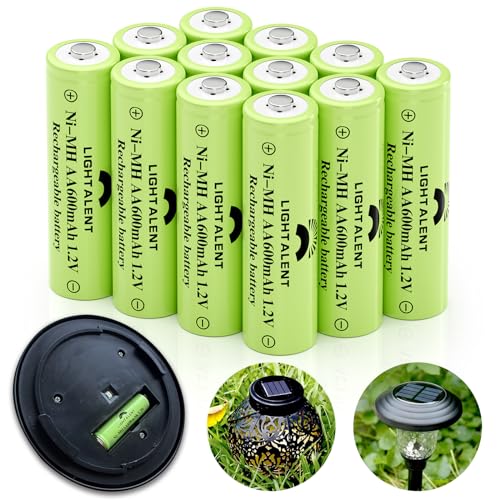
【Strong Performance】1.2-volt 600mAh AA Ni-MH rechargeable batteries,Package included: 12 x solar battery 1.2v ni-mh aa 600mAh
Light Fixture Design
Light fixture design plays a significant role in determining battery size. Different fixtures require specific types of batteries for proper functionality. For instance, larger fixtures with higher wattage bulbs typically use AA or 18650 batteries to accommodate their energy needs. In contrast, smaller decorative fixtures often use AAA batteries, which suffice for lower power requirements. When choosing batteries, check the manufacturer’s specifications for your fixture to find the recommended size.
Intended Usage
Intended usage impacts the battery size you choose. If you use your solar lights for security or illumination over extended hours, opt for batteries with higher capacities, such as 18650 cells, which provide longer run times. For short-term decorative lighting, AAA or AA batteries can work efficiently. Consider how long you want your lights to shine each night and select a battery that aligns with those expectations.
Conclusion
Choosing the right battery size for your solar lights is key to keeping them shining bright. Whether you opt for AA, AAA, or 18650 batteries, understanding their capacities and characteristics can make all the difference in performance.
Regular maintenance and timely replacements will help ensure your lights operate efficiently. By taking these simple steps you can enjoy a well-lit outdoor space while benefiting from the eco-friendly nature of solar lighting. So go ahead and give your solar lights the care they need to illuminate your nights!
Frequently Asked Questions
What causes solar lights to shine less brightly over time?
Solar lights may shine less brightly due to factors like battery degradation, dirt on solar panels, or insufficient sunlight exposure. Regular maintenance, including cleaning solar panels and replacing worn-out batteries, can help restore brightness.
How important is battery size for solar light performance?
Battery size is crucial for solar light performance. The right battery ensures optimal energy storage and usage, affecting how long and brightly the lights shine. Choosing the appropriate size—such as AA, AAA, or 18650—can significantly enhance performance.
What are the common battery types used in solar lights?
Common battery types for solar lights include NiMH, Li-ion, and lead-acid. NiMH batteries are efficient and rechargeable, Li-ion batteries offer longer retention, and lead-acid batteries are suitable for larger solar systems.
How do I determine the right battery size for my solar lights?
To choose the right battery size, consider the design and wattage of your light fixtures. Typically, larger fixtures require AA or 18650 batteries, while decorative lights often use AAA batteries.
What maintenance tips can help prolong my solar light batteries?
Maintain solar light batteries by regularly inspecting them, replacing old or weak batteries promptly, and storing them properly when not in use. Keeping solar panels clean also helps optimize battery performance.
Can I use different brands of batteries in solar lights?
While it’s possible to use different brands, it’s recommended to stick with high-quality batteries of the same type and capacity for optimal performance. Mixing brands or types can lead to inefficient energy usage or shorter battery life.
What capacity should I look for in solar light batteries?
For solar light batteries, capacities vary by type: AA batteries typically range from 600 mAh to 3000 mAh, AAA batteries from 800 mAh to 1200 mAh, and 18650 batteries from 1500 mAh to 3500 mAh. Choose based on your light’s requirements.
Why are NiMH batteries often recommended for solar lights?
NiMH batteries are often recommended for solar lights because they offer a good balance of efficiency, rechargeability, and capacity. They perform well under outdoor conditions and have lower self-discharge rates than other types, ensuring longer use.
