

Are you tired of your solar lights flickering or going dark too soon? You’re not alone. Many people struggle with finding the right battery to keep their solar lights shining bright throughout the night. The choice of milliamp hours (mAh) can make a big difference in performance and longevity.
In this article, you’ll discover which mAh ratings work best for different types of solar lights. You’ll learn how to choose a battery that not only fits your needs but also maximizes the efficiency of your solar setup. With the right battery, you can enjoy reliable lighting and peace of mind knowing your outdoor spaces are well illuminated.
Key Takeaways
- Battery mAh Rating Matters: A higher mAh rating (2000-3000 mAh) increases the runtime and brightness of solar lights, crucial for those needing extended illumination.
- Types of Batteries: Different battery types (NiCd, NiMH, Lithium-Ion) offer various advantages—NiMH is cost-effective, while Lithium-Ion provides superior longevity and performance.
- Temperature Performance: Battery selection should consider local climate; NiMH batteries perform well in cold while Lithium-Ion excels across varying temperatures.
- Compatibility and Voltage: Ensure the battery voltage matches your solar light system (typically 1.2V for NiMH and 3.7V for Lithium) to avoid performance issues.
- Cost vs. Longevity: Higher-priced lithium-ion batteries may offer better long-term savings due to their extended lifespan and efficiency, making them a worthwhile investment.
- Selecting the Right Options: Popular choices like TalentCell Lithium-Ion (6000 mAh) and EBL NiMH (2800 mAh) ensure reliable operation and optimal performance in solar lighting applications.
Overview of Solar Lights
Solar lights harness energy from the sun to provide outdoor illumination. These lights are eco-friendly options for gardens, pathways, and landscape features. The core components include a solar panel, a battery, and LED bulbs. Sunlight charges the battery during the day, allowing the lights to operate at night.
Types of Solar Lights
- Path Lights: These guide the way along walkways and driveways. They’re typically low to the ground with a soft light output.
- Flood Lights: These offer brighter light over larger areas. Ideal for security purposes, they often cover entrances and backyards.
- Spotlights: Designed to highlight specific features, such as trees or statues. Spotlights provide focused beams for aesthetic appeal.
- String Lights: Perfect for ambiance, these can be draped around patios or decks. They add a decorative touch to outdoor spaces.
Components of Solar Lights
- Solar Panels: Responsible for capturing sunlight and converting it to electrical energy.
- Batteries: Store the energy for use when the sun isn’t shining. The choice of battery with the right mAh rating directly influences performance.
- LED Bulbs: Provide efficient lighting with low energy consumption. LEDs offer longer life spans compared to traditional bulbs.
Battery Specifications
Choosing the right battery is crucial for the longevity and efficiency of your solar lights. Focus on these key specifications:
- mAh Rating: Higher ratings offer longer run times and better performance, especially on cloudy days.
- Type of Battery: Common options include NiMH (Nickel Metal Hydride) and lithium batteries. NiMH batteries are typically more cost-effective, while lithium batteries provide better longevity.
- Voltage: Ensure the battery voltage matches the solar light system’s requirements, usually 1.2V for NiMH and 3.7V for lithium.
By understanding these aspects of solar lights, you equip yourself with the knowledge needed to select the best mAh battery for your system, ensuring reliable outdoor lighting for your space.
Importance of Battery Capacity
Selecting the right battery capacity is crucial for optimizing the performance of your solar lights. A battery’s milliamp hour (mAh) rating directly influences how long your lights can operate after sundown. Understanding this rating helps ensure you choose a battery that meets your energy needs.
Understanding mAh Ratings
mAh ratings indicate a battery’s storing capacity. Higher mAh ratings mean greater energy storage. For example, a 2400 mAh battery can supply twice the energy of a 1200 mAh battery. For solar lights, aim for at least 2000 mAh for reliable performance, especially in low-light conditions. Depending on your solar lights’ usage and design, you might consider mAh ratings ranging from 2000 to 3000 for optimal performance.
How Battery Capacity Affects Performance
Battery capacity significantly affects how long your solar lights can shine. A battery with a low mAh rating may lead to dim lighting and shorter operational periods. Conversely, a high-capacity battery enables brighter lights and extended runtime.
Consider battery type too. NiMH batteries last longer than traditional alkaline batteries, even when they’re of similar mAh ratings. For instance, using a 2500 mAh NiMH battery can provide a more consistent light output compared to a 2500 mAh alkaline battery, which might falter after a few hours.
To maximize performance, always match the battery’s mAh rating with your solar light’s requirements. Verify compatibility with your solar lights to avoid issues with brightness and operational time.
Types of Batteries for Solar Lights
Understanding the types of batteries best suited for solar lights is vital for optimal performance. Each battery type has distinct characteristics that affect longevity, efficiency, and compatibility with solar systems.
Recommended Products

RELIABLE PERFORMANCE: 8-pack of AA rechargeable NiMH batteries (2,000 mAh)

【Battery Type】1.2 V Ni-MH 2/3AAA 200 MAh Rechargeable Battery
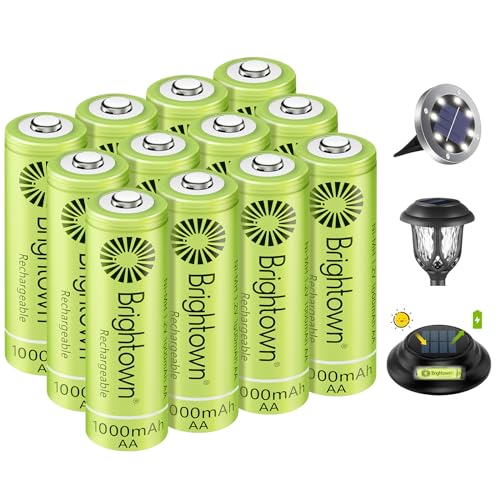
【 30% Precharged for Ready Use 】 For transportation safety purposes, these batteries are only precharged with 30% power, so charge them before use for longer working. In addition, recharging the battery every 3 months can make its lifespan longer
Nickel-Cadmium (NiCd) Batteries
Nickel-Cadmium (NiCd) batteries offer good performance in various temperature conditions. They’re known for their durability and resistance to overcharging. NiCd batteries are capable of delivering a consistent voltage, making them reliable for solar lights. However, they have a lower energy storage capacity compared to other types. You can expect a lifespan of about 2-5 years with proper maintenance.
Nickel-Metal Hydride (NiMH) Batteries
Nickel-Metal Hydride (NiMH) batteries are popular for their high energy density. With an increased storage capacity, they’re ideal for solar lights needing longer run times. NiMH batteries typically last longer than NiCd batteries, with lifespans reaching up to 5-7 years. They also perform better in colder temperatures and recharge more quickly. When considering a NiMH battery for your solar lights, look for a minimum rating of 2000 mAh for reliable operation.
Lithium-Ion Batteries
Lithium-Ion batteries stand out for their superior energy density and lightweight design. They provide longer runtimes and higher capacities, making them ideal for solar lights. Lithium-Ion batteries can last up to 10 years while maintaining performance well across varying temperatures. They also charge faster and maintain power more efficiently, ensuring your lights stay bright even in low-light conditions. When selecting Lithium-Ion batteries, check for compatibility and ensure they fit your solar light system.
Factors to Consider When Choosing a Battery
Selecting the right battery for your solar lights involves several critical factors that can influence performance and efficiency.
Recommended Products

【High Capacity&Long Lasting】:2000mah high capacity AA rechargeable battery will lasting much longer time to ensure your outdoor lights always has enough power to light all night. Also can replace 600mAh, 800mAh, 1100mah, etc NiCd or Ni-MH AA cells AA battery.

【High Capacity&Long Lasting】:1600mah high capacity AA rechargeable battery will lasting much longer time to ensure your outdoor lights always has enough power to light all night. Also can replace 600mAh, 800mAh, 1100mah, etc NiCd or Ni-MH AA cells AA battery. They won't lose the maximum capacity.

Product Description: 6 count AA NI-MH solar rechargeable batteries which capacity is 2000mah and voltage is 1.2V,1.97 inches high and 0.55 inches wide
Climate and Temperature Effects
Consider how your local climate impacts battery performance. Extreme temperatures can affect the efficiency of different battery types. NiMH batteries perform well in cold conditions, while lithium-ion batteries thrive in a broader temperature range. If you live in a region with frequent temperature fluctuations, opt for a battery that can withstand those changes without significant capacity loss.
Duration of Use
Evaluate how long you plan to use your solar lights each night. Higher mAh ratings provide longer runtimes and brighter illumination. If your lights need to operate throughout the night, look for batteries with at least 2000 mAh for reliable performance. This capacity ensures your lights remain functional during extended hours, especially in winter months when daylight is shorter.
Cost and Availability
Analyze the cost and availability of batteries. While lithium-ion batteries may have a higher upfront cost, their longevity and efficiency can result in long-term savings. Check local retailers and online platforms for accessible options. Weigh the initial investment against expected lifespan and performance to determine the best value for your solar lighting needs.
Recommendations for Best mAh Batteries
Choosing the right mAh battery is crucial for optimizing solar light performance. Here are some top recommendations you can consider.
Recommended Products

Note: It’s rechargeable Ni-MH AA Battery, 1.2V battery, designed exclusively for use with 1.2V devices. For charging, please use the EBL AA NiMH charger. For safety during transportation, the batteries are not fully charged, pls kindy charge it before first use. 【Perfect Solar Batteries】 Exact size AA batteries designed for solar lights, outdoor garden lights, mouse, keyboards, TV remotes, toys, game controllers, digital camera, will fit all your device perfectly in daily life usage, high quality AA rechargeable batteries supply long lasting power, great convenience and good performance.

Product Size: 67*18*18mm/2.64*0.71*0.71 inch

Qwenoer 22.2V Rechargeable Battery: 2600mAh 22.2 volt battery size is 4.33 *3.54 *3.14in and weight is 380g/0.83lb.
Top Options in the Market
- TalentCell Lithium-Ion Battery (6000 mAh)
TalentCell offers a 6000 mAh lithium-ion battery. This battery stands out for its high energy density and long lifespan. It fits perfectly in solar lights that need extended runtime. - EBL NiMH Rechargeable Battery (2800 mAh)
EBL’s NiMH battery provides a robust 2800 mAh capacity. This option excels in colder temperatures, making it good for winter conditions. - Ansmann NiMH Battery (2400 mAh)
Ansmann’s 2400 mAh NiMH batteries work well in various climates. Their high energy density ensures reliable performance after sundown. - Amstron NiCd Batteries (1500 mAh)
Amstron’s NiCd batteries, although lower in capacity at 1500 mAh, offer durability. They’re a good budget choice for less frequent use.
| Battery Type | Capacity (mAh) | Lifespan | Temperature Performance |
|---|---|---|---|
| TalentCell Lithium-Ion | 6000 | Up to 10 years | Excellent across all temps |
| EBL NiMH | 2800 | 5-7 years | Best in cold conditions |
| Ansmann NiMH | 2400 | 5-7 years | Reliable in moderate temps |
| Amstron NiCd | 1500 | 2-5 years | Consistent but lower capacity |
The comparison demonstrates that lithium-ion batteries offer the best longevity, while NiMH options excel in performance during colder months. When selecting a battery, consider both capacity and expected lifespan to ensure your solar lights perform optimally.
Conclusion
Choosing the right mAh battery for your solar lights can make a world of difference in their performance and longevity. By understanding the various battery types and their specifications you can ensure your outdoor spaces remain beautifully illuminated. Whether you opt for a high-capacity lithium-ion battery or a reliable NiMH option it’s all about finding what works best for your needs.
With the right battery in place you’ll enjoy brighter lights and longer run times even on those low-light days. So take the time to consider your options and make an informed choice. Your solar lights deserve it!
Frequently Asked Questions
What causes solar lights to flicker?
Flickering in solar lights often occurs due to low battery power, poor connections, or faulty components. It’s essential to check the battery’s mAh rating and replace it if it’s inadequate for the solar light’s energy needs.
How do I choose the right battery for my solar lights?
Selecting the right battery involves considering the mAh rating, type (NiMH, NiCd, or lithium-ion), and your specific light’s power demands. Aim for a battery with at least 2000 mAh for optimal performance, especially in low-light conditions.
What are mAh ratings, and why are they important?
The milliamp hour (mAh) rating measures a battery’s energy storage capacity. A higher mAh rating means longer runtime and brighter lights. Choosing a battery with an adequate mAh rating is vital for maximizing solar light efficiency.
What types of batteries are best for solar lights?
NiMH, NiCd, and lithium-ion batteries are commonly used for solar lights. NiMH offers better energy density and lifespan, while lithium-ion boasts superior energy storage and longevity, making them ideal for outdoor lighting applications.
How does temperature affect battery performance?
Extreme temperatures can impact battery efficiency. NiMH batteries perform well in cold conditions, while lithium-ion batteries are effective across a wider range of temperatures, ensuring reliable operation in various climates.
What mAh ratings should I look for in solar lights?
For reliable performance, look for batteries with at least a 2000 mAh rating. This ensures extended runtime and optimal brightness, especially during periods of low sunlight.
Can I use regular batteries in solar lights?
Using regular alkaline batteries in solar lights is not recommended, as they have lower energy density and shorter lifespan compared to rechargeable options like NiMH or lithium-ion batteries, which are designed for solar energy applications.
What are some recommended batteries for solar lights?
Some top batteries for solar lights include the TalentCell Lithium-Ion Battery (6000 mAh), EBL NiMH Rechargeable Battery (2800 mAh), and Ansmann NiMH Battery (2400 mAh). These provide good capacity, longevity, and performance in various conditions.
