

Ever wondered why positive and negative aren’t clearly marked on your car battery? Picture this: you’re stranded on the side of the road, trying to jump-start your car, but you can’t tell which is positive and which is negative. Frustrating, right? In this article, you’ll uncover the mystery behind this common issue and learn how to navigate it like a pro.
Have you ever faced the confusion of not knowing which terminal is positive or negative on your car battery? It’s a situation many car owners encounter, leading to unnecessary delays and headaches. But fear not, as we’re here to shed light on this perplexing dilemma. By the end of this article, you’ll have the knowledge and confidence to tackle this problem with ease.
Importance of Proper Markings on Car Battery Terminals
When it comes to car battery terminals, having clear markings for the positive and negative terminals is crucial for a seamless experience.
- Safety First: Proper markings help you avoid dangerous accidents that can occur from accidental reverse polarity connections.
- Preventing Damage: Connecting cables to the wrong terminals can damage your vehicle’s electrical system, leading to costly repairs.
- Convenience: Clearly labeled terminals save you time and frustration, especially during urgent situations like a dead battery.
In essence, correctly identifying the positive and negative terminals on your car battery is the first step to smooth operations and trouble-free maintenance.
Reasons Behind Lack of Clear Positive and Negative Markings
Have you ever wondered why some car batteries lack clear markings for the positive and negative terminals? Let’s explore a few reasons behind this common issue:
- Cost-cutting Measures: Sometimes, manufacturers may opt for minimal markings to save on production expenses, which can lead to ambiguous labeling on the battery.
- Assumption of Knowledge: Manufacturers might assume that car owners are already familiar with terminal distinctions, overlooking the fact that not everyone is well-versed in automotive workings.
- Uniform Design: In some cases, batteries are designed for use in various vehicles, resulting in a standardized appearance that may not prioritize distinct terminal markings.
These factors contribute to the prevalence of batteries with unclear positive and negative terminals, underscoring the importance of additional caution when handling such components.
Common Methods to Determine Positive and Negative Terminals
You’re likely wondering, “How can I determine which terminal is positive and which is negative on my car battery?” Fear not, there are indeed a few ways to tackle this common issue:
- Look for Markings: Some car batteries do have + and – signs embossed near the terminals.
- Check for Color Coding: In many cases, the positive terminal is red and the negative terminal is black. Keep an eye out for these colors when inspecting your battery.
- Examine the Terminals: The positive terminal tends to be slightly larger than the negative one. This size difference can often help in identifying the correct terminals.
- Refer to the Owner’s Manual: Sometimes, the manual provides detailed information on the battery, including clear labeling of the terminals.
- Use a Multimeter: If you have a multimeter, you can measure the voltage. The terminal with a higher voltage reading will indicate the positive side.
| Method | Description |
|---|---|
| Look for Markings | + and – signs embossed near the terminals |
| Check for Color Coding | Positive terminal is red, negative terminal is black |
| Examine the Terminals | Positive terminal is slightly larger than the negative one |
| Refer to the Owner’s Manual | Detailed battery information, including terminal labeling |
| Use a Multimeter | Measure voltage to determine positive and negative terminals |
Recommended Products

Material: Made of quality steel, sturdy construction, durable to use.

Clean and spread battery Cable terminals with this plier-type tool

[4 WAY BATTERY TERMINAL] Made of high-quality brass and steel material which is corrosion resistant with excellent electrical conductivity that can reduce voltage distortion and transmission loss. And it has 4 ports for multiple cable connections, wiring is easy and convenient to modify.
Risks and Consequences of Incorrect Terminal Connection
Here are the risks and consequences you need to be aware of when connecting car battery terminals incorrectly:
- Short Circuits: Can cause sparks, heat, and potential fire hazards.
- Electrical Damage: Incorrect connection can damage the car’s electrical system.
- Battery Damage: Reversing the polarity can shorten the battery’s lifespan.
To avoid these risks, ensure you correctly identify and connect the positive and negative terminals of your car battery.
Recommended Products

Catch Battery Problems Early: Featured in two videos by Project Farm, a popular YouTube channel with millions of subscribers, the ANCEL BA101 helps you quickly spot battery issues before they leave you stranded. It provides easy-to-understand readings for State of Health (SOH), State of Charge (SOC), voltage, current, CCA, plus cranking and charging system tests, so you can better understand your battery and help avoid unexpected breakdowns
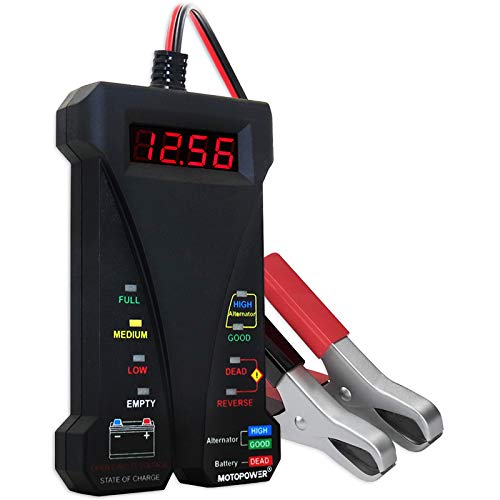
Effortless Operation - Boasting a “plug-and-test” design, there's no need for complex set-up procedures. Just connect it to the battery following simple steps. Without starting the vehicle, you can read the battery status, and after starting, quickly obtain the alternator status. Whether you're a professional mechanic or an ordinary car owner, you can easily use it to quickly determine if the battery needs jump - starting, replacement, or if the alternator output is normal.

【Reliable Car Battery Tester】: The alternator tester can accurately determine whether the car battery needs to be replaced or if there is a power outage, and at the same time evaluate the output status of the alternator, clearly presents real-time voltage data, battery health and charging status. It can effectively prevent the battery from being damaged due to overcharging or undercharging, and extend the battery's service life.
Tips for Safely Handling Ambiguous Terminal Identification
When positive and negative markings are not clear on your car battery, here are some tips to navigate this situation:
- Observe the Terminal Shape: Larger terminals often indicate the positive side, while smaller terminals usually represent the negative side.
- Check for Color Cues: In some cases, red terminals signify positive, and black terminals indicate negative.
- Use a Multimeter: Testing the terminal polarity with a multimeter can help you determine the correct connections.
- Follow Manufacturer Guidelines: Refer to your car’s manual or contact the manufacturer for specific instructions on identifying the battery terminals.
- Safety First: Wear protective gear such as gloves and goggles, and keep sparks or metal tools away from the battery.
Remember, taking precautions and verifying terminal polarity can help you safely handle an ambiguous situation when connecting your car battery.
Recommended Products

High-Quality: Made of tinned copper, it has 4 ports for multiple cable connections, with good electrical conductivity and corrosion resistance, mainly used for SAE / JIS TYPE A rear car battery.

[Car Battery Tester] You can easily test and inspect your 12V lead-acid battery with this TOPDON car battery tester. The SOH (State of Health), SOC (State of Charge), Voltage, Current, Rating, and numerous other understandable analytical data are provided by this battery tester. It is compatible with 100-2000CCA regular flooded, AGM flat plate/spiral, EFB, and GEL for their optimum performance.

【Reliable Automotive Car Battery Tester】 KW208 is the most cost-effective battery load tester compared to other brands, it has all the functions you need and the lowest cost that you can afford. KW208 can test all 12V batteries(100-2000CCA) including regular flooded, AGM flat plate, AGM spiral or gel batteries. Provide overall analysis of batteries’ condition and help you know their status in advance before it dies. KW208 battery analyzer supports cranking and charging system tests also alternator and starter test. Conveniently store this car battery tester for batteries in your glove box or garage, ready for use whenever needed.
Conclusion
Handling car battery terminals safely is crucial, especially when the positive and negative markings are unclear. By following the tips provided in this article, you can navigate ambiguous terminal identification situations effectively and connect your car batteries safely. Remember to observe terminal shapes, check for color cues, use a multimeter for testing, follow manufacturer guidelines, and prioritize safety by wearing protective gear and avoiding sparks or metal tools near the battery. These simple precautions and methods can make a significant difference in ensuring your safety and the proper functioning of your vehicle’s battery.
Frequently Asked Questions
How can I safely handle car battery terminals when the markings are unclear?
When the markings on car battery terminals are unclear, you can observe the terminal shapes (round for positive and square for negative), look for color cues (red for positive and black for negative), use a multimeter to test for polarity, follow manufacturer guidelines for specific models, wear protective gear, and avoid sparks or metal tools near the battery to ensure safety. These precautions and methods help in safely connecting your car battery even in ambiguous terminal identification situations.
