


I have noticed that the entryway often decides whether the rest of the house feels calm or chaotic the second you walk through the door.
Lighting plays a bigger role than most people expect because it shapes how the space works when you are juggling bags or coming home tired.
A single fixture can shift the whole mood.
When I consider minimalist options I usually ask myself which ones would still look clean once everyday items start piling up near the door.
Trying a couple of these approaches at home has taught me that the simplest setups tend to last when they leave room for actual living.
Vertical Sconces Keep Narrow Entries Simple
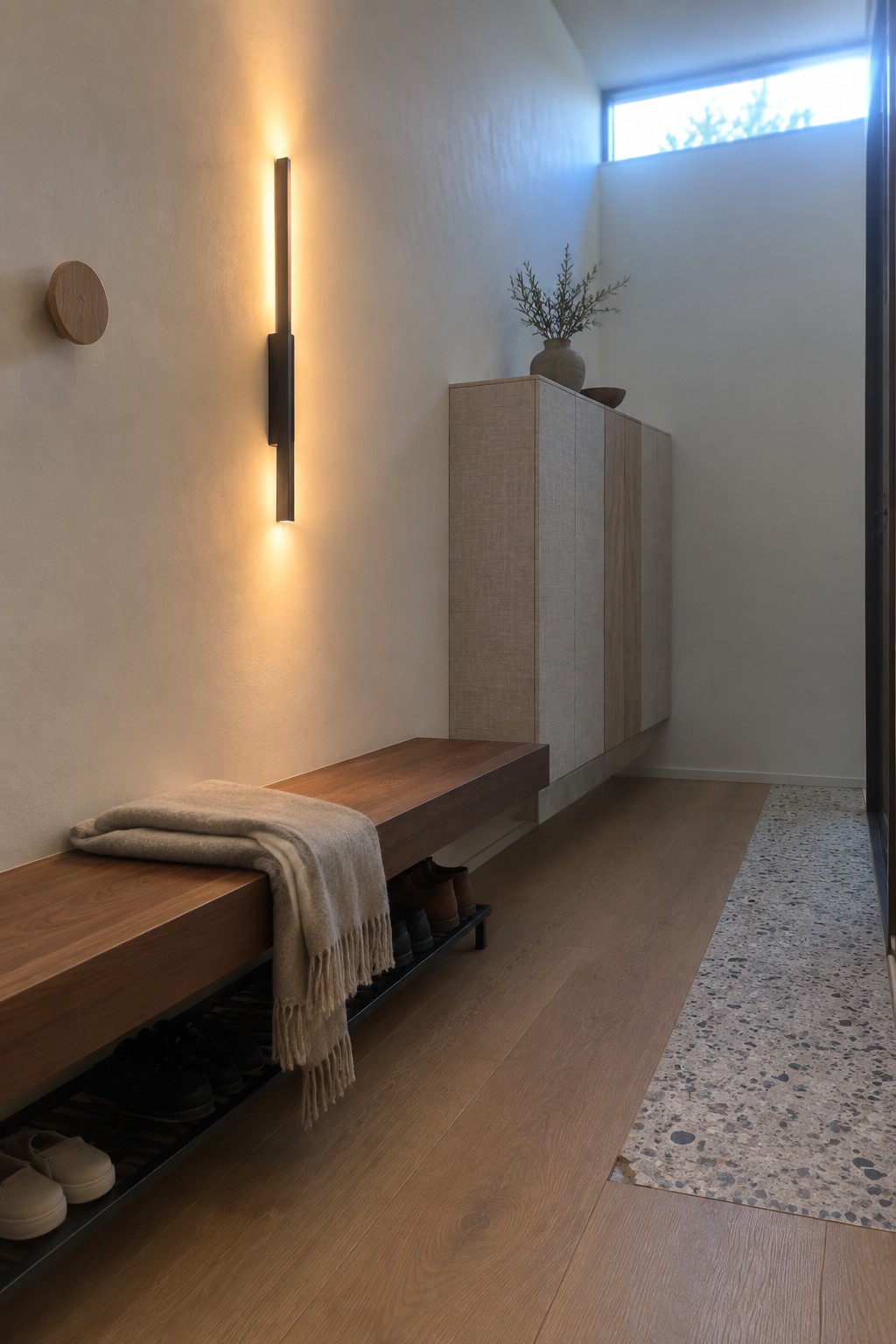
A tall vertical sconce gives an entryway steady light without crowding the wall. It works especially well when the space already has built-in seating and storage, since the fixture stays flat and out of the way.
This approach suits small or long entry halls in minimalist homes. Mount the light at eye level or slightly higher, and choose a slim profile that blends with the wall color so the focus stays on the clean lines rather than the hardware.
One Pendant Light Keeps A Foyer Feeling Open
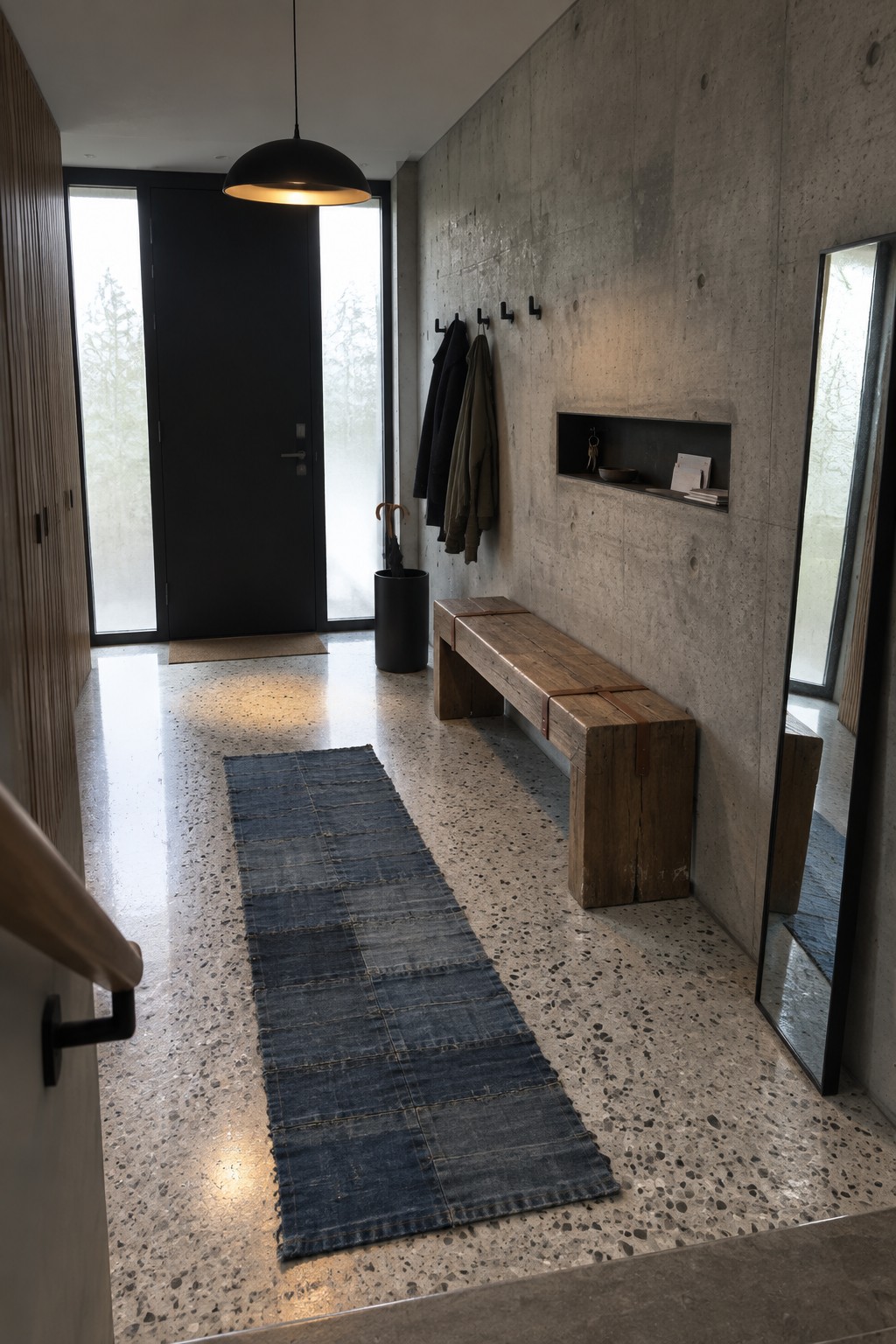
A single pendant works well in a minimalist entry because it gives focused light without crowding the space. The fixture hangs at a height that illuminates the main walking area while leaving the rest of the ceiling clean and open. This keeps the whole entrance from feeling busy even when other elements like a bench or storage niche are present.
It suits homes that already lean simple in their finishes and furniture. Choose a shape and finish that matches the door hardware or other metal details so the light reads as part of the architecture rather than an added object. Avoid anything too large or ornate if the goal is to maintain that spare look.
Large Globe Pendants For Narrow Entryways
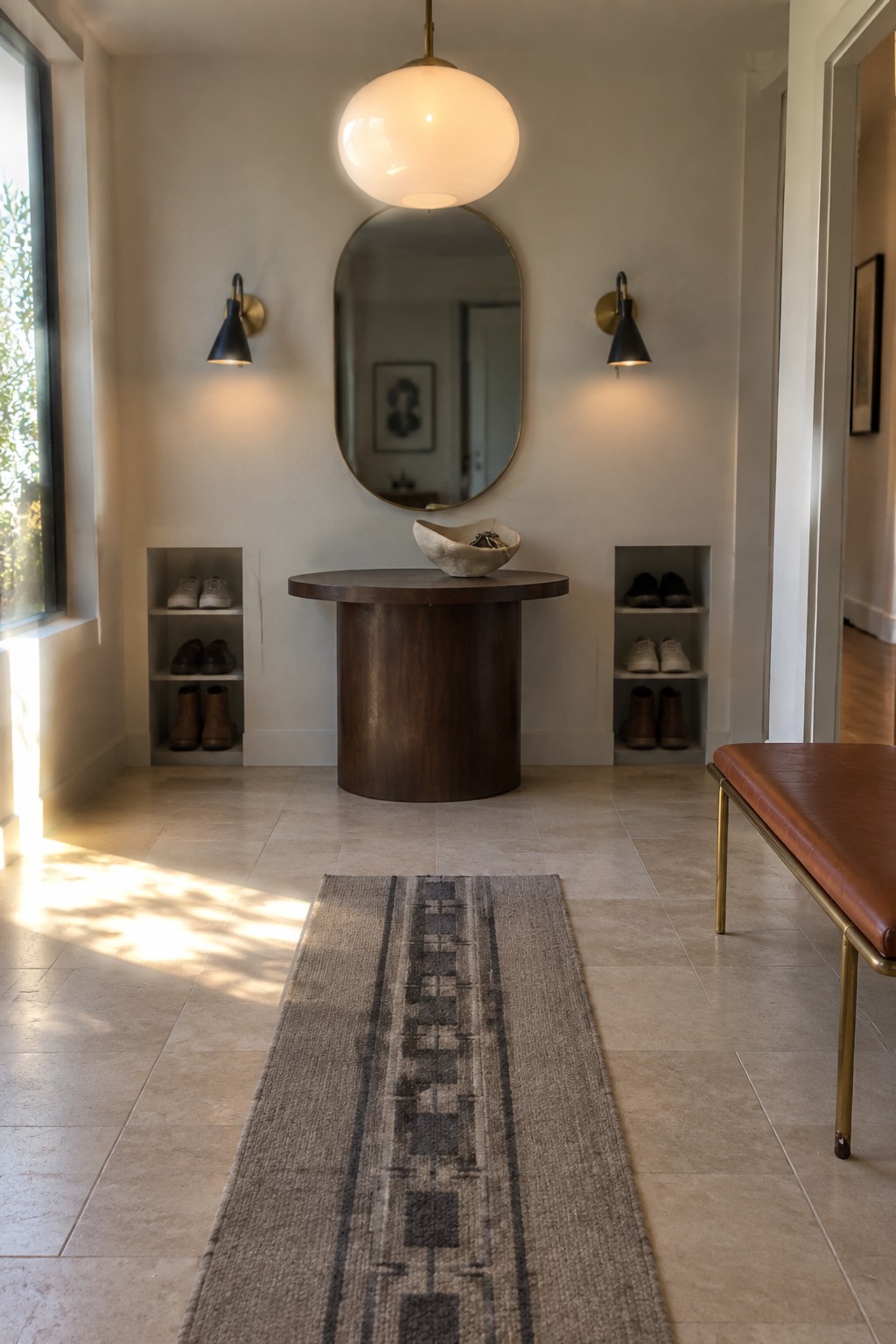
A large globe pendant works well in a tight entry because it spreads light evenly from one central point. The shape keeps the ceiling from feeling crowded and still gives enough brightness to see coats, shoes, and the floor clearly.
This setup fits homes that already use simple lines and neutral colors. Add a pair of small wall scones only if you need extra light right by the door, and keep other fixtures to a minimum so the pendant stays the main source.
Use a Low Pendant Over Built-In Storage
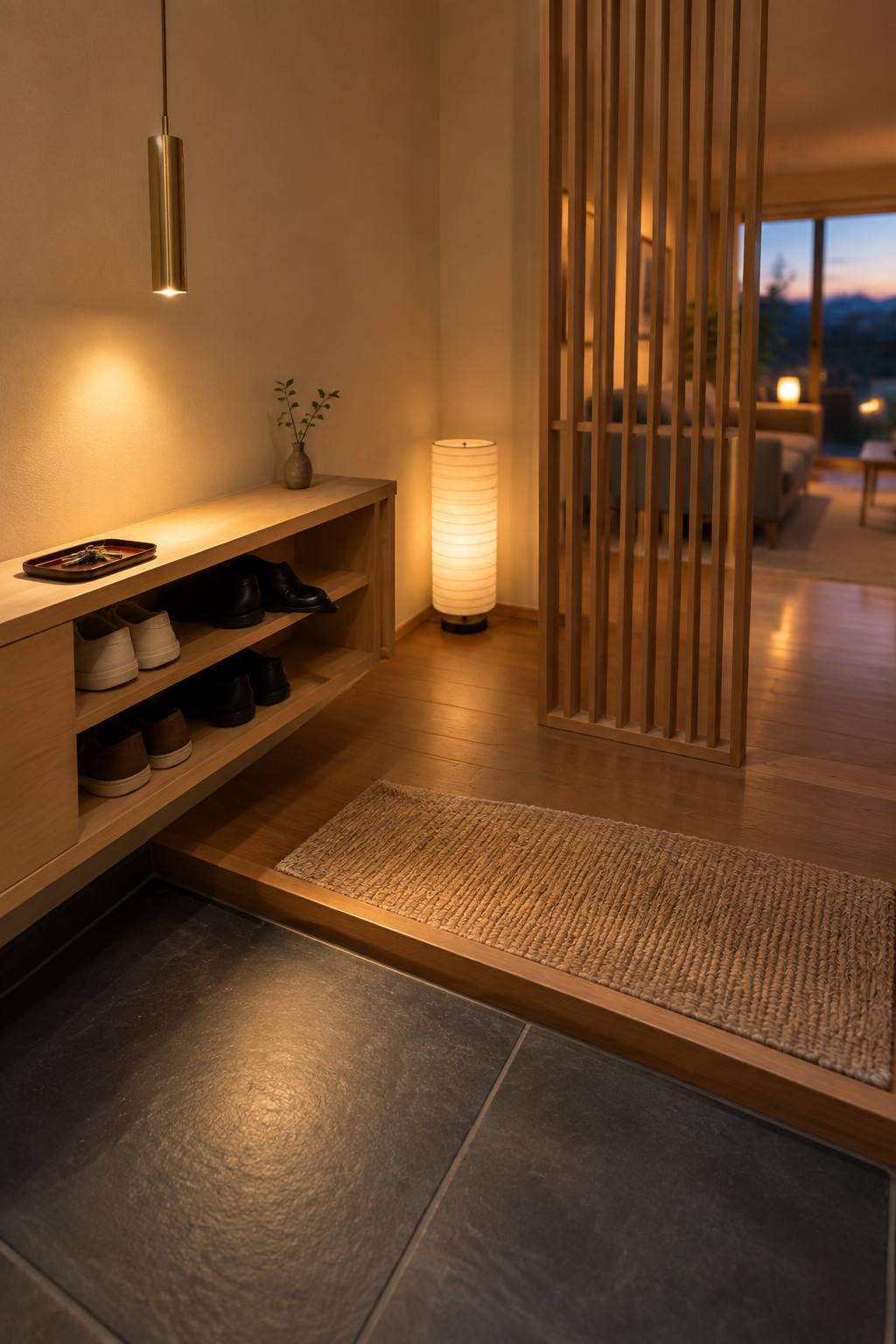
A low pendant hung right above the bench gives focused light for shoes and keys without filling the ceiling with fixtures. The floor lamp a few feet away then softens the whole area so the entry feels calm rather than dim.
This works best in smaller homes or apartments where you need storage but want to keep the space open. Place the pendant low enough to matter and let the second light handle the general glow so nothing feels stark at the door.
Tall Vertical Pendants For High Foyers
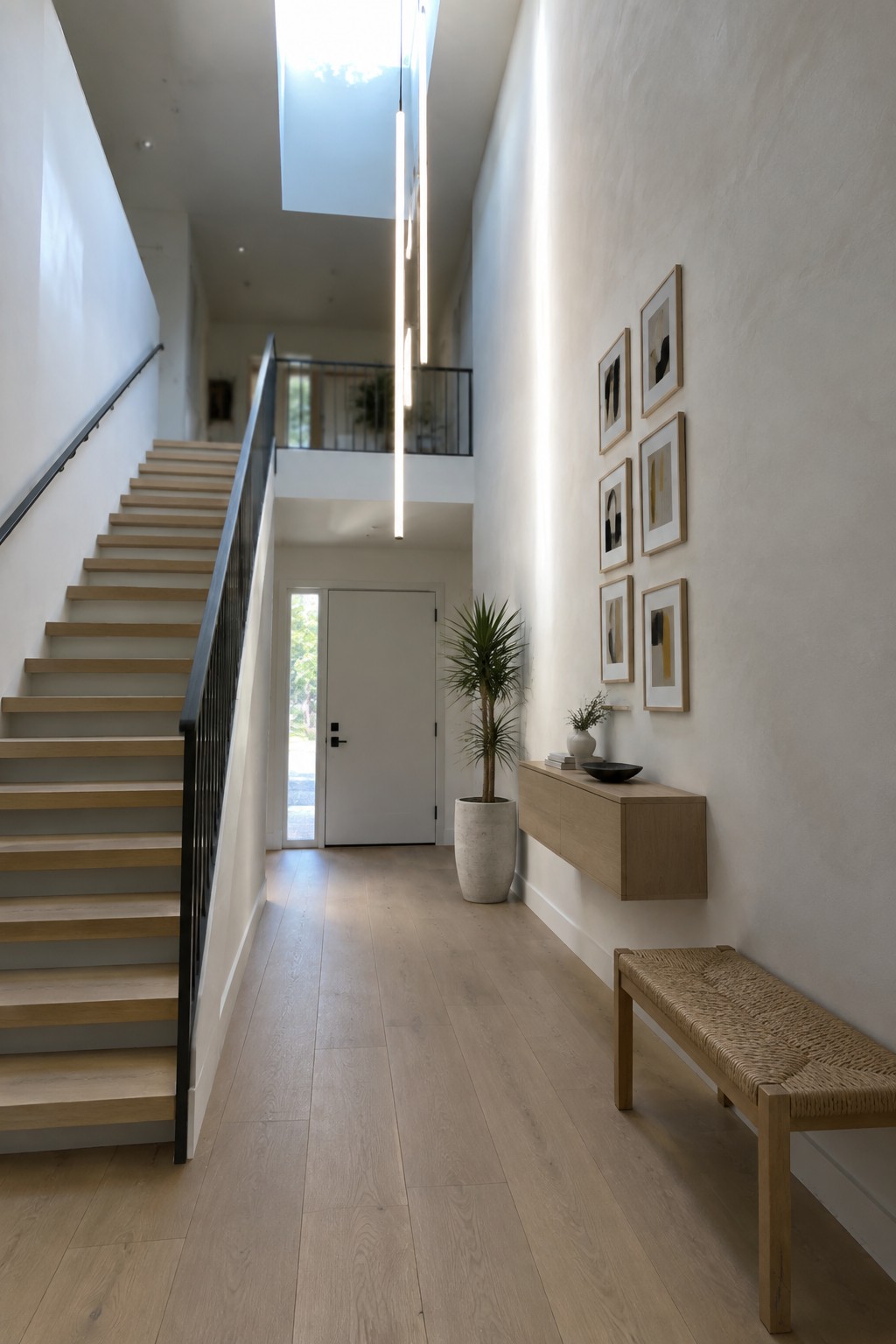
Long vertical pendants work well in entryways that have extra height because they fill the vertical space without crowding the floor. They give a clean line of light that feels steady rather than scattered, and they keep the overall look simple.
This approach suits homes with open stairwells or double height ceilings. Hang them from the highest point so the light reaches down where it is needed most, and choose slender fixtures that stay in the background.
One Pendant Light For A Minimal Foyer
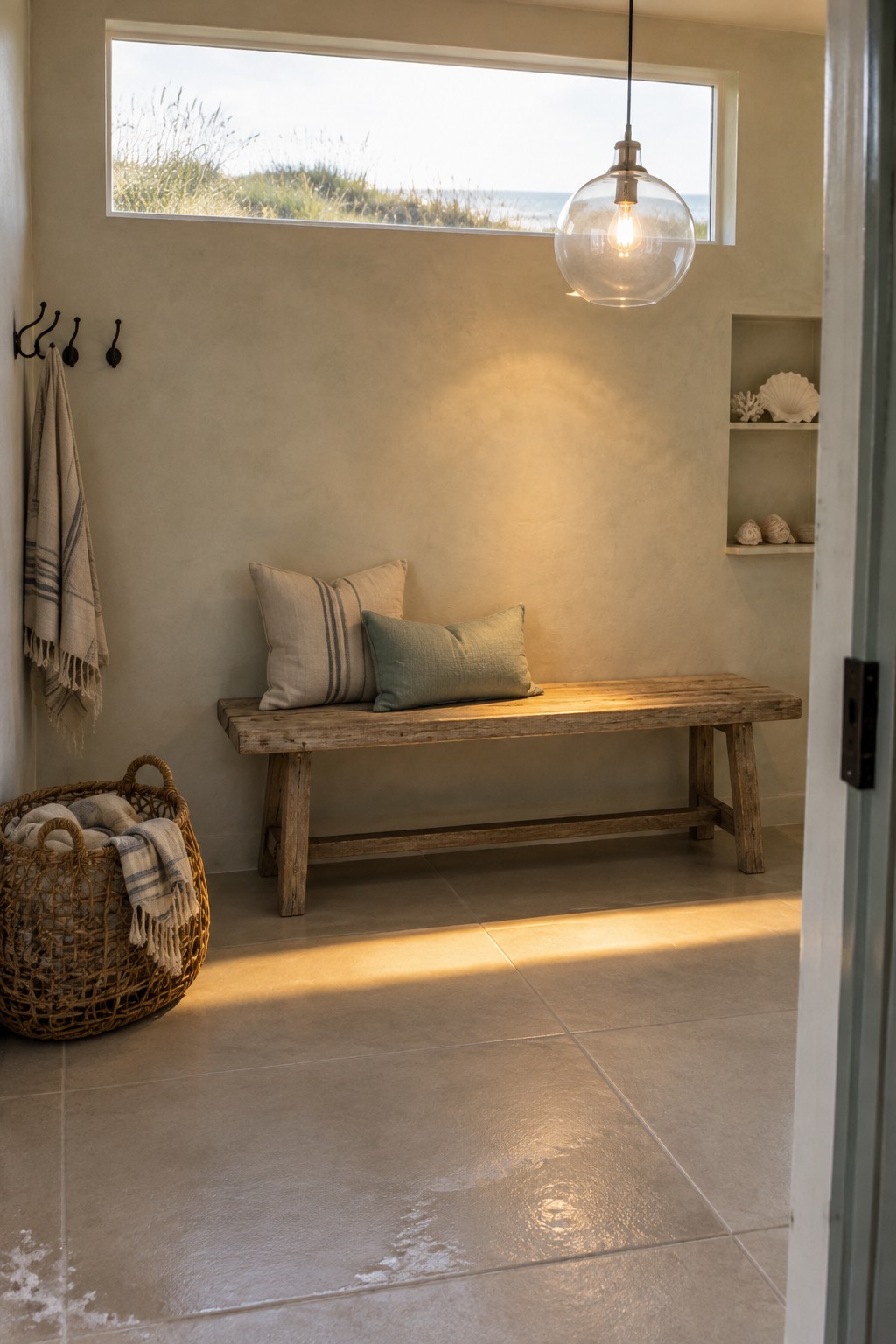
A single pendant light often works better than a set of smaller fixtures in a clean entry. It gives steady light without adding extra hardware on the ceiling or walls. The simple glass shape also becomes part of the room instead of disappearing into it.
This approach suits smaller foyers or spaces that already get daylight from a window. Hang the light where people walk or sit so the glow lands on the floor and bench. Skip extra wall sconces or recessed cans if the room feels bright enough during the day.
One Sculptural Sconce For A Calm Entry
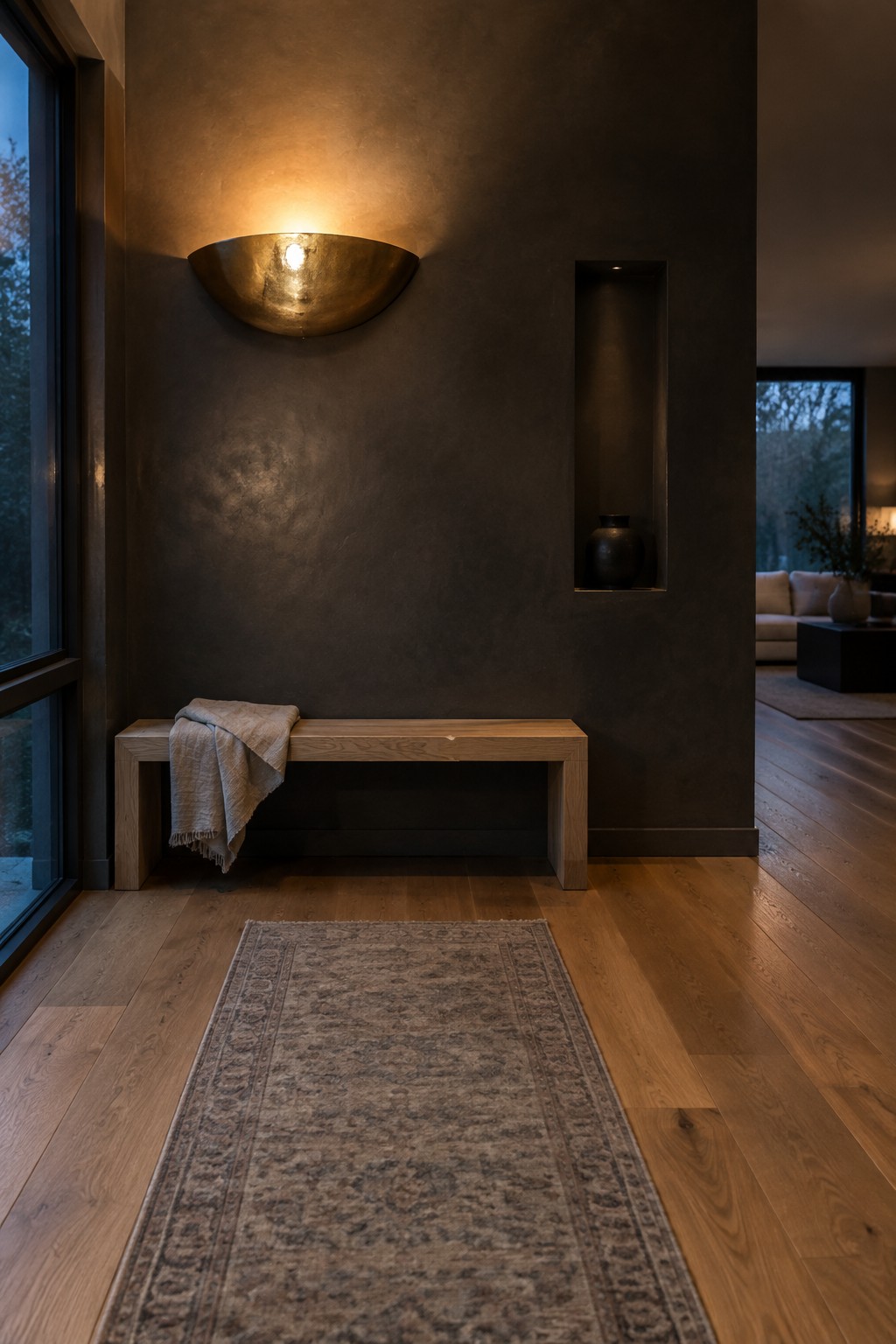
A single wall sconce can carry the whole lighting plan in a small entry. It gives focused light where you need it while leaving the ceiling and floor clear, which helps the space feel open instead of crowded.
This approach works best in homes that already use simple lines and fewer finishes. Mount the fixture at a comfortable height above a bench or console, and choose a shape that has some presence so it reads as the main detail rather than an afterthought.
Skylights for Naturally Bright Foyers
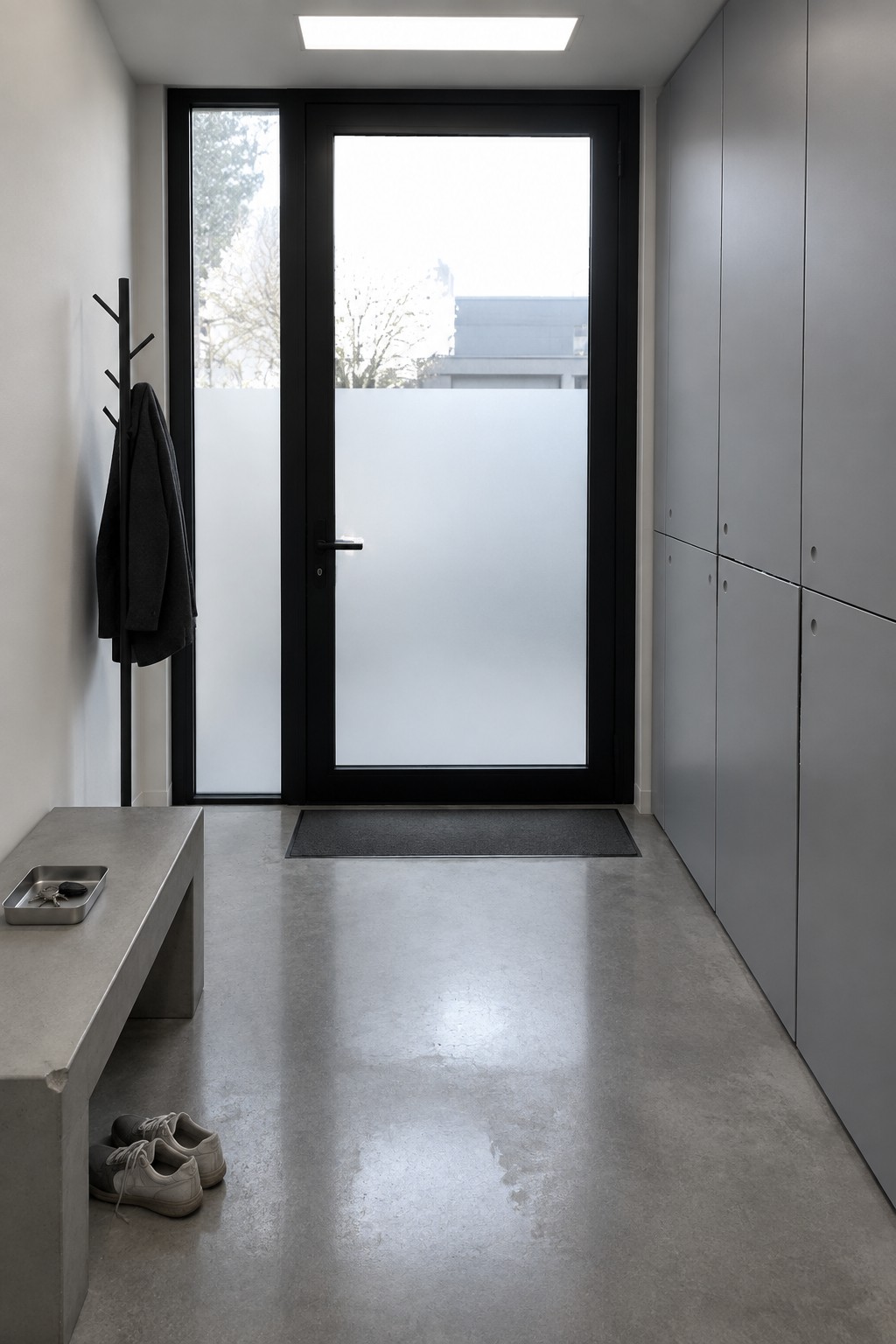
A skylight placed directly over the entry door brings in steady natural light that keeps the space open and simple. It reduces the need for extra fixtures while making the whole area feel less closed in during the day.
This approach works best in compact foyers or narrow hallways where wall space is tight. It suits modern homes with clean surfaces and helps the entry stay functional without adding visual clutter.
Vertical Lighting in an Arched Niche
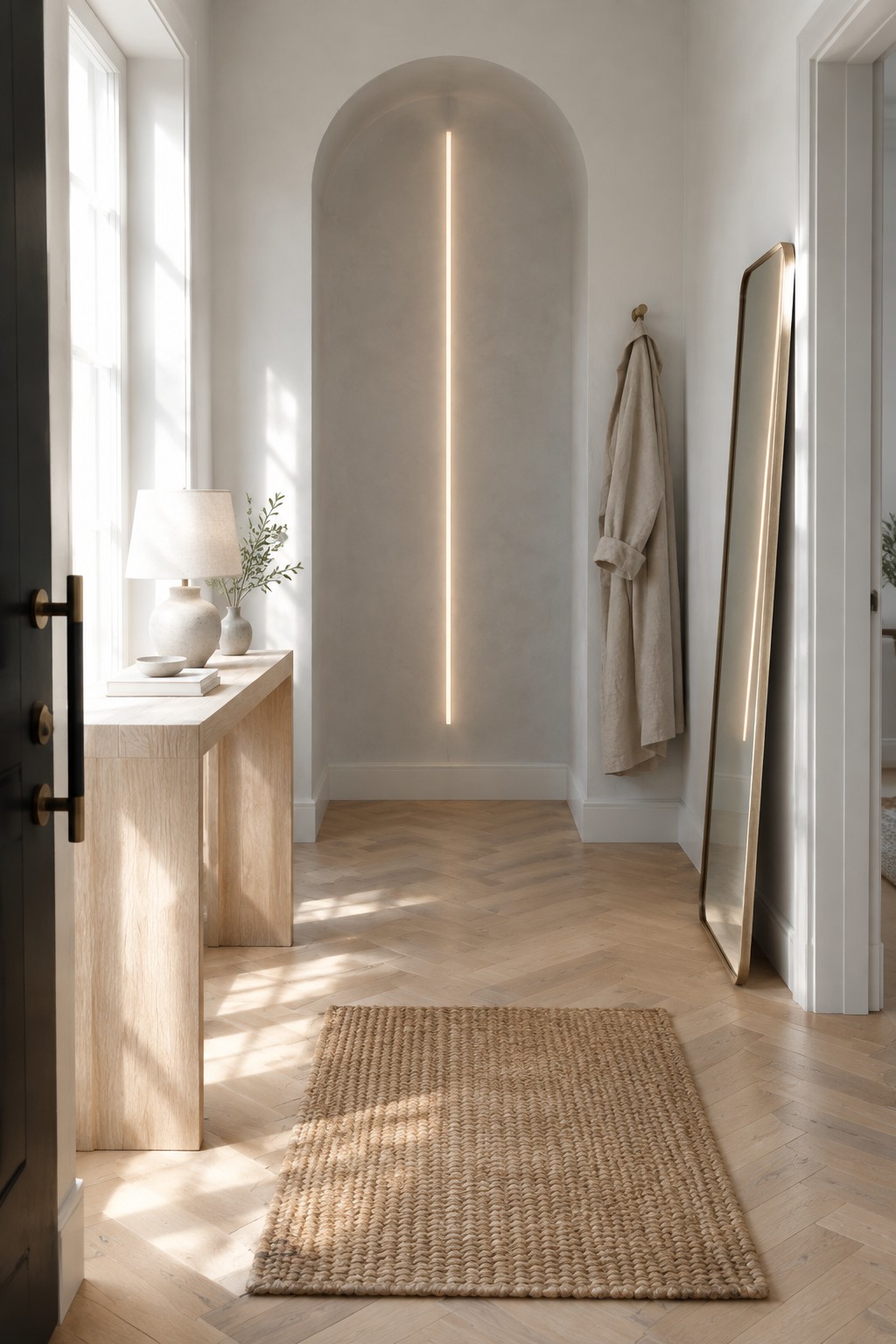
A tall vertical light set into a shallow arched recess gives a foyer a quiet focal point without adding any extra objects. The light becomes part of the wall itself, so the space stays open and the ceiling line stays clean. Many people like this approach because it delivers enough brightness for daily use while keeping the look spare.
This works best in narrow or low-ceiling entryways where a hanging fixture would feel too heavy. Try it in homes with simple plaster walls and wood floors. Keep the rest of the lighting low and even so the vertical strip stays the main feature.
One Pendant Light for a Minimal Entry
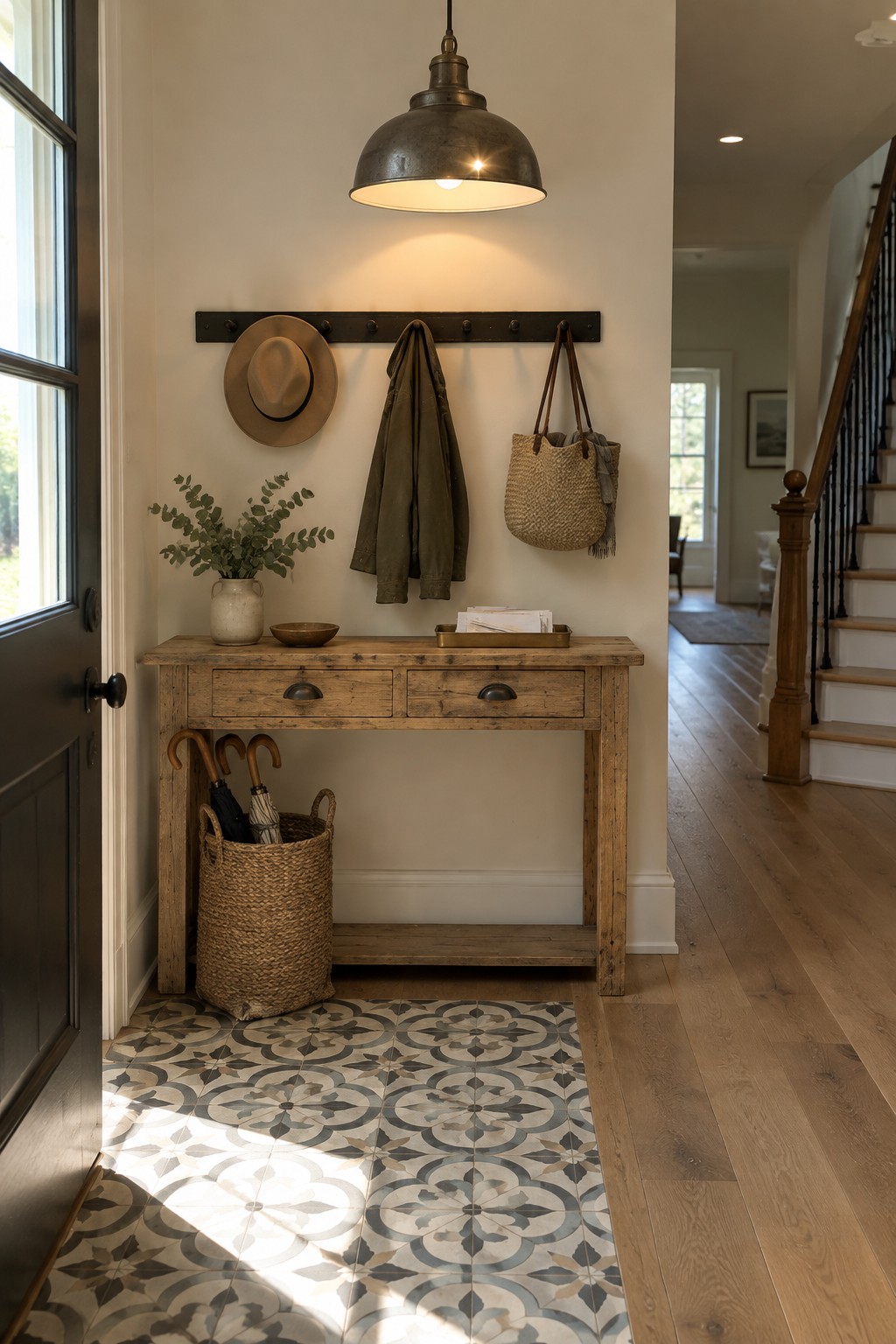
A single pendant can do a lot in a small entry without making the space feel busy. It gives focused light right where you need it, over the console or the spot where you drop keys and mail, and it avoids the need for multiple wall sconces or recessed cans that can clutter a clean wall line.
This works best in narrow foyers or homes that already lean simple. Hang the fixture at a height that clears heads but still feels connected to the table below, and keep the shade fairly plain so it does not compete with the rest of the room.
Vertical Lighting Strips Along The Door
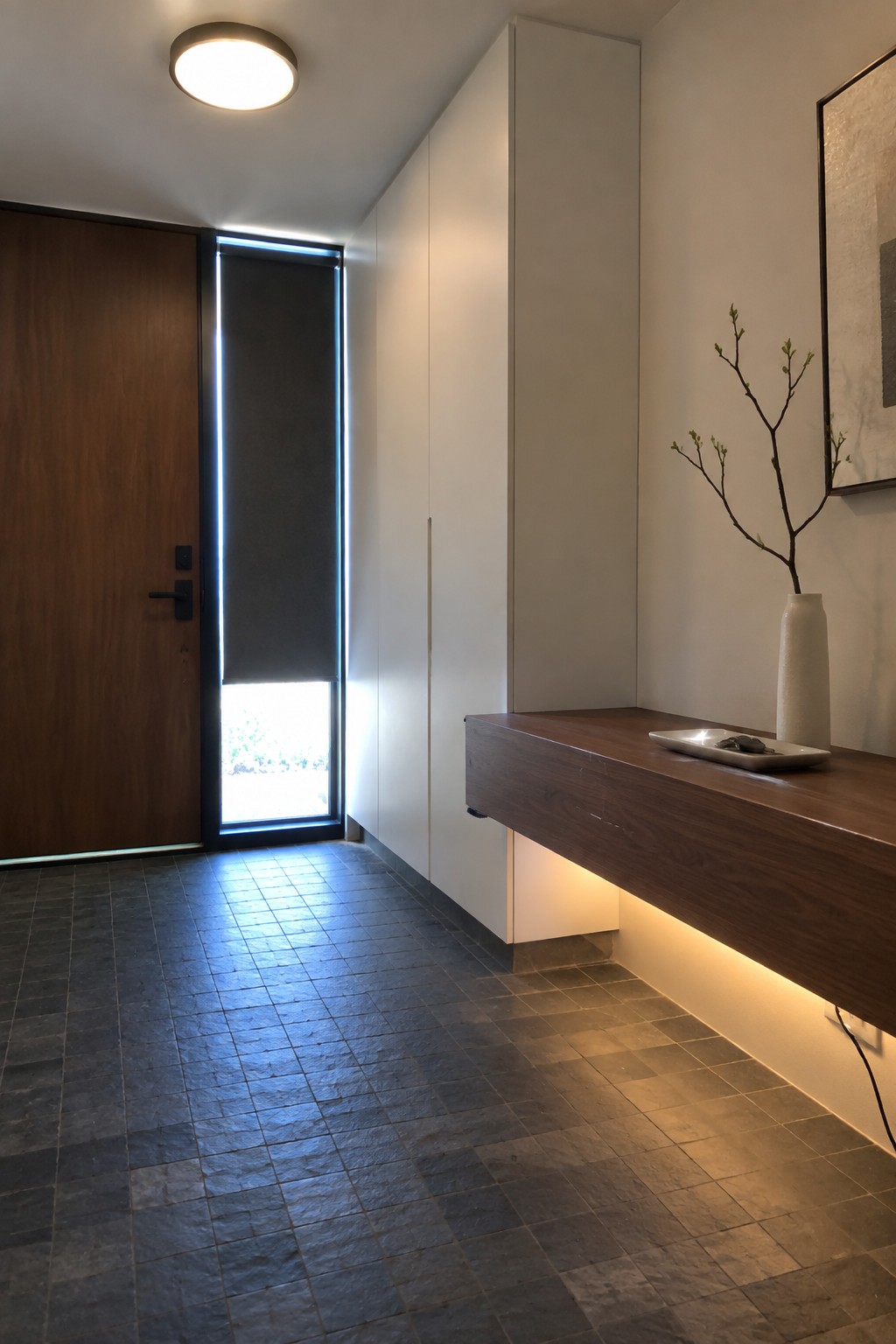
A slim vertical light strip right beside the door adds a soft glow that marks the entry without extra lamps or clutter. It keeps the space feeling open while still giving enough light to see your way in at night.
This works best in narrow foyers or clean-lined homes where you want light but nothing bulky. Pair it with a simple ceiling fixture and a low console that has its own under-lighting so the whole area stays balanced and easy to keep tidy.
Linear Lighting Along One Wall
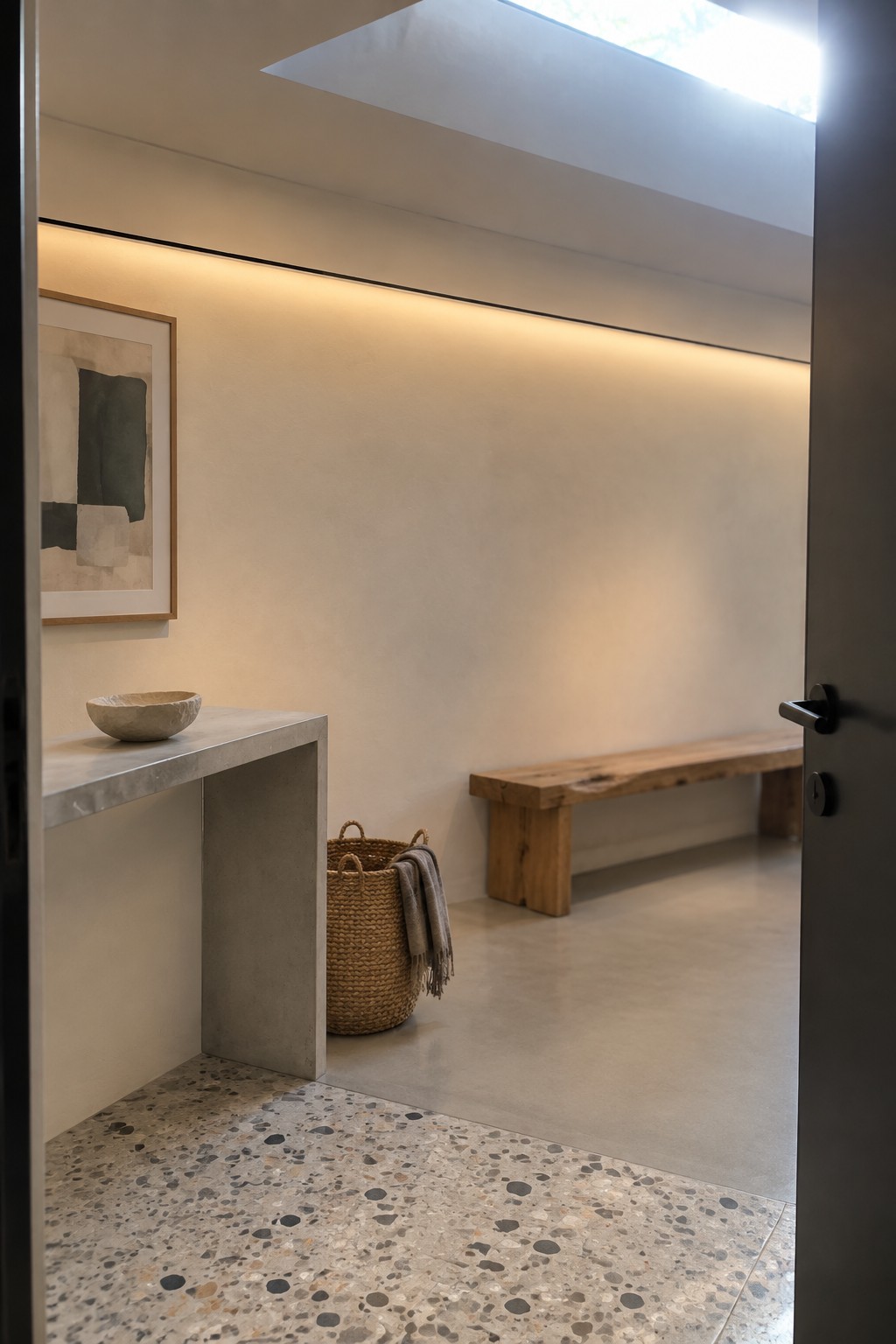
A long horizontal light strip set into the wall gives a steady, even wash of light across the entry without adding extra fixtures or clutter. It keeps the space feeling open and calm while still making the area usable at night.
This approach works especially well in narrow or simply finished foyers with plain walls. It suits homes that already favor minimal details and can be planned during construction or a larger remodel.
Pendant Lights Over a Floating Shelf
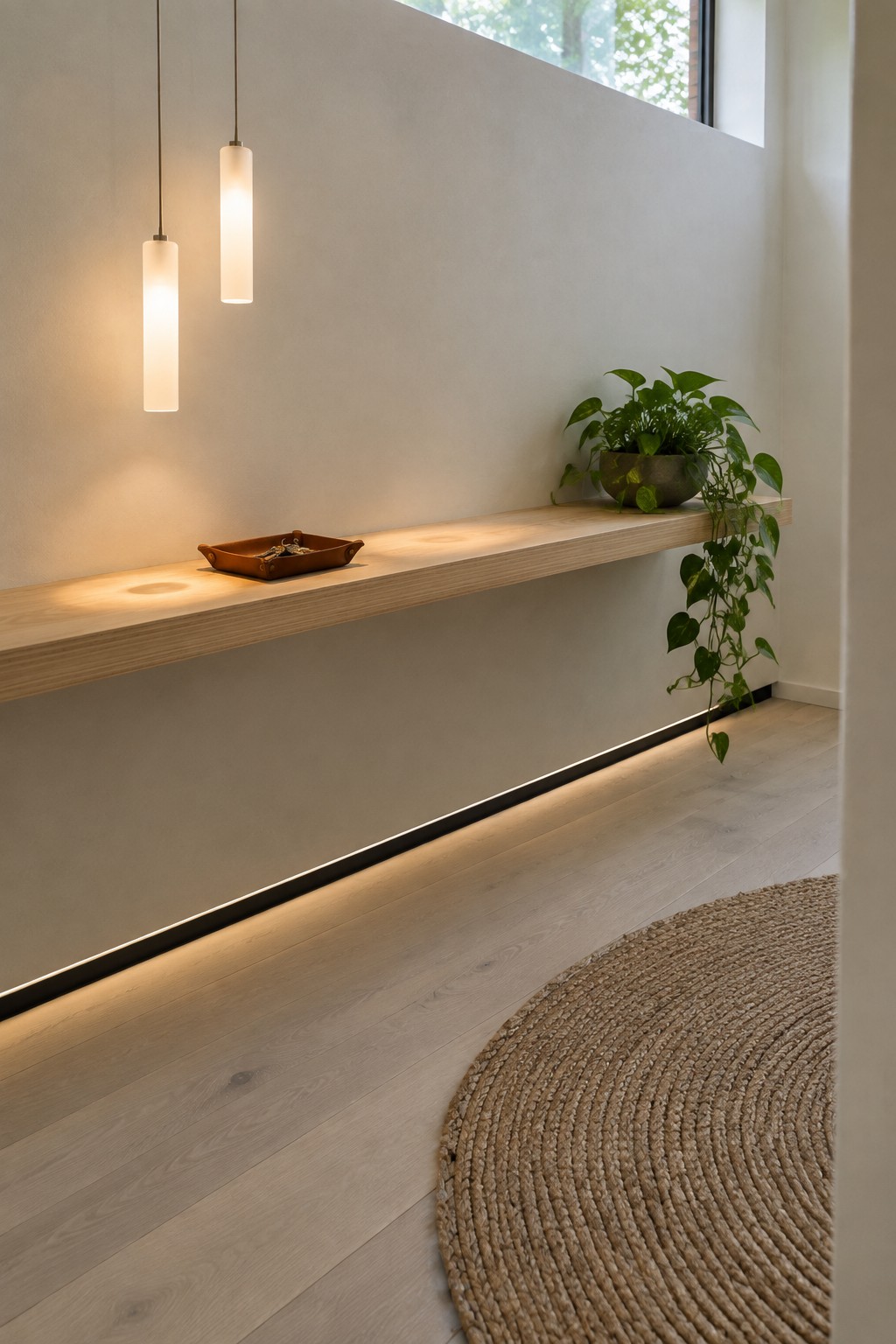
A floating shelf works well in a narrow entry because it gives you a place for keys and mail without eating up floor space. Adding a pair of slim pendant lights above it creates a gentle pool of light that feels welcoming at the end of the day. The light stays focused on the shelf area and leaves the rest of the walkway clear.
This setup suits smaller or minimalist homes where you want lighting without extra furniture. Keep the pendants narrow and hang them at a height that does not block movement. The shelf can be as long as your wall allows, but avoid loading it with too many small items or the clean look starts to disappear.
Linear Fixtures For Narrow Foyers
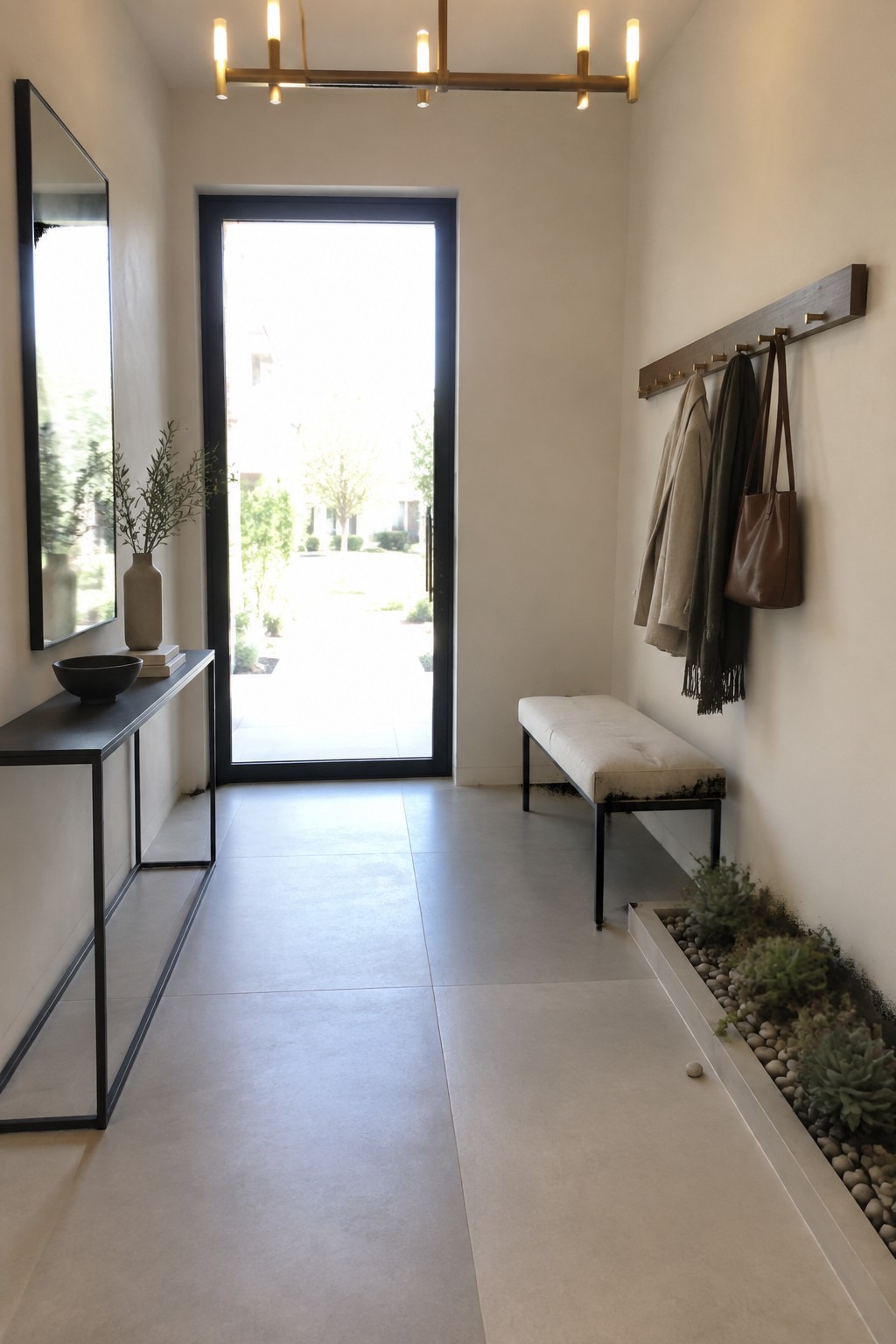
A long, slim overhead fixture works well when the entry is tight and you want light without adding bulk. It spreads illumination evenly along the length of the space instead of creating one bright spot in the middle.
This approach suits homes with plain walls and minimal furniture along the sides. Keep the fixture narrow enough that it does not crowd the ceiling edges, and choose a finish that blends with the rest of the hardware in the house.
Linear Wall Lighting For Narrow Foyers
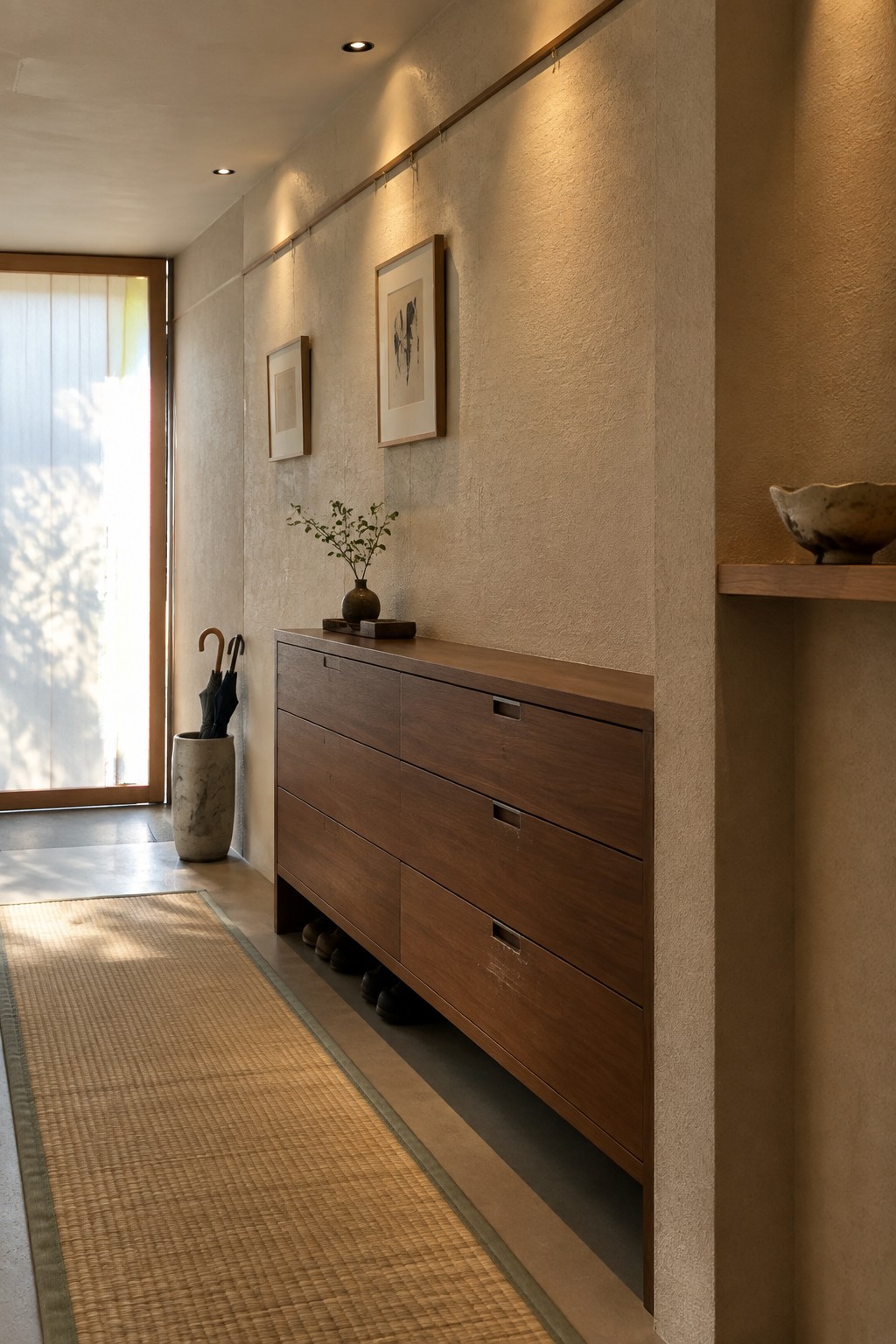
A slim track of light running along the upper wall gives steady coverage in a long entry without adding extra lamps or clutter. It keeps the space feeling open while making sure the whole length stays usable at night.
This setup works best in narrow or simple foyers where you want the focus on the walls rather than fixtures. Pair it with a couple of recessed ceiling spots for overall light, and it fits homes that already lean toward clean lines and minimal furniture.
A Branching Chandelier For Even Foyer Lighting
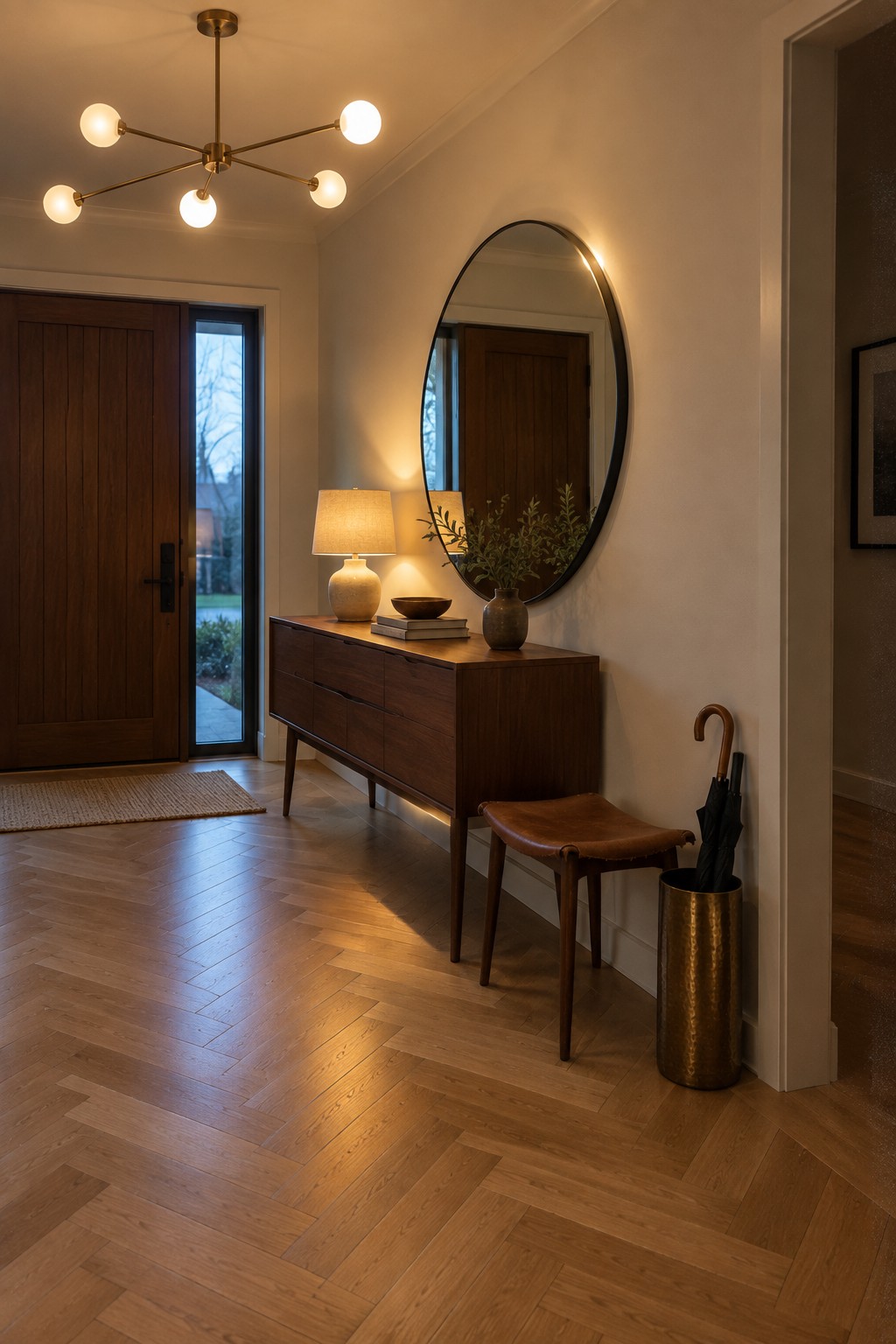
A chandelier with several arms works well in a clean entry because it spreads light in multiple directions at once. This cuts down on the need for extra lamps while still keeping the space bright enough for daily use.
It suits homes with wood floors and simple furniture layouts. Hang it centered over the console area so the glow reaches the mirror and nearby seating without creating dark corners or feeling heavy.
Pendant Lights in a Straight Line
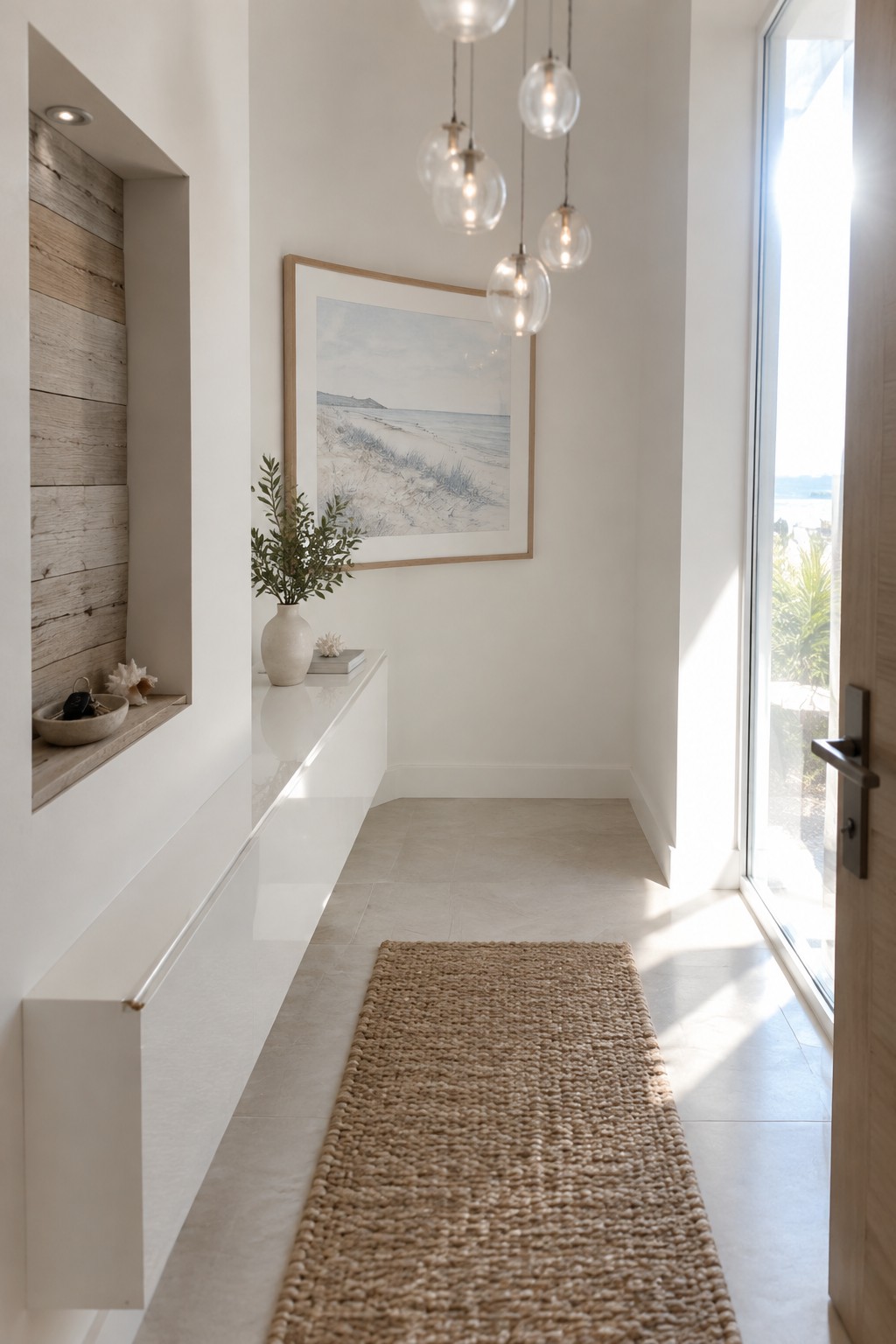
Running a row of matching pendants down a narrow foyer gives steady light without crowding the walls or floor. The simple globes stay out of the way and keep the space feeling open and calm, especially when everything else stays light and plain.
This setup suits slim hallways in minimalist homes where you want function without extra pieces. Keep the fixtures small and evenly spaced so the line looks intentional rather than busy.
Built-In Lighting In Wall Niches
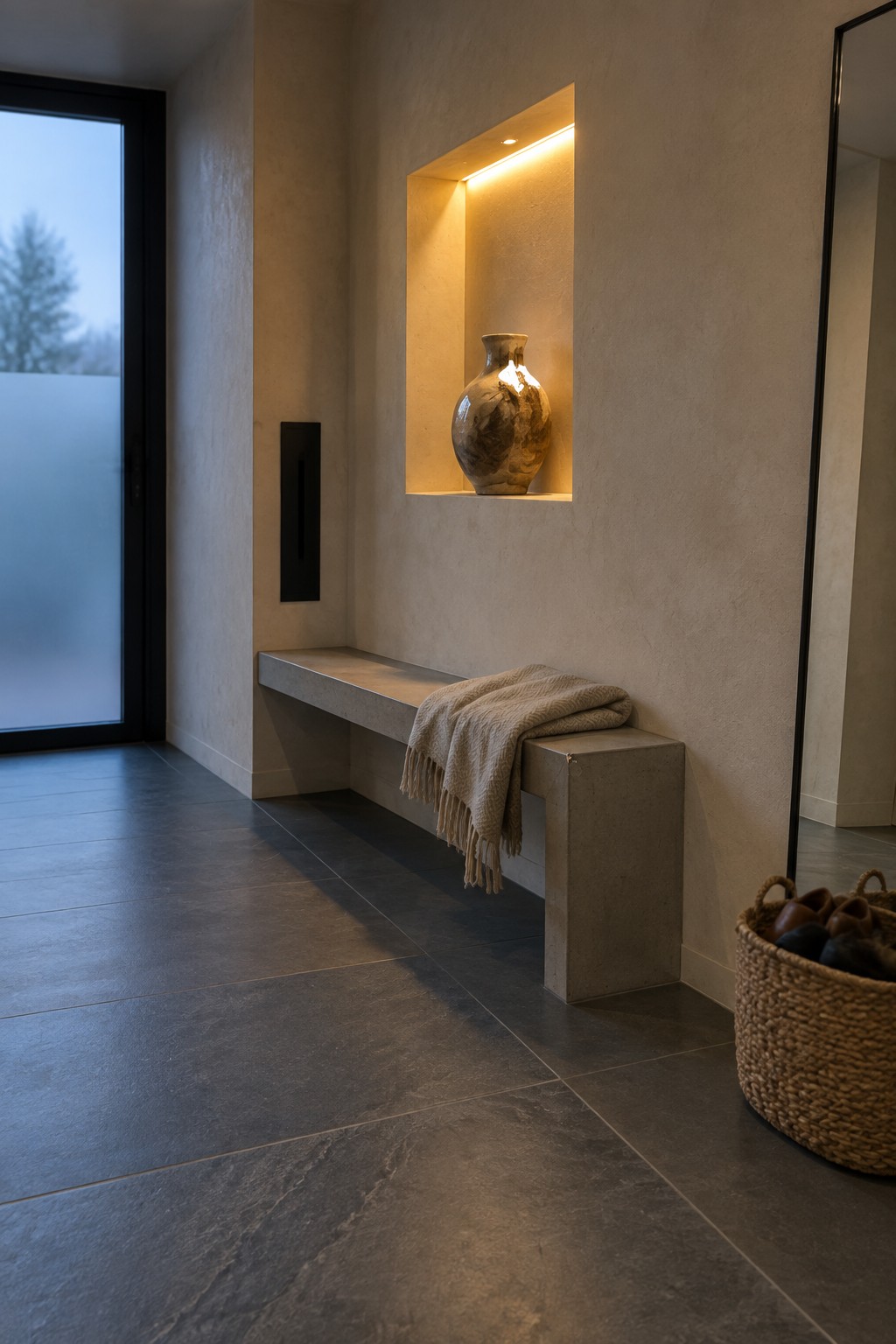
A recessed niche with its own light source gives an entryway a quiet focal point without adding any visible fixtures. The soft glow stays contained and helps the space feel calm and uncluttered, especially when the rest of the room stays simple.
This approach works best in narrow or low-traffic foyers where you want light directed at one spot. It suits homes with plain walls and built-in seating, though the niche needs to be deep enough to avoid glare from the bulb itself.
Wall Mounted Arc Lamps For Slim Foyers
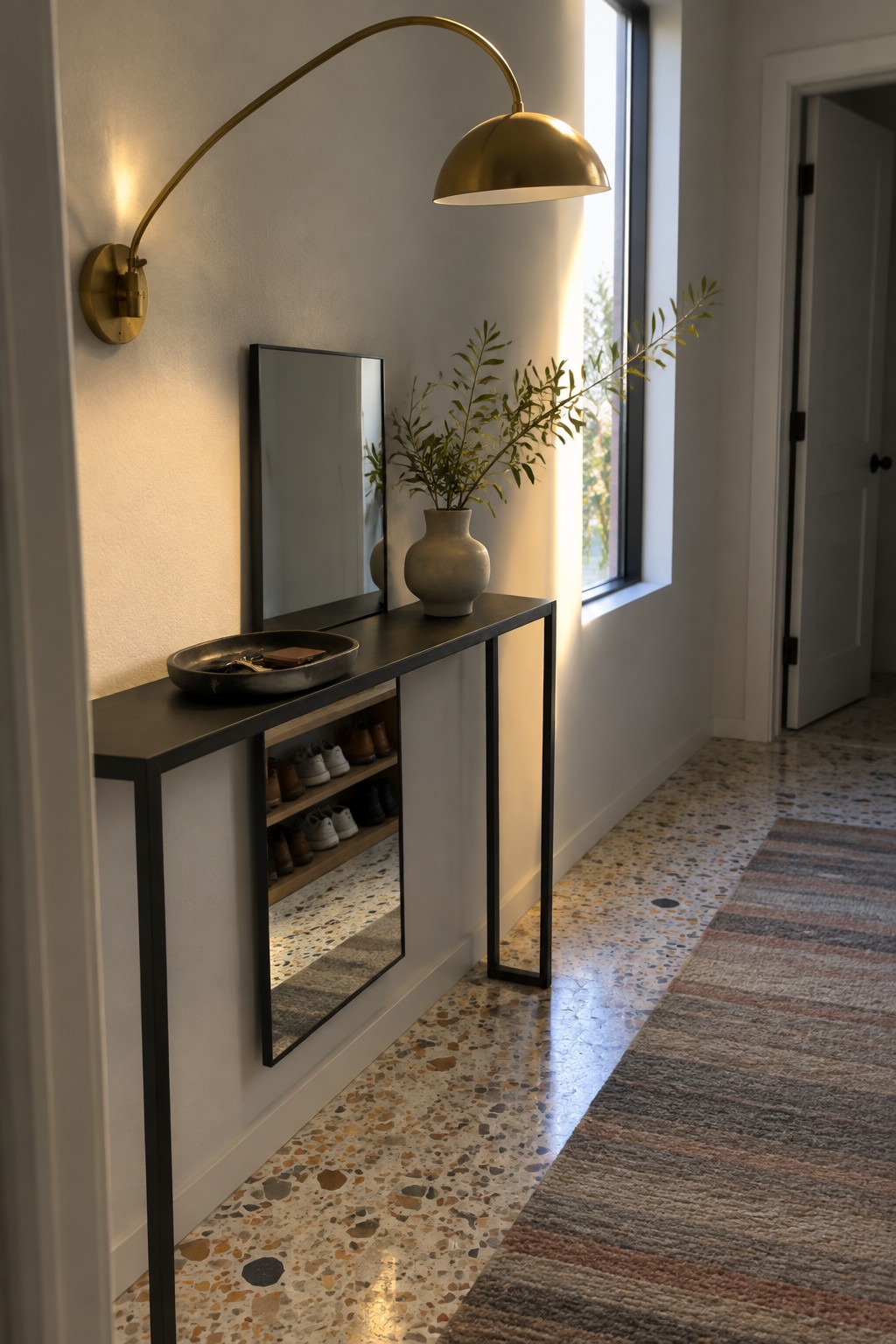
A wall mounted arc lamp gives you focused light right where you need it over a console without taking up any floor space. That keeps the entry feeling open and makes daily use easier when you are coming and going with bags or shoes.
This approach works best in narrow or minimalist homes where a floor lamp would get in the way. Mount the lamp so the shade clears the table by a few inches and pair it with simple hardware that matches your other fixtures.
Integrated Lighting Along The Stairs
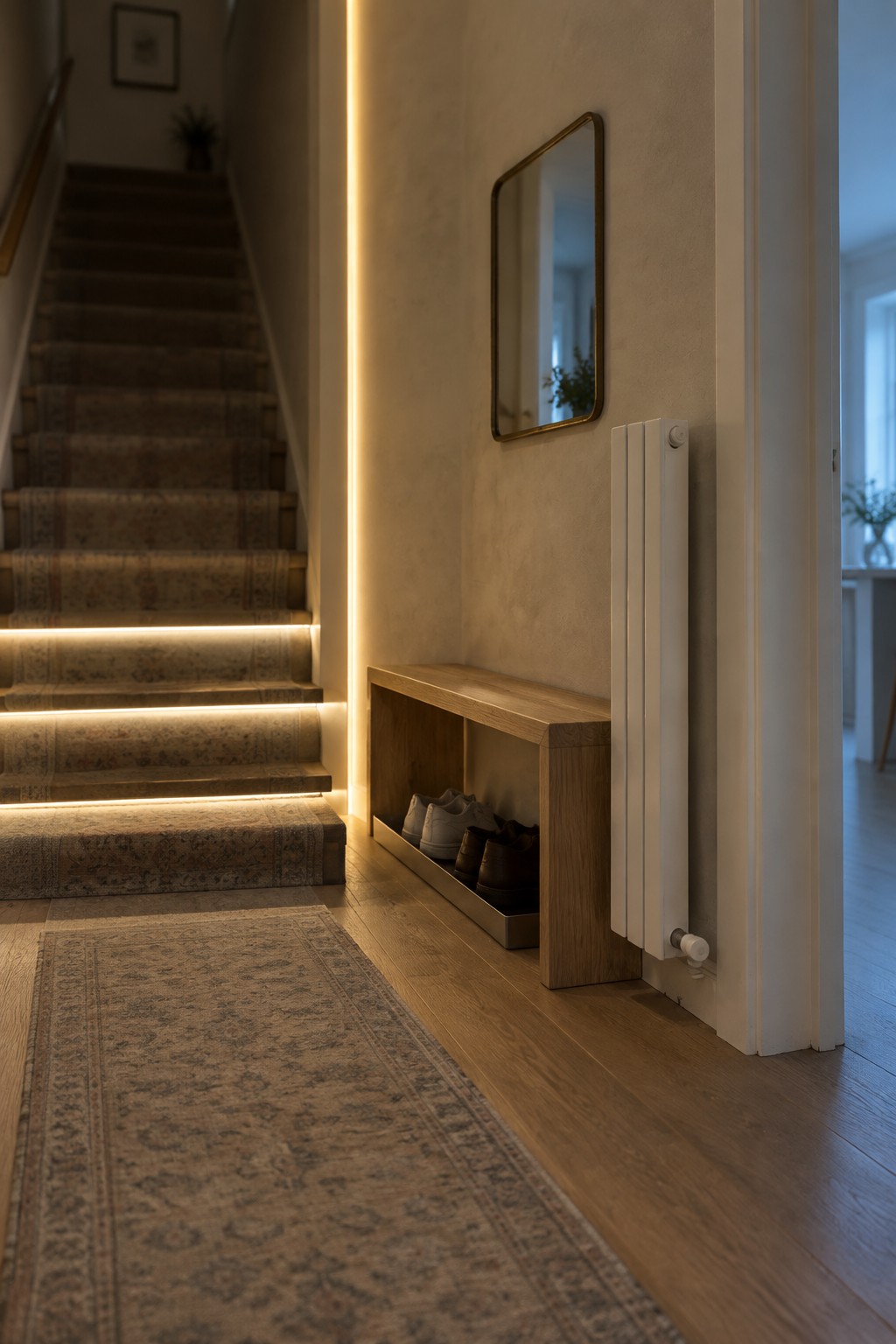
One simple way to keep a foyer feeling open and uncluttered is to run lighting right into the stairs themselves. Thin LED strips tucked under each tread give enough light to see the steps without adding lamps, scones, or visible fixtures that take up space.
This approach works best in homes where the stairs sit right in the entry or where the goal is a calm, low-key look. It suits both modern and traditional homes as long as the strips stay hidden and the light stays soft rather than bright.
Mirror Border Lighting In Entryways
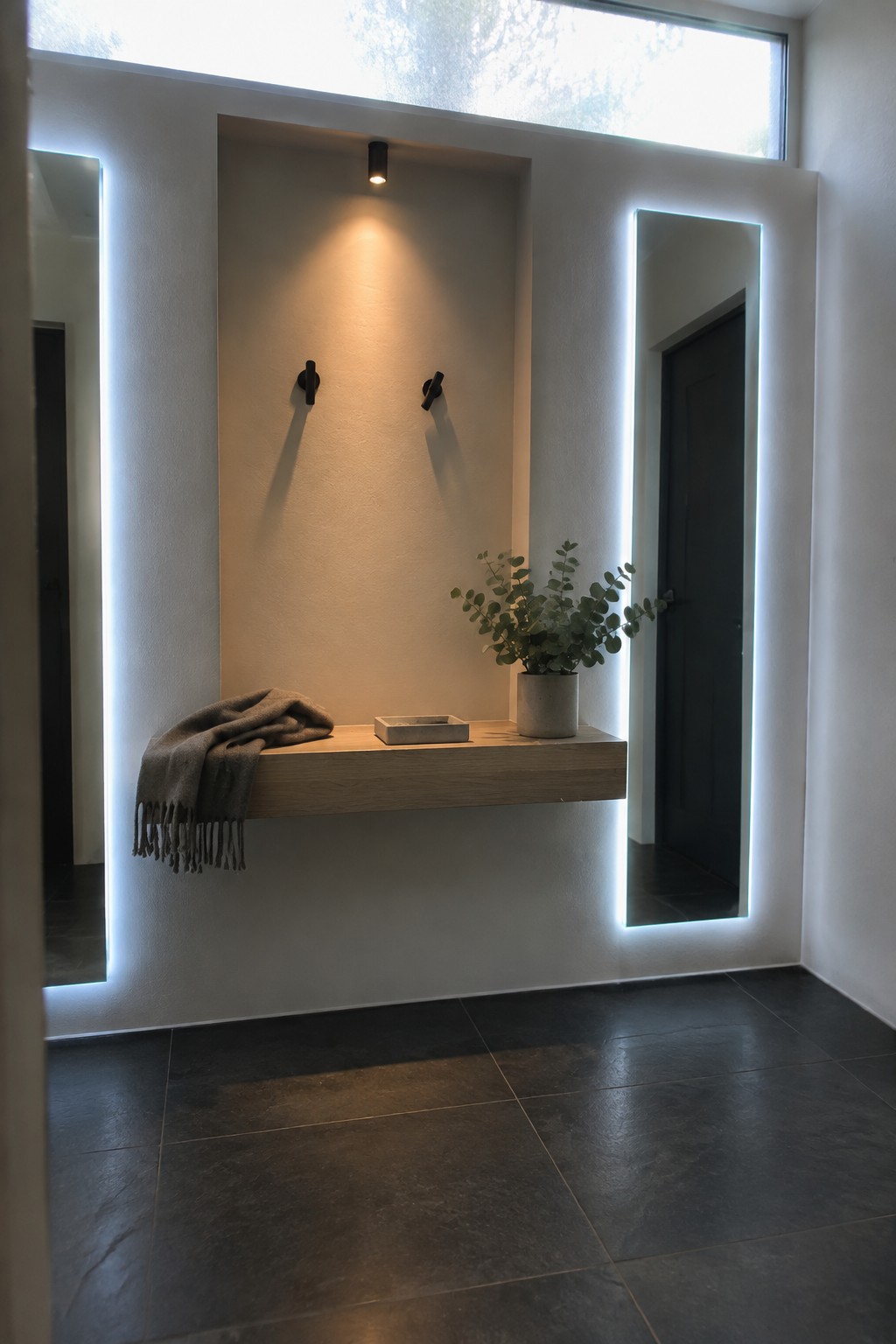
Many people like the way LED strips set into mirror frames give a soft, even glow across the whole entry without needing extra lamps or wall sconces. It keeps the walls clean and makes the space feel open even when the main lights are off.
This works best in smaller foyers or narrow halls where you want light but not clutter. It suits homes with simple wall finishes and pairs well with a single floating shelf or bench underneath. Just make sure the LEDs sit behind a cover strip so the light stays diffused instead of glaring.
Frequently Asked Questions
Q: What size light works best in a small foyer? A: Start with a fixture no wider than half the width of your door. Keep the design simple with clean lines so it does not overwhelm the space. Test the scale by holding up a paper cutout first.
Q: How can I make my entryway feel brighter without adding more fixtures? A: Choose bulbs with a high lumen output but a soft white tone. Position the light to bounce off a nearby wall or mirror. This spreads the glow evenly across the floor.
Q: Do these minimalist designs work with colored walls? A: Pick a fixture in a neutral finish that matches your hardware. The simplicity of the shape lets the wall color stand out instead of competing.
