

Ever wondered if your car battery can handle the power surge? Picture this: you’re cruising down the highway when suddenly, your dashboard lights flicker. Could 15 volts be too much for your car battery to handle?
In this article, you’ll discover the impact of 15 volts on your car battery and whether it’s a cause for concern. Understanding the optimal voltage range for your battery can save you from unexpected breakdowns and costly repairs. Let’s dive in and shed light on whether 15 volts is a friend or foe to your car’s powerhouse.
Understanding Car Battery Voltage
When it comes to your car’s battery, understanding the voltage it operates at is crucial. Here’s what you need to know:
- Car batteries typically operate at around 12 volts. This voltage provides the necessary power to start your car and keep it running.
- The ideal voltage range for a car battery is between 12.4 to 12.6 volts. This range indicates a fully charged battery, ensuring optimal performance.
- A voltage above 12.6 volts when the car is not running is considered high. It could indicate overcharging, potentially leading to damage if not addressed promptly.
- An excessively high voltage of 15 volts can cause electrolyte loss in the battery. This loss may result in decreased battery life and performance issues.
To maintain your car battery’s health and performance, it’s important to monitor its voltage regularly. If you notice consistently high voltages, it’s wise to have your car’s electrical system checked by a professional to prevent any long-term damage.
Effects of High Voltage on Car Battery
When your car battery voltage exceeds 15 volts, several detrimental effects can occur:
- Electrolyte Loss: High voltage can lead to increased electrolyte loss, affecting the battery’s ability to function properly.
- Reduced Battery Life: Excessive voltage can shorten the lifespan of your car battery, leading to frequent replacements.
- Diminished Performance: A voltage of 15 volts or higher can result in diminished battery performance, causing issues with starting your vehicle.
- Risk of Overheating: The risk of your car battery overheating also increases with elevated voltage levels, potentially causing safety concerns.
To prevent these issues, it’s crucial to monitor your car battery voltage regularly. If you notice consistently high voltages, seeking professional inspection is advisable to safeguard your battery’s long-term health.
Optimal Voltage Range for Car Batteries
When it comes to car batteries, staying within the right voltage range is crucial for optimal performance and longevity. Here’s what you need to know:
Ideal Range:
- Car batteries typically operate best within the range of 12.4 to 12.6 volts when the vehicle is off.
- While Running: When your car is running, the voltage should be between 13.7 to 14.7 volts to allow for charging and system operation.
Significance of the Range:
- Below 12.4 Volts: You risk draining the battery excessively, leading to potential starting issues.
- Above 15 Volts: Exceeding this limit can result in electrolyte loss, reduced lifespan, and overheating, as previously discussed.
Monitoring is Key:
- Regularly checking your car battery voltage ensures it stays within the optimal range.
- Use a multimeter for accurate readings and early detection of any potential issues.
Preventative Measures:
- If you notice consistently high voltages, it’s wise to seek professional inspection to safeguard your battery’s health.
- Avoid overcharging your battery, as this can damage its internal components and shorten its lifespan.
- By understanding and monitoring your car battery’s voltage, you can proactively protect it from harm and ensure reliable performance when you hit the road.
Recommended Products
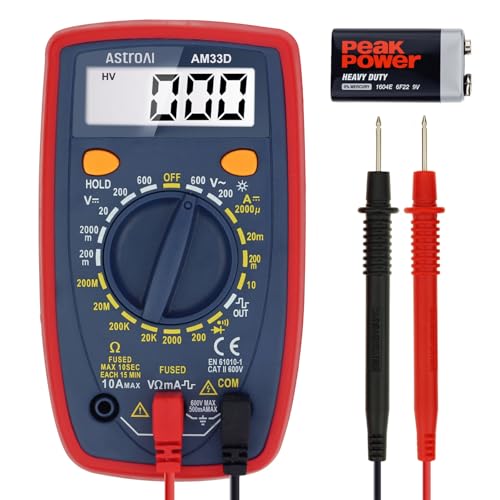
Additional Tips - The following incorrect operations may cause the multimeter not to show results: Firstly, the plugs of test leads are not fully inserted or not inserted into the correct sockets. Secondly, the manual rotary switch is not placed in the correct position. In addition, this meter can not test all AC Current and below 100mV AC Voltage. Please check the user manual carefully before measurement.

Accurately Test Full Features: Accurately measures AC/DC voltage, DC current, resistance, continuity test, diode and batteries.

✅【Car Battery Tester】 BR502 can test all 6V/12V/24V 100-2000CCA batteries including regular flooded, AGM flat plate, AGM spiral, or gel batteries, compatible with cars, SUVs, Pickups, Boats, Motorcycles and etc. Provide overall analysis of batteries’ health and help you know its status in advance before it dies.
Signs of Overvoltage in Car Batteries
If you’re wondering, “Is 15 volts too high for a car battery?” it’s crucial to recognize the signs of overvoltage to prevent damage and ensure your battery’s health. Here are some indicators to watch out for:
- Swelling or Bulging Battery Case: A bloated or deformed battery case can signal overcharging, causing the internal components to deteriorate.
- Strong Sulfur Odor: An unpleasant sulfur smell coming from your battery could be a sign of overheating due to excessive voltage.
- Electrolyte Boiling: If you notice bubbling or boiling electrolyte in the battery cells, it could mean the voltage is too high, causing elevated temperatures.
- Corroded Battery Terminals: Overvoltage can lead to increased off-gassing, resulting in corrosion on the battery terminals.
- Melted Battery Casing: Excessive voltage can cause the battery casing to melt or distort, compromising its structural integrity.
Keep an eye out for these warning signs to catch overvoltage early and take the necessary steps to protect your car battery.
Recommended Products

Effortless Operation - Boasting a “plug-and-test” design, there's no need for complex set-up procedures. Just connect it to the battery following simple steps. Without starting the vehicle, you can read the battery status, and after starting, quickly obtain the alternator status. Whether you're a professional mechanic or an ordinary car owner, you can easily use it to quickly determine if the battery needs jump - starting, replacement, or if the alternator output is normal.

Catch Battery Problems Early: Featured in two videos by Project Farm, a popular YouTube channel with millions of subscribers, the ANCEL BA101 helps you quickly spot battery issues before they leave you stranded. It provides easy-to-understand readings for State of Health (SOH), State of Charge (SOC), voltage, current, CCA, plus cranking and charging system tests, so you can better understand your battery and help avoid unexpected breakdowns

【Reliable Car Battery Tester】: The alternator tester can accurately determine whether the car battery needs to be replaced or if there is a power outage, and at the same time evaluate the output status of the alternator, clearly presents real-time voltage data, battery health and charging status. It can effectively prevent the battery from being damaged due to overcharging or undercharging, and extend the battery's service life.
Voltage Warning Levels
When it comes to car batteries, 12.4 to 12.6 volts when the vehicle is off and 13.7 to 14.7 volts while running are the optimal ranges. Operating above these levels can be detrimental to your battery’s health. Regularly monitoring the voltage can help you detect and address overvoltage issues promptly.
Recommended Products

🔋High Value Battery Tester: BM200 is your go-to solution for 12V lead-acid and lithium battery. Equipped with advanced features like voltage & cranking & charging system test, abnormal alarm and real-time trip records.This battery monitor ensures your car battery is always in optimal condition. Whether it's for your car, motorcycle, truck, RV or boat, this 12V battery tester has got you covered. Get it, and forget winter breakdown worries.

APPLICATION --- The battery testers can be used for testing battery voltage and capacity for electric motorcycle, motorcycle,golf cart, automotive , car, marine, RV, boat, etc.

DUAL USB CHARGING PORTS WITH 24W OUTPUT - This 4.8A USB car charger delivers steady power for iPad, iPhone XS, XR, 8 Plus, HTC, Galaxy, MP3 Players, Digital Cameras, PDAs and other mobile devices.
Conclusion
Ensuring your car battery operates within the recommended voltage ranges is vital for its health and performance. Recognizing the signs of overvoltage, like swelling cases and corroded terminals, is key to preventing damage. Keep in mind the optimal voltage levels of 12.4 to 12.6 volts when the vehicle is off and 13.7 to 14.7 volts when running. Monitoring these levels can help you address any overvoltage issues promptly, safeguarding your battery and ensuring a reliable ride.
Frequently Asked Questions
What are the signs of overvoltage in a car battery?
Overvoltage in a car battery can be indicated by swelling battery cases, sulfur odors, electrolyte boiling, corroded terminals, and melted casings.
What are the recommended voltage ranges for a car battery?
The recommended voltage ranges are 12.4 to 12.6 volts when the vehicle is off and 13.7 to 14.7 volts while running.
Why is monitoring the voltage levels important?
Monitoring voltage levels is crucial to detect and address overvoltage issues promptly, safeguarding the battery’s well-being and ensuring reliable performance.
