

Are you considering adding a battery to your solar system but unsure how to size it? You’re not alone. Many homeowners face this challenge when trying to maximize their solar energy usage while ensuring they have enough power for their needs.
Key Takeaways
- Understand Energy Needs: Calculate your daily energy consumption and peak loads to determine the appropriate battery size for your solar system.
- Avoid Common Mistakes: Track usage patterns, consider seasonal variations, and account for future energy needs to avoid misjudging battery capacity.
- Battery Types Matter: Choose between Lead-Acid, Lithium-Ion, or Nickel-Cadmium batteries based on efficiency, lifespan, and maintenance requirements.
- Accurate Calculations: Use formulas to determine the required battery capacity and add a safety margin to accommodate unexpected energy demands.
- Consider Total Cost of Ownership: Evaluate upfront costs alongside maintenance and replacement expenses to make a financially sound choice.
- Check Warranty and Lifespan: Longer warranty periods and understanding the lifespan of batteries can guide you to a reliable investment for your solar energy needs.
Understanding Solar Battery Sizing
Sizing a battery for your solar system involves understanding both your energy needs and how solar energy works. Proper sizing ensures you maximize your solar energy usage and maintain sufficient power during non-sunny periods.
Importance of Proper Sizing
Proper sizing of your solar battery determines efficiency and reliability. A battery that’s too small may leave you without power during high demand times or extended cloudy weather. Conversely, an oversized battery can lead to wasted resources and increased costs. Aim for a system that balances your daily energy consumption with enough reserve capacity to handle unexpected shortages.
Key factors to consider include:
- Daily Energy Usage: Calculate how much energy your household consumes daily in kilowatt-hours (kWh).
- Peak Loads: Identify which appliances require the most energy simultaneously.
- Backup Needs: Determine how long you want power during outages.
Careful evaluation of these areas maximizes your investment in renewable energy.
Common Sizing Mistakes
Several common mistakes occur during the sizing process, which can impact the performance of your solar system.
- Ignoring Usage Patterns: Not tracking daily energy consumption leads to inaccurate sizing. Review past utility bills for a clearer picture of your needs.
- Overlooking Seasonal Variations: Energy usage can fluctuate with seasons. Assess your energy needs in the winter and summer to avoid underperformance.
- Misjudging Battery Capacity: Confusing battery capacity with runtime often results in selecting an inappropriate size. Understand both amp-hours (Ah) and kWh for better decisions.
- Neglecting Future Changes: Failing to account for potential increases in energy needs due to lifestyle changes or new appliances can hinder performance. Plan for long-term usage.
By avoiding these mistakes, you ensure your solar battery efficiently meets your energy demands throughout the year.
Factors to Consider When Sizing Batteries
When sizing batteries for a solar system, consider several key factors to ensure optimal performance and reliability.
Recommended Products

【High Capacity&Long Lasting】:1600mah high capacity AA rechargeable battery will lasting much longer time to ensure your outdoor lights always has enough power to light all night. Also can replace 600mAh, 800mAh, 1100mah, etc NiCd or Ni-MH AA cells AA battery. They won't lose the maximum capacity.
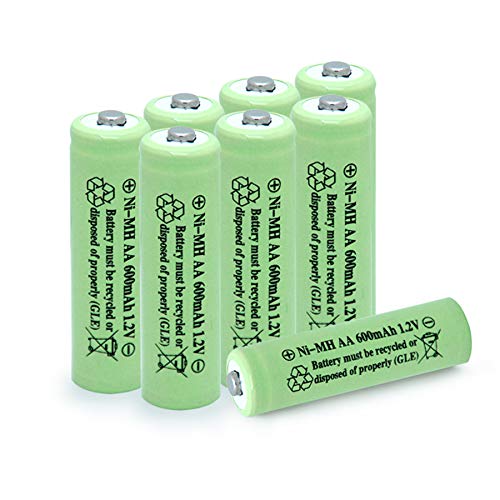
1.2-volt 600mAh AA Ni-MH rechargeable batteries

【High Conversion Rate】This 20W solar panel with monocrystalline A+ solar cell has an excellent cell efficiency of 21%-30%. Designed to charge and maintain 12V rechargeable batteries like LiFePO₄, Lithium Ion, AGM, SLA, GEL, EFB, MF, etc. Keep batteries in charged for trailer, tractor, truck, boat, motorcycle, RV, car, lawn mower, water pump, gate opener, electric fence, etc
Energy Needs Assessment
Assess your daily energy usage by reviewing utility bills, considering peak loads, and evaluating seasonal variations. Calculate the total watt-hours you consume each day. For example, if your appliances use 1,500 watts per hour for 8 hours, that totals 12,000 watt-hours daily. Determine if you want a backup during outages or to run essential devices, like refrigerators or medical equipment. This assessment guides you in selecting a battery with enough capacity.
Battery Type and Chemistry
Choose a battery type that suits your specific needs. Common types include Lead-Acid, Lithium-Ion, and Nickel-Cadmium. Lead-Acid batteries are cost-effective but often have a shorter lifespan and lower depth of discharge. Lithium-Ion batteries are popular for their efficiency and longer life but come at a higher price. Assess factors like budget, longevity, and available space in your decision. The right battery chemistry significantly impacts performance and maintenance.
Depth of Discharge
Understand the depth of discharge (DoD) limits of your chosen battery. This term refers to how much energy can be safely drained from a battery before recharging is necessary. For example, a battery with a 50% DoD means you can use half its total capacity without damage. Choosing a battery with a higher DoD allows for more usable power, but may affect lifespan. Balance your needs with the battery’s DoD specifications for efficient operation.
Sizing Calculations
Accurate sizing calculations ensure that your solar battery meets your energy needs effectively. Here’s how to approach the essential calculations.
Recommended Products
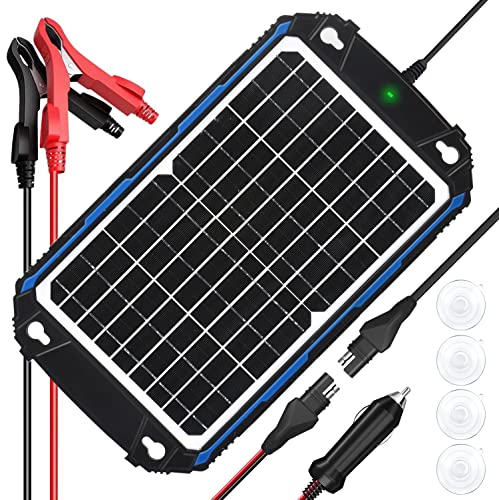
【Ultra-Smart MPPT Technology】This 12v solar panel battery charger is crafted with SUNER POWER's unique Ultra-Smart MPPT( Max Power Point Tracking) technology, the innovative MPPT allows to deliver high tracking efficiency of up to 99% and peak conversion efficiency of 98%, improving approximately 20%-30% utilization rate than other competitors

[More Efficient] 30% high conversion rate crystalline silicon material + 95% high transmittance ETFE material, greatly improving the charging efficiency of solar chargers, which can achieve the most ideal charging effect in a limited space.

【PRO GRADE VOLTAGE PROTECTION】 This industrial-grade LVC low voltage cutoff module prevents battery damage with ±0.1V precision - outperforming generic protectors. Set custom disconnect points (12-36V) to optimize battery lifespan in solar/RV systems.
Daily Energy Consumption
To size your battery, start by assessing your daily energy consumption. Review your utility bills to find total watt-hours used each day. For instance, if your household consumes 30 kWh daily, this figure becomes the baseline for sizing your battery. Break it down further by listing major appliances and their usage. For example:
- Refrigerator: 1200 watts for 8 hours → 9.6 kWh
- Lights: 300 watts for 5 hours → 1.5 kWh
- Electronics: 200 watts for 4 hours → 0.8 kWh
Add these figures to estimate total daily energy needs accurately.
Battery Capacity Calculation
Next, calculate the battery capacity required to meet your energy consumption. Use the following formula:
[ \text{Battery Capacity (Wh)} = \text{Daily Energy Consumption (Wh)} \div \text{Depth of Discharge (DoD)} ]
For example, if your daily energy consumption is 30,000 Wh and your battery’s DoD is 80%, the calculation is:
[ \text{Battery Capacity} = 30,000 \text{Wh} \div 0.8 = 37,500 \text{Wh} ]
This means you need a battery capable of storing 37,500 Wh to meet your demands adequately.
Adding a Safety Margin
Adding a safety margin accounts for unexpected energy needs or system anomalies. Typically, a 10-20% safety margin is advisable. If your calculated capacity is 37,500 Wh, add 15%:
[ \text{Safety Margin} = 37,500 \text{Wh} \times 0.15 = 5,625 \text{Wh} ]
So, the total capacity becomes:
[ 37,500 \text{Wh} + 5,625 \text{Wh} = 43,125 \text{Wh} ]
Choosing a battery that meets or exceeds this capacity helps ensure reliability and efficiency in your solar energy system.
Choosing the Right Battery
Selecting the right battery for your solar system involves understanding various battery types, costs, lifespan, and warranties to ensure an efficient and reliable energy solution.
Recommended Products

1.5V High Power AA Lithium Batteries: Revolutionary technology makes batteries larger in capacity, longer lasting,more powerful in output,ideal for high power products.Such as Xbox, blink(some models unsuitable),digital camera,meta quest

🔥【Why do you need lipo battery bag】- Do you know the potential dangers of lipo batteries? Once the battery is shorted, it will instantly generate high temperature and spontaneously ignite, which brings danger to you and your family.We designed this bag to minimize that risk, even though it can't withstand the heat and flames naturally generated by batteries for long time. But it will at least give you time to react to a spontaneous battery combustion.

Types of Batteries for Solar Systems
- Lead-Acid Batteries:
- Provide a low-cost option.
- Come in two types: flooded and sealed.
- Flooded batteries require maintenance, while sealed batteries (AGM or Gel) do not.
- Lithium-Ion Batteries:
- Offer higher efficiency and longer lifespan.
- Require less maintenance compared to Lead-Acid options.
- Generally, have a higher upfront cost but provide better value over time due to longer cycling.
- Nickel-Cadmium Batteries:
- Known for durability and performance.
- Suitable for extreme temperatures.
- Higher prices and environmental concerns may limit their appeal.
Cost Considerations
- Initial Investment:
- Account for the upfront costs of different battery types.
- Lithium-Ion batteries typically require a higher initial investment than Lead-Acid.
- Total Cost of Ownership:
- Consider replacement costs and maintenance over time.
- Lithium-Ion batteries provide savings in the long run with fewer replacements.
- Incentives and Rebates:
- Research possible financial incentives or rebates.
- Some areas offer financial support for renewable energy systems.
- Lifespan:
- Lead-Acid batteries usually last 3-7 years.
- Lithium-Ion batteries can last 10-15 years, depending on usage.
- Warranty:
- Check the warranty period for each battery type.
- Longer warranties often indicate higher confidence in a product’s longevity.
- Depth of Discharge (DoD):
- Learn how DoD affects lifespan.
- Lithium-Ion batteries often allow deeper discharges compared to Lead-Acid.
By understanding these factors, you can make an informed decision about which battery best suits your solar system needs.
Conclusion
Sizing your battery for a solar system is a vital step in ensuring you get the most out of your investment. By carefully assessing your energy needs and considering factors like battery type and depth of discharge, you can find the perfect match for your lifestyle. Remember to avoid common mistakes and keep future changes in mind to maintain efficiency and reliability.
With the right battery, you’ll enjoy peace of mind knowing you’ve got a dependable energy source ready to meet your demands. Whether you’re looking to save on electricity bills or reduce your carbon footprint, a well-sized battery can make all the difference in your solar journey. Happy solar powering!
Frequently Asked Questions
What should I consider when sizing a solar battery?
To size a solar battery effectively, assess your daily energy usage, peak loads, and backup needs. Review your utility bills to calculate total daily watt-hours consumed. Also, consider the battery type, depth of discharge (DoD) limits, and add a safety margin of 10-20% for unexpected energy needs.
Why is battery sizing important for solar systems?
Proper battery sizing is crucial for maximizing solar energy use and ensuring reliable power supply. An undersized battery may lead to energy shortages during high demand, while an oversized battery can increase costs and waste resources.
What are common mistakes when sizing solar batteries?
Common mistakes include ignoring usage patterns, misunderstanding seasonal energy variations, misjudging battery capacity, and overlooking future energy needs. These errors can result in inadequate power supply or unnecessary costs.
What types of batteries are best for solar systems?
The best battery types for solar systems include Lead-Acid, Lithium-Ion, and Nickel-Cadmium. Lead-Acid is low-cost but requires maintenance. Lithium-Ion offers high efficiency and lifespan with lower maintenance but is pricier. Nickel-Cadmium is durable but has environmental concerns.
How do I calculate the required battery capacity?
To calculate battery capacity, assess your daily energy consumption using your utility bills and appliance usage. Use the formula: Required Capacity (Wh) = Daily Consumption (Wh) / DoD, adding a safety margin of 10-20% for unexpected needs.
What is depth of discharge (DoD)?
Depth of discharge (DoD) refers to the percentage of a battery’s capacity that has been used. Understanding DoD limits is essential as it dictates how much energy can be safely drawn from the battery before needing a recharge.
How can I avoid overpaying for my solar battery?
To avoid overpaying, consider the total cost of ownership, including replacement costs, maintenance, and any available financial incentives for renewable energy. Balance the upfront costs with the battery’s lifespan and efficiency to make an informed choice.
What are the maintenance requirements for different battery types?
Lead-Acid batteries require regular maintenance, such as checking water levels. Lithium-Ion batteries need minimal maintenance, offering convenience. Nickel-Cadmium batteries have specific care guidelines as well but are generally considered durable.
How long do solar batteries last?
Solar batteries vary in lifespan. Typically, Lithium-Ion batteries last longer than Lead-Acid options, often exceeding 10 years with proper care. Lead-Acid batteries may last 3-5 years, while Nickel-Cadmium batteries offer durability but at a higher cost.
