

Ever wondered why your laptop suddenly powers off without warning? Picture this: you’re in the middle of an important project, and your laptop dies on you. Frustrating, right? You might be dealing with a dead laptop battery. But how can you tell if that’s the culprit? Don’t worry, we’ve got you covered. In this article, we’ll show you simple ways to determine if your laptop battery is on its last legs. Stay tuned to avoid those unexpected power cuts and keep your work uninterrupted.
Check the battery icon on the taskbar
When it comes to knowing if your laptop battery is dead, checking the battery icon on the taskbar is a quick and convenient way to gauge its health.
- Look at the battery icon in the taskbar to see the current charge level – this gives you an immediate idea of how much power is left in your battery.
- If the battery icon shows no power or a red ‘X,’ your battery may either be completely drained or experiencing a malfunction.
- Watch out for any erratic behavior on the battery icon, such as sudden drops in charge percentage or unusual fluctuations – these could indicate a failing battery.
By keeping an eye on the battery icon on your taskbar, you can stay proactive in monitoring your laptop’s battery health and take necessary steps to prevent any unexpected shutdowns.
Run a battery report
To Run a battery report on your laptop, you can access detailed information about your battery usage, health, and more. Here’s how you can do it:
- Step 1: Press Windows Key + X and select “Windows Powershell (Admin)”.
- Step 2: In the PowerShell window, type powercfg /batteryreport and hit Enter.
- Step 3: After running the command, you’ll get a message saying: “Battery life report saved to file path”.
- Step 4: Navigate to the file path provided to access your battery report.
By reviewing the battery report, you can analyze trends in your battery’s performance, see design capacity versus current capacity, and identify if there are any issues affecting its health.
| Battery Information |
|---|
| Design Capacity |
| Full Charge Capacity |
| Cycle Count |
| Battery Health |
Understanding these details can help you make informed decisions about your laptop usage and take steps to extend your battery’s lifespan.
Monitor the battery health in the system settings
If you suspect your laptop battery might be on its last legs, the first step is monitoring its health in the system settings. Here’s how:
- Access the System Settings: Go to your laptop’s Control Panel or Settings menu.
- Locate the Power Options: Look for the “Power & Sleep” or “Battery” settings.
- Check Battery Health: You should see information like design capacity, current capacity, cycle count, and more.
Monitoring your battery health in the system settings provides valuable insights into its condition.
Use third-party software for battery diagnostics
When monitoring your laptop’s battery health, utilizing third-party software can provide more detailed insights that may not be available through built-in system settings. These programs often offer comprehensive reports on various aspects of your battery’s performance, helping you assess its condition accurately.
Here are a few popular third-party battery diagnostic tools you can consider:
- BatteryInfoView: A user-friendly tool that displays essential battery information such as capacity, wear level, power source, and more in a simple interface.
- HWMonitor: This software not only provides battery details but also monitors system sensors, fan speeds, and temperatures, giving you a holistic view of your laptop’s health.
- coconutBattery: Primarily designed for Mac, this tool offers in-depth battery statistics including cycle count, full charge capacity, and manufacture date to help you make informed decisions.
Using these tools, you can track changes in your battery’s performance over time and identify potential issues early, extending its lifespan.
Recommended Products

Same with NT301. Extra Battery Test — Upgraded from the NT301, the NT301 Plus code reader reads and clears engine codes just as fast as the classic you trust. But now, it also checks your 12V battery health. Think of the extra cost as cheap insurance against the high tow truck bill. As one user put it: "It paid for itself the first time I plugged it in." With a 36% larger 2.8” color display (vs. 2.4”), it delivers clearer results every time. Ideal for DIYers, car owners, home mechanics, used car inspection and anyone who wants to diagnose car issues with confidence before making a costly shop visit
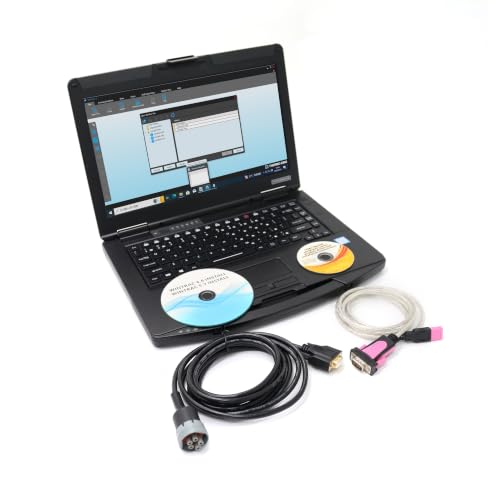
WinTrac software is the easiest way to manage your data storage and display requirements for Thermo King data logging units. WinTrac 5 is compatible with Thermo King DAS, DAS-IV, DMS, DRS, AccuTRAC, TranScan, CargoWatch or ServiceWatch data log-gers, Thermo King MPIV, MPV, MPVI, MPCR, MPD, MPA, MPA+, VPRS/DSR, TTMT, TSD, SR-2/SR-3 and Multi-Temp controllers equipped with data logging.

2-IN-1 Fast Fault & Battery Diagnosis: Instantly identify the root cause of a check engine light or a dead car. This 2-in-1 professional scanner for car combines full OBD2 code reading with a deep 12V battery health test (delivering SOC, SOH, internal resistance, and CCA data). Diagnose aging batteries or electrical faults in just 3 minutes to avoid guessing and expensive repair shop fees.
Replace the laptop battery
If you’ve determined that your laptop battery is no longer holding a charge like it used to, it may be time to replace it. Here are some steps to guide you through the process:
- Check Compatibility: Ensure you are purchasing a battery that is compatible with your specific laptop model.
- Purchase a New Battery: Visit your laptop manufacturer’s website or a reputable electronics store to find a replacement battery.
- Power Off Your Laptop: Before replacing the battery, make sure your laptop is powered off.
- Remove the Old Battery: Locate the battery compartment on the bottom of your laptop and carefully remove the old battery.
- Install the New Battery: Insert the new battery into the compartment, ensuring it is securely in place.
- Power On Your Laptop: After installing the new battery, power on your laptop and let it fully charge.
Remember, replacing the laptop battery can breathe new life into your device and improve its overall performance.
Recommended Products

Voltage: 14.8V Cells: 4-cell Grade A cells ensure fast charges and low power consumption; Built-in circuit protection ensures both safety and stability.

Specifications: 53Wh Battery H5CKD , Battery Model: 53Wh Standard Rechargeable Li-ion battery Type H5CKD, Voltage: 15V Capacity: 53Wh ; Cells: 4-cell; Color: Black ,Packages includes: 1x H5CKD Battery,2 x Free Screwdrivers(Easy to Install),1x Instruction for Dell 53WH Type H5CKD Battery

BTY-M6K battery Capacity:52.4Wh/4600mAh Voltage: 11.4V Condition: 100% New from Manufacturer
Conclusion
You now have a clear understanding of how to determine if your laptop battery is no longer functioning properly. By following the steps outlined in this article, you can easily assess the condition of your battery and take appropriate action. Remember, replacing the battery can breathe new life into your laptop and improve its overall performance. Stay proactive in monitoring your battery health to ensure a seamless user experience. Happy computing!
Frequently Asked Questions
How do I know if my laptop battery needs replacing?
If your laptop battery no longer holds a charge effectively and drains quickly even after a full charge, it may be time to consider replacing it.
How can I check if a new battery is compatible with my laptop?
To ensure compatibility, check the laptop model number on the manufacturer’s website or battery specifications. Match the voltage and physical size for a suitable replacement.
What are the general steps to replace a laptop battery?
- Power off the laptop.
- Remove the old battery carefully.
- Insert the new battery securely.
- Allow the new battery to fully charge.
Why is it important to replace a laptop battery?
Replacing a laptop battery can improve the device’s performance, longevity, and usability by providing a reliable power source for extended periods.
