

Are you tired of running out of power on your RV adventures? It’s a common hassle for many campers who rely on their batteries for everything from lights to appliances. But what if you could harness the sun’s energy to keep your battery charged and your trips worry-free?
Key Takeaways
- Understanding RV Batteries: Different battery types (Flooded Lead-Acid, AGM, Lithium-Ion) influence how well they can harness solar energy, impacting your setup’s efficiency.
- Solar Panel Basics: Solar panels convert sunlight into DC electricity. A charge controller is crucial for regulating this energy and preventing battery overcharging.
- Setup Essentials: Key components for a successful solar charging system include solar panels, charge controllers, inverters, batteries, and wiring kits tailored to your power needs.
- Effective Positioning: For optimal energy absorption, mount solar panels in areas with maximum sun exposure and keep them clean from debris to enhance efficiency.
- Regular Monitoring: Use battery monitors to track voltage and capacity, helping to prevent deep discharges and ensure the durability of your RV battery.
- Troubleshooting Tips: Be aware of common issues like low voltage or no solar power production, and regularly inspect and maintain your solar system for reliable performance.
Understanding RV Batteries
Understanding RV batteries is essential for maximizing the efficiency of your solar charging system. Different types and capacities of batteries affect how well they store and use solar energy.
Types of RV Batteries
- Flooded Lead-Acid Batteries: These are the most common RV batteries. They require regular maintenance, including checking water levels.
- AGM (Absorbent Glass Mat) Batteries: These batteries are maintenance-free. They resist vibration and can handle deep discharges well.
- Lithium-Ion Batteries: These offer a longer lifespan and faster charging. They’re lightweight but come at a higher cost.
Selecting the right type of battery impacts how effectively your solar panel system charges it.
- Capacity: Measured in amp-hours (Ah), capacity determines how much energy a battery can store. For example, a 100Ah battery can deliver 5 amps for 20 hours or 10 amps for 10 hours.
- Voltage: Commonly, RV batteries are either 12V or 6V. If using 6V batteries, connecting two in series creates a 12V system.
Knowing the capacity and voltage helps you choose the proper solar panel system to keep your battery charged effectively.
Basics of Solar Charging
Solar charging offers an efficient way to keep your RV batteries powered during trips. Understanding how solar panels operate and their advantages makes it easier to implement this eco-friendly solution.
How Solar Panels Work
Solar panels convert sunlight into electricity using photovoltaic (PV) cells. These cells generate direct current (DC) electricity when exposed to sunlight. In an RV setup, solar panels connect to a charge controller, which regulates the voltage and current going into the batteries. This control prevents overcharging, protecting the battery’s lifespan. The stored DC power can charge batteries directly or power devices via an inverter, which converts DC to alternating current (AC) for standard appliances.
- Sustainability: Solar power reduces reliance on fossil fuels, lowering your carbon footprint while on the road.
- Cost Savings: After the initial investment in equipment, solar energy significantly decreases costs associated with traditional fuel sources.
- Independence: Enjoy greater freedom by not depending on campgrounds with electrical hookups.
- Quiet Operation: Solar panels generate electricity silently, enhancing your outdoor experience.
- Low Maintenance: With no moving parts, solar panel systems generally require minimal upkeep once installed.
Charging your RV battery with solar panels not only ensures a steady power supply but also promotes an environmentally friendly lifestyle.
How to Charge RV Battery with Solar Panel
Charging your RV battery with a solar panel is an effective way to ensure a steady power supply during your trips. This section breaks down the necessary components and provides guidance for setting up your solar system.
Recommended Products
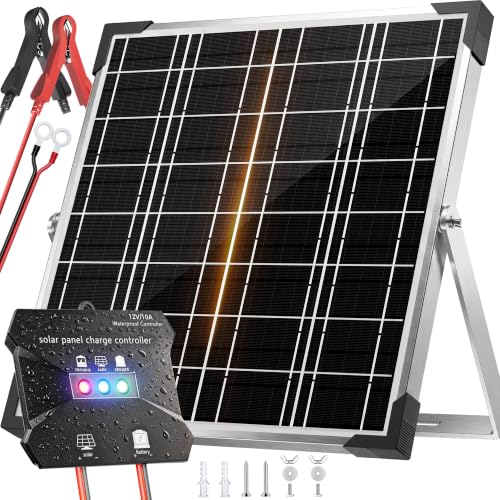
High-Efficiency MPPT Solar Charger - Advanced tracking technology delivers 20-30% faster charging for 12V batteries. A+ monocrystalline panels maximize power conversion. Perfect 20W solar trickle charger for cars, RVs, boats, and trailers. More sun captured, less time waiting.

【High Conversion Rate】This 20W solar panel with monocrystalline A+ solar cell has an excellent cell efficiency of 21%-30%. Designed to charge and maintain 12V rechargeable batteries like LiFePO₄, Lithium Ion, AGM, SLA, GEL, EFB, MF, etc. Keep batteries in charged for trailer, tractor, truck, boat, motorcycle, RV, car, lawn mower, water pump, gate opener, electric fence, etc
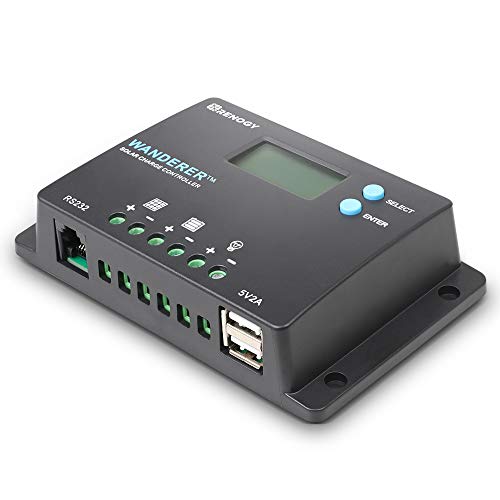
𝐒𝐦𝐚𝐫𝐭 𝟒-𝐒𝐭𝐚𝐠𝐞 12V/24V Solar Charge Controller: Renogy charge controller 𝐦𝐚𝐱𝐢𝐦𝐢𝐳𝐞𝐬 𝐁𝐚𝐭𝐭𝐞𝐫𝐲 𝐋𝐢𝐟𝐞 & 𝐒𝐨𝐥𝐚𝐫 𝐄𝐟𝐟𝐢𝐜𝐢𝐞𝐧𝐜𝐲, this advanced pwm solar charge controller utilizes intelligent 4-stage charging (Bulk/Boost/ Float/Equalization) to optimize power delivery for AGM, Gel, Flooded and Lithium batteries. RV solar charge controller prevents overcharging and gas buildup while 𝐚𝐜𝐡𝐢𝐞𝐯𝐢𝐧𝐠 𝟑𝟎% 𝐥𝐨𝐧𝐠𝐞𝐫 𝐛𝐚𝐭𝐭𝐞𝐫𝐲 𝐥𝐢𝐟𝐞𝐬𝐩𝐚𝐧 compared to basic charge controllers.
Necessary Components
You need specific components to effectively charge your RV battery with solar power:
- Solar Panels: Choose panels based on your power needs. For instance, a 100-watt solar panel might be sufficient for basic appliances, while multiple panels can support more power-intensive devices.
- Charge Controller: This component regulates the voltage and current from the solar panels to the batteries. It prevents overcharging and prolongs battery life. MPPT (Maximum Power Point Tracking) controllers are more efficient than PWM (Pulse Width Modulation) controllers.
- Inverter: If you need to power AC appliances, you’ll need an inverter to convert the DC output from your battery into AC power. Look for an inverter that matches your wattage requirements.
- Batteries: Select batteries according to their capacity, maintenance requirements, and type (Flooded Lead-Acid, AGM, or Lithium-Ion). For example, a 12-volt, 100Ah battery can power small devices for several hours.
- Wiring Kit: Proper wiring ensures safe connections between your solar panels, charge controller, and batteries. Look for UL-certified cables to ensure quality and safety.
Setting Up Your Solar System
Setting up your solar system involves several straightforward steps:
- Identify Locations: Choose a place for your solar panels on the RV. A roof with maximum sun exposure is ideal.
- Mount the Panels: Use the appropriate mounting brackets to secure the solar panels to the roof. Make sure they’re firmly attached to withstand wind and travel.
- Connect the Charge Controller: Run the wiring from the solar panels to the charge controller. Attach the positive and negative wires to their corresponding terminals.
- Connect the Batteries: Next, connect the charge controller to the batteries. Again, match the positive and negative wires, ensuring secure connections.
- Install the Inverter: If you’re using AC appliances, connect the inverter to the battery. Use the appropriate gauge wire to handle the current safely.
- Test the System: After all connections are made, check that the solar panels are charging the batteries. Monitor voltage levels using the charge controller display.
This setup ensures you harness solar energy efficiently, keeping your RV battery charged and ready for use.
Tips for Efficient Charging
Optimizing the charging process ensures that you maximize your solar energy and maintain your RV battery health.
Best Practices for Solar Charging
- Choose the Right Solar Panel Size: Select solar panels based on your power needs. Generally, aim for a panel that produces enough wattage to meet the daily energy consumption of your RV.
- Position the Panels Effectively: Install solar panels where they receive direct sunlight for most of the day. Avoid shaded areas, such as those under trees or near tall buildings.
- Keep Panels Clean: Regularly clean the surface of your solar panels. Dirt and debris can reduce efficiency. Use water and a soft cloth to gently wipe away any buildup.
- Use a Quality Charge Controller: Invest in a good charge controller, such as a Maximum Power Point Tracking (MPPT) controller. It maximizes energy harvest and prevents battery overcharging.
- Optimize Battery Storage: Store batteries in a cool, dry place when not in use. Extreme temperatures can shorten battery life and affect performance.
- Install a Battery Monitor: A battery monitor tracks voltage and capacity in real time. This tool helps you know when to charge and prevents deep discharges that can damage batteries.
- Check Voltage Regularly: Monitor the battery voltage daily, especially if using a flooded lead-acid battery. Maintain a range between 12.4V and 12.7V for optimal performance.
- Understand Charging Stages: Recognize the three charging stages: bulk, absorption, and float. Each stage provides different charging levels. Adjust your system to accommodate these stages.
- Record Consumption: Keep a log of your daily energy consumption. This practice helps you identify patterns and adjust your usage or solar setup accordingly.
- Be Aware of Weather Changes: Monitor weather conditions. On cloudy or rainy days, consider conserving energy and minimizing power usage, as solar production may be lower.
Common Issues and Solutions
When using solar panels to charge RV batteries, you may encounter common issues. Understanding these problems and their solutions ensures a smooth charging experience.
Troubleshooting Charging Problems
- No Solar Power Production: Check if the solar panels are positioned correctly. Avoid obstructions blocking sunlight. Inspect the panels for dirt or damage.
- Low Voltage Reading: Ensure connections between the panels, charge controller, and battery are secure. Inspect the charge controller for proper settings.
- Overcharging Battery: Use a quality charge controller that automatically regulates voltage. Check if the battery type matches the charge controller settings.
- Battery Not Holding Charge: Assess the battery’s age and condition. Batteries over five years old often lose capacity. Consider a replacement if necessary.
- Unusual Noise from Inverter: Identify the sound’s source. Ensure the inverter is not overloaded. Disconnect non-essential devices to lighten the load.
- Regular Cleaning: Clean solar panels at least once a month. Use a soft cloth or sponge with mild soap and water to remove dirt. This improves efficiency.
- Battery Inspection: Inspect battery terminals every few months. Clean corrosion with baking soda and water for better connectivity.
- Storage Care: Store batteries in a cool, dry place during winter months. Extreme temperatures affect battery performance and lifespan.
- Monitoring Voltage: Use a battery monitor regularly to track voltage levels. This helps identify potential issues early.
- ** Annual System Check:** Schedule an annual check of your entire solar system. Inspect connections, wires, and overall system performance to ensure reliability.
Conclusion
Embracing solar power for your RV battery charging needs opens up a world of convenience and sustainability. By harnessing the sun’s energy you can enjoy longer trips without the constant worry of running out of power.
With the right setup and a little maintenance your solar system can efficiently keep your batteries charged and ready for all your adventures. Remember to monitor your system regularly and stay aware of your energy consumption to keep everything running smoothly.
So go ahead and explore the great outdoors with confidence knowing you’ve got a reliable power source at your fingertips. Happy camping!
Frequently Asked Questions
What is the main issue RV users face regarding power supply?
Many RV users run out of power during their adventures as they mainly rely on batteries for lights and appliances, making it a common concern.
How can solar energy help RV users?
Solar energy can keep RV batteries charged, allowing users to enjoy worry-free trips without depending heavily on electrical hookups or generators.
What types of RV batteries are discussed?
The article covers Flooded Lead-Acid, AGM (Absorbent Glass Mat), and Lithium-Ion batteries, each with different maintenance needs, lifespans, and charging capabilities.
How do solar panels work for RV power?
Solar panels convert sunlight into electricity using photovoltaic cells, with a charge controller managing the flow to protect and extend battery life.
What components are needed for charging RV batteries with solar panels?
Essential components include solar panels, a charge controller, an inverter, batteries, and a wiring kit to create an effective solar charging system.
What tips are provided for efficient solar charging?
Tips include selecting the right solar panel size, ensuring optimal sunlight exposure, using a quality charge controller, and regularly checking battery health.
What troubleshooting issues might RV users encounter with solar charging?
Common issues include no power production, low voltage readings, batteries not holding charge, and unusual inverter noises. Regular maintenance can help prevent these issues.
How can I maintain my solar charging system?
Maintain your system by cleaning solar panels regularly, inspecting battery terminals, monitoring voltage levels, and scheduling annual system checks for reliability.
