

Have you ever found yourself out on the water, only to realize your marine battery is running low? It’s a frustrating situation that can leave you stranded. But what if you could harness the power of the sun to keep your battery charged and ready for your next adventure?
Key Takeaways
- Understanding Battery Types: Familiarize yourself with the three main types of marine batteries—starting, deep cycle, and dual-purpose—to choose the right one for your needs and solar charging compatibility.
- Solar Panel Selection: Choose between monocrystalline, polycrystalline, and flexible solar panels based on efficiency, space availability, and budget for optimal charging performance.
- Essential Components: Ensure you have the necessary components (solar panels, charge controller, cables, and compatible battery) for a successful solar charging setup that prolongs battery life and maximizes efficiency.
- Installation Tips: Follow a structured installation process, including proper mounting, wiring, and configuring the charge controller, to ensure your solar panel system works effectively.
- Environmental and Cost Benefits: Take advantage of the environmental benefits of solar charging, including reduced carbon emissions, and expect long-term cost savings by eliminating fuel expenses and minimizing maintenance.
- Maintenance Practices: Regularly clean solar panels, check connections, monitor battery state, and store components correctly to maintain the system’s efficiency and longevity.
Understanding Marine Batteries
Marine batteries play a crucial role in powering your boat’s systems and ensuring a reliable energy source while you’re on the water. Knowing the types of marine batteries and their performance characteristics can help you make informed decisions when charging with solar panels.
Types of Marine Batteries
- Starting Batteries
Starting batteries provide bursts of high current to start your boat’s engine. These batteries have thin plates to maximize surface area, allowing for quick energy release but not deep discharge. - Deep Cycle Batteries
Deep cycle batteries deliver a steady flow of power over extended periods. Constructed with thicker plates, these batteries can handle frequent discharges and recharges, making them ideal for running onboard electronics. - Dual-Purpose Batteries
Dual-purpose batteries combine features of both starting and deep cycle batteries. They can start engines and power electronics, offering versatility for those needing multiple functions from a single battery type.
Battery Capacity and Performance
Battery capacity indicates how much energy a battery can store and is measured in amp-hours (Ah). Higher amp-hour ratings signal more stored energy.
- Understanding Amp-Hours
For example, a 100Ah battery can theoretically supply 1 amp of current for 100 hours or 10 amps for 10 hours, depending on usage. Selecting a battery with the right capacity is essential for your needs. - Factors Affecting Performance
Temperature, discharge rate, and age significantly impact battery performance. Batteries perform better in moderate temperatures—excessive heat or cold can decrease their efficiency. - Monitoring State of Charge
Use a battery monitor to track the state of charge. Knowing when your battery approaches 50% discharge helps maintain longevity and optimal performance, ensuring it’s ready for your next adventure.
Solar Panel Basics
Understanding solar panels is essential for effectively charging your marine battery. They provide a clean, renewable energy source, allowing you to harness the power of the sun while on the water.
Recommended Products

【High Conversion Rate】This 20W solar panel with monocrystalline A+ solar cell has an excellent cell efficiency of 21%-30%. Designed to charge and maintain 12V rechargeable batteries like LiFePO₄, Lithium Ion, AGM, SLA, GEL, EFB, MF, etc. Keep batteries in charged for trailer, tractor, truck, boat, motorcycle, RV, car, lawn mower, water pump, gate opener, electric fence, etc
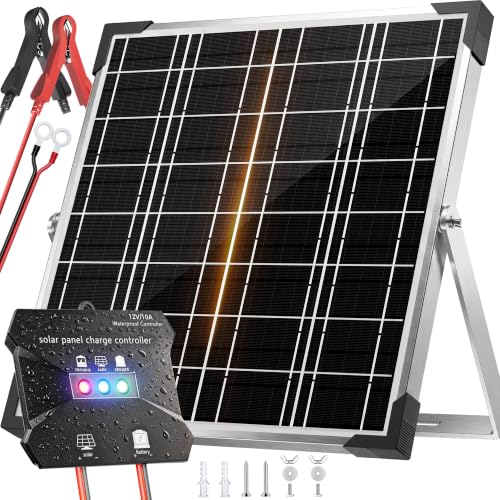
High-Efficiency MPPT Solar Charger - Advanced tracking technology delivers 20-30% faster charging for 12V batteries. A+ monocrystalline panels maximize power conversion. Perfect 20W solar trickle charger for cars, RVs, boats, and trailers. More sun captured, less time waiting.

Superior Solar Efficiency: Our 10W solar panel offers a robust solution for outdoor power needs, providing higher conversion efficiency compared to similar-sized polycrystalline and amorphous panels. Ideal for maintaining a 12V battery in prime condition
How Solar Panels Work
Solar panels convert sunlight into electricity using photovoltaic (PV) cells. When sunlight strikes these cells, it excites electrons, creating an electric current. This process involves several steps:
- Sunlight Absorption: Solar panels capture sunlight.
- Electricity Generation: PV cells convert sunlight into direct current (DC) electricity.
- Energy Storage: The generated DC electricity charges your marine battery.
Efficiency varies based on panel type and environmental conditions, like shade or angle.
Types of Solar Panels for Marine Use
Several types of solar panels suit marine applications, each offering unique advantages. Consider the following options:
- Monocrystalline Panels: These have the highest efficiency and lifespan, making them ideal for limited space. They perform well in low-light conditions, which is beneficial during cloudy days.
- Polycrystalline Panels: Known for their affordability, polycrystalline panels offer decent efficiency but take up more space. They’re suitable if you have ample room on your boat.
- Flexible Panels: Lightweight and versatile, flexible panels can conform to various surfaces. They’re great for smaller boats or unconventional mounting locations.
- Solar Kits: These kits include panels, charge controllers, and mounting hardware for easy installation. They provide all-in-one solutions for beginners or those looking for hassle-free options.
Selecting the right type of solar panel depends on available space, budget, and specific energy needs. This knowledge helps you make an informed choice for your boat’s solar charging setup.
Charging Marine Batteries with Solar Panels
Using solar panels to charge marine batteries offers an efficient and eco-friendly solution for keeping your power topped off while on the water. Follow these steps to understand the necessary components and the installation process.
Necessary Components
To successfully charge your marine battery with solar panels, you need the following components:
- Solar Panels: Choose suitable panels based on your space and power needs. Monocrystalline panels are efficient and space-saving, while flexible panels can fit curved surfaces.
- Charge Controller: A charge controller prevents overcharging, protecting your battery’s lifespan. Select a PWM (Pulse Width Modulation) or MPPT (Maximum Power Point Tracking) type based on your solar panel output.
- Battery: Ensure your marine battery is compatible with solar charging. Deep cycle batteries, like AGM or gel types, work well for this purpose.
- Cables and Connectors: Use high-quality, weather-resistant cables and connectors to link your solar panel, charge controller, and battery.
Installation Process
Installing your solar panel system is straightforward. Here’s a step-by-step guide:
- Mounting the Solar Panels: Secure the panels to a flat or slightly angled surface on your boat, ensuring they face the sun. Use sturdy brackets and marine-grade adhesive if necessary.
- Wiring the System: Connect the solar panels to the charge controller using appropriate cables. Follow the positive and negative terminals to avoid incorrect connections.
- Linking to the Battery: Connect the charge controller to the marine battery. Ensure the connections are tight and corrosion-resistant.
- Setting Up the Charge Controller: Program the charge controller according to your battery type, if applicable. This step ensures optimal charging without damaging the battery.
- Testing the System: Verify the system by checking the readings on the charge controller. Ensure the solar panels receive adequate sunlight and monitor battery voltage to confirm charging.
By following these steps, you can harness solar energy effectively to keep your marine batteries charged, enhancing your boating experience.
Advantages of Solar Charging
Solar charging offers effective solutions for maintaining marine battery power while supporting sustainability. Its benefits include environmental advantages and cost-effectiveness.
Environmental Benefits
Solar charging significantly reduces your carbon footprint. By harnessing renewable energy, you minimize reliance on fossil fuels. Choosing solar energy helps decrease greenhouse gas emissions. For example, every 1,000 watts of solar energy can replace approximately 60 pounds of carbon emissions per month. In addition, solar panels operate quietly without the noise typical of gas generators, creating a more peaceful boating experience.
Cost-Effectiveness
Solar charging proves to be a smart financial choice in the long run. Initial costs for solar panels and installation may seem high, but you avoid ongoing fuel expenses. Once installed, solar panels require minimal maintenance, reducing long-term costs. Depending on the system’s size and energy generation, you can save hundreds of dollars annually. For instance, a small solar setup can eliminate the need for shore power at marinas. Additionally, many solar systems qualify for tax credits, further enhancing their affordability.
Common Challenges and Solutions
Charging marine batteries with solar panels presents some challenges. Understanding these challenges helps you maximize efficiency and ensure reliable power on your adventures.
Weather Conditions
Weather conditions impact solar charging efficiency. Overcast skies reduce sunlight exposure, limiting energy production. Cold temperatures can also slow battery charging rates.
- Monitor Forecasts: Check the weather before heading out. If rain is expected, have backup power solutions ready.
- Optimize Solar Panel Placement: Position panels for maximum sunlight. Adjust angles to track the sun’s position throughout the day.
- Use Battery Management Systems: Some systems include monitoring features that provide real-time data on solar input and battery status, adapting to changing weather.
Maintenance Tips
Regular maintenance keeps your solar charging system working effectively. Preventive measures extend the system’s lifespan and enhance performance.
- Clean Solar Panels: Dust, salt, and debris can diminish solar efficiency. Clean panels with mild soap and water regularly, especially if moored in salty environments.
- Inspect Connections: Check cables and connectors for corrosion or wear. Replace damaged components to ensure a safe electrical flow.
- Monitor Battery State: Regularly check the battery’s state of charge (SOC) using a multimeter. This practice helps identify issues before they lead to deeper problems.
- Store Properly: If not in use for an extended period, store panels in a dry, protected location to prevent damage from the elements.
Conclusion
Charging your marine battery with solar panels is a game-changer for your boating adventures. It not only keeps your battery powered but also lets you enjoy the great outdoors without worrying about running low on energy. With a little knowledge and the right setup you can harness the sun’s energy to ensure your boat’s systems are always ready to go.
Remember to stay on top of maintenance and monitor your system’s performance. You’ll find that with a bit of effort your solar charging setup can provide reliable energy while being environmentally friendly. So gear up and set sail knowing you’ve got a sustainable power source backing you up. Happy boating!
Frequently Asked Questions
What is the purpose of marine batteries?
Marine batteries are essential for powering a boat’s systems, including electronics, lights, and motors. They come in different types—starting, deep cycle, and dual-purpose—each designed for specific functions on the water.
How can I keep my marine batteries charged while boating?
Using solar energy is an effective way to keep marine batteries charged. Solar panels capture sunlight, converting it into electricity that can recharge batteries, ensuring they are ready for your next adventure.
What are the different types of solar panels for marine use?
There are several types of solar panels suitable for marine applications, including monocrystalline, polycrystalline, and flexible panels. Choosing the right type depends on your available space, budget, and energy needs.
How do I install a solar charging system for my marine batteries?
To install a solar charging system, you’ll need solar panels, a charge controller, compatible batteries, and quality cables. The process involves mounting the panels, wiring them correctly, linking to the battery, and testing the system to ensure functionality.
What maintenance is required for a solar charging system?
Regular maintenance for a solar charging system includes cleaning the panels, checking connections for wear, monitoring the state of the battery, and storing panels properly when not in use. These steps maximize efficiency and reliability.
What are the benefits of using solar energy for marine batteries?
Solar energy is environmentally friendly, reduces fuel costs, and requires minimal maintenance. While initial setup costs can be high, long-term savings and potential tax credits make solar charging a smart financial choice.
How does weather impact solar panel efficiency?
Weather conditions like cloud cover and rain can reduce solar panel efficiency. To maximize performance, monitor weather forecasts, optimize panel placement, and consider using battery management systems to adapt to changing conditions.
