

Have you ever found yourself running low on battery power while enjoying the great outdoors? It can be frustrating when your devices need a boost and there’s no outlet in sight. Luckily, solar panels offer a simple and eco-friendly solution to keep your batteries charged, no matter where you are.
Key Takeaways
- Solar Panel Types: Familiarize yourself with different solar panel types—monocrystalline, polycrystalline, thin-film, and bifacial—to choose the right one for your charging needs based on efficiency and space considerations.
- Battery Selection: Choose an appropriate battery type for solar charging, considering options like lead-acid, lithium-ion, NiCd, and NiMH, based on their performance, cost, and energy density.
- Capacity Considerations: Understand battery capacity measured in amp-hours (Ah), ensuring it meets your energy consumption requirements and accounts for efficiency losses during solar charging.
- Charging Components: Ensure you have essential components such as a solar panel, charge controller, compatible battery, and necessary cables/connectors for a successful charging setup.
- Structured Charging Process: Follow a systematic process for setting up and connecting your solar charging system to maximize solar energy utilization and maintain battery life.
- Maintenance Practices: Regularly clean and inspect your solar panels and batteries to enhance performance, and store them properly to prolong their lifespan.
Understanding Solar Panel Basics
Solar panels provide a straightforward way to generate electricity from sunlight. Familiarizing yourself with solar panel types and their functioning helps you utilize them effectively for charging batteries.
Types of Solar Panels
- Monocrystalline Panels:
- Made from single crystal silicon, offering high efficiency.
- Ideal for limited space due to their superior power output.
- Polycrystalline Panels:
- Composed of multiple silicon crystals, typically less efficient than monocrystalline.
- Cost-effective choice for larger installations where space isn’t restricted.
- Thin-Film Panels:
- Constructed from layers of photovoltaic material.
- Lightweight and flexible, these panels require more space to produce equivalent energy.
- Bifacial Panels:
- Capture sunlight from both sides, enhancing energy collection.
- Often used in commercial setups for higher energy yields.
How Solar Panels Work
Solar panels convert sunlight into electricity through photovoltaic effects. Here’s how it happens:
- Sunlight Absorption:
- Solar cells within the panels absorb photons from sunlight.
- Electron Excitation:
- Absorbed energy excites electrons in the silicon, creating free electrons.
- Current Flow:
- The movement of these free electrons generates direct current (DC) electricity.
- Inverter Conversion:
- An inverter converts DC electricity to alternating current (AC) for commonly used devices.
- Power Storage:
- Excess electricity can charge batteries, allowing energy access even during non-sunny hours.
Understanding these basics equips you to choose the right solar panel system for your needs and optimizes your battery charging experience.
Selecting the Right Battery
Choosing the right battery is crucial for effective solar charging. You must consider battery types and their capacities to match your solar panel system and energy needs.
Recommended Products

Wide Compatibility: The Solar Charge Controller is automatically compatible with 12V or 24V systems and is suitable for a variety of batteries: lead-acid batteries, lithium iron phosphate batteries, and ternary lithium batteries.
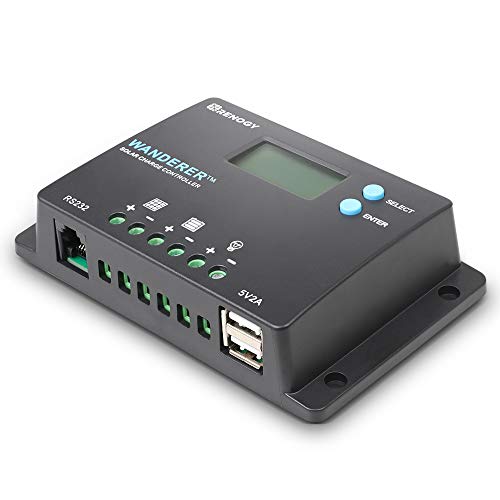
𝐒𝐦𝐚𝐫𝐭 𝟒-𝐒𝐭𝐚𝐠𝐞 12V/24V Solar Charge Controller: Renogy charge controller 𝐦𝐚𝐱𝐢𝐦𝐢𝐳𝐞𝐬 𝐁𝐚𝐭𝐭𝐞𝐫𝐲 𝐋𝐢𝐟𝐞 & 𝐒𝐨𝐥𝐚𝐫 𝐄𝐟𝐟𝐢𝐜𝐢𝐞𝐧𝐜𝐲, this advanced pwm solar charge controller utilizes intelligent 4-stage charging (Bulk/Boost/ Float/Equalization) to optimize power delivery for AGM, Gel, Flooded and Lithium batteries. RV solar charge controller prevents overcharging and gas buildup while 𝐚𝐜𝐡𝐢𝐞𝐯𝐢𝐧𝐠 𝟑𝟎% 𝐥𝐨𝐧𝐠𝐞𝐫 𝐛𝐚𝐭𝐭𝐞𝐫𝐲 𝐥𝐢𝐟𝐞𝐬𝐩𝐚𝐧 compared to basic charge controllers.
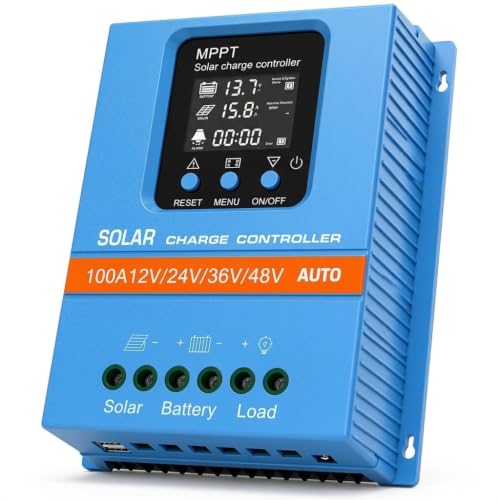
【Product Advantages 】: 100A intelligent adjustment controller with precise time control and light control, can switch loads on and off at a fixed time, adjustable voltage parameters, and memory function. Large LED display screen, real-time display of working voltage, clearer data reading. Flame retardant materials are safe and durable, fashionable and simple. Large section wiring port, wire spacing increased by 99mm
Types of Batteries for Solar Charging
- Lead-Acid Batteries: These are the most common type. They offer affordability and reliability. They’re available in two subtypes:
- Flooded Lead-Acid: They require maintenance and can produce gas during charging.
- Sealed Lead-Acid (SLA): Maintenance-free and safer, but typically come at a higher cost.
- Lithium-Ion Batteries: These batteries provide higher energy density and efficiency. They have a longer lifespan and require less space. They perform well in various temperatures, making them a great choice for outdoor use.
- Nickel-Cadmium (NiCd) Batteries: These are durable and perform well in extreme conditions. They are less common for solar applications due to decreased energy density compared to lithium-ion options.
- Nickel-Metal Hydride (NiMH) Batteries: These batteries are more environmentally friendly than their NiCd counterparts. They offer decent energy capacity but tend to be less popular than lithium-ion or lead-acid batteries.
Battery Capacity Considerations
Battery capacity is measured in amp-hours (Ah). It indicates how much energy the battery can store.
- Determine Your Energy Needs: Calculate the total watt-hours your devices consume daily. For example, if you use a 30-watt device for 5 hours, you’d need 150 watt-hours per day.
- Match Capacity to Usage: Select a battery that meets or exceeds your daily energy needs. For instance, if your daily requirement is 150 watt-hours and you plan to use the battery for a couple of days without solar input, look for a battery with at least 300 Ah capacity.
- Consider Depth of Discharge: Different batteries have varying recommendations for discharge levels. Lead-acid batteries should generally not be discharged below 50%, while lithium-ion batteries can handle deeper discharges. Factor in this aspect to maximize battery life.
- Plan for Efficiency: Solar charging is often not 100% efficient. Expect some energy loss. Choose a battery with a bit more capacity than your calculations suggest to avoid running out of power.
When selecting your battery, keep these types and capacity considerations in mind to optimize your solar charging experience.
Charging Process Overview
Charging a battery from a solar panel involves understanding specific components and following a structured process. Here’s what you need to know to effectively harness solar power for your battery.
Recommended Products

✔️【Waterproof Solar Charge Controller】IP67 waterproof, suitable for outdoor use. Automatically identify voltage, 12V Max power: 150W, 24V Max power: 300W. The maximum current is 10A. Compatible with various 12V/24V deep-cycle batteries, such as AGM, GEL, Flooded. Adopting brand MCU chips to realize fast intelligent control and ultra-low standby power consumption.

SMART SOLAR CHARGE CONTROLLER: Solar charge the smart way with the Victron Energy SmartSolar MPPT charge controller, to ensure that every ray of available sunlight is converted into usable energy, while optimizing battery longevity.

UPGRADED SOLAR CONTROLLER: With the built-in industrial microcontroller, this PWM solar charge controller automatically helps you manage the working of solar panels and batteries in solar systems. When the battery runs out, it will memorize various parameters you set, so you don't need to reset it, which is easy and safe
Components Needed for Charging
- Solar Panel: Choose a panel that matches your energy needs. Consider wattage and efficiency ratings to ensure optimal performance.
- Charge Controller: This device regulates voltage and current from the solar panel to the battery. It prevents overcharging, protecting battery life.
- Battery: Select a compatible battery type for solar charging. Common options include lead-acid and lithium-ion, each having unique characteristics.
- Cables and Connectors: Use appropriately rated cables for safe connections. Ensure all connectors are secure to prevent power loss.
- Inverter (Optional): If you plan to power AC devices, an inverter may be necessary to convert DC power from the battery to AC.
- Set Up the Solar Panel: Position the solar panel in direct sunlight, ensuring there are no obstructions that could shade it. Aim for optimal angles for maximum sunlight exposure.
- Connect Charge Controller to Solar Panel: Utilize the appropriate cables to connect the solar panel to the charge controller. Follow manufacturer instructions for correct polarity.
- Connect Charge Controller to Battery: Use suitable cables to link the charge controller to the battery. Double-check the connections and match positive to positive and negative to negative.
- Monitor Charging Process: Observe the charge controller display for charging status. Many controllers indicate when the battery is fully charged.
- Disconnect After Charging: Once fully charged, safely disconnect all connections in the reverse order of setup. This ensures no power is lost and preserves battery life.
By following these steps, you can effectively use solar energy to charge your battery, making outdoor activities more sustainable and hassle-free.
Maintenance Tips
Maintaining your solar charging system ensures optimal performance and longevity. Follow these tips to keep everything running smoothly.
Care for Your Solar Panel System
- Clean Regularly: Dust and debris can block sunlight. Clean panels with a soft cloth or sponge every month, especially after storms.
- Inspect for Damage: Check for cracks or corrosion on the panel surface and connectors. Address any issues immediately to prevent further damage.
- Monitor Performance: Keep an eye on the output voltage. Significant drops may indicate a problem. Use a multimeter to check.
- Adjust Position: Ensure the solar panels face the sun directly, especially during winter months when the sun is lower in the sky.
- Protect from Shade: Trim nearby trees or plants that may create shade over your panels. Even partial shading can significantly reduce charging efficiency.
- Check Water Levels: For lead-acid batteries, ensure the electrolyte levels are topped off with distilled water, keeping terminal connectors clean.
- Avoid Deep Discharge: Discharging below 50% capacity can damage lead-acid batteries. Aim to recharge before reaching this level.
- Store Properly: If you’re storing batteries, keep them in a cool, dry place. Ensure they’re charged to about 50% to maintain health.
- Temperature Management: Batteries perform best between 50°F and 85°F. Avoid exposing them to extreme temperatures.
- Use a Charge Controller: Always connect a charge controller to prevent overcharging. This device regulates voltage and current from the solar panel to the battery.
By following these maintenance tips, you maximize the efficiency and lifespan of your solar panel and battery system.
Conclusion
Harnessing solar energy to charge your battery opens up a world of convenience and sustainability. Whether you’re out camping hiking or simply need a reliable power source at home you can enjoy the benefits of clean energy.
By choosing the right solar panel and battery combination you can ensure efficient charging that meets your needs. Remember to keep your system well-maintained for optimal performance.
With a little planning and care you’ll be ready to tackle any adventure without worrying about running out of power. Enjoy the freedom that comes with solar charging and let the sun do the work for you!
Frequently Asked Questions
What are the benefits of using solar panels for outdoor battery charging?
Solar panels provide an eco-friendly and sustainable way to recharge devices when traditional power sources are unavailable. They harness sunlight, reducing reliance on grid electricity, which is especially valuable during outdoor activities. Additionally, they offer portability and can power devices without generating noise or pollution.
What types of solar panels are available?
There are four main types of solar panels: monocrystalline, polycrystalline, thin-film, and bifacial. Monocrystalline panels are highly efficient and space-saving, while polycrystalline panels are more affordable but slightly less efficient. Thin-film panels are lightweight and flexible, and bifacial panels capture sunlight from both sides, enhancing energy generation.
How do solar panels work to charge batteries?
Solar panels convert sunlight into electricity through a process involving sunlight absorption by the solar cells, exciting electrons, and creating current flow. This electricity is then sent to a charge controller, which regulates the charging process and directs energy to the battery for storage.
What types of batteries are recommended for solar charging?
The best batteries for solar applications include lead-acid (flooded and sealed), lithium-ion, nickel-cadmium (NiCd), and nickel-metal hydride (NiMH). Lithium-ion batteries are popular due to their efficiency and longevity, whereas lead-acid batteries are more affordable but require more maintenance.
How do I set up a solar charging system?
To set up a solar charging system, position the solar panel in a spot with maximum sunlight exposure. Connect the charge controller to the panel and the battery using appropriate cables. Monitor the charging status, and safely disconnect everything once fully charged to prevent damage.
What maintenance is needed for solar panels and batteries?
Regular maintenance includes cleaning solar panels to remove dirt and debris, inspecting for damage, and ensuring optimal positioning for sunlight. For batteries, check water levels, avoid deep discharges, and store them properly. Use a charge controller to prevent overcharging for better longevity.
How can I determine the battery capacity I need for solar charging?
To determine your battery capacity, assess your energy needs by calculating total watt-hours required. Match this calculation to the battery’s capacity, taking into account the depth of discharge and efficiency to ensure you have enough power for your usage during outdoor activities.
