

Ever wondered how much solar power you need to charge a 100Ah battery? If you’re relying on solar energy for your off-grid adventures or backup power, figuring this out can feel overwhelming. You might find yourself asking questions about solar panel sizes, sunlight hours, and efficiency.
Imagine you’re planning a weekend camping trip and want to keep your devices charged without running a generator. Knowing the right solar setup can make all the difference. In this article, you’ll discover exactly how to calculate the solar power required to keep your 100Ah battery fully charged. By the end, you’ll have a clear plan to harness the sun’s energy efficiently.
Key Takeaways
- Understanding Battery Specifications: A 100Ah battery can supply various currents for a specific duration based on its capacity; knowing this helps gauge your energy needs accurately.
- Importance of Solar Charging: Utilizing solar power provides a sustainable solution for charging batteries, reduces dependence on the grid, and minimizes environmental impact.
- Factors Affecting Solar Requirements: The efficiency of your battery type (lead-acid vs. lithium-ion) and the output of your solar panels significantly influence how much solar energy you need.
- Daily Energy Consumption Calculation: Determine your total daily energy needs in watt-hours by listing device usage, which will guide the size and number of solar panels required.
- Required Solar Wattage: Calculate the necessary solar wattage using your daily energy consumption divided by average sunlight hours, adjusting for battery efficiency and adding extra capacity for optimal performance.
- Choosing the Right Solar Panel Setup: Select solar panels based on efficiency, space availability, and budget, determining the optimal configuration to charge your 100Ah battery effectively.
Understanding Solar Charging
Understanding the solar charging process plays a critical role in managing energy for a 100Ah battery. You’ll need to grasp key concepts about battery capacity, solar power generation, and the conditions affecting performance.
What Is A 100Ah Battery?
A 100Ah battery can store up to 100 amp-hours of electrical energy. This means it can supply one amp of current for 100 hours or ten amps for ten hours. Commonly used in RVs, boats, and off-grid systems, these batteries usually fall into categories like lead-acid or lithium-ion. Lead-acid batteries are less expensive but heavier and less efficient, while lithium-ion batteries offer better performance, longevity, and weight savings. Knowing the type of battery helps you determine charging requirements.
Why Solar Charging?
Solar charging provides a sustainable way to power your devices without relying on the grid. Using solar energy reduces your carbon footprint and can save you money on electricity, especially in remote locations. For example, during a week-long camping trip, solar panels can keep your 100Ah battery charged for lights, cooling devices, or charging gadgets. Solar charging systems are simple. Typically, they consist of solar panels, charge controllers, and batteries, making them user-friendly for varied power needs.
Factors Influencing Solar Requirements
Understanding the factors that influence solar requirements helps you determine the right setup for charging your 100Ah battery efficiently. Key elements include battery efficiency and solar panel output.
Recommended Products
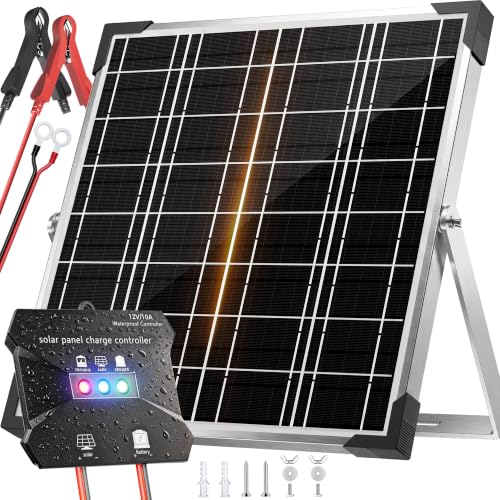
High-Efficiency MPPT Solar Charger - Advanced tracking technology delivers 20-30% faster charging for 12V batteries. A+ monocrystalline panels maximize power conversion. Perfect 20W solar trickle charger for cars, RVs, boats, and trailers. More sun captured, less time waiting.

【High Conversion Rate】This 20W solar panel with monocrystalline A+ solar cell has an excellent cell efficiency of 21%-30%. Designed to charge and maintain 12V rechargeable batteries like LiFePO₄, Lithium Ion, AGM, SLA, GEL, EFB, MF, etc. Keep batteries in charged for trailer, tractor, truck, boat, motorcycle, RV, car, lawn mower, water pump, gate opener, electric fence, etc
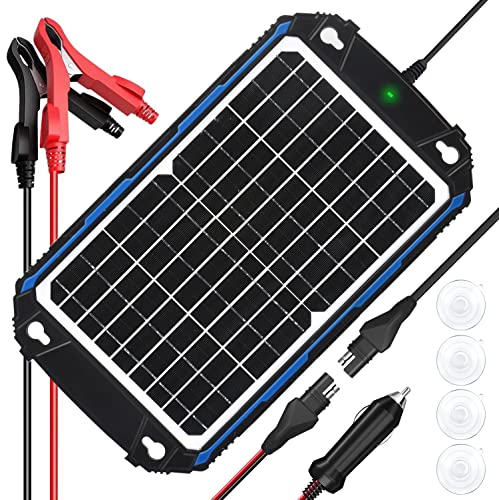
【Ultra-Smart MPPT Technology】This 12v solar panel battery charger is crafted with SUNER POWER's unique Ultra-Smart MPPT( Max Power Point Tracking) technology, the innovative MPPT allows to deliver high tracking efficiency of up to 99% and peak conversion efficiency of 98%, improving approximately 20%-30% utilization rate than other competitors
Battery Efficiency
Battery efficiency refers to how well a battery can convert the incoming solar energy into usable power. Different battery types exhibit varying efficiencies. For example, lithium-ion batteries generally deliver around 90-95% efficiency, while lead-acid batteries typically offer 70-85%.
When calculating the amount of solar power you need, factor in the efficiency of your battery. If you’re using a lead-acid battery with 80% efficiency, you’ll need to supply 25% more solar energy to compensate. Therefore, for a 100Ah battery, you’ll require a panel output of 125Ah to achieve a full charge.
Solar Panel Output
Solar panel output, measured in watts, directly affects how quickly your battery charges. Ratings on solar panels generally range between 50W and 400W. The optimal output for charging a 100Ah battery depends on several aspects, including your location, the amount of sunlight available, and your energy needs.
To estimate the solar panel output you require, consider your daily energy consumption. If you consume 1,000Wh daily, you would need about 250W of solar panels, assuming an average of 4 hours of sunlight per day.
In sunny areas, fewer panels may suffice, while overcast locations may require additional panels. Gauge the sunlight hours in your area to adjust your solar panel setup accordingly.
Calculating Solar Power Needs
Determining the solar power required to charge a 100Ah battery involves a couple of key calculations. Understanding your daily energy consumption and required solar wattage helps create an effective solar setup.
Recommended Products

ULTRA-LIGHTWEIGHT & ULTRA-PORTABLE: Weighing just 6 lbs (2.75 kg), this 100W foldable solar panel folds down to roughly the size of a laptop bag for easy carrying and storage. Measuring just 15.68 x 10.44 x 2.96 inches when folded, it’s ideal for camping, hiking, fishing, and RV trips. Built-in grommets make it easy to hang on tents, RVs, or other suitable surfaces for convenient solar charging wherever you go
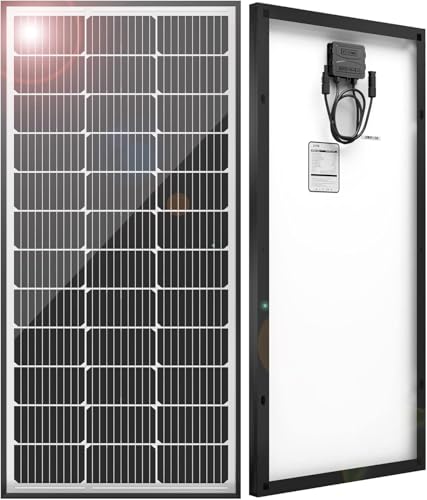
[Higher Efficiency, More Power Output] With Grade A+ large monocrystalline solar cells, this panel achieves a remarkable 23% conversion rate, outperforming conventional options. It generates up to 500Wh of electricity per day with 5 hours of direct sunlight. Unleash the potential of solar energy with our high-performance panel.

Daily Energy Consumption
Start by calculating your daily energy consumption in watt-hours (Wh). List the devices you’ll be using and their power ratings in watts. Multiply the wattage of each device by the number of hours you plan to use them each day. For example, if you run a 50W light for 4 hours, the energy usage is:
50W x 4h = 200Wh
Make a complete list of all devices you plan to power. Summing these figures will give you your total daily energy consumption. For instance, if you add up the consumption of multiple devices and find it totals 800Wh, this figure informs your solar power needs.
Required Solar Wattage
Next, you need to determine the required solar wattage. Use the formula:
Total Daily Energy Consumption (Wh) ÷ Sunlight Hours = Required Solar Wattage (W)
If your total daily consumption is 800Wh and you expect an average of 5 sunlight hours, the calculation would look like this:
800Wh ÷ 5h = 160W
This means you’ll need a solar panel or panels that can produce at least 160W to meet your energy needs. Adjust for inefficiencies by factoring in a margin, typically around 20% more wattage. Thus, you might consider a solar setup of around 192W to account for inefficiencies and cloudy days.
Be sure to select solar panels with ratings matching or exceeding this wattage to ensure your 100Ah battery charges adequately. This structured approach allows you to determine the solar requirements effectively, ensuring consistent power for your needs.
Recommended Solar Panel Configurations
Choosing the right solar panel configuration for charging a 100Ah battery requires understanding various types of panels and optimal setups for efficiency.
Recommended Products

HIGH-EFFICIENCY MONOCRYSTALLINE CELLS: Premium mono-crystalline cells deliver higher conversion efficiency and steadier real-world output, giving you more usable power from every hour of sunlight.

Up to 25% High Efficiency: Our 300 watt solar panels utilize the latest half-cut cell technology and 10BB Concealed busbar to increase light absorption; panels are made of high quality materials such as A+ grade high strength polyester film and high efficiency monocrystalline silicon, which makes the solar panels perform better and more stable; the half-cut cell technology reduces the power loss and lowers the temperature of the solar panels as compared to the traditional solar panels

【High Conversion Efficiency, Fast Charging】The upgraded A+ grade monocrystalline solar cells achieve a conversion rate of 24%, maximizing solar energy capture. With ample sunlight, they can generate a maximum output power of 200W. The latest ETFE laminated case offers a light transmission rate of over 95%, significantly improving the performance of the solar cells.
Different Types of Solar Panels
You can choose from several types of solar panels, each with distinct characteristics:
- Monocrystalline Panels: Highly efficient, these panels typically range from 300W to 400W. They convert sunlight into electricity more effectively, making them ideal for limited space.
- Polycrystalline Panels: Slightly less efficient than monocrystalline, these panels usually provide 250W to 350W. They generally have a lower cost but require more space for installation.
- Thin-Film Panels: Flexible and lightweight, thin-film panels offer lower efficiency (around 10-12%) and power ratings from 50W to 150W. These panels work best in low-light conditions but need more surface area to produce enough energy.
Selecting the right solar panel depends on your available space, budget, and energy needs.
Optimal Panel Setup
To effectively charge a 100Ah battery, consider the following optimal setup:
- Determine Daily Energy Needs: Calculate your total energy consumption in watt-hours by listing the devices you’ll use. For example, if you run a 50W light for 4 hours, you consume 200Wh.
- Adjust for Panel Efficiency: Consider the efficiency of your battery type. If you use a lead-acid battery (80% efficiency), your actual energy requirement increases. You’d need to adjust your calculations accordingly (200Wh ÷ 0.8 = 250Wh).
- Calculate Required Solar Output: Use the formula:
Total Daily Energy Consumption (Wh) ÷ Average Sunlight Hours = Required Solar Wattage (W).
If you expect 5 hours of sunlight, your calculation could look like this: 250Wh ÷ 5 hours = 50W.
- Add Extra Capacity: It’s wise to account for inefficiencies by adding at least 20% extra capacity. Using the previous example, a 50W panel setup would ideally look like
50W × 1.2 = 60W.
- Choose the Right Number of Panels: Based on your calculated wattage, determine how many panels to install. If using a 100W monocrystalline panel, just one might suffice. For lower-rated polycrystalline panels at 250W, you might still opt for one for added flexibility.
By following these steps, you can create an efficient solar panel setup that ensures your 100Ah battery remains charged, supporting your off-grid activities effectively.
Conclusion
Getting the right solar setup for your 100Ah battery can make all the difference in keeping your devices powered during off-grid adventures. By understanding your daily energy needs and factoring in sunlight hours and battery efficiency, you can easily determine the solar wattage required.
With the right solar panels in place you’ll enjoy the benefits of sustainable energy while reducing your carbon footprint. Whether you’re camping or just looking for backup power, a well-planned solar system will ensure your battery stays charged and ready for action. So go ahead and embrace the sun’s energy for your next adventure!
Frequently Asked Questions
How do I determine the solar power needed to charge a 100Ah battery?
To determine the solar power needed, first calculate your daily energy consumption in watt-hours (Wh). Use the formula: Total Daily Energy Consumption (Wh) ÷ Sunlight Hours = Required Solar Wattage (W). Don’t forget to add an efficiency margin (about 20%) to account for losses.
What types of batteries can I use with solar panels?
Common battery types for solar setups include lead-acid and lithium-ion. Lead-acid batteries offer good affordability but typically have an efficiency of 70-85%, while lithium-ion batteries are more efficient (90-95%) and better for longer-term use.
Why is solar charging beneficial?
Solar charging is environmentally friendly and reduces your carbon footprint. It can save you money on fuel or electricity costs and provides a reliable power source for off-grid activities, such as camping or RV use.
What factors influence solar requirements for a battery?
Key factors include battery type (which affects efficiency), daily energy consumption, solar panel output, and local sunlight availability. Knowing these factors helps in sizing your solar system correctly for reliable charging.
How do I calculate my daily energy consumption?
To calculate daily energy consumption, list all devices you plan to use, noting their power ratings in watts. Multiply each device’s wattage by the number of hours it will be used daily. Sum these values for total daily consumption in watt-hours (Wh).
What are the types of solar panels available?
The main types of solar panels are monocrystalline, polycrystalline, and thin-film. Monocrystalline panels are the most efficient, polycrystalline is cost-effective, and thin-film panels are flexible and lightweight but generally have lower efficiency.
How can I optimize my solar panel setup?
To optimize your solar panel setup, start by accurately calculating your energy needs, consider the efficiency of your panels, and choose the right panel type. Adjust your required solar wattage according to daily consumption and local sunlight hours to ensure adequate charging.
