

Are you considering going solar but unsure how many batteries you’ll need for your 200-watt panel? You’re not alone. Many people face this question when trying to maximize their solar energy efficiency.
Imagine harnessing the sun’s power to keep your devices running smoothly, even when the sun isn’t shining. Knowing the right number of batteries can make all the difference in ensuring you have enough energy stored for those cloudy days or nighttime use.
Key Takeaways
- Understand Solar System Components: A solar power system consists of solar panels, batteries, and an inverter, each playing a crucial role in energy production and utilization.
- Calculate Daily Energy Consumption: Estimate your daily watt-hours to determine how many batteries you’ll need, factoring in energy usage from appliances and devices.
- Determine Battery Capacity: Use the formula (\text{Battery Capacity (Ah)} = \frac{\text{Daily Usage (Wh)} \times \text{Autonomy Days}}{\text{Battery Voltage (V)} \times \text{Depth of Discharge}}) to accurately assess your battery requirements.
- Consider Depth of Discharge: Limit the depth of discharge to extend battery lifespan—50% for lead-acid batteries and 80% for lithium-ion.
- Choose the Right Battery Type: Evaluate different battery technologies, such as lead-acid and lithium-ion, based on their performance, maintenance needs, and suitability for your solar setup.
- Be Aware of Environmental Factors: Recognize that temperature variations can affect battery efficiency, so consider climate conditions when selecting and positioning your batteries.
Understanding Solar Power Systems
Solar power systems consist of solar panels, batteries, and an inverter. These components work together to convert sunlight into usable electricity. Understanding how they interrelate is crucial for optimizing performance and energy storage.
Components of a Solar Power System
- Solar Panels: Solar panels, like the 200-watt model, convert sunlight into electrical energy. They help generate electricity during daylight hours.
- Batteries: Batteries store surplus energy produced by solar panels. This stored energy powers your home when solar production dips, such as in cloudy weather or at night.
- Inverter: The inverter converts direct current (DC) from solar panels and batteries into alternating current (AC) for home use. It ensures compatibility with household appliances.
Determining Battery Needs
To determine how many batteries you need for a 200-watt solar panel, consider your energy consumption and storage requirements. Here’s an easy method to gauge your battery needs:
- Calculate Daily Energy Usage: Estimate your daily energy usage in watt-hours (Wh). For example, if you use 1,000 Wh daily, this is your starting figure.
- Panel Output: A 200-watt solar panel produces about 800 Wh to 1,000 Wh daily under ideal conditions. This output varies based on location, time of year, and panel efficiency.
- Battery Capacity: Battery capacity is commonly measured in amp-hours (Ah). To find the appropriate battery size, divide your daily energy usage by the voltage of the battery system. For example, for a 12-volt system:
- 1,000 Wh ÷ 12V = 83.33 Ah
You’ll need batteries that can provide at least this capacity.
Example Scenario
Let’s say you want to ensure two days of backup power due to potential weather interruptions. Multiply your daily usage by two:
- 1,000 Wh x 2 days = 2,000 Wh
Then use the same battery capacity calculation as before:
- 2,000 Wh ÷ 12V = 166.67 Ah
You should consider using multiple batteries to meet this capacity, as standard batteries typically come in 100 Ah sizes. Therefore, two 12V, 100 Ah batteries would suffice in this case.
- Depth of Discharge: Ensure your batteries are efficiently utilized. Aim for a maximum depth of discharge (DoD) of about 50% for lead-acid batteries to prolong lifespan.
- Temperature Fluctuations: Be aware that temperature affects battery performance. Batteries perform best within specific temperature ranges, so placing them in a climate-controlled space is ideal.
- Charging Speed: Understand that charging from a solar panel can vary based on sunlight availability. Having additional storage capacity helps maintain consistent energy supplies.
Adhering to these components and calculations leads to a robust solar power system. By understanding how each part functions and plays a role in energy management, you maximize your solar investment efficiently.
Battery Requirements for Solar Panels
Understanding battery requirements for a 200-watt solar panel is essential for optimizing your solar energy system. The number of batteries you need depends on several factors including usage and capacity.
Recommended Products

[Industry-Leading 25% Efficiency] 16BB N-Type cells deliver more power from the same sunlight, supporting RV trips, camping, blackout backup, and off-grid use in limited or cloudy conditions.

Large Capacity: Solar panel case inner size is 24 x 5.5 x 27 inches, can hold 2 solar panels. Mainly compatible with Jackery SolarSaga 100W 100X 200W 200W Bifacial Twelseavan 200W solar panel Zoupw 100W 200w Luvknit 100W ECOFLOW 160w 220w Grecelle 100W 200w Bluetti 100W 200W Anker 100W 200W and other Solar panel. Two zippered pockets, lots of extra storage for cords, adapters, and other accessories
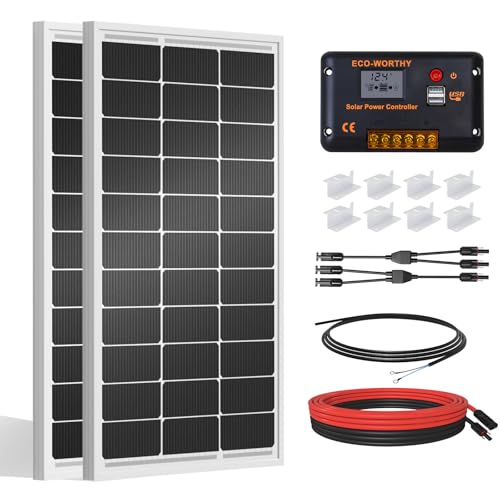
[Wide Application]: Daily Output 800wh/day under 4 hours full sunshine condition. Perfect for RV, Caravan, Marine, Camper, Electric scooter, Golf Carts, Power wheels, Trolling motor, Tool trailer, Backup power supply for cabin shed home etc.
Factors Influencing Battery Count
- Daily Energy Consumption: Calculate the total watt-hours used daily. This includes appliances, lights, and any devices powered by your solar setup.
- Panel Output: A 200-watt solar panel produces about 1,000 watt-hours per day under ideal conditions. Knowing your panel’s output helps assess what size battery you’ll require.
- Depth of Discharge: Batteries should only discharge to a certain level to prolong their life. If you use a lead-acid battery, limit discharge to 50%. For lithium-ion batteries, aim for 80%.
- Autonomy Days: Determine the number of days you want your system to run without sun. For instance, if you choose two autonomy days, multiply your daily watt-hour needs by two.
- Temperature Effects: Recognize that battery performance varies with temperature. Cold weather reduces capacity, so be prepared for potential inefficiencies.
Calculating Battery Capacity
To estimate battery capacity necessary for a 200-watt solar panel, use the following formula:
- Calculate Daily Watt-Hours:
[
\text{Daily Energy Usage} = \text{Total Daily Watt-Hours}
] - Adjust for Autonomy Days:
[
\text{Required Battery Capacity (Ah)} = \frac{\text{Daily Usage (Wh)} \times \text{Autonomy Days}}{\text{Battery Voltage (V)} \times \text{Depth of Discharge}}
]
For example, for a daily usage of 1,000 Wh with a 12V battery limited to 50% discharge across two autonomy days:
[
\text{Required Capacity} = \frac{1,000 , \text{Wh} \times 2}{12 , \text{V} \times 0.5} = 333.33 , \text{Ah}
] - Determine Battery Count:
Divide the required capacity by individual battery capacity. For instance, if using 100 Ah batteries:
[
\text{Batteries Needed} = \frac{333.33 , \text{Ah}}{100 , \text{Ah}} = 3.33
]
Round up to four batteries for adequate support.
Following these guidelines ensures your solar setup functions effectively, even during less sunny days.
Choosing the Right Batteries
Selecting the appropriate batteries is crucial for maximizing your solar energy system’s efficiency. Consider all factors to ensure reliable power storage.
Recommended Products

[High-Efficiency 23% Conversion Rate]: Power your adventures with 200W solar panel, featuring a 23% high conversion rate for maximum energy absorption. Perfect for camping, RV trips, marine use, and off-grid power!

【N-Type 16BB High-Efficiency Solar Cells】The Callsun 200 watt solar panel is built with advanced N-type solar cells and 16BB busbar technology, delivering up to 25.6% conversion efficiency. Compared to traditional P-type cells, N-type solar panels generate higher power output and better reliability, while the 16BB design reduces hot spots and hidden cracks — ensuring superior performance and a longer lifespan.

【Perfect Size for Class B Vans】This 200W N-Type solar panels are 7.5% smaller and 11.7% lighter than previous models, providing the same power output in a compact, space-saving design that’s perfect for tight spaces in Class B vans.
Types of Batteries for Solar Energy
- Lead-Acid Batteries:
- Flooded: Need regular maintenance. Cost-effective and reliable but require careful handling.
- AGM (Absorbent Glass Mat): Require less maintenance and are spill-proof. Higher initial cost but offer better performance in deep cycle applications.
- Gel: Similar to AGM, these batteries are sealed and can handle temperature fluctuations well. They are sensitive to overcharging.
- Lithium-Ion Batteries:
- Lithium Iron Phosphate (LiFePO4): Known for longevity and safety. Higher upfront cost, but efficiency and lifespan make them a popular choice for solar setups.
- NMC (Nickel Manganese Cobalt): High energy density and robust performance. Ideal for larger systems needing compact storage.
- Nickel-Cadmium (NiCd):
- Good for extreme temperatures and long cycles, but environmental concerns limit their popularity. Higher maintenance costs also affect practicality.
- Assess Your Energy Needs: Determine daily usage in watt-hours. Use a watt-hour meter or track consumption over a week.
- Consider Depth of Discharge (DoD): Choose batteries with a DoD that aligns with your usage. Lithium batteries can typically handle deeper discharge compared to lead-acid batteries.
- Evaluate Temperature Range: Account for the climate in your area. Batteries perform best within specified temperature ranges. Choose batteries designed for your typical weather conditions.
- Check Warranty and Lifespan: Thoroughly review warranties. Longer warranties often indicate higher quality and durability.
- Match with Solar Panel Output: Ensure batteries complement the energy produced by your 200-watt solar panel. Balance between storage capacity and efficiency.
By keeping these factors in mind, you’re set to make an informed choice about your battery selection, ensuring optimal function and longevity for your solar energy system.
Conclusion
Getting the right number of batteries for your 200-watt solar panel is key to ensuring you have reliable power when you need it. By considering your daily energy usage and the specific characteristics of your batteries, you can create a system that works for you.
Remember to factor in things like depth of discharge and temperature to optimize your setup. Choosing the right type of battery can make a big difference in performance and longevity.
With the right planning and knowledge, you’ll be well on your way to enjoying the benefits of solar energy, even when the sun isn’t shining. Happy solar powering!
Frequently Asked Questions
How many batteries do I need for a 200-watt solar panel?
To determine the number of batteries needed for a 200-watt solar panel, first calculate your daily energy consumption in watt-hours. Then, consider the panel’s daily output and the batteries’ total capacity. Typical calculations may suggest around 1-4 batteries, depending on your energy needs and desired backup duration.
Why is battery storage important in solar energy systems?
Battery storage is crucial in solar energy systems because it stores excess energy generated during the day for use at night or on cloudy days. This ensures a continuous power supply, increases system efficiency, and enhances energy independence.
What factors influence the number of batteries required?
Factors affecting battery count include daily energy consumption, solar panel output, desired autonomy days (backup duration), depth of discharge, and local temperature conditions. These aspects impact the overall battery capacity needed for an effective solar system.
What battery types are best for solar energy systems?
For solar energy systems, suitable battery types include lead-acid (flooded, AGM, gel), lithium-ion (LiFePO4 and NMC), and nickel-cadmium (NiCd). Each type presents different advantages and disadvantages regarding lifespan, cost, and depth of discharge.
How do I calculate battery capacity for my solar system?
To calculate battery capacity, determine your daily watt-hours required, then multiply by the number of autonomy days (desired backup duration). Divide the total by the depth of discharge (in percentage) to find the required battery capacity in amp-hours (Ah).
What considerations should I keep in mind when choosing batteries?
When selecting batteries, consider energy needs, depth of discharge, temperature range, warranty and lifespan, and compatibility with panel output. This ensures your solar energy system operates efficiently and meets your energy demands.
Can temperature affect battery performance in a solar system?
Yes, temperature can significantly impact battery performance. Extreme cold or heat can reduce battery efficiency and lifespan. Properly managing temperature conditions is essential for maintaining optimal battery function in solar energy systems.
