

Have you ever found yourself with a dead battery while off the grid? It’s frustrating, but charging it with a solar panel can be a game-changer. Imagine harnessing the sun’s energy to keep your devices powered, whether you’re camping, traveling, or just enjoying the outdoors.
Key Takeaways
- Solar Charging Basics: Solar panels convert sunlight into electricity, making them ideal for charging batteries during outdoor activities and off-grid situations.
- Essential Components: Key components include solar panels, charge controllers to manage voltage, and batteries (lead-acid, lithium-ion, AGM) tailored to energy needs.
- Optimal Setup: Select the right solar panel wattage based on your battery size; position panels for maximum sunlight exposure; and ensure correct wiring and connections.
- Monitoring Efficiency: Regularly check charge controller displays and battery voltage to confirm proper charging; clean solar panels to maintain efficiency.
- Troubleshooting: Address issues like low charging efficiency by optimizing panel position and ensuring battery compatibility with solar system components for enhanced performance.
Overview of Solar Charging
Solar charging harnesses sunlight to generate electricity for charging batteries. This method proves effective during outdoor activities, providing a reliable power source when traditional electricity isn’t available.
How Solar Charging Works
- Solar Panels: These panels contain photovoltaic cells that convert sunlight into electricity. The energy captured is either stored for later use or used immediately to power devices.
- Charge Controller: This device regulates the voltage and current transferred from the solar panel to the battery. It prevents overcharging, ensuring the battery remains in good condition.
- Battery: The battery stores the electricity generated by the solar panel. Various types include deep cycle batteries and lithium-ion batteries, each with specific charging requirements.
Steps for Charging a Battery with Solar Panels
- Select the Right Solar Panel: Choose a solar panel with an appropriate wattage for your battery size. For instance, a 100-watt solar panel suits a 12-volt deep cycle battery.
- Connect the Charge Controller: Wire the solar panel to the charge controller. Positive and negative leads must connect correctly to prevent damage.
- Attach the Battery: Connect the battery to the charge controller. Ensure you match the positive and negative terminals accurately.
- Position the Solar Panel: Place the panel in direct sunlight, optimizing sunlight exposure for efficient charging. Adjust its angle based on the time of day and season.
- Monitor the Charging Process: Most charge controllers have indicators or displays showing battery charge levels. Regularly check to ensure your battery is charging properly.
- Sustainability: Solar energy is renewable and reduces dependency on fossil fuels.
- Cost-Effectiveness: Once installed, solar systems have low ongoing costs.
- Portability: Portable solar panels enable you to charge batteries while on the move.
- Independence: No need for access to electrical outlets, especially in remote areas.
Understanding these elements helps maximize the efficiency of charging your battery with solar power. With the right setup, staying powered up during your adventures becomes easy and eco-friendly.
Understanding Solar Panels
Solar panels capture sunlight and convert it into electricity, providing a reliable energy source for charging batteries and other devices. Understanding how they work helps you maximize their efficiency during outdoor adventures.
Recommended Products

Notes to buyers ①Designed for 12V/24V batteries, please don't connect to higher voltage batteries. ②The PV can not exceed 60V. ③Connection sequence: first connect the battery, then connect the solar panel.

【20A PWM Controller — Precision 12V Charging】As the "brain" of your 12V solar system, this controller is purpose-built for 12V batteries (not compatible with 24V/36V systems) and works seamlessly with solar panels up to 300W. Equipped with upgraded 20A PWM technology, it delivers twice the output current of standard 10A controllers — enabling faster, more stable charging. Smart charging algorithms regulate current flow, reducing energy loss and improving overall system efficiency. Please note: a polarity converter is not included. Be sure to connect positive and negative terminals correctly — proper wiring ensures safe, reliable operation.

【High Conversion Rate】This 20W solar panel with monocrystalline A+ solar cell has an excellent cell efficiency of 21%-30%. Designed to charge and maintain 12V rechargeable batteries like LiFePO₄, Lithium Ion, AGM, SLA, GEL, EFB, MF, etc. Keep batteries in charged for trailer, tractor, truck, boat, motorcycle, RV, car, lawn mower, water pump, gate opener, electric fence, etc
Types of Solar Panels
- Monocrystalline Panels
Monocrystalline panels offer high efficiency and performance. Made from a single crystal structure, they usually take up less space for the same power output. These panels perform better in low-light conditions. - Polycrystalline Panels
Polycrystalline panels consist of multiple crystal structures. They’re generally less efficient than monocrystalline panels but are often more affordable. These panels require more space for the same power output. - Thin-Film Panels
Thin-film panels are lightweight and flexible. They can be easier to transport and install but typically have lower efficiency. These panels suit applications where weight and flexibility are critical, like portable charging setups.
- Solar Panels
Solar panels capture sunlight and produce direct current (DC) electricity. The efficiency of the panels determines how much electricity they can generate in a given time. - Charge Controller
A charge controller regulates the voltage and current from the solar panels to the battery. It prevents overcharging and protects the battery from damage, ensuring longer battery life. - Battery
The battery stores electricity generated by the solar panels. Choose a suitable battery type, such as lead-acid or lithium-ion, based on your energy needs and budget. - Inverter
An inverter converts the DC electricity from the solar panels into alternating current (AC) for devices that require it. Some systems don’t use inverters if charging DC devices directly. - Wiring and Connectors
Proper wiring and connectors ensure safe and efficient energy transfer. Use high-quality materials to minimize energy loss and improve system reliability.
By selecting the right type of solar panels and understanding the components involved, you’ll maximize your ability to charge batteries effectively with solar energy.
Choosing the Right Battery
Choosing the right battery is essential for efficient solar charging. Selecting the correct type ensures compatibility with your solar panel setup and meets your energy needs.
Recommended Products

Maintenance Free: Manufactured with thick absorbent Glass Mat (AGM) seperators and advanced valve regulated technology, Renogy deep cycle agm batteries save you from acid leakage and frequent maintenance..Batteries Required:no

BATTERY RESTORER FOR WEAK LEAD-ACID BATTERIES - Designed to help recondition aging, serviceable lead-acid batteries that are not holding charge or runtime like they used to. A practical option before replacing a battery that may still have usable life. It can take up to 10 days of regular charging for the full effect.
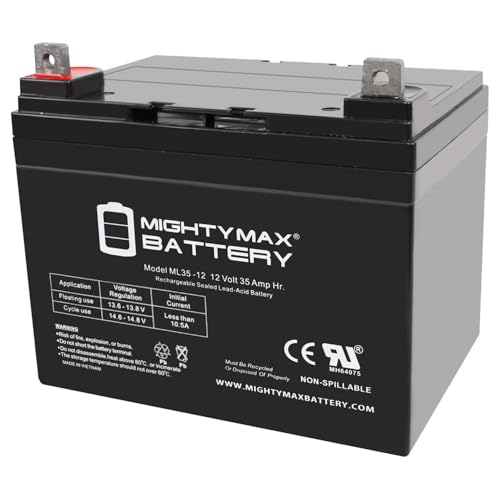
Ml35-12 Sla Is A 12V 35Ah Sealed Lead Acid (Sla) Rechargeable Maintenance Free Battery
Compatible Battery Types
- Lead-Acid Batteries: Commonly used for solar systems. Deep-cycle lead-acid batteries are especially suitable. They offer durability and a lower initial cost but may require more maintenance.
- Li-ion Batteries: These provide higher energy density, longer lifespans, and faster charging. They are often lighter than lead-acid batteries, making them ideal for portable applications.
- AGM Batteries: Absorbent Glass Mat (AGM) batteries are a type of sealed lead-acid battery. They offer low maintenance and can handle deep discharges better than traditional lead-acid options.
- Gel Batteries: Gel batteries use a gelled electrolyte, making them safer to use in various environments. They excel in low-temperature scenarios but may have lower discharge rates.
- Amp-Hours (Ah): Determine your energy needs using amp-hours. This measurement indicates how much electricity the battery can deliver over time. Assess your devices’ power demands to calculate the required capacity.
- Usable Capacity: Factor in depth of discharge (DoD) percentages. Lead-acid batteries generally require a DoD of 50%, while Li-ion batteries can often reach 80-90%. Aim for usable capacity that aligns with your discharge habits.
- Daily Input vs. Output: Match the battery capacity with daily energy production from your solar panel. Calculate the energy generated by your solar setup and ensure it meets or exceeds your daily requirements.
- Temperature Effects: Understand how temperature affects battery performance. Extreme heat can reduce lifespan while cold temperatures may lower capacity. Choose batteries designed for your environment to optimize performance.
Steps to Charge a Battery with a Solar Panel
Charging a battery with a solar panel involves a series of straightforward steps. Follow these instructions for optimal results.
Recommended Products
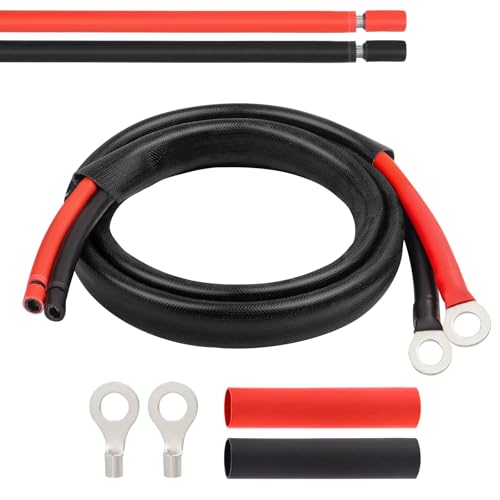
10AWG Tinned Copper Wire -- MOOKEERF solar battery cable is made of larger diameter 10AWG tinned copper wire which is minimize power loss in solar panel systems, the inner conductor consists of 84 tin-plated copper, well constructed and good conductive.
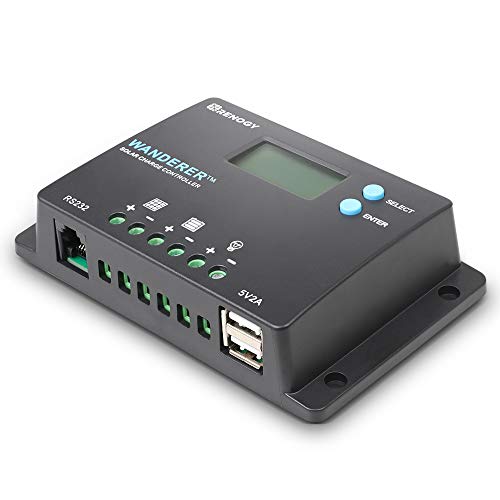
𝐒𝐦𝐚𝐫𝐭 𝟒-𝐒𝐭𝐚𝐠𝐞 12V/24V Solar Charge Controller: Renogy charge controller 𝐦𝐚𝐱𝐢𝐦𝐢𝐳𝐞𝐬 𝐁𝐚𝐭𝐭𝐞𝐫𝐲 𝐋𝐢𝐟𝐞 & 𝐒𝐨𝐥𝐚𝐫 𝐄𝐟𝐟𝐢𝐜𝐢𝐞𝐧𝐜𝐲, this advanced pwm solar charge controller utilizes intelligent 4-stage charging (Bulk/Boost/ Float/Equalization) to optimize power delivery for AGM, Gel, Flooded and Lithium batteries. RV solar charge controller prevents overcharging and gas buildup while 𝐚𝐜𝐡𝐢𝐞𝐯𝐢𝐧𝐠 𝟑𝟎% 𝐥𝐨𝐧𝐠𝐞𝐫 𝐛𝐚𝐭𝐭𝐞𝐫𝐲 𝐥𝐢𝐟𝐞𝐬𝐩𝐚𝐧 compared to basic charge controllers.

8AWG Tinned Copper Wire -- MOOKEERF solar battery cable is made of larger diameter 8AWG tinned copper wire which is minimize power loss in solar panel systems, the inner conductor consists of 140 tin-plated copper, well constructed and good conductive.
Setting Up Your Solar Panel
- Select a Location: Choose an area where your solar panel receives maximum sunlight, ideally facing south.
- Position the Panel: Install the solar panel at an angle of about 30 to 45 degrees to capture sunlight efficiently. Use a stable mount to secure the panel.
- Connect to Charge Controller: If you’re using a charge controller, connect the solar panel’s output terminals to the controller according to the manufacturer’s instructions. This device regulates the voltage and prevents overcharging.
Connecting the Battery to the Solar Panel
- Select the Right Battery: Ensure your battery type is compatible with your solar panel system. Common options include lead-acid or lithium-ion batteries.
- Ensure Safety: Before connecting, wear protective gear, and work in a dry area. Turn off all equipment to avoid short circuits.
- Use Appropriate Wiring: Utilize appropriate gauge wires to connect from the charge controller to the battery. Refer to the charge controller manual for guidance on the correct wire size.
- Make Connections:
- Connect the positive terminal from the charge controller to the positive terminal of the battery.
- Connect the negative terminal from the charge controller to the negative terminal of the battery.
- Check Charge Controller Display: Observe the charge controller’s display for real-time information about charging status, voltage, and current.
- Inspect Connections Regularly: Periodically check all connections and wiring for any signs of wear, corrosion, or damage.
- Monitor Battery Voltage: Use a multimeter to measure the battery voltage. It should ideally be at the recommended level for your specific battery.
- Evaluate Charging Duration: Depending on sunlight availability and battery capacity, charging may take several hours. Plan ahead, especially for critical needs.
These steps ensure a smooth and efficient process for charging a battery with a solar panel, harnessing the power of solar energy effectively.
Troubleshooting Common Issues
When charging a battery with a solar panel, you may encounter a few common issues. Understanding these problems helps you resolve them quickly and effectively.
Low Charging Efficiency
Low charging efficiency occurs when your solar panel isn’t generating enough power. Several factors can cause this:
- Insufficient Sunlight: Position your panel in direct sunlight during peak hours for optimal performance. Avoid shaded areas or obstructions, like trees and buildings.
- Incorrect Panel Angle: Adjust the angle of the panel to face the sun directly. A 30-45 degree angle usually works best for solar panels.
- Weather Conditions: Understand that cloudy or rainy days reduce sunlight intensity. Consider using a larger panel or a battery with a higher capacity to compensate.
- Dirt and Dust: Regularly clean your solar panel to remove dirt or debris that can block sunlight. A simple rinse with water can enhance efficiency.
Battery Compatibility Problems
Battery compatibility issues can arise when your battery doesn’t match the solar charging system components. To avoid this:
- Check Battery Type: Ensure your battery type—like lead-acid or lithium-ion—is compatible with the charge controller you’re using. Refer to the manufacturer’s specifications for details.
- Match Voltage Ratings: Verify that your solar panel voltage matches the battery voltage. For example, use a 12V panel with a 12V battery to ensure efficient charging.
- Monitor Depth of Discharge: Keep track of your battery’s depth of discharge (DoD). For lead-acid batteries, don’t exceed a DoD of 50% for longevity.
- Use Appropriate Charge Controllers: Select an appropriate charge controller. PWM (Pulse Width Modulation) controllers suit simpler systems, while MPPT (Maximum Power Point Tracking) controllers optimize energy use for more complex setups.
By addressing these troubleshooting tips, you enhance your solar charging experience and extend the life of your batteries efficiently.
Conclusion
Charging a battery with a solar panel can transform your outdoor experiences. By harnessing the sun’s energy you’re not just saving money but also embracing a sustainable lifestyle.
Remember to choose the right components and follow the steps carefully to ensure everything works smoothly. With a little preparation and the right setup you can enjoy the freedom of reliable power wherever your adventures take you.
So go ahead and set up your solar charging system. You’ll be ready to tackle any off-grid challenge that comes your way. Happy charging!
Frequently Asked Questions
What are the benefits of using solar panels for charging devices off the grid?
Using solar panels to charge devices off the grid allows you to harness renewable energy, ensuring a reliable power source during camping or outdoor activities. It’s sustainable, cost-effective, portable, and promotes energy independence, allowing you to enjoy nature without worrying about battery life.
How do solar panels generate electricity?
Solar panels generate electricity by converting sunlight into direct current (DC) electricity through photovoltaic cells. This process involves absorbing photons from sunlight, which excites electrons and creates an electric current that can be used to charge batteries or power devices.
What types of solar panels are available?
There are three main types of solar panels:
- Monocrystalline – High efficiency and performs well in low light.
- Polycrystalline – More affordable but less efficient.
- Thin-film – Lightweight and flexible but generally has lower efficiency.
What is a charge controller’s function?
A charge controller regulates the voltage and current coming from solar panels to prevent battery overcharging and ensure safe charging. It helps optimize the charging process to extend the battery’s lifespan and maintain optimal performance.
How do I choose the right battery for solar charging?
To choose the right battery, consider the type (e.g., lead-acid, lithium-ion), capacity (amp-hours), depth of discharge, and the specific environmental conditions. Matching the battery capacity with daily solar energy production is vital for efficient performance.
What are the steps to charge a battery with a solar panel?
First, select a sunny location and position the solar panel for maximum sunlight. Connect the panel to a charge controller, then link the controller to your battery. Always follow safety precautions, like using proper wiring and checking connections regularly.
How do I troubleshoot low charging efficiency with solar panels?
Low charging efficiency may result from insufficient sunlight, incorrect panel angle, bad weather, or dirt on the panel. Ensure the panel is clean, properly angled, and in direct sunlight for optimal performance. Regularly check connections and match battery specifications for compatibility.
Why is understanding amp-hours (Ah) important?
Understanding amp-hours (Ah) helps you determine the energy needs of your devices and the usable capacity of your battery. Awareness of factors like depth of discharge ensures you choose a battery that can effectively support your energy requirements during outdoor use.
