

Have you ever wondered if you really need to use rechargeable batteries in your solar lights? You’re not alone. Many people face this question when setting up their outdoor lighting. It can be frustrating to figure out the best way to keep those lights shining bright through the night.
Using the right batteries can make a big difference in how well your solar lights perform. In this article, you’ll discover why rechargeable batteries are often recommended and how they can enhance the efficiency of your solar lighting system. By the end, you’ll have a clearer understanding of what works best for your needs, helping you make informed choices for your outdoor spaces.
Key Takeaways
- Rechargeable Batteries Are Essential: Using rechargeable batteries, such as NiMH or lithium-ion, is crucial for optimal solar light performance, ensuring they operate efficiently and last longer.
- Enhanced Efficiency: Rechargeable batteries charge quickly and hold more energy, leading to brighter lights and extended illumination periods at night.
- Cost-Effective and Eco-Friendly: Though the initial investment is higher, rechargeable batteries save money over time by minimizing replacements, while reducing environmental waste.
- Temperature Sensitivity: Be aware that rechargeable batteries can face challenges in extreme temperatures, potentially affecting their efficiency.
- Alternative Battery Options: Non-rechargeable alkaline batteries and other rechargeable types like lead-acid or NiCd are available, but may have limitations compared to standard rechargeable options.
- Regular Maintenance Is Key: Proper battery and solar light maintenance, including cleaning panels and checking connections, boosts performance and longevity.
Understanding Solar Lights
Solar lights harness sunlight during the day and use that energy to illuminate your outdoor spaces at night. Knowing how solar lights operate helps you understand the role of batteries within these systems.
How Solar Lights Work
Solar lights consist of several key components: solar panels, rechargeable batteries, LED bulbs, and light sensors. The solar panel collects sunlight during the day, converting it into electrical energy. This energy charges the rechargeable batteries. Once the sun sets, the light sensor activates the LED bulbs, drawing power from the batteries to provide illumination. Efficient systems rely on high-quality components for optimal performance, ensuring they last throughout the night.
Importance of Batteries in Solar Lights
Batteries power solar lights, making them essential for functionality. Rechargeable batteries store energy collected during the day and release it at night. Using the right type of rechargeable batteries, such as NiMH or lithium-ion, enhances charging efficiency and lifespan. Improper batteries can lead to performance issues, causing lights to dim or fail. In colder climates, some batteries maintain charge better than others, impacting overall functionality. For consistent lighting, select batteries designed specifically for solar applications.
Do You Have to Put Rechargeable Batteries in Solar Lights?
Using rechargeable batteries in solar lights isn’t just common; it’s essential for optimal performance. These batteries play a crucial role in how solar lights operate, ensuring they work efficiently and last longer.
Recommended Products

Note: It’s rechargeable Ni-MH AA Battery, 1.2V battery, designed exclusively for use with 1.2V devices. For charging, please use the EBL AA NiMH charger. For safety during transportation, the batteries are not fully charged, pls kindy charge it before first use. 【Perfect Solar Batteries】 Exact size AA batteries designed for solar lights, outdoor garden lights, mouse, keyboards, TV remotes, toys, game controllers, digital camera, will fit all your device perfectly in daily life usage, high quality AA rechargeable batteries supply long lasting power, great convenience and good performance.

1.Attention: 2/3AAA 600mAh Rechargeable Battery,2/3AAA Battery size is 0.39 x 1.18 inch (10 x 30mm), Not Standard aaa size batteries, Please Check Your Solar Lights First

RELIABLE PERFORMANCE: 8-pack of AA rechargeable NiMH batteries (2,000 mAh)
Benefits of Using Rechargeable Batteries
- Efficiency: Rechargeable batteries, like NiMH or lithium-ion, charge quickly and hold more energy. This efficiency translates to brighter lights and longer usage times at night.
- Cost-Effective: While the upfront cost is higher, rechargeable batteries save money over time. You won’t frequently replace disposable batteries, reducing waste and expense.
- Eco-Friendly: Using rechargeable batteries lessens environmental impact. They minimize landfill waste compared to single-use batteries.
- Durability: Quality rechargeable batteries handle a greater number of charge cycles. They last longer and withstand various weather conditions, especially in outdoor settings.
- Temperature Sensitivity: Rechargeable batteries can struggle in extreme temperatures. Cold climates may impact charging efficiency, leading to dimmer lights.
- Initial Investment: Though they save money in the long run, the initial investment for high-quality rechargeable batteries can be significant.
- Compatibility Issues: Not all solar lights work with every battery type. It’s necessary to check your solar light specifications to ensure compatibility.
- Maintenance Needs: Rechargeable batteries may require occasional maintenance or replacement after many charge cycles, which complicates their use slightly.
Choosing the right rechargeable batteries is vital to maximizing your solar light performance. Prioritize efficiency and compatibility for the best results.
Alternative Battery Options
Several battery options can power your solar lights effectively aside from the typical rechargeable types. These alternatives provide flexibility and performance for different scenarios.
Recommended Products
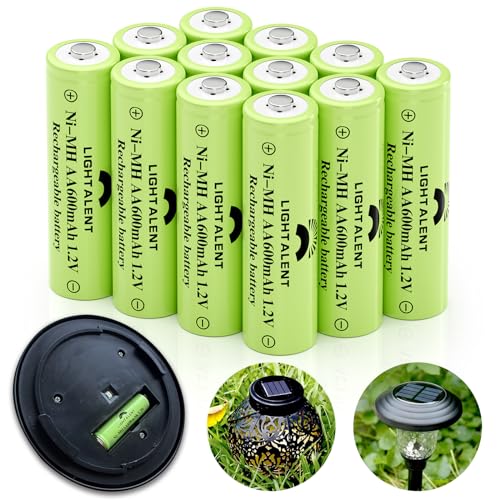
【Strong Performance】1.2-volt 600mAh AA Ni-MH rechargeable batteries,Package included: 12 x solar battery 1.2v ni-mh aa 600mAh

High Capacity-1.2V the Ni-CD AA rechargeable battery is designed was built with a 300mWh capacity rating that translates to long-lasting performance while making the most of its single charge.

【Included products】4*AA 600mAh 1.2v Ni-MH rechargeable batteries, AA 600mAh battery is 1.97 inches long and 0.55 inches wide. (Batteries only)
Alkaline Batteries
Alkaline batteries serve as a common non-rechargeable option for solar lights. These batteries offer a convenient choice, especially in situations where you want a quick and easy solution. Alkaline batteries provide reliable performance and are widely available. For instance, using alkaline batteries can work well during the summer months when temperatures are higher, but they may underperform in colder weather. Although they’re less eco-friendly compared to rechargeable batteries, they can be a practical solution for temporary or less frequently used solar lights.
Other Rechargeable Options
You can consider other rechargeable battery types if you prefer alternatives to NiMH or lithium-ion batteries. For example, lead-acid batteries are an option that tends to be more affordable upfront. However, they occupy more space and are heavier, making them less suitable for smaller solar lights.
Another alternative is using nickel-cadmium (NiCd) batteries. While they recharge quickly, NiCd batteries have a lower capacity, requiring more frequent replacements. Moreover, these batteries are less eco-friendly due to the cadmium element, which poses environmental concerns.
When choosing battery options, factor in performance, lifespan, and your specific lighting needs. Researching each type’s characteristics ensures you find the right batteries for optimal solar light operation.
Maintaining Solar Lights
Proper maintenance of solar lights ensures they function efficiently and last longer. Understanding how to care for your solar lights enhances both performance and longevity.
Recommended Products

【Reliable Performance】12 X Ni-MH AA 600mAh 1.2v Rechargeable Battery,Ideal for garden solar lights. (This product does not include a charger)

【Attention】This is a 2/3 AAA battery and not a AAA battery, the only difference between them is the height, same diameter but 2/3 height of AAA battery,2/3AAA Battery size is 0.39 x 1.18 inch (10 x 30mm)(Please look carefully before buying)

【 30% Precharged for Ready Use 】 For transportation safety purposes, these batteries are only precharged with 30% power, so charge them before use for longer working. In addition, recharging the battery every 3 months can make its lifespan longer
Tips for Battery Maintenance
- Check Batteries Regularly: Inspect batteries every few months for corrosion or damage. Replace defective batteries promptly.
- Keep Contacts Clean: Clean the battery terminals with a dry cloth. Dirty contacts can impede charging.
- Store in a Suitable Location: Keep solar lights in a location where they receive direct sunlight. Adequate sunlight exposure boosts battery charging.
- Select Compatible Batteries: Use batteries that match your solar light’s specifications. Chargers and battery types vary widely.
- Opt for Quality Batteries: Invest in high-quality rechargeable batteries, such as NiMH or lithium-ion. These options provide optimal performance and longevity.
- Clean Solar Panels: Regularly wipe the solar panels with a soft cloth to remove dirt and debris. Clean panels absorb more sunlight, enhancing efficiency.
- Adjust Placement: Position solar lights away from obstructions, such as foliage or buildings, that block sunlight. This maximizes energy collection.
- Prune Surrounding Vegetation: Trim plants or shrubs that might shade the solar lights during the day. More sunlight leads to better battery performance.
- Use a Timer or Sensor: Consider incorporating timers or sensors for your solar lights. These devices avoid unnecessary battery drainage and enhance functionality at night.
Conclusion
Choosing the right batteries for your solar lights can make all the difference in performance and longevity. While rechargeable batteries are often the best option for efficiency and eco-friendliness, it’s important to consider your specific needs and conditions. Whether you opt for high-quality rechargeable batteries or explore non-rechargeable alternatives, taking the time to understand your options will lead to better results.
Don’t forget to keep up with maintenance and care for your solar lights. With the right batteries and a little attention, you can enjoy beautiful outdoor lighting that lasts. Your solar lights deserve the best to shine bright and enhance your space.
Frequently Asked Questions
Do solar lights need rechargeable batteries?
Yes, solar lights require rechargeable batteries to function efficiently. These batteries store energy collected by solar panels during the day, allowing the lights to operate at night. Using the right type of rechargeable battery is crucial for optimal performance.
What types of rechargeable batteries are best for solar lights?
NiMH and lithium-ion batteries are recommended for solar lights. They are efficient, have longer lifespans, and perform well in various temperatures. Choosing high-quality batteries enhances the charging efficiency of your solar lighting system.
Can I use alkaline batteries in solar lights?
While alkaline batteries can be used in solar lights, they are non-rechargeable and less eco-friendly. They offer convenience but are not cost-effective long-term, especially compared to rechargeable options.
How can I maintain my solar light batteries?
Regular maintenance is key. Check for corrosion on battery contacts, keep them clean, and ensure solar panels receive direct sunlight for optimal charging. This will enhance battery performance and extend the lifespan of your solar lights.
What are the drawbacks of rechargeable batteries for solar lights?
Rechargeable batteries can be temperature-sensitive and might have compatibility issues with certain solar fixtures. Additionally, they require maintenance to ensure optimal performance, which can be a consideration for some users.
How do I choose the right battery for my solar lights?
Consider factors like performance, lifespan, and specific lighting needs when selecting batteries. Opt for high-quality rechargeable batteries matched to your solar lights to ensure efficient operation and longevity.
