

Have you ever wondered if you can use rechargeable batteries in your solar lights? You’re not alone. Many people face the same question when their solar lights start to dim or fail to work altogether. It can be frustrating to deal with this issue, especially when you want your outdoor space to shine brightly.
Key Takeaways
- Rechargeable Batteries Enhance Performance: Using rechargeable batteries, like NiMH and Li-ion, provides better performance and longevity compared to standard alkaline batteries in solar lights.
- Cost-Effective Solution: Although rechargeable batteries require an initial investment, they can last up to 1,000 charge cycles, leading to significant long-term savings on replacements and electricity bills.
- Environmental Benefits: Opting for rechargeable batteries minimizes waste and reduces the environmental impact, as they can be reused multiple times and generally contain fewer harmful chemicals.
- Compatibility is Key: Always check the specifications of your solar lights before replacing batteries to ensure compatibility, particularly focusing on voltage and size to avoid damage.
- Quality Matters: Invest in high-quality rechargeable batteries to prevent performance issues, such as rapid discharge and dimming of solar lights.
- Solar Lights Function Year-Round: Solar lights are designed for outdoor use and can operate in various weather conditions, making them a reliable choice for consistent outdoor illumination.
Overview of Solar Lights
Solar lights provide an eco-friendly solution for outdoor illumination. They harness sunlight during the day, convert it into energy, and use that energy to light up at night. Typically, these lights feature solar panels, an LED bulb, a rechargeable battery, and a control circuit.
How Solar Lights Work
- Solar Panel Absorption: Solar panels collect sunlight and convert it into electrical energy through photovoltaic cells.
- Energy Storage: The energy is stored in rechargeable batteries, enabling the lights to function even when it’s dark.
- LED Illumination: At night, the stored energy powers the LED bulbs, providing light in your garden, pathways, or patios.
Components of Solar Lights
- Solar Panel: Most solar lights have a small, powerful solar panel that captures sunlight.
- Rechargeable Battery: Stores energy for use after dark. Common types include nickel-cadmium (NiCd) and nickel-metal hydride (NiMH) batteries.
- LED Bulb: They use less energy and last longer compared to traditional light bulbs.
Benefits of Using Solar Lights
- Energy Efficiency: Solar lights reduce electricity costs by relying on renewable energy.
- Environmentally Friendly: Using solar power reduces carbon footprints and promotes sustainability.
- Easy Installation: Solar lights require minimal setup, often without the need for wiring.
- Can You Leave Solar Lights Outside Year-Round? Yes, most solar lights are designed for outdoor use and can withstand various weather conditions.
- Do Solar Lights Work on Cloudy Days? Yes, solar lights collect energy even on cloudy days, although their performance may decrease.
- How Long Do Solar Lights Last? The lifespan varies but most high-quality solar lights can last 2 to 5 years with proper maintenance.
Understanding how solar lights function and their components helps you in deciding how to integrate them effectively into your outdoor spaces.
Types of Batteries for Solar Lights
Understanding battery types is essential for optimizing the performance of solar lights. Different batteries serve distinct purposes, impacting how effectively your solar lights operate.
Recommended Products

Note: It’s rechargeable Ni-MH AA Battery, 1.2V battery, designed exclusively for use with 1.2V devices. For charging, please use the EBL AA NiMH charger. For safety during transportation, the batteries are not fully charged, pls kindy charge it before first use. 【Perfect Solar Batteries】 Exact size AA batteries designed for solar lights, outdoor garden lights, mouse, keyboards, TV remotes, toys, game controllers, digital camera, will fit all your device perfectly in daily life usage, high quality AA rechargeable batteries supply long lasting power, great convenience and good performance.

1.Attention: 2/3AAA 600mAh Rechargeable Battery,2/3AAA Battery size is 0.39 x 1.18 inch (10 x 30mm), Not Standard aaa size batteries, Please Check Your Solar Lights First

RELIABLE PERFORMANCE: 8-pack of AA rechargeable NiMH batteries (2,000 mAh)
Standard vs. Rechargeable Batteries
Standard batteries, commonly alkaline, offer one-time use. They provide high initial voltage but lack the longevity needed for solar applications. Rechargeable batteries, including NiMH and Li-ion, deliver better performance in solar lights. They endure multiple charging cycles, making them ideal for daily use. You should choose rechargeable batteries for consistent power supply and long-term savings.
Common Battery Types Used
Several battery types are prevalent in solar lights:
- Nickel-Metal Hydride (NiMH): Common in solar lights for their energy efficiency and ability to operate in a range of temperatures. Their moderate capacity ensures they recharge quickly through solar panels.
- Lithium-Ion (Li-ion): Known for high energy density, Li-ion batteries come in compact sizes, allowing for longer run times. Their performance remains stable even in fluctuating temperatures.
- Lead-Acid: Typically found in larger solar lighting systems. While less common for residential solar lights, they provide robust power suitable for extensive usage.
Always check your solar lights’ specifications to ensure compatibility with your chosen battery type.
Benefits of Using Rechargeable Batteries
Using rechargeable batteries in solar lights offers several advantages that enhance their overall performance and sustainability.
Recommended Products

【Reliable Performance】12 X Ni-MH AA 600mAh 1.2v Rechargeable Battery,Ideal for garden solar lights. (This product does not include a charger)

【Included products】4*AA 600mAh 1.2v Ni-MH rechargeable batteries, AA 600mAh battery is 1.97 inches long and 0.55 inches wide. (Batteries only)

【High Capacity&Long Lasting】:1600mah high capacity AA rechargeable battery will lasting much longer time to ensure your outdoor lights always has enough power to light all night. Also can replace 600mAh, 800mAh, 1100mah, etc NiCd or Ni-MH AA cells AA battery. They won't lose the maximum capacity.
Cost-Effectiveness
Rechargeable batteries lower overall lighting costs. You invest in these batteries upfront, but they typically last for hundreds of cycles. For example, if you use Nickel-Metal Hydride (NiMH) batteries, they might deliver up to 1,000 charge cycles. This longevity means you replace them less often, saving you money on battery purchases over time. Additionally, since solar lights harness free energy from the sun, the combination of rechargeable batteries and solar technology maximizes your savings on electricity bills.
Environmental Impact
Using rechargeable batteries contributes positively to the environment. Rechargeable batteries reduce waste because they can be used multiple times, cutting down on the number of disposable batteries that end up in landfills. For instance, if everyone switched to rechargeable batteries, the reduction in waste could be substantial. Moreover, these batteries usually contain fewer harmful chemicals than regular alkaline batteries, making them a safer choice for the ecosystem. Choosing rechargeable batteries means supporting eco-friendly practices while enjoying reliable solar lighting.
Potential Issues with Rechargeable Batteries
Using rechargeable batteries in solar lights comes with specific concerns that you should consider to ensure optimal performance.
Recommended Products

Solar PRO technology – Tenergy engineered solar AA batteries with technology addressing common solar light battery performance problems: leaking due to over-charging from long sunny summer days, dead batteries due to over-discharging from extended rainy or cloudy days. Tenergy is a Silicon Valley based company with over 15 years of experience in batteries.
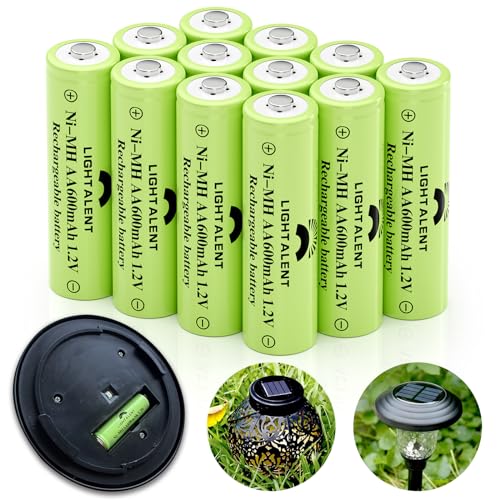
【Strong Performance】1.2-volt 600mAh AA Ni-MH rechargeable batteries,Package included: 12 x solar battery 1.2v ni-mh aa 600mAh

【Attention】This is a 2/3 AAA battery and not a AAA battery, the only difference between them is the height, same diameter but 2/3 height of AAA battery,2/3AAA Battery size is 0.39 x 1.18 inch (10 x 30mm)(Please look carefully before buying)
Compatibility Concerns
Compatibility often arises when using rechargeable batteries in solar lights. Not all solar lights are designed to work with every type of rechargeable battery. Check your solar light’s specifications to verify which batteries are compatible, particularly the voltage and size. Using incompatible batteries can damage the solar lights or lead to inefficient performance. For example, if your solar light requires 1.2V batteries, using standard alkaline batteries (which typically provide 1.5V) can cause issues.
Performance Differences
Performance can vary significantly between battery types. Rechargeable batteries, like Nickel-Metal Hydride (NiMH) and Lithium-Ion (Li-ion), deliver consistent voltage over time, which helps maintain brightness throughout the night. However, older designs may not fully benefit from these advancements. You may notice that cheaper or lower-quality rechargeable batteries discharge faster, leading to dimmer lights sooner than expected. It’s essential to invest in high-quality batteries that match the requirements of your solar lights to enjoy consistent performance and longer lifespan.
Make sure to monitor your solar lights after replacing batteries. If you find they’re still underperforming, it may indicate deeper issues, such as faulty solar panels or poor connections.
Conclusion
Using rechargeable batteries in your solar lights can make a world of difference. Not only do they save you money in the long run but they also help the environment by reducing waste. Just remember to check the specifications of your solar lights to ensure compatibility with the batteries you choose.
With the right rechargeable batteries, you’ll enjoy brighter and more reliable outdoor lighting. So go ahead and make that switch—you’ll be glad you did!
Frequently Asked Questions
Can rechargeable batteries be used in solar lights?
Yes, rechargeable batteries can be used in solar lights. They’re specifically designed for solar applications, offering better longevity and efficiency compared to standard one-time-use batteries.
What types of batteries are suitable for solar lights?
The best types of batteries for solar lights are Nickel-Metal Hydride (NiMH) and Lithium-Ion (Li-ion). Lead-Acid batteries can also be used for larger systems, but ensure they match your lights’ specifications.
How do rechargeable batteries help in solar lighting?
Rechargeable batteries help reduce costs and environmental waste. They last for hundreds of cycles, meaning less frequent replacements, which saves money and minimizes harmful waste compared to disposable batteries.
What should I check before replacing batteries in solar lights?
Before replacing batteries, check your solar lights’ specifications to ensure the correct voltage and size are used. Using incompatible batteries can damage the lights or affect their performance.
Do solar lights work in cloudy weather?
Yes, solar lights can work on cloudy days, but their performance may be diminished. Solar panels still collect some sunlight, allowing the lights to charge, though less effectively than on sunny days.
How long do rechargeable batteries last in solar lights?
Rechargeable batteries can last for several years, depending on the type and usage. High-quality batteries, like NiMH, can endure hundreds of charging cycles, making them a cost-effective option for solar lights.
What are the benefits of solar lights?
Solar lights provide energy efficiency, ease of installation, and environmental friendliness. They use sunlight to power LED bulbs, helping to lower electricity costs while minimizing the carbon footprint.
