

- Car batteries can be used for home electricity, but it is not recommended.
- The amount of power a car battery can provide is limited and may not be sufficient for powering household appliances or electronics.
- Using a car battery for home electricity can also be dangerous if not done properly.
- Car batteries are designed to provide short bursts of high power, whereas household appliances require sustained power over longer periods of time.
- If you do decide to use a car battery for home electricity, make sure to use an inverter to convert the DC power from the battery to AC power that is compatible with household appliances.
- It is also important to monitor the battery’s charge level and avoid over-discharging it, as this can damage the battery and reduce its lifespan.
Have you ever found yourself in a power outage and wished you had a backup source of electricity? Or maybe you’re looking for a more sustainable way to power your home. Whatever the reason may be, there’s a growing interest in using car batteries as an alternative source of energy for homes.
But can it really work? Can a car battery be used to power your home during an emergency or even on a daily basis? The answer is yes, but with some important considerations.
In this article, we’ll explore the possibilities and limitations of using car batteries for home electricity. We’ll also dive into the technical details of how this works and what you need to know before attempting it on your own. So, whether you’re looking for an emergency backup or just curious about alternative energy sources, keep reading to find out if a car battery could be the solution you’ve been searching for.
The Quick Answer:
Learn how car batteries work and what their components are. A car battery provides electrical energy to a vehicle’s engine compartment and consists of six cells, each containing electrodes and an electrolyte solution. The chemical reaction within the battery generates electricity by converting chemical energy into electrical energy. Extreme temperatures can affect its performance, with cold weather causing batteries to discharge more quickly and hot weather reducing their lifespan. Components include positive and negative terminals, lead plates, sulfuric acid electrolyte solution, battery case, vent caps, and a separator between positive and negative plates.
Understanding Car Batteries: How They Work
A car battery is a rechargeable battery that provides electrical energy to a vehicle. The battery is typically located in the engine compartment and consists of six cells, each containing electrodes and an electrolyte solution. When the car’s engine is off, the battery powers the electrical system, allowing features like headlights and radios to function.
The chemical reaction within a car battery generates electricity by converting chemical energy into electrical energy. This process involves lead plates and sulfuric acid electrolyte, which creates an electric charge. The lead-acid battery can be charged through an alternator or a specialized charger designed for car batteries.
It’s important to note that car batteries are not designed for long-term use and will eventually lose their charge over time. In addition, extreme temperatures can affect their performance, with cold weather causing batteries to discharge more quickly and hot weather reducing their lifespan.
The Components of a Car Battery
A typical car battery consists of several components that work together to provide power to the vehicle. These include:
- Positive and negative terminals
- Lead plates
- Sulfuric acid electrolyte solution
- Battery case
- Vent caps
- A separator between positive and negative plates.
Positive And Negative Terminals:
The positive terminal connects to the starter motor, while the negative terminal connects to the ground.
Lead Plates:
The lead plates inside a car battery are made from high-purity lead alloyed with other metals such as antimony or calcium. They are thin sheets of metal that are stacked on top of each other inside the battery case.
Sulfuric Acid Electrolyte Solution:
The sulfuric acid electrolyte solution is a mixture of water and sulfuric acid that fills the space between the lead plates. The solution ionizes into hydrogen and sulfate ions, which react with the lead plates to create an electric charge.
Battery Case:
The battery case is typically made from hard plastic or rubber and acts as a protective shield for the internal components of the battery.
Vent Caps:
Vent caps are small caps on top of each cell that allow gases produced during charging to vent outside the battery.
Separator:
A separator between positive and negative plates prevents short circuits within cells.
Using a Car Battery for Home Electricity: Is it Possible?
With the rising cost of electricity bills, many people are looking for alternative sources of power, including using car batteries to power household appliances. It is possible to use a car battery for home electricity, but there are several things to consider before doing so.
The first thing to consider when using a car battery for home electricity is its capacity. Car batteries have a limited capacity and cannot provide power for extended periods. They are designed to start engines rather than supply continuous electrical power.
Another factor to consider is power output. A typical car battery produces direct current (DC) power, which needs to be converted into alternating current (AC) power through an inverter before it can be used by most household appliances.
It’s also important to note that running appliances off a car battery can quickly drain it, requiring frequent recharging. Additionally, using a car battery for home electricity may not be cost-effective in the long run since car batteries have a limited lifespan and will eventually need replacing.
The Capacity of Car Batteries
Car batteries come in different sizes and capacities, measured in ampere-hours (AH), which indicates how much current they can produce over a specific period. The capacity of a car battery depends on the size and construction of its cells, as well as the type of electrolyte solution used.
A typical car battery has a capacity between 45 and 100 AH. However, this is not enough to power most household appliances for extended periods. For instance, an air conditioner typically requires around 5000 watts per hour, while a refrigerator uses around 1200 watts per hour.
Converting DC Power to AC Power
Most household appliances use alternating current (AC) power, which means that direct current (DC) power from a car battery needs to be converted through an inverter before it can be used.
An inverter is an electronic device that converts DC voltage from a car battery into AC voltage that can be used by most household appliances. Inverters come in different sizes and capacities depending on the amount of power required to run specific appliances.
It’s important to choose an inverter that matches the wattage requirements of your appliances to prevent overloading or underpowering them.
The Pros and Cons of Using a Car Battery for Home Electricity
Using a car battery for home electricity comes with both advantages and disadvantages. Here are some pros and cons to consider:
Pros:
- Cost-effective: Car batteries are relatively inexpensive compared to other sources of power.
- Portable: Car batteries are easy to transport and can be used off-grid or in remote locations.
- Easy installation: Setting up a car battery for home electricity is straightforward since it only requires an inverter and wiring.
Cons:
- Low Capacity: Car batteries have limited capacity and cannot provide continuous power for extended periods.
- Short lifespan: Car batteries have a limited lifespan and will eventually need replacing.
- Requires recharging: Using a car battery for home electricity requires frequent recharging, which can be inconvenient and time-consuming.
Connecting a Car Battery to Power Household Appliances: How To Do It
Connecting a car battery to power household appliances requires an inverter, wiring, and some basic electrical knowledge. Here are the steps to follow:
Recommended Products

【Pro Chaser Power Inverter Basics】: This inverter provides a steady 400W of DC to AC power with a peak output of 800W. Equipped with dual 110V AC sockets and two high-speed 3.1A USB ports, it's perfect for powering your devices on the go.
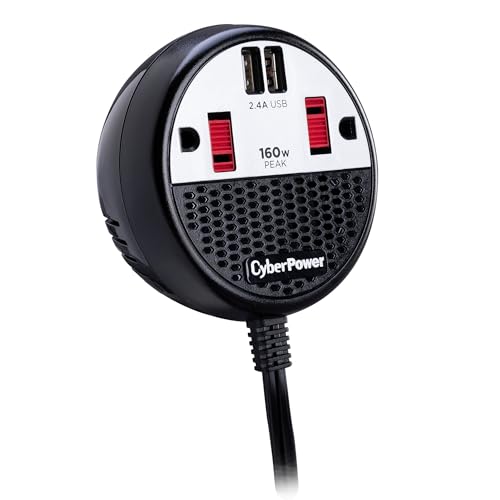
ADVANCED ELECTRONICS PROTECTION: Built‑in surge protection and automatic shutdown help safeguard sensitive devices from power fluctuations, high temperatures, short circuits, and abnormal battery conditions.

【Parameter】-- Come with 2pcs battery clips. Provides 850 watts continuous power, 2000 watts peak power, converts 12V DC battery power to standard 110V AC
Step 1: Choose an Inverter:
Choose an inverter that matches the wattage requirements of your appliances. Make sure to account for the starting wattage as well as the continuous wattage.
Step 2: Install the Inverter:
Install the inverter by connecting it to the positive and negative terminals of the car battery using appropriate wiring. Make sure that all connections are tight and secure.
Step 3: Connect Your Appliances:
Connect your appliances to the inverter using appropriate wiring. Make sure that all connections are tight and secure.
Step 4: Turn on the Inverter:
Turn on the inverter and check that it is supplying power to your appliances. If everything is working correctly, you should be able to use your appliances normally.
Choosing the Right Inverter for Converting DC Power from a Car Battery to AC Power
Choosing the right inverter for converting DC power from a car battery to AC power depends on several factors, including your energy needs, budget, and type of appliances you plan on running.
The first thing to consider is capacity. Choose an inverter with sufficient capacity to run all of your appliances without overloading or underpowering them. The capacity of an inverter is measured in watts or kilowatts (KW).
Other factors to consider when choosing an inverter include:
Waveform:
Inverters produce AC power with either a sine wave or a modified sine wave. Sine wave inverters produce cleaner and more stable power, making them suitable for sensitive electronics like laptops and televisions. Modified sine wave inverters are less expensive but may cause issues with certain appliances.
Efficiency:
Inverters come in different efficiency ratings, which indicate how much DC power is converted into AC power. Look for an inverter with a high efficiency rating to minimize energy loss.
Brand and Warranty:
Choose an inverter from a reputable brand with a good warranty to ensure that it is reliable and durable.
Safety Precautions When Using a Car Battery for Home Electricity
Using a car battery for home electricity can be dangerous if proper safety precautions are not taken. Here are some tips to keep you safe:
- Do not touch the terminals of the battery while it is charging or discharging.
- Make sure that all connections are tight and secure to prevent short circuits or electrical fires.
- Avoid overloading the battery or inverter, as this can cause damage and potentially start fires.
- Avoid exposing the battery to extreme temperatures, which can affect its performance and lifespan.
- If you notice any signs of damage or wear on your battery or inverter, replace them immediately.
Exploring Alternative Solutions to Using a Car Battery for Home Electricity
While using a car battery for home electricity is possible, there are several alternative solutions worth exploring that may be more practical and cost-effective.
One option is to install solar panels on your roof or property. Solar panels generate electricity using sunlight, which can be stored in batteries and used to power your home. This option requires a larger upfront investment but can save money in the long run.
Another option is to invest in a portable generator that runs on gasoline or propane. Portable generators are versatile and can power a variety of appliances, making them ideal for off-grid or emergency situations. However, they require fuel, which can be expensive and must be stored safely.
Finally, you could consider using energy-efficient appliances and devices that consume less electricity overall. This option is the most cost-effective and sustainable since it reduces your overall energy consumption while still allowing you to use modern conveniences.
In conclusion, while it is technically possible to use a car battery for home electricity, it is not a practical or safe solution in the long term. It is better to invest in a proper home battery system that is designed for this purpose.
Frequently Asked Questions about Can a Car Battery Be Used for Home Electricity
How many car batteries are needed to power a house?
A 6 volt battery with a capacity of 400 amp-hours can supply approximately 2.4 kilowatt hours of energy. A battery bank designed to power an average American household for three days requires 90 kilowatt-hours. If we use the previous battery example, it would take 38 of those batteries to meet the power requirements.
How can I use a car battery for electricity?
To power your devices, connect the black (negative) clamp of your inverter to the black terminal on your battery, and the red (positive) clamp to the red terminal. Then, attach a surge-protected power strip to the inverter’s plug-in connector and use it like a regular household outlet.
How long will a 12 volt battery run a TV?
From my experiment, I have found that a TV can typically run continuously for approximately 15-20 hours when powered by a 12V 100Ah lithium battery. However, if you use a 12V 100Ah lead acid battery, you can expect it to last for around 7-10 hours of uninterrupted use due to the limitation of lead acid batteries, which can only be discharged up to 50%. This information was collected on May 12, 2023.
Can a car battery power a TV?
You can power your home TV using the 12-volt lighter socket in your car, truck, or RV. However, since the home TV requires AC power and the vehicle only produces DC power, which is stored in the battery, you will need a power inverter to convert the DC power into AC power that your television can use.
How long can you power a house with a car battery?
The energy storage capacity of electric car batteries is typically around 60 kilowatt hours (kWh), which is sufficient to sustain an average American household with backup power for two days.
Can you turn a car battery into an outlet?
A power inverter is a simple device that allows you to use household plug-in appliances with an ordinary car battery.
