


Basements with low ceilings often end up feeling closed in because standard overhead lights create flat shadows that emphasize the height problem.
I learned this after trying to make our own lower level more livable and realizing the lighting had to work harder than it did upstairs.
Recessed fixtures combined with task lighting shift that balance.
The real difference shows up when light hits the spots where people actually read or work instead of just filling the ceiling plane.
A few targeted swaps in our space made the room feel more open without touching the structure.
Recessed Lights Work Well With Wall Sconces

One simple way to brighten a basement living room is to use recessed ceiling lights as the main source and add wall sconces for extra layers. This combination spreads light more evenly across the space without relying on tall lamps that can make low ceilings feel tighter.
Place the sconces near seating or reading spots so they handle focused tasks while the recessed lights keep the whole room lifted. It suits finished basements where headroom is limited and you want the space to feel open during the day.
Recessed Lights Keep Low Ceilings Feeling Open

Recessed lighting works especially well in basement media rooms because it stays flush with the ceiling and does not eat into already limited headroom. In this setup, several small fixtures spread across the ceiling provide steady ambient light without any hanging elements that would make the space feel tighter.
This approach suits finished basements used for movie watching or lounging, where you want enough light for moving around but still keep the room cozy. Place the fixtures in a simple grid pattern and choose dimmable bulbs so you can adjust the brightness depending on whether the screen is in use.
Recessed Lights With Wall Sconces For Low Ceilings
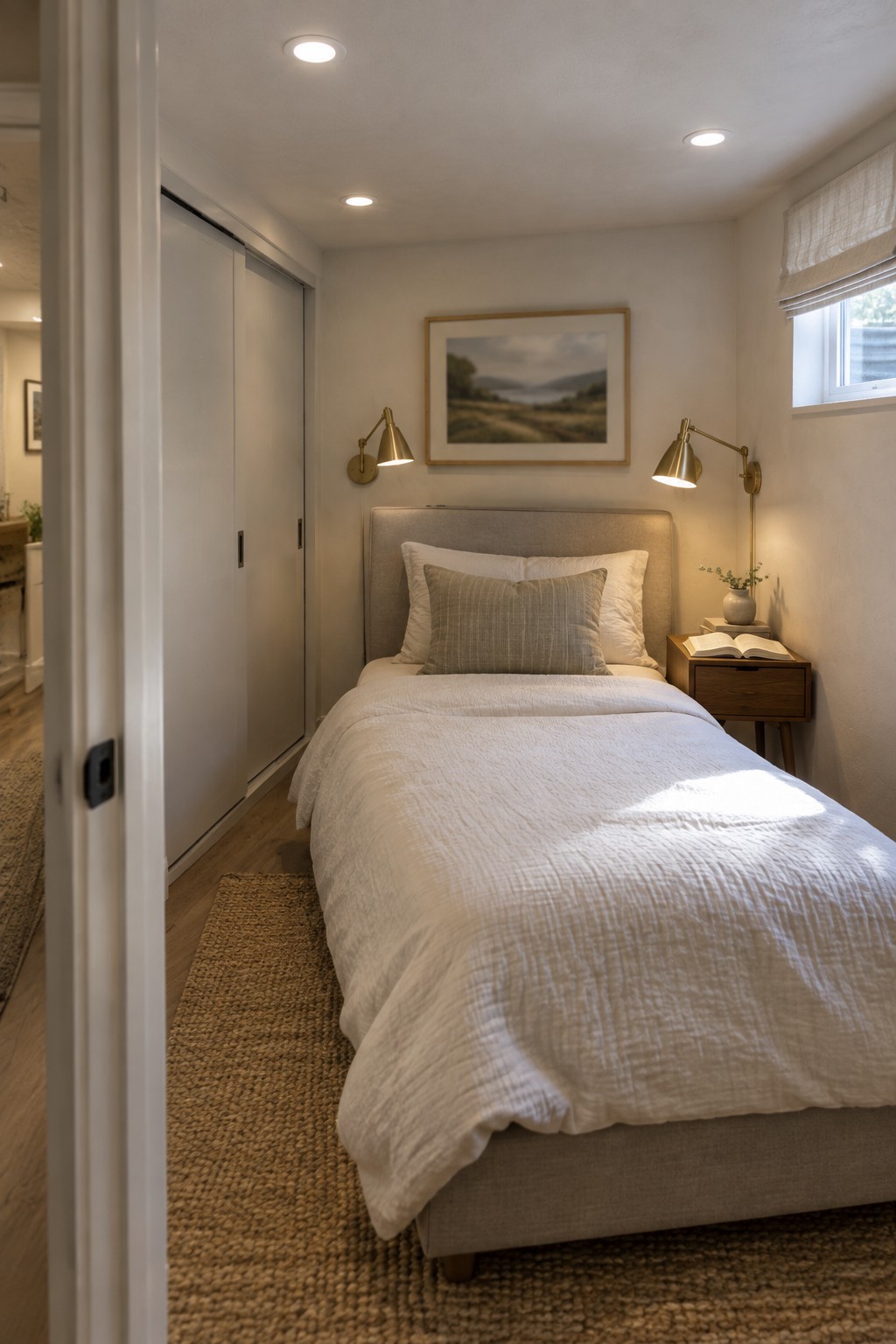
Many basement bedrooms feel dark because people rely on one overhead fixture or bulky lamps that eat up floor space. Adding several recessed lights across the ceiling gives even background light, while a pair of wall sconces beside the bed handles reading and task needs without lowering the ceiling further.
This mix works best in small guest rooms or finished basements where you want the space to feel open during the day and practical at night. Mount the sconces at seated eye level and keep the bulbs consistent so the room stays bright without feeling harsh.
Layer Recessed Lights With Under Cabinet Strips

One simple way to brighten a kitchen is to use both recessed ceiling lights and under cabinet strips at the same time. The overhead lights handle the overall glow while the lower strips focus directly on the counters where you actually work.
This setup works especially well in basements or any room with lower ceilings because the light comes from two levels instead of one. It keeps the space feeling open and practical without needing extra fixtures that might crowd the room.
Layer Recessed Lights With Under Shelf Task Lighting
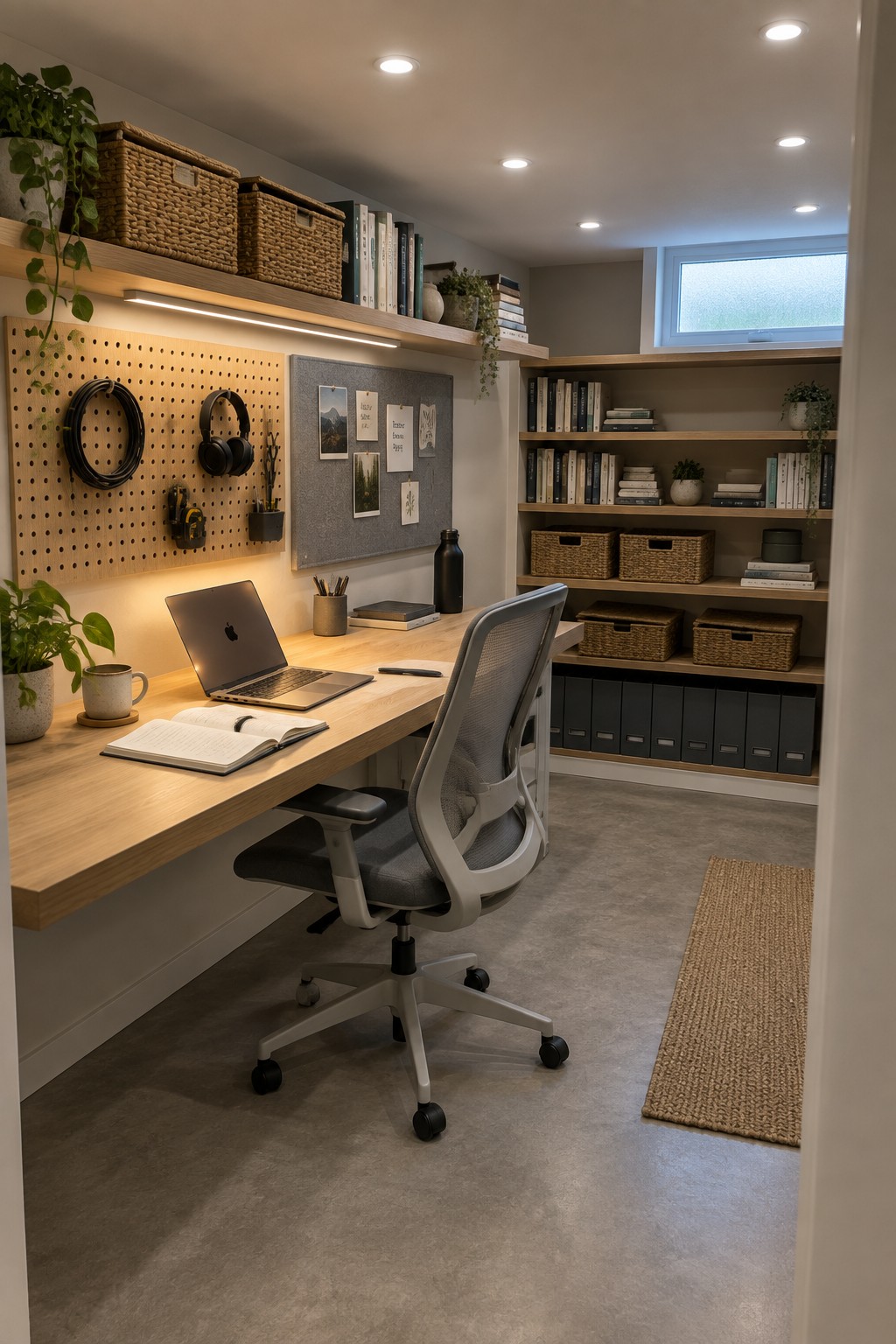
Basement offices often end up with uneven light because the ceiling height limits what you can hang. Running a long strip of task lighting right under the upper shelf fills in the shadows across the desk while the recessed ceiling lights handle the overall brightness.
This setup works best in small work areas or craft rooms where you need focused light for reading and projects. Place the recessed lights in two or three rows and keep the under shelf strip on its own switch so you can adjust the mood without turning everything on at once.
Task Lighting for Basement Craft Tables

Many basements stay dim even when the ceiling lights are on, so adding a pair of adjustable task lamps right over the work surface helps a lot. The lamps direct bright light exactly where it is needed for detailed work like cutting or sorting without relying only on overhead fixtures.
This setup works especially well in craft rooms or workshops with low ceilings because the lamps sit low and can be angled as needed. Keep the bases simple and place them near the edge of the table so they do not get in the way of larger projects.
Layering Recessed Lights With Under-Shelf Task Lighting
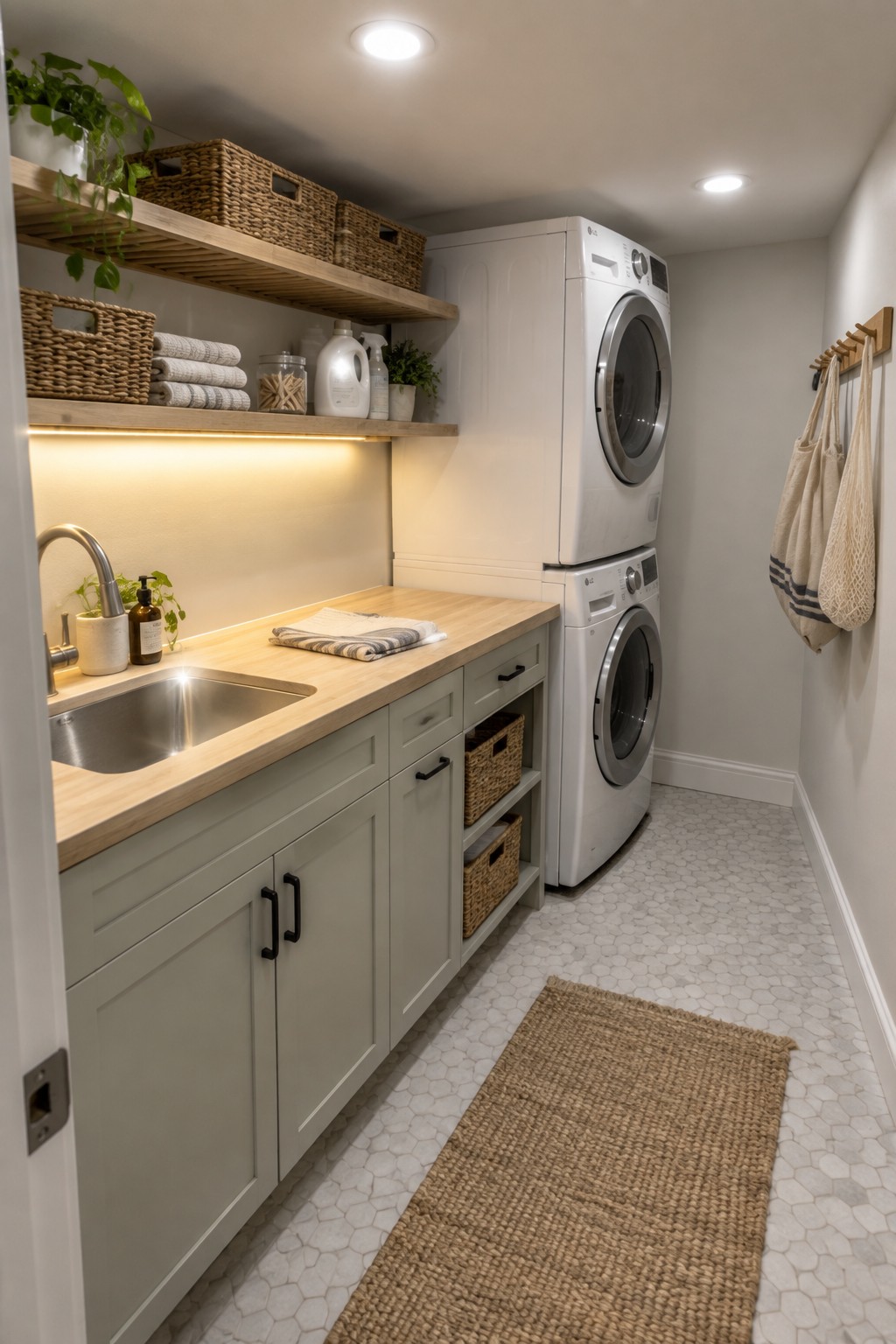
Low ceilings in basements often make rooms feel darker than they need to be. Adding recessed lights overhead gives even overall brightness, while a strip of task lighting tucked under the shelves brings focused light down to the counter without taking up extra space.
This setup works well in laundry rooms or utility areas where you need clear visibility for sorting and folding. Keep the fixtures modest in size and use warm bulbs so the space feels practical rather than harsh.
Recessed And Task Lighting For Basement Bars

Recessed ceiling lights combined with under-cabinet task lighting help keep a low-ceiling basement bar from feeling dark or closed in. The overhead recessed fixtures spread even light across the whole area while the lower glow along the cabinets adds focused brightness right where drinks are made and served. This mix avoids the need for hanging fixtures that would drop the ceiling height even more.
This setup works well in finished basements used for entertaining. Space the recessed lights evenly and run LED strips under the upper cabinets or bar edge so the light bounces off the floor and counter. It suits homes where the goal is a clean, open look without extra visual weight from pendants or chandeliers.
Combine Recessed Lights With Wall Sconces
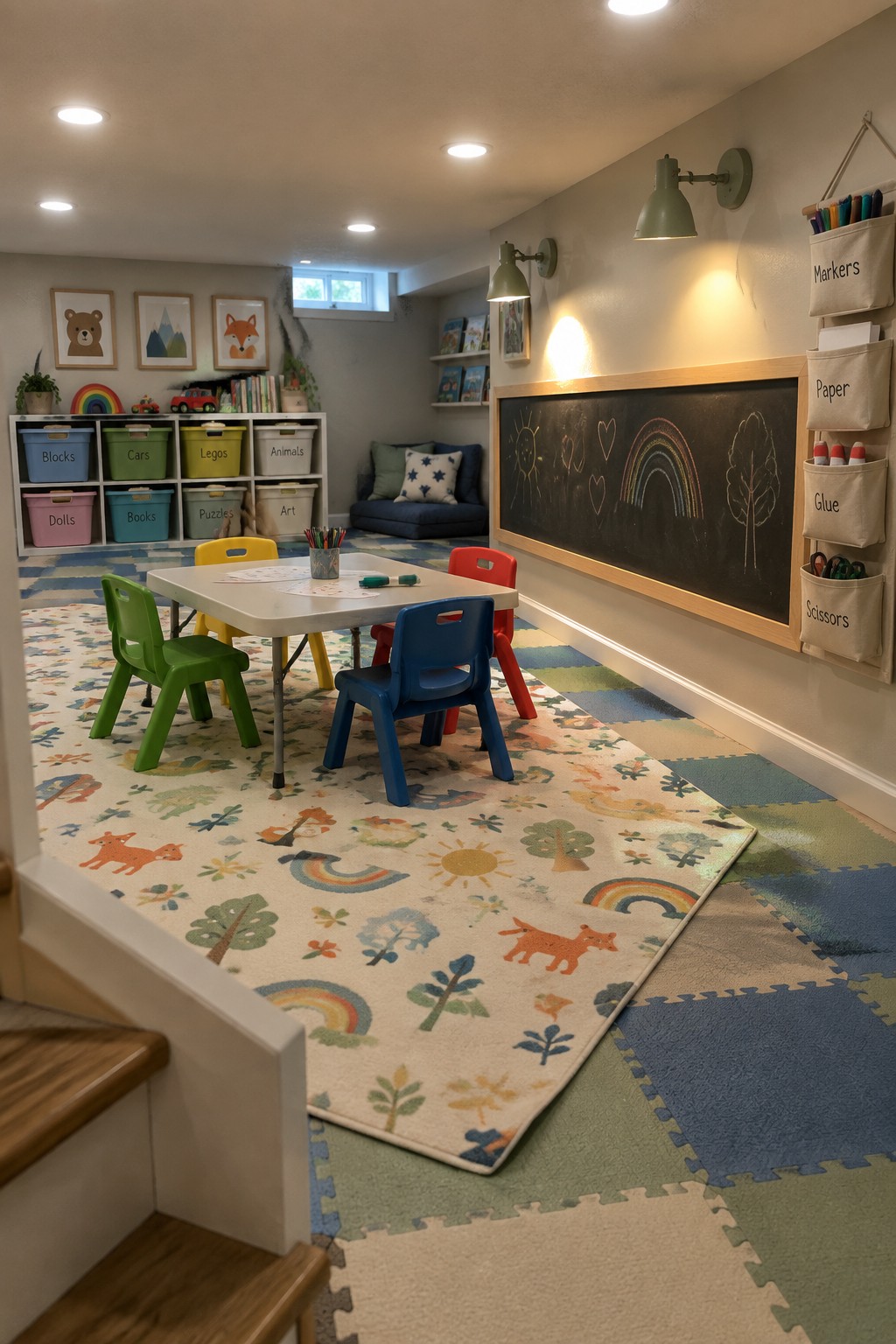
Basements with low ceilings often end up dim because there is not much room for hanging fixtures. Recessed lights spread a base layer of brightness across the ceiling, but they can still leave work areas feeling flat. Adding a couple of wall sconces gives focused light right where kids draw or play without dropping the ceiling height.
This setup works best in rooms that double as play spaces or craft areas. Mount the sconces on the longest wall so they light the main table without glare. Keep the finish simple so the lights blend into the wall rather than stand out.
Layer Recessed Lights With Task Lamps
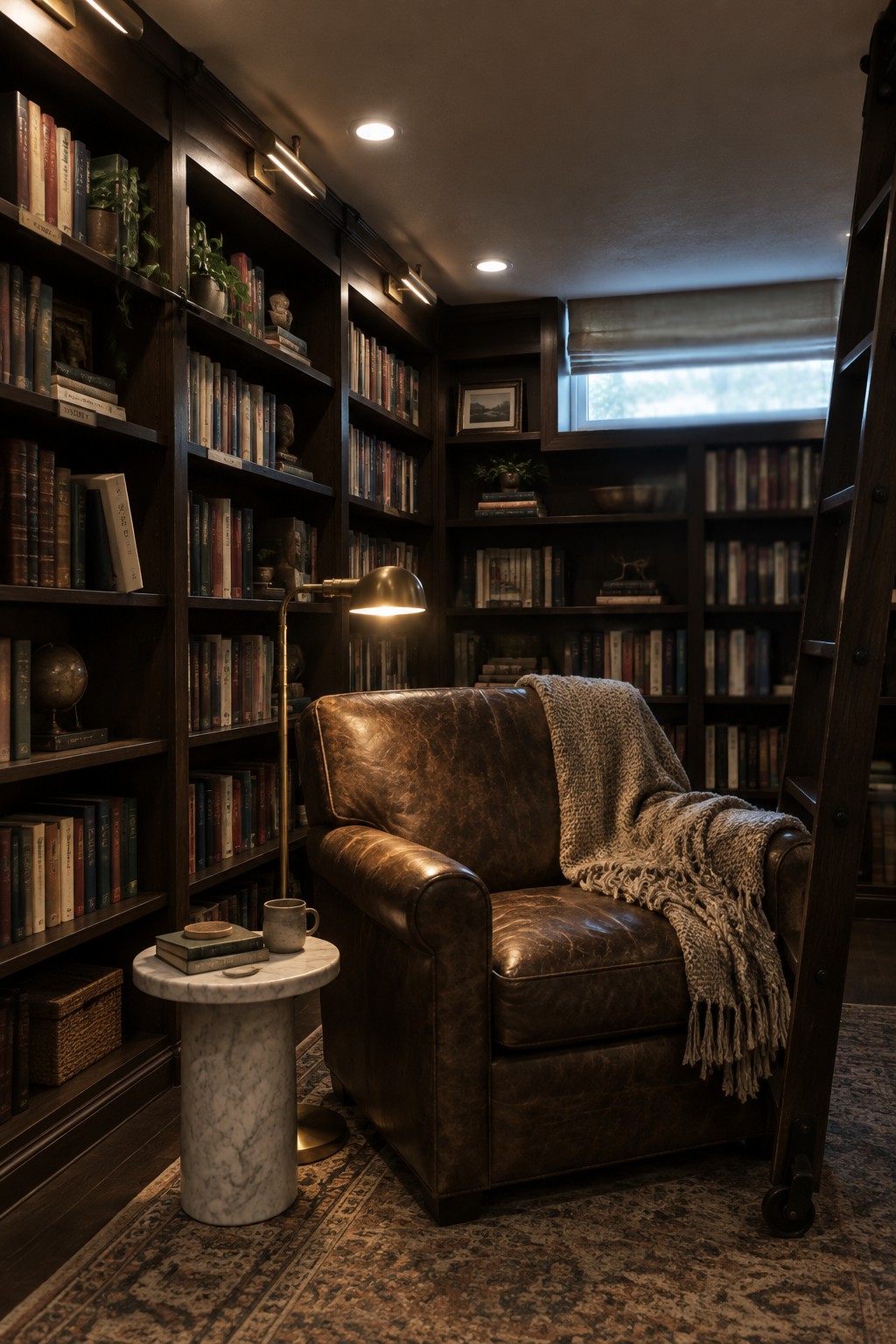
Low ceilings in basements often make rooms feel darker than they need to be, especially when the walls are lined with dark wood. Recessed lights spread a steady base layer of light across the ceiling while a task lamp adds focused brightness right where someone sits to read.
This setup works best in finished basements turned into libraries or quiet corners. Keep the task lamp on a dimmer so you can raise the light for evening use without washing out the whole room.
Layer Recessed Lights With Mirror LED Strips

Recessed ceiling lights give steady overhead brightness, but they often fall short in basement gyms where ceilings sit low. Adding a continuous LED strip along the top edge of a mirror wall bounces light across the room and makes the space feel much brighter without needing extra fixtures that would crowd the ceiling.
This setup works well in workout areas because the mirror reflects both the recessed lights and the strip, doubling the effect. Keep the LED strip on a separate dimmer so you can adjust task lighting on equipment while the recessed cans stay on for general visibility. It suits finished basements with rubber flooring and simple wall storage, and it avoids the glare that comes from relying on one strong light source.
Add Vertical Lighting Strips Beside the Mirror

Vertical lights placed on both sides of a mirror give even task lighting that overhead fixtures alone often miss. This setup helps reduce shadows on the face and makes the whole area feel brighter without needing extra fixtures that take up space.
The approach works well in bathrooms or smaller rooms where you need clear light for daily routines. Keep the strips narrow and run them the full height of the mirror, then add a few recessed ceiling lights to fill in the rest of the room.
Recessed Lighting For Low Ceiling Basements

Recessed lights help keep low basement ceilings from feeling closed in. By tucking the fixtures into the ceiling plane, you get steady light along the length of a narrow space without anything hanging down to reduce headroom.
This setup works well in wine cellars or storage rooms where you need clear visibility for labels and bottles. Adding one focused light over a small counter gives enough task lighting for pouring or serving without brightening the entire room at once.
Linear Lights Along the Ceiling for Narrow Hallways

Linear ceiling fixtures give steady light down the full length of a hallway without needing lots of individual recessed cans. They sit close to the surface, which helps in spaces with lower ceilings where every inch of height matters.
This setup works especially well in basements or any tight corridor that needs to feel brighter. Add a few low lights near the floor to soften shadows and keep the path easy to follow at night.
Pair Recessed Lights With a Pendant for Task Lighting

Recessed lights alone can leave certain spots in a mudroom or entry feeling a bit dim, especially when you need to see what you are doing. Adding one pendant over the bench or storage area gives a direct pool of light for tying shoes or sorting bags without needing to raise the whole ceiling.
This setup works best in smaller homes or any space with lower ceilings where you want simple, useful light. Keep the pendant on a dimmer so it can stay soft most of the time and only brighten when needed.
Combine Recessed Lights With Task Lighting

One simple way to brighten a basement with low ceilings is to use recessed fixtures for overall light and add a few task lights where people actually sit or work. The recessed lights stay flush with the ceiling so they do not eat into headroom. A wall-mounted lamp over the sofa or under-cabinet lights in the kitchen then give focused light without needing floor lamps that take up space.
This mix works best in small finished basements or studio apartments where you need the room to feel open during the day and useful at night. Place the task lights on dimmers so you can turn them up for reading or cooking and keep the recessed lights on a separate switch for general brightness. It keeps the space from feeling flat while still leaving plenty of clearance overhead.
Recessed Lights With Under-Bed Lighting

Recessed ceiling lights keep the plane of a low ceiling clean and open. Adding a hidden strip of light under the bed platform gives the room a soft base layer that brightens the floor area without adding bulk or visual weight overhead.
This approach works especially well in basement bedrooms where every inch of height matters. The under-bed glow also helps the space feel less closed in at night while the recessed lights handle general brightness during the day.
Layer Recessed Lights With Task Lamps

One simple way to brighten a low-ceiling basement is to use recessed lights for overall coverage and add task lamps for focused work areas. The recessed fixtures keep the space evenly lit without dropping the ceiling visually, while the lamps let you control brightness right where you need it for screens or paperwork.
This setup works especially well in home offices or studios because you can adjust the task lights without changing the whole room. Keep the lamps on desks or side surfaces and angle them as needed, and make sure the recessed lights stay on a dimmer so the two layers can work together without glare.
Layer Recessed Lights With Task And Shelf Lighting

Recessed ceiling lights give a room even coverage without taking up visual space or hanging low. When you add task lamps on side tables and warm lighting inside built-in shelves, the whole space feels brighter and more usable, especially in basements where natural light is limited.
This mix works best in rooms that already have a focal point like a fireplace. Keep the recessed lights simple and white, then use one or two lamps with fabric shades for softer glow at seating level. The shelf lights can stay on a separate switch so you can adjust the mood without turning everything off at once.
Combine Recessed Lights With Task Lamps For Basement Workshops

Basement workshops often feel dim because of low ceilings and limited natural light. Adding recessed ceiling lights gives steady overall brightness without dropping the ceiling further, while task lamps on the workbench focus light right where hands and tools need it most.
This mix works especially well in home workshops or craft rooms where people do detailed work for hours. Place adjustable lamps at key spots on the bench and choose bulbs that match the recessed lights so the whole space feels even rather than patchy.
Recessed Lights With A Pendant Over The Table

One simple way to brighten a basement game room is to combine recessed ceiling lights with a single pendant hung right over the main table. The recessed fixtures spread light across the whole space while the pendant focuses it where people actually need it most.
This setup works especially well when ceilings are low because the recessed lights stay out of the way and the pendant can be sized to hang just low enough for task lighting without crowding the room. It suits game rooms, craft tables, or any basement area where you want clear visibility on the surface without relying on one big fixture.
Bright Task Lighting Over Work Tables
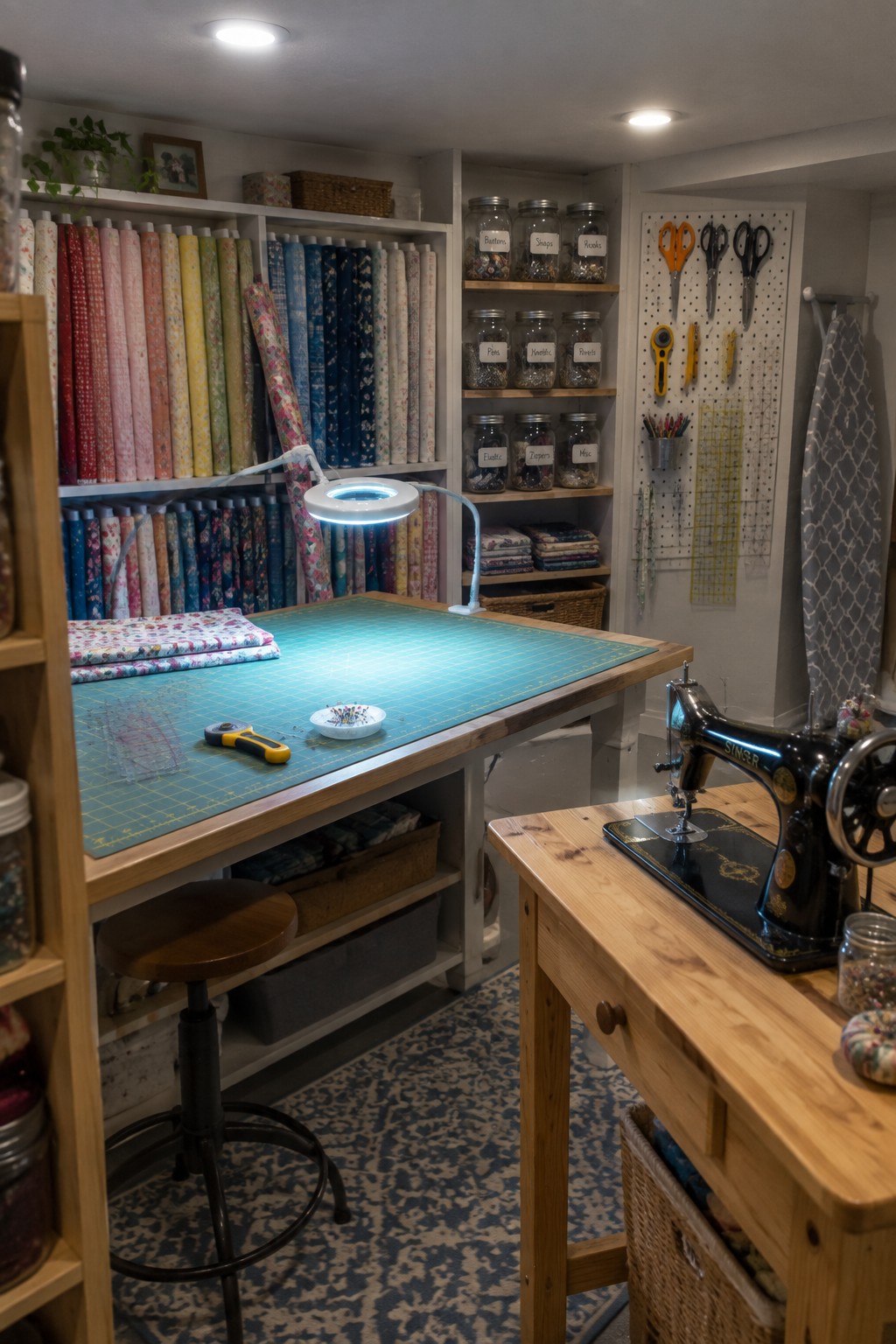
One practical way to brighten a basement craft space with low ceilings is to bring strong light right down to the work surface instead of relying only on overhead fixtures. An adjustable task lamp clamped to the edge of the table delivers focused illumination exactly where it is needed for cutting, pinning, or sewing.
This setup pairs well with simple recessed ceiling lights and leaves the upper part of the room feeling less crowded. It works especially well in rooms that serve multiple purposes, since the lamp can be moved or angled as projects change. Just make sure the base stays stable so it does not tip when the table gets crowded with fabric and tools.
Recessed Lights Work Well With Task Lighting
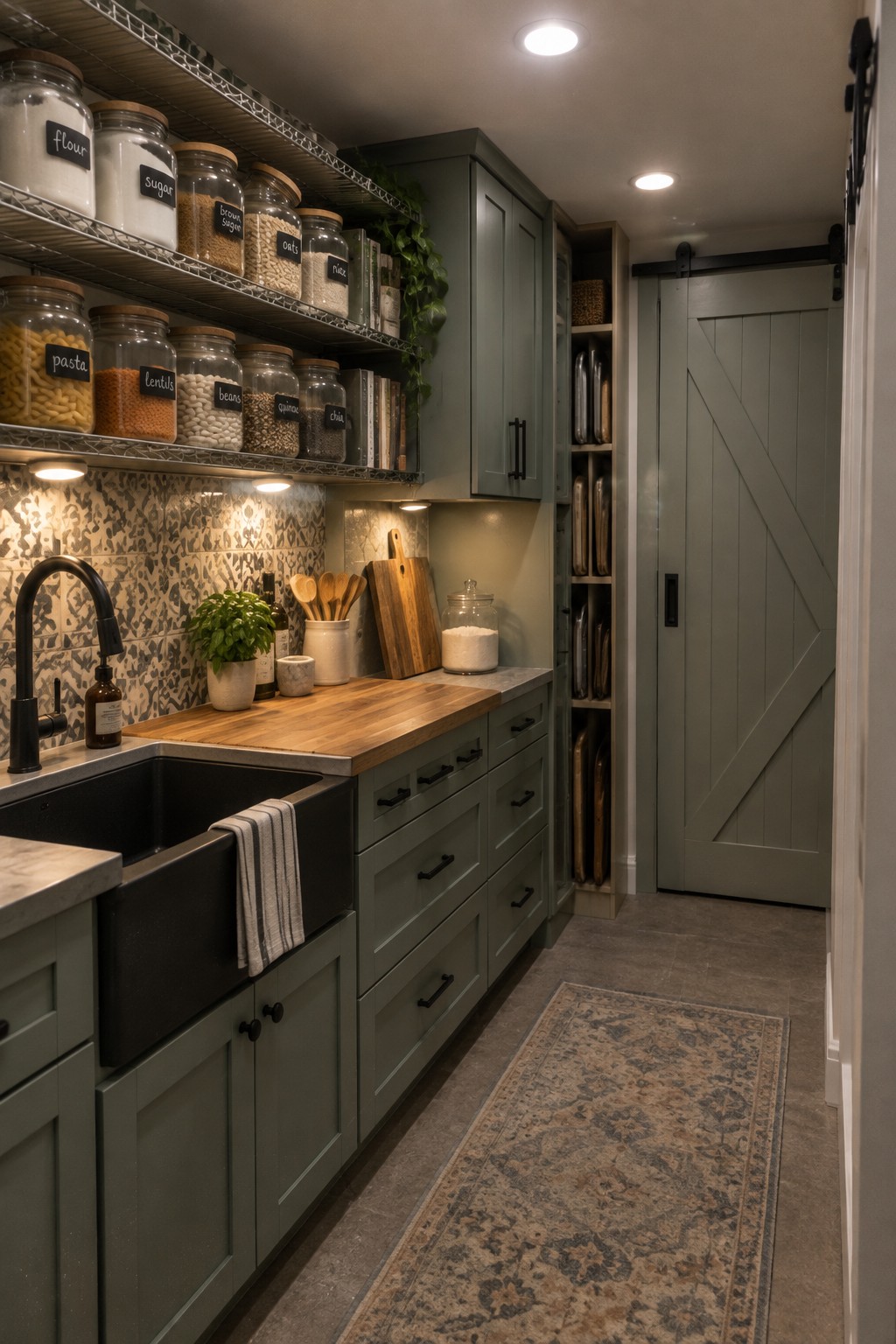
In a narrow pantry or basement storage space, recessed ceiling lights spread illumination evenly across the whole area without dropping the ceiling height. Task lights tucked under the shelves then add focused brightness right at the counter level where you actually work.
This combination suits low ceiling homes because it keeps the space open and usable instead of relying on bulky fixtures. Place the recessed cans in a simple row down the center and add slim LED strips or puck lights beneath open shelving for the best result.
Layer Recessed Lights With Wall Sconces And Step Lights

Basements with low ceilings often feel dim even when you add overhead lights. Layering a few different sources helps spread light more evenly without needing to lower fixtures or crowd the space. A single sconce above a console can handle task lighting while small step lights keep stairs safe and visible.
This approach works especially well in entry areas or narrow hallways where one light source leaves shadows. Place the recessed lights on a dimmer so you can adjust them, and keep the lower lights on a separate switch for everyday use. It suits most homes with finished basements that need practical brightness without feeling like a basement.
Frequently Asked Questions
Q: How close can I space recessed lights without creating hot spots? A: Space them about four feet apart and angle them slightly outward. This spreads the light evenly across the floor. You will get better coverage without any bright patches.
Q: What if I want task lights over a desk but the ceiling is too low for pendants? A: Mount slim LED strips under shelves instead. They give focused light right where you need it. Keep the color temperature the same as your recessed lights for a smooth feel.
Q: Can I use dimmers with these lights in a basement? A: Add dimmers to your recessed fixtures so you can adjust for movie nights. Start with a single dimmer for the whole room.
Q: How do I handle shadows from low beams with task lighting? A: Place small puck lights on the sides of the beams. They bounce light around the obstacles and keep the work surface bright.
