

Have you ever wondered why your solar lights don’t seem to last as long as you’d hoped? It can be frustrating when those outdoor lights fail to shine bright after just a few months. The truth is, not all batteries are created equal, especially when it comes to solar-powered devices.
Key Takeaways
- Battery Types Matter: The performance of solar lights heavily relies on the battery type, with common options being lead-acid, nickel-cadmium (NiCd), and lithium-ion (Li-ion), each offering distinct advantages and disadvantages.
- Quality Impacts Longevity: High-quality batteries charge faster, last longer, and support more cycles, resulting in better performance and durability for solar lights.
- Compatibility is Key: Ensure that the battery type is compatible with the solar panel’s voltage and chemistry to achieve optimal energy transfer and functionality.
- Special Batteries Offer Advantages: Using specially designed batteries for solar lights can lead to extended lifespan and improved efficiency, making them a worthwhile investment.
- Environmental Considerations: Some batteries, like NiCd, pose environmental concerns due to toxic materials, highlighting the importance of choosing eco-friendly options.
- Performance Factors: Battery performance is influenced by charge capacity, discharge rate, and temperature sensitivity, which can affect how long and brightly your solar lights shine.
Understanding Solar Lights
Solar lights convert sunlight into electricity using photovoltaic cells. These lights rely on solar panels to gather and store energy in batteries during the day. At night, the stored energy powers the lights, providing illumination without requiring traditional electrical sources.
Components of Solar Lights
- Solar Panel: The panel absorbs sunlight and initiates the energy conversion process. Higher-quality panels collect energy more efficiently.
- Battery: The battery stores energy for nighttime use. Battery type impacts performance, with common options including lead-acid, nickel-cadmium (NiCd), and lithium-ion (Li-ion). Each type offers unique advantages and disadvantages.
- LED Light: LEDs provide effective lighting while consuming less energy. They are more durable and longer-lasting than traditional bulbs.
- Controller: This component regulates the energy flow, ensuring optimal charging and discharging of the battery. It protects against overcharging and discharging.
Common Battery Types in Solar Lights
- Lead-Acid: Cost-effective and widely used in economical solar lights, yet heavy and less efficient in deep cycling.
- Nickel-Cadmium (NiCd): Reliable and performs well in low temperatures, but it suffers from memory effect and environmental concerns.
- Lithium-Ion: Lightweight, efficient, and provides longer lifespan. It’s increasingly common in premium solar lights due to its benefits.
Importance of Battery Quality
Battery quality directly impacts solar light performance and longevity. High-quality batteries charge faster, hold energy longer, and withstand more cycles. Investing in solar lights with quality batteries ensures extended operation and better efficiency.
When selecting solar lights, consider the battery type and quality. This choice affects light brightness and duration, influencing overall satisfaction with outdoor lighting.
Types of Batteries Used in Solar Lights
Different types of batteries power solar lights, each offering unique benefits. Understanding these options helps you choose the best one for your needs.
Recommended Products

Note: It’s rechargeable Ni-MH AA Battery, 1.2V battery, designed exclusively for use with 1.2V devices. For charging, please use the EBL AA NiMH charger. For safety during transportation, the batteries are not fully charged, pls kindy charge it before first use. 【Perfect Solar Batteries】 Exact size AA batteries designed for solar lights, outdoor garden lights, mouse, keyboards, TV remotes, toys, game controllers, digital camera, will fit all your device perfectly in daily life usage, high quality AA rechargeable batteries supply long lasting power, great convenience and good performance.

【High Capacity&Long Lasting】:1600mah high capacity AA rechargeable battery will lasting much longer time to ensure your outdoor lights always has enough power to light all night. Also can replace 600mAh, 800mAh, 1100mah, etc NiCd or Ni-MH AA cells AA battery. They won't lose the maximum capacity.
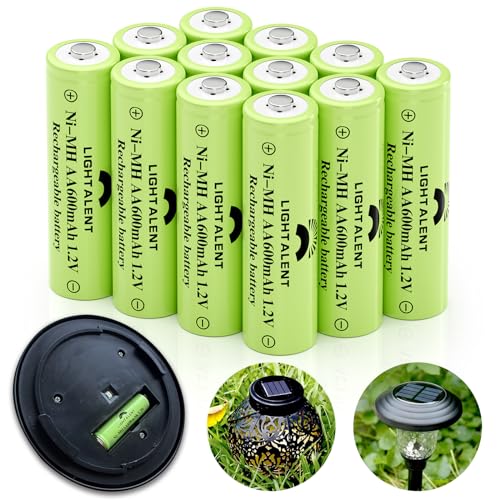
【Strong Performance】1.2-volt 600mAh AA Ni-MH rechargeable batteries,Package included: 12 x solar battery 1.2v ni-mh aa 600mAh
Nickel-Cadmium Batteries
Nickel-Cadmium (NiCd) batteries are a common choice for solar lights. They perform well in various temperatures and have a long cycle life. These batteries can charge quickly and tolerate overcharging. However, they contain cadmium, a toxic metal, which raises environmental concerns. Their lower energy density compared to other types means you’ll need more battery capacity for longer durations.
Lithium-Ion Batteries
Lithium-ion batteries have gained popularity in solar lights due to their high energy density and lightweight nature. They charge quickly, maintain their efficiency for longer periods, and withstand a higher number of charge cycles. These batteries perform exceptionally well in fluctuating temperatures. Despite their higher initial cost, their longevity and performance generally lead to lower replacement costs over time.
Lead-Acid Batteries
Lead-acid batteries, including sealed and flooded versions, are traditional options for solar lighting. They’re cost-effective and reliable for larger solar applications. These batteries work well in stable conditions and can deliver a strong amount of power when needed. However, they are heavier, less efficient, and have shorter lifespans than lithium-ion and NiCd options. Regular maintenance is essential to ensure optimal performance, especially for flooded lead-acid batteries.
Choosing the right battery type for your solar lights is crucial for achieving the best performance and longevity. Consider factors like your specific needs, budget, and environmental impact when making a decision.
Do Solar Lights Require Special Batteries?
Solar lights often benefit from specific battery types designed for their unique requirements. Understanding these needs helps you choose the right components for optimal performance.
Performance Factors
Battery performance directly impacts how long your solar lights last and how bright they shine. Factors influencing performance include:
- Charge Capacity: Higher capacity batteries store more energy, improving light duration.
- Discharge Rate: Lower discharge rates help maintain brightness longer. Look for batteries that hold charge well under load.
- Temperature Sensitivity: Some batteries perform poorly in extreme temperatures. Select batteries designed for your local climate for optimal functioning.
For instance, lithium-ion batteries generally have higher charge capacity and longer life spans compared to lead-acid batteries, making them ideal for those who want reliable solar lighting.
Compatibility with Solar Panels
Not all batteries work with every solar panel. Compatibility ensures efficient energy transfer and optimal performance. Key considerations include:
- Voltage Rating: Ensure the battery voltage matches your solar panel’s output. Mismatched voltage can lead to inadequate performance or damage.
- Battery Chemistry: Different battery types have varying charging and discharging characteristics. Pairing compatible batteries with the right solar panels maximizes efficiency.
- Size and Configuration: Ensure physical dimensions of the battery fit within the solar light housing. Also, consider terminal compatibility to facilitate connections.
For example, using a lithium-ion battery with a panel designed for NiCd batteries might work, but it can lead to subpar performance and reduced lifespan. Always check the specifications of both the battery and the solar panel before purchasing.
Benefits of Using Special Batteries for Solar Lights
Using special batteries designed for solar lights offers numerous advantages. These batteries enhance performance and ensure you get the most out of your solar-powered systems.
Extended Lifespan
Extended lifespan represents a key benefit of special batteries. Lithium-ion batteries can last two to three times longer than traditional lead-acid batteries. If you choose high-quality batteries, you reduce the frequency of replacements, saving you time and money. Additionally, these longer-lasting batteries withstand more charge cycles, providing reliable power over the years. This durability translates into less hassle and extended enjoyment of your solar lights.
Improved Efficiency
Improved efficiency is another significant advantage. Special batteries, like lithium-ion options, maintain optimal energy output even in fluctuating temperatures. They charge faster and discharge power more effectively than standard batteries. For instance, lithium-ion batteries can reach full charge in a shorter time, even on cloudy days. This efficiency ensures your solar lights shine brightly when needed. By using specialized batteries, you maximize the energy conversion process, making your solar lighting system more reliable and effective.
Conclusion
Choosing the right battery for your solar lights can make all the difference in their performance and longevity. By opting for high-quality batteries like lithium-ion, you’ll enjoy brighter lights and longer-lasting power.
It’s worth considering your specific needs and budget when selecting a battery. The right choice not only enhances your solar lighting experience but also contributes to a more sustainable environment. So take the time to pick a battery that suits your solar lights best and watch them shine brighter for longer.
Frequently Asked Questions
Why do solar lights not last as long as expected?
Solar lights may not last as long as expected due to the quality of the batteries used. Low-quality batteries may degrade quickly, affecting performance. Additionally, factors like insufficient sunlight exposure, poor maintenance, and environmental conditions can contribute to their shortened lifespan.
What role do batteries play in solar light performance?
Batteries are crucial in storing energy generated by solar panels. Their quality directly impacts how long solar lights can operate and their brightness. High-quality batteries, like lithium-ion, improve performance, extend longevity, and enhance overall satisfaction with solar lighting systems.
What are the common types of batteries used in solar lights?
The most common battery types in solar lights are lead-acid, nickel-cadmium (NiCd), and lithium-ion. Lead-acid is cost-effective but heavy; NiCd performs well in varied temperatures but poses environmental concerns; lithium-ion offers high energy density and efficiency, making it popular despite a higher initial cost.
How do solar lights convert sunlight into electricity?
Solar lights convert sunlight into electricity through photovoltaic cells located in solar panels. These cells capture sunlight and generate electricity, which is then stored in batteries for use when it’s dark, powering the LED lights when needed.
Why is battery quality important for solar lights?
Battery quality is essential because it affects the solar lights’ efficiency, longevity, and performance. High-quality batteries ensure better energy retention and discharge rates while making the solar lights more reliable and effective over time, reducing the need for frequent replacements.
How can I choose the right battery for my solar lights?
When choosing a battery for your solar lights, consider the type (like lithium-ion or lead-acid), battery chemistry, voltage rating, and physical size. Understand your needs and budget, as well as the environmental impact, to select the most suitable battery for optimal performance.
What are the benefits of using lithium-ion batteries in solar lights?
Lithium-ion batteries offer several advantages: they have a longer lifespan, lasting two to three times longer than lead-acid batteries, charge quickly, and maintain output better in fluctuating temperatures. These features ensure that solar lights operate effectively and reliably over the years.
