


I have found that the entryway sets the tone for how the rest of the house feels once you cross the threshold.
Many people start with rugs or a console table and only later realize the lighting layers determine whether the space feels open or cramped at different times of day.
Lighting choices matter more than they seem at first.
When I swapped out a single overhead bulb for a mix of wall and floor sources in my own hallway, the path from the door to the main rooms stopped feeling like an afterthought.
That small change showed me why certain setups hold up better once daily routines take over.
Hang Multiple Pendants To Layer Entry Lighting
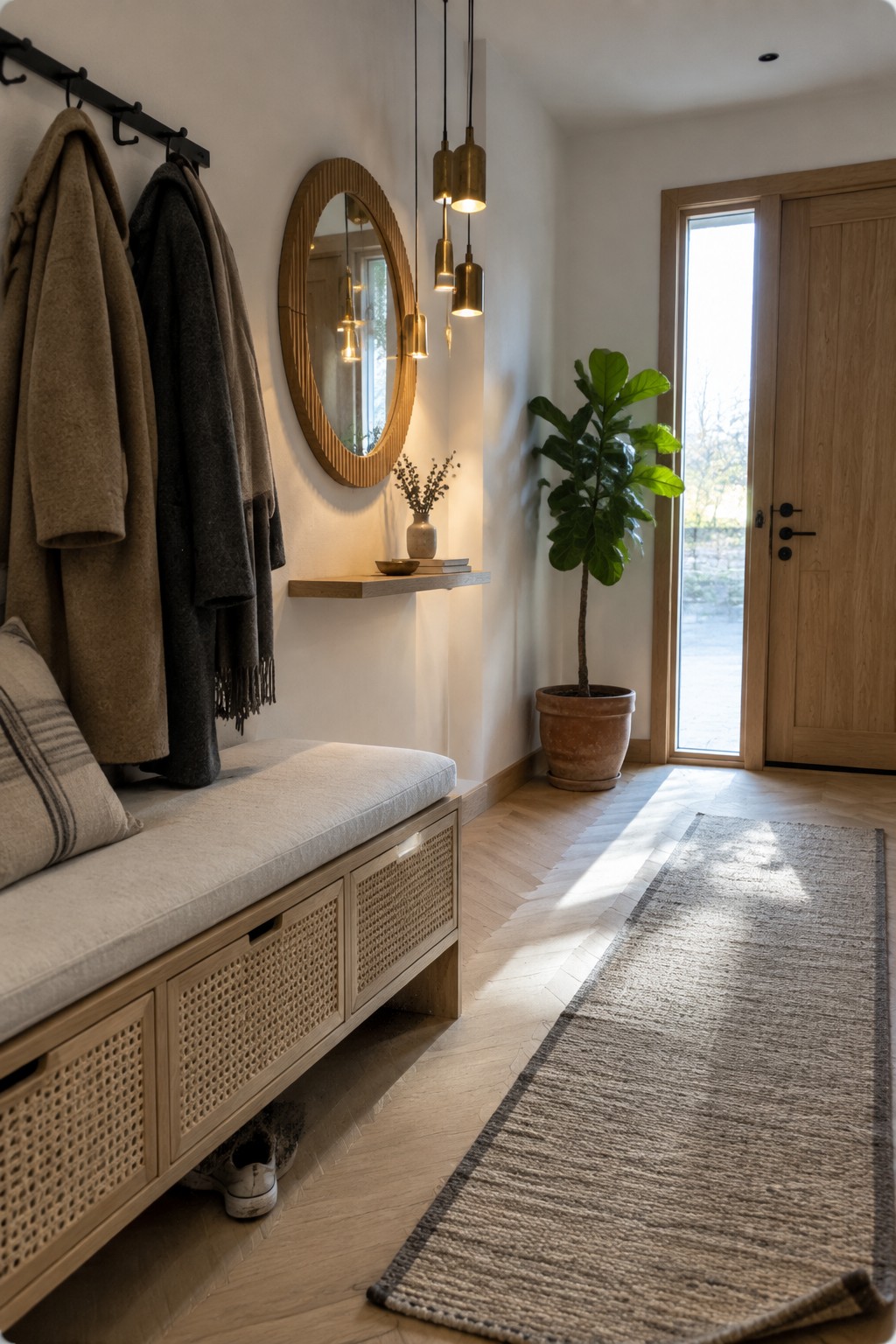
Hanging a few pendant lights together gives an entryway a soft but useful layer of light that feels more inviting than one bright fixture. The different heights help fill the space without making it feel flat or overly bright.
This setup works best in a spot with some height and a place to sit, like near a bench or hooks. Keep the shades simple and the bulbs warm so the light stays gentle on the way in and out.
Mix A Wall Sconce With A Table Lamp
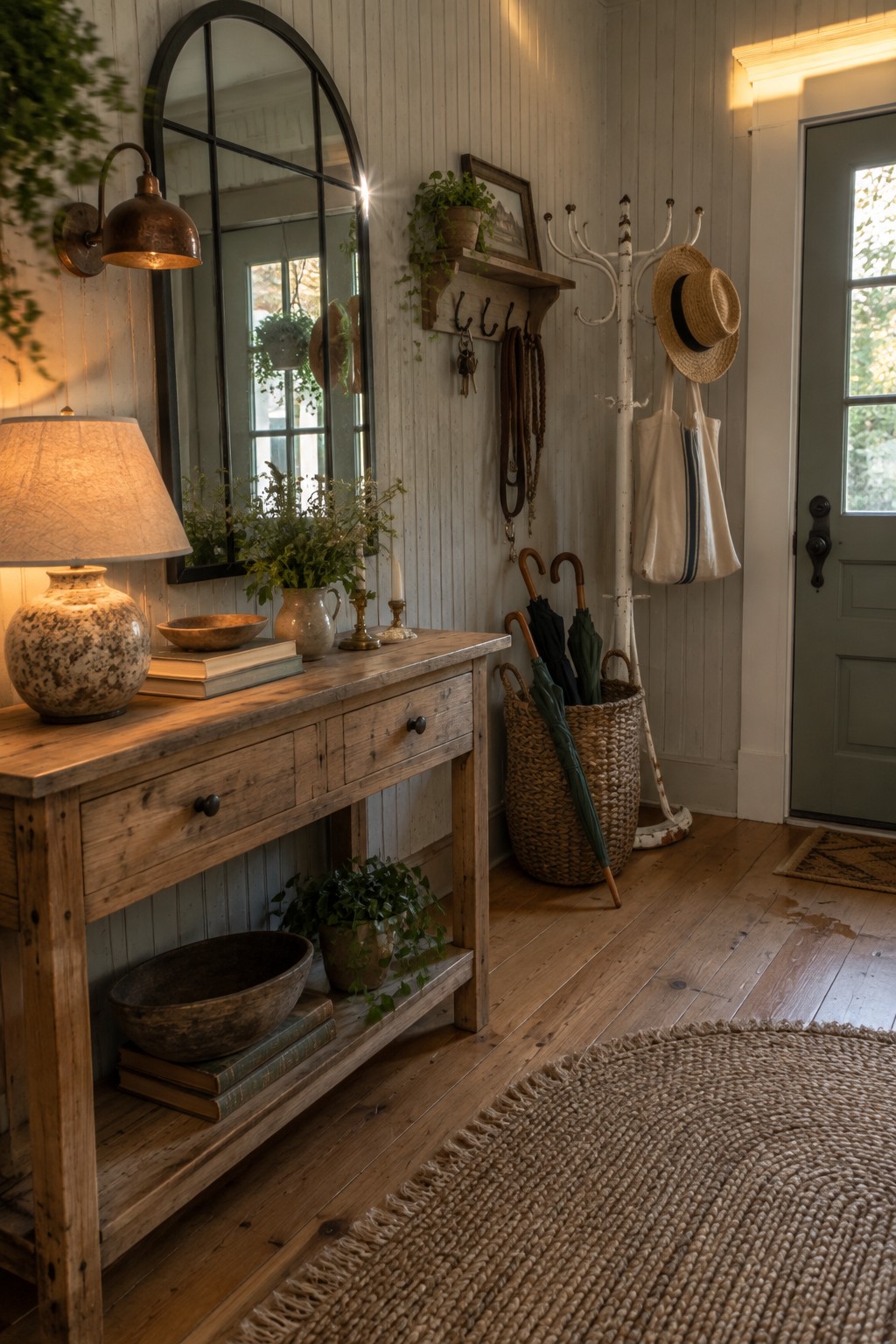
One simple way to get layered light in an entry is to use both a wall sconce and a table lamp. The sconce lifts light higher along the wall while the lamp on the console keeps things softer and closer to eye level. Together they fill the space without relying on one bright overhead.
This setup works best in older homes or entryways with some width to the wall. Keep the sconce on a dimmer if you can and choose a lamp with a warm shade so the two sources do not compete. It gives you useful light for coming and going without making the space feel stark.
Layered Lighting With Wall Sconces and Base Glow
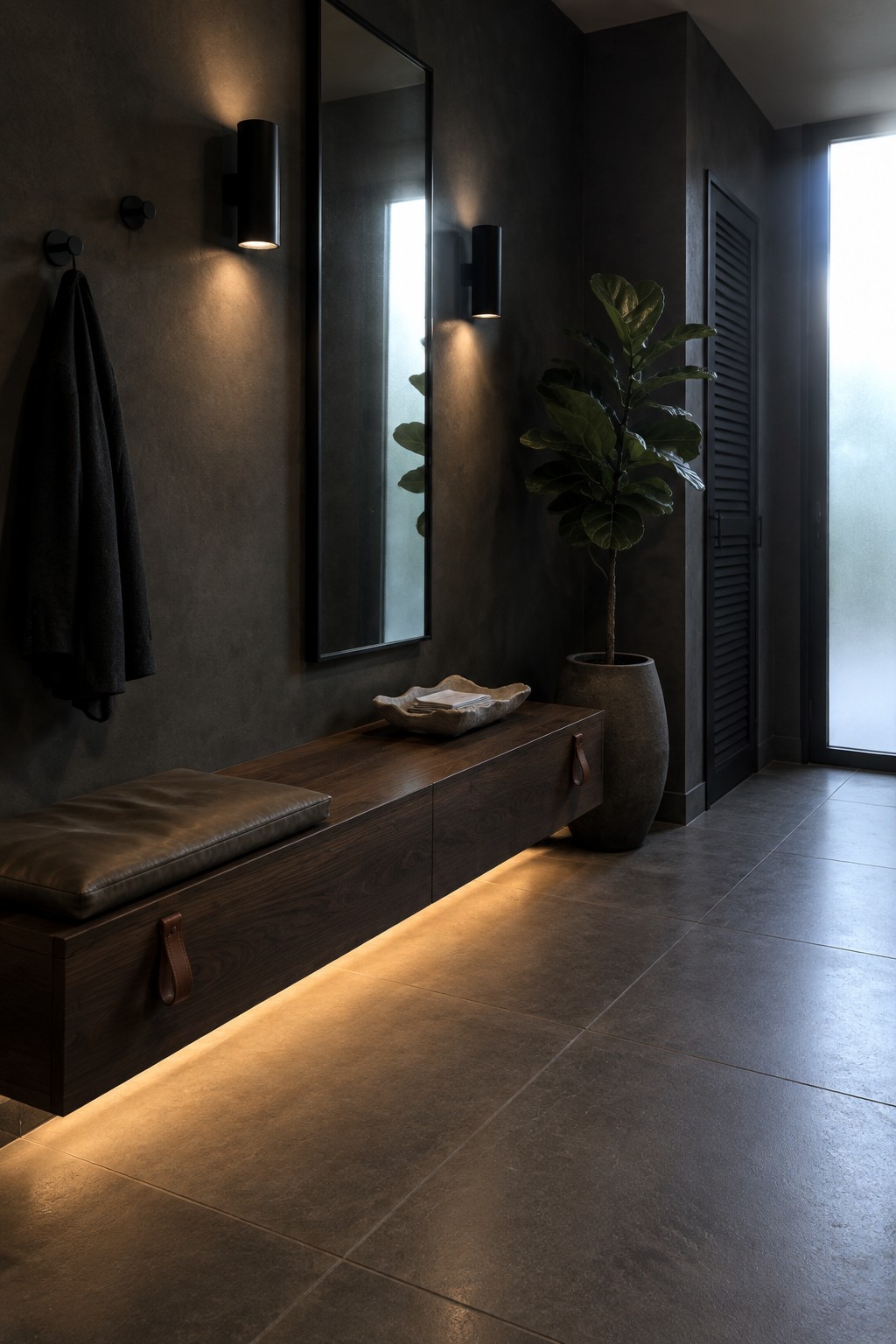
Entryways often need more than a single ceiling light to feel usable. Wall sconces beside a mirror provide light at eye level while a low glow from under a bench keeps the floor area from going dark. The two layers together make the space easier to navigate without feeling harsh.
This setup suits narrow entry areas or rooms with dark walls where light gets absorbed quickly. Mount the sconces at a standard height and hide a simple LED strip beneath a floating bench or cabinet so the glow stays subtle. The result is practical without adding extra fixtures on the ceiling.
Layer A Pendant With Table Lamps

A single overhead light often leaves an entry feeling either too dim or too bright at night. Adding a couple of table lamps on a console gives you that middle layer of light that makes the space feel more welcoming as soon as you step inside.
This works especially well in smaller or windowless entries where you need more than one source. Keep the overhead light on a dimmer and choose lamps with fairly simple shades so the two layers do not compete.
Layer Pendant And Sconce Lights In Entryways
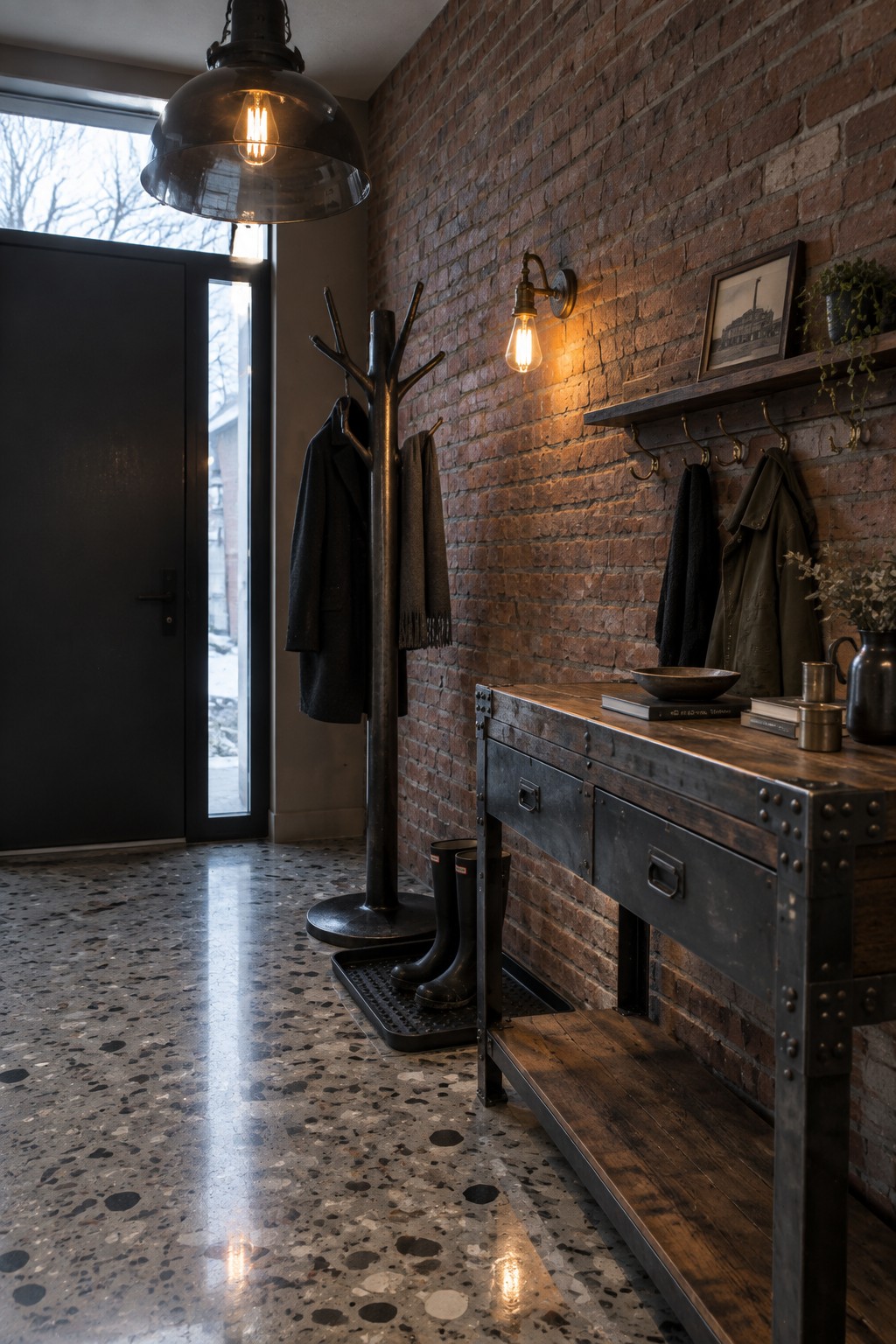
Many entryways feel more usable when they have two different light sources instead of relying on one. A large overhead pendant handles the main area while a wall sconce adds a lower, warmer point of light that fills in shadows near the walls.
This setup works best in spaces with tall ceilings or textured surfaces like brick. It keeps the entry from going dark in the corners and gives you options for brighter task light during the day or softer light in the evening.
Mix A Table Lamp With String Lights For Layered Entry Glow

A single overhead light often feels too flat in an entry. Adding a table lamp on a low cabinet gives a warmer base layer that fills the space at eye level, while string lights along a shelf above add a soft overhead glow without much effort.
This setup works best in narrow hallways or small foyers where you need gentle light that stays on during the evening. Keep the lamp shade simple and the string lights warm white so the two sources blend instead of compete.
Layer A Pendant With Recessed Lights For Even Entry Glow
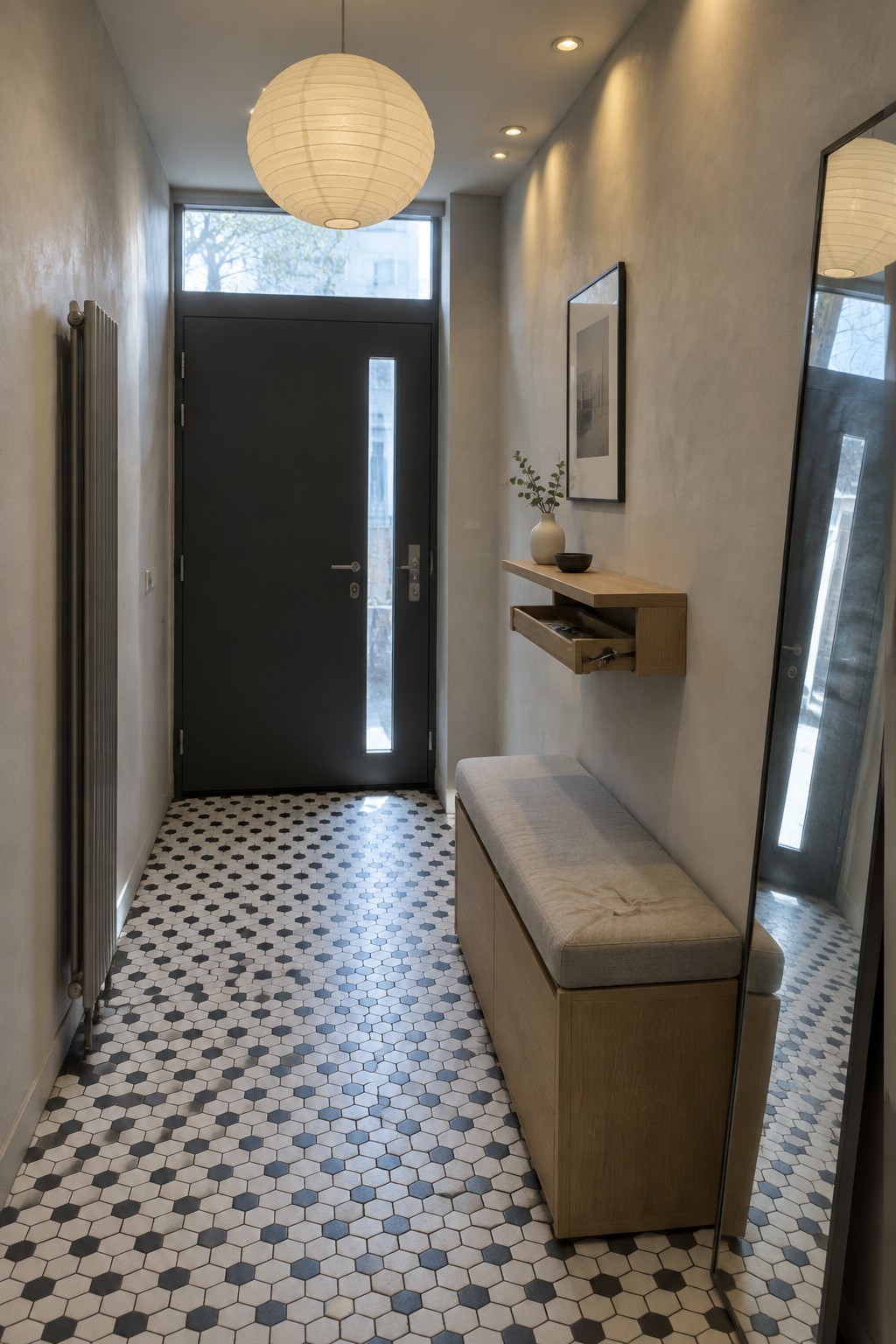
A large pendant works well in an entry because it drops light at eye level and softens the whole space. Pairing it with recessed ceiling spots fills the gaps and keeps the floor and walls from feeling dim, especially in narrow hallways where one light source often falls short.
This setup suits homes with standard or slightly higher ceilings and works best when the pendant sits centered over the main walking path. Keep the recessed lights on a separate switch so you can use just the softer glow at night or both together during the day.
Layer Entry Lighting From Different Heights
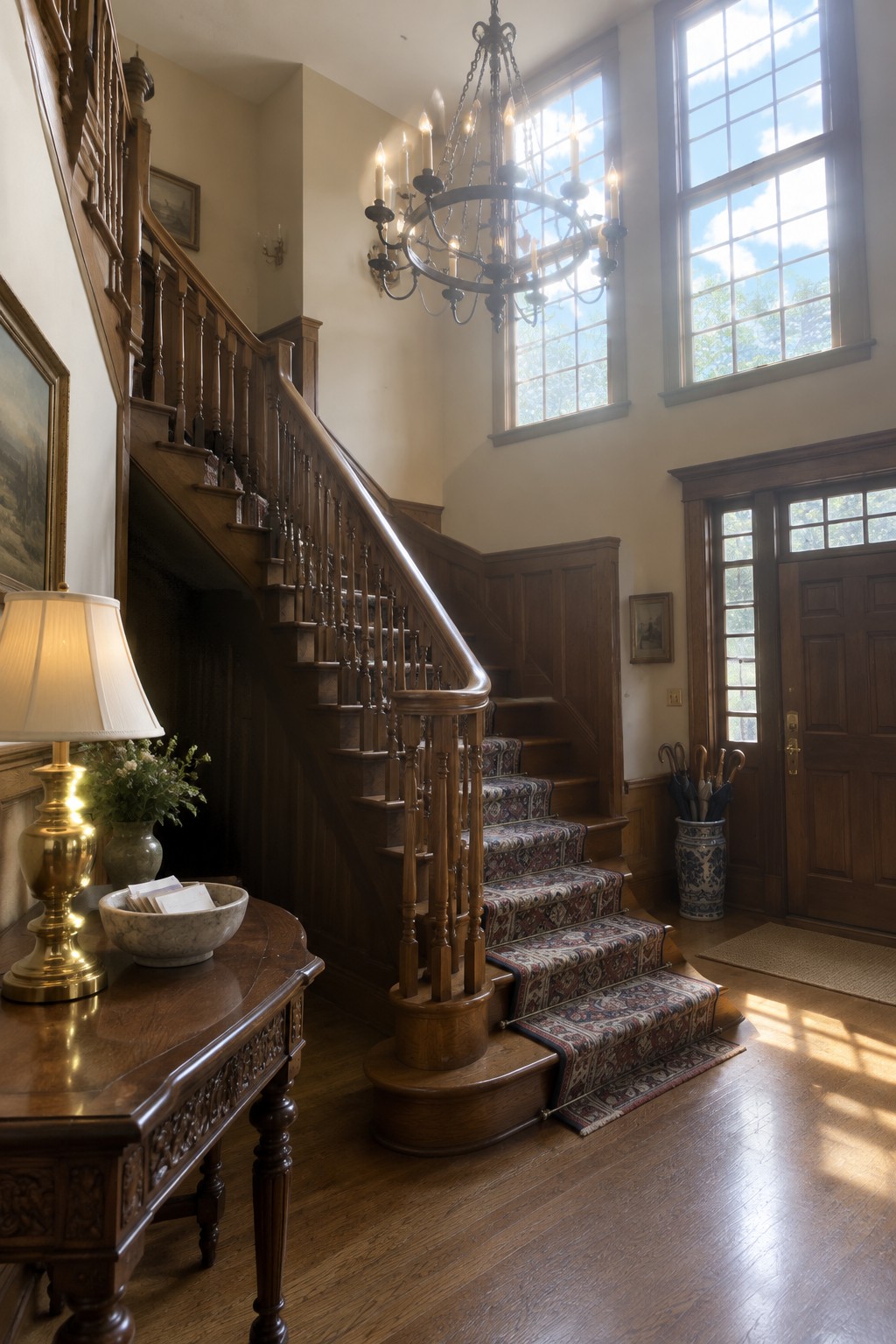
A tall ceiling and open staircase call for more than one light source at the same level. The chandelier takes care of the upper space while a lamp on the console adds light closer to eye level, so the entry feels balanced instead of dim or overly bright.
This setup works best in homes with two-story entries or large windows that already bring in daylight. Keep the lower light on a dimmer so you can adjust it as the sun moves, and choose a shade that softens the bulb rather than competing with the overhead fixture.
Layer Lighting In The Entryway

A backlit mirror paired with a small recessed niche light gives this entry a calm, useful glow without relying on one bright overhead fixture. The mirror spreads light across the wall while the niche adds a focused spot for keys or a bowl. Together they make the space feel welcoming even at night.
This approach works well in narrow entries or hallways where ceiling lights alone can feel harsh. Keep the backlit element on a dimmer and add one or two small wall lights or sconces higher up. It suits most homes because it stays simple and avoids the need for major rewiring.
Layer Wall Sconces Along a Long Entry Wall
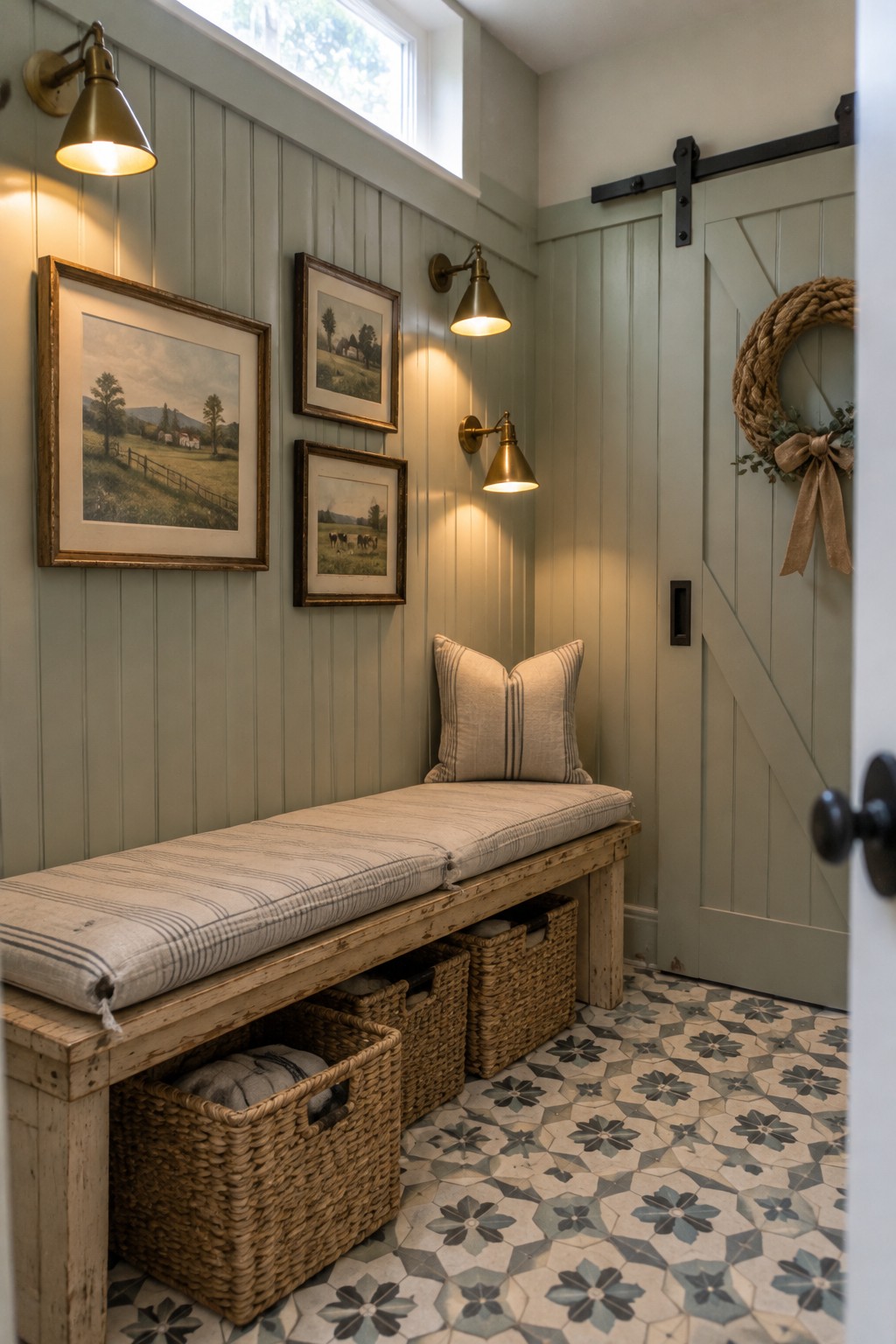
A single ceiling light often leaves an entry feeling flat and dim in the corners. Adding several wall sconces at staggered heights creates layers that fill the space more evenly and give it a warmer feel without much extra wiring.
This approach works best in narrow entries with at least one long wall to work with. Keep the sconces simple and space them out so each one lights a different area, like a bench or piece of art, rather than clustering them all together.
Layer Wall Sconces With A Table Lamp
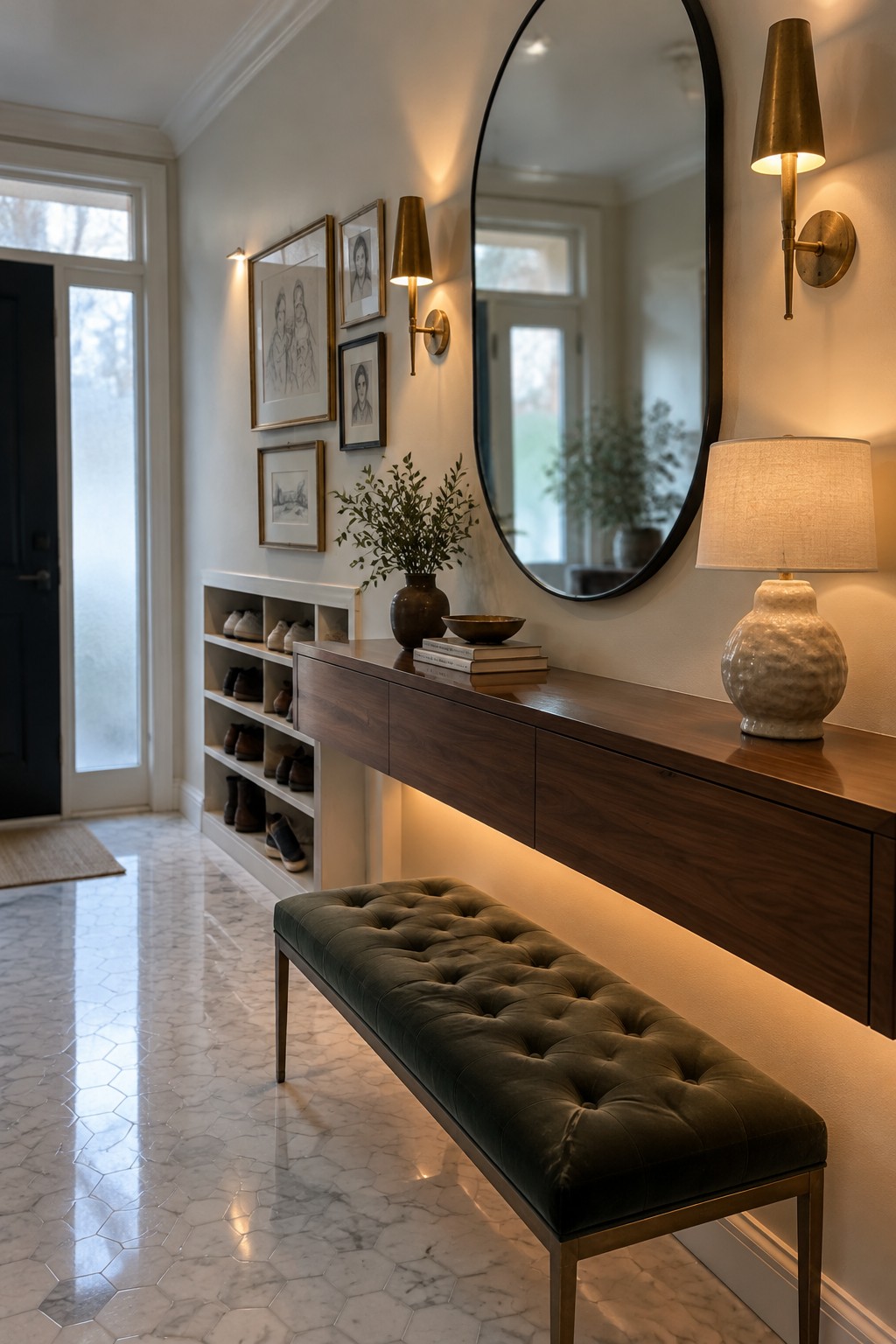
Mixing wall sconces and a table lamp gives an entryway light at different heights without needing a big overhead fixture. The sconces add height and a gentle wash along the wall, while the lamp on the console brings the light down to a more comfortable level for everyday use.
This setup works especially well in narrow hallways or smaller foyers where one strong ceiling light can feel too bright. Keep the sconces at roughly eye level and choose a lamp with a soft shade so the whole space feels warm rather than stark. It suits homes that already have some traditional or transitional details.
Layer Sconces With A Pendant In The Entry Hall

Wall sconces placed at different heights along a hallway create a steady line of light that feels much more welcoming than a single overhead fixture. The mix of lower wall lights and one central pendant gives the space both task lighting near the floor and a softer glow higher up, which helps a long narrow entry feel less like a tunnel.
This approach works especially well in older homes or any entry with dark walls where one light source tends to leave corners dim. Place the sconces about eye level and keep the pendant on a dimmer so you can adjust for morning versus evening use. Avoid overcrowding the wall with too many frames between the lights.
Layer Overhead And Table Lighting In The Entry

A single ceiling light often leaves an entryway feeling flat or dim once the sun goes down. Adding a table lamp on a console gives you a second layer that fills in shadows and makes the space feel more usable when you come and go.
This setup works best in homes that already have a narrow table or cabinet near the door. Keep the lamp on a simple timer or smart plug so it comes on automatically in the evening and balances the brighter overhead fixture without needing much extra effort.
Layer Lighting With A Console Lamp
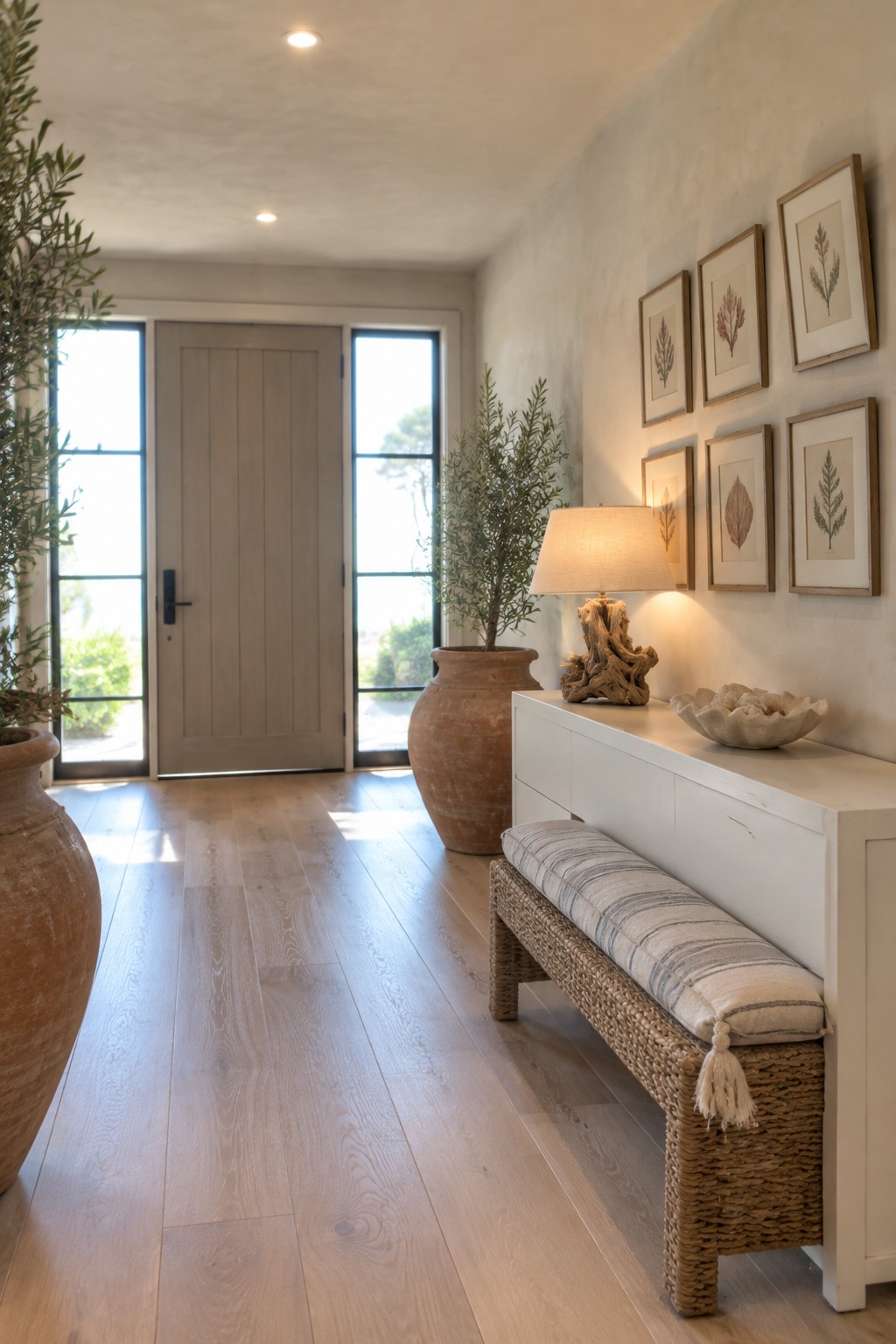
A table lamp on the entry console adds a useful middle layer of light that overhead fixtures and doorways cannot cover on their own. The warm pool of light near eye level makes the space feel more settled and easier to use at any time of day.
This approach works best in entries that already get some natural light from glass doors or sidelights. Keep the lamp simple in scale so it does not crowd the surface, and choose a shade that diffuses the bulb without blocking the glow. It suits homes where the entry also serves as a hallway rather than a grand foyer.
Combine Pendant Lighting With A Backlit Niche

One simple way to get layered light in an entryway is to hang a single pendant and pair it with a recessed niche that has its own light source. The pendant handles the middle of the space while the niche glows from the wall, giving you two different levels without needing a lot of fixtures. This keeps the area from feeling dark or one-note when you walk through the door.
It works best in narrower entry halls or spots with a console table where you already have a natural place to add the niche. Darker wall finishes make the light stand out more, but the same idea works in lighter spaces too. Just keep the pendant high enough that people can walk underneath without bumping it.
Use Wall Sconces To Layer Entryway Light

Wall sconces give an entry a soft layer of light that feels steady even when the sun moves. In this space the single sconce next to the niche adds a warm pool that blends with the daylight coming through the door and window, so the whole area stays usable without feeling dim or harsh.
This approach works best in entryways that already get some natural light but need extra glow in the evening or on cloudy days. Place the sconces at eye level on a side wall rather than centered over the table, and choose glass or linen shades that keep the light gentle. It suits older homes or any space with textured walls where a single overhead fixture would feel too flat.
Vertical Lighting Strips For Entryway Walls

A vertical strip of light tucked into a wood slat wall gives an entryway steady, low-level illumination without relying on a single overhead fixture. It creates a soft wash along the bench and floor while still leaving room for a small table lamp or a light near the door if needed. This setup works especially well in narrow spaces where ceiling lights can feel too harsh or direct.
It suits homes that already use wood tones and simple built-ins. The key is keeping the strip narrow and warm so it blends with the wall rather than standing out as decoration. Many people add a dimmer so the light can stay on low in the evening without overpowering the rest of the room.
Overhead Pendants That Work With Daylight
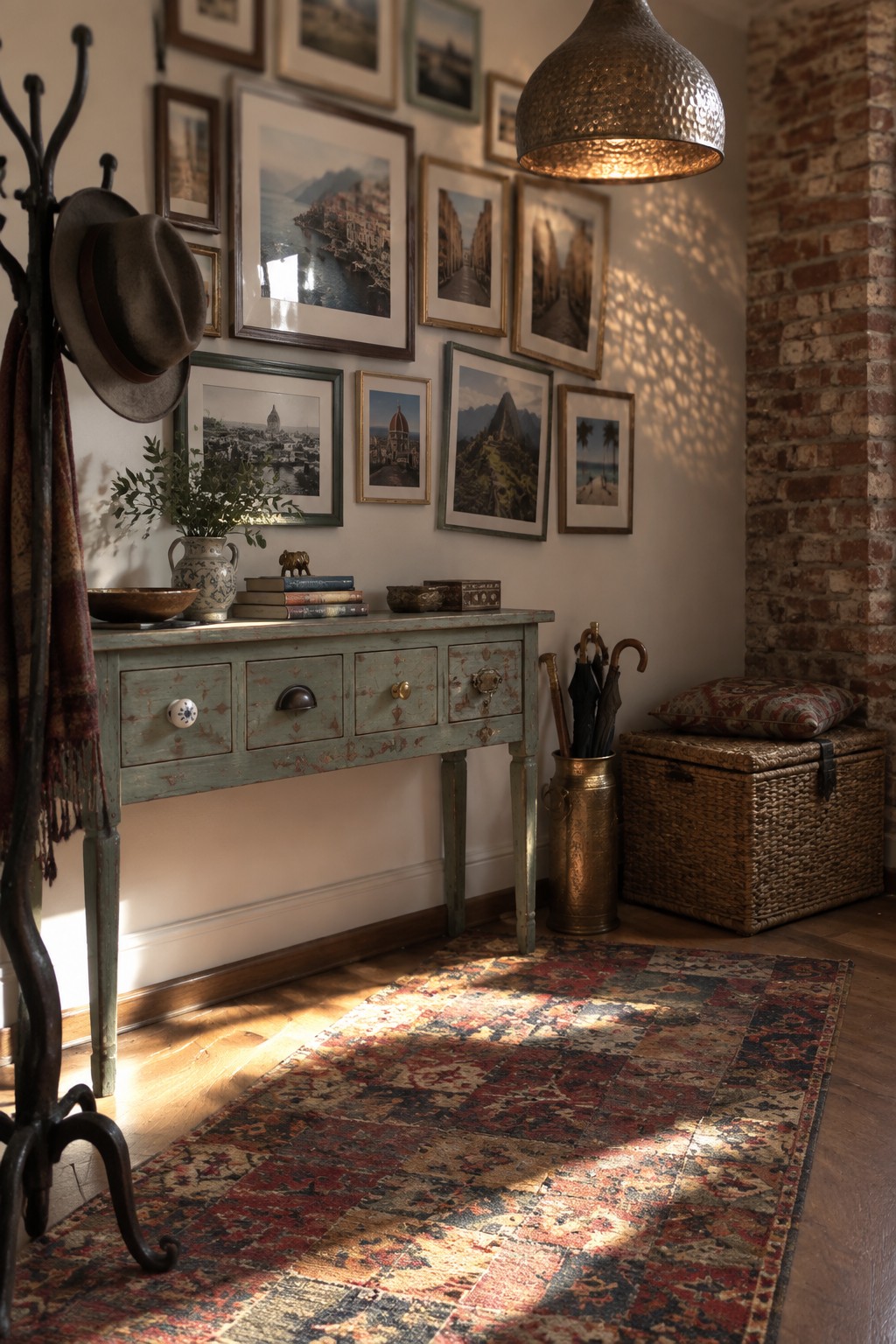
A single strong pendant can give an entryway real depth when natural light comes in from the side. The light from the fixture mixes with the sunlight to create soft patterns on the wall and floor, so the space feels brighter without extra lamps.
This setup works best in entries that get decent daylight during the day. Keep the pendant fairly large and simple so it adds warmth without overpowering the room or blocking the natural light.
Pendant Lighting Over Built-In Entry Storage
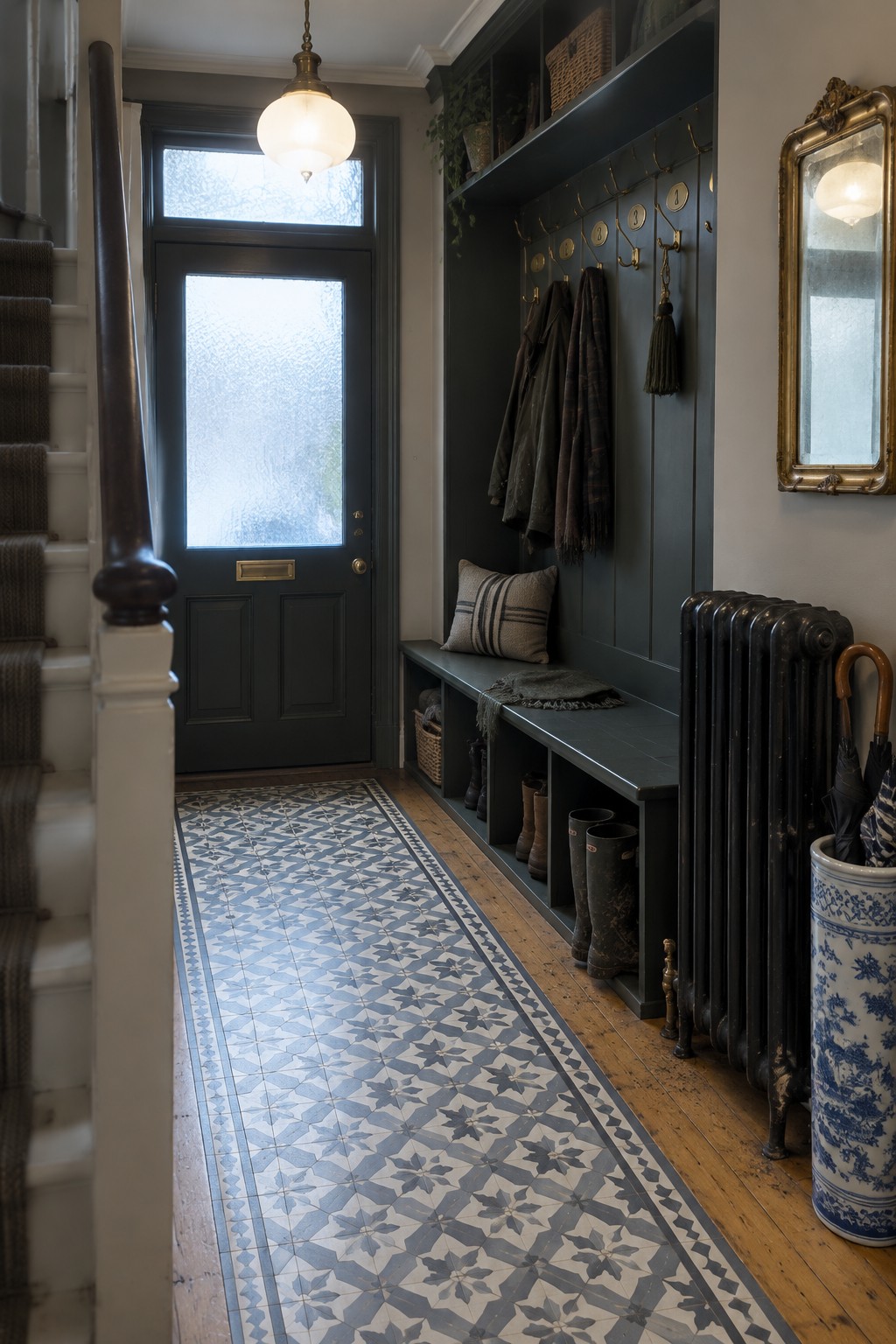
A pendant light works well in an entry like this because it gives focused illumination right where people need it most, without taking up any floor space. The dark walls and wood tones can make the space feel closed in, so the overhead fixture helps keep things practical while the glass in the door brings in daylight during the day.
This setup suits older homes or narrow hallways that already have built-in seating and hooks. Keep the fixture simple and hang it high enough so it does not interfere with movement, and let the natural light from the door handle the daytime hours.
Pair A Linear Pendant With Under Console Lighting
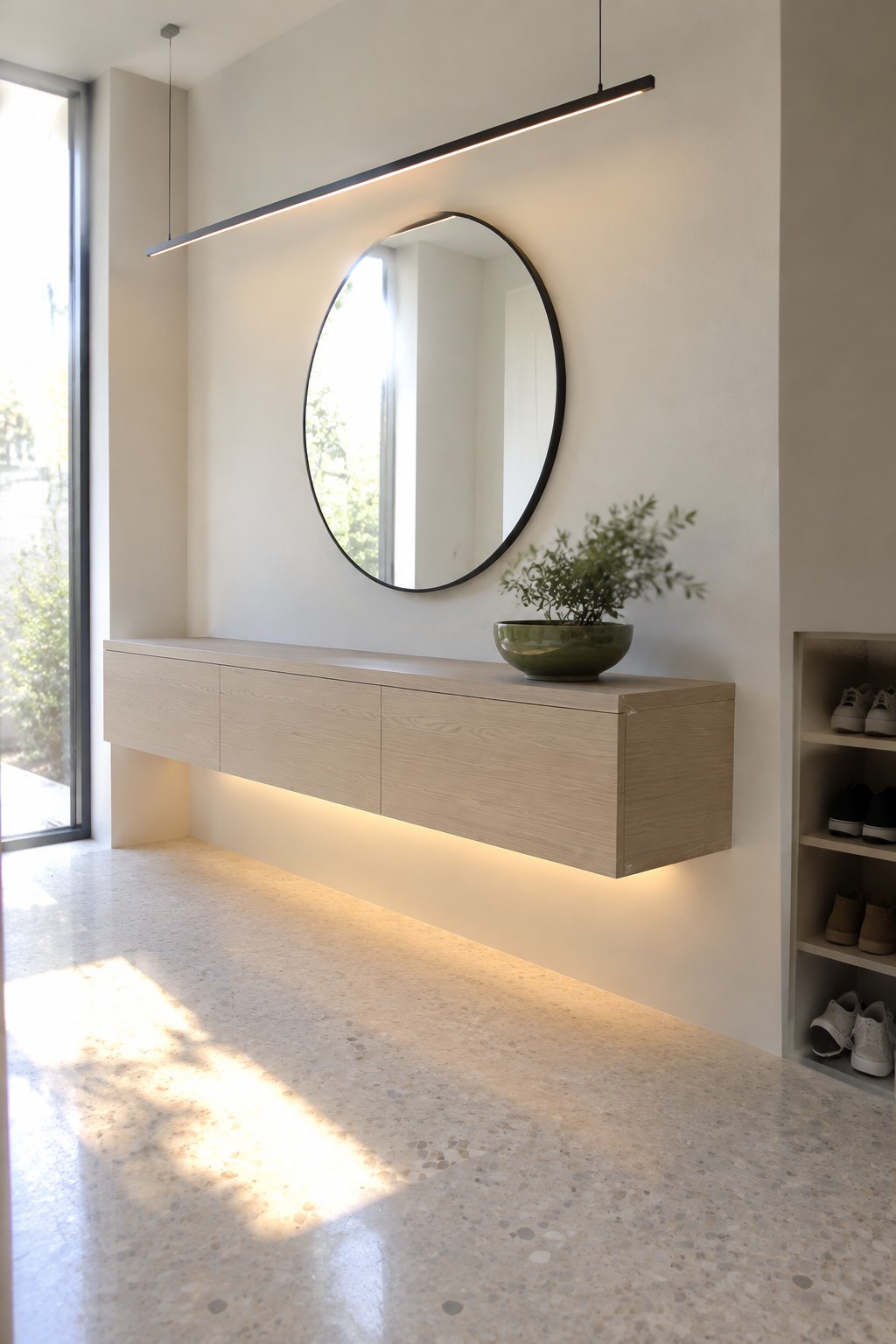
Many entryways stay flat with just a ceiling fixture. Adding a long linear pendant above a floating console and pairing it with a soft glow from underneath creates two distinct layers that make the space feel both brighter and calmer.
This approach suits narrow hallways and open foyers where you need clear walking light without harsh overhead glare. The upper light covers the whole area while the lower glow keeps the floor visible and the console surface usable at night.
Combine Wall Sconces With Built-In Seating Lighting

One simple way to improve an entry is to use two different light sources instead of relying on just one. A wall sconce gives steady light at mid height while a table lamp on a nearby surface adds a lower, warmer glow. Together they make the space feel more usable at night without needing a bright ceiling fixture.
This mix works well in narrower entries or those with built in seating because it spreads light evenly along the walls. Place the sconce near the door and the lamp farther down the console so people get light as soon as they step inside. It suits homes that already have wood trim or painted paneling since the lamps soften the look without competing with the architecture.
Frequently Asked Questions
Q: How do I keep the entryway from getting too bright with all these layers? A: Turn on the brightest overhead light only when you need it for tasks like finding keys. Keep the accent and task lights dimmer for everyday use. Adjust them based on the time of day so the space stays comfortable.
Q: What if one layer feels too dominant? A: Move the brighter fixtures to the sides or lower positions. This pulls attention across the whole entryway instead of straight up. Test it by standing at the door and seeing where your eyes go first.
Q: Can I add layers gradually if I start with just one light? A: Start with your ceiling fixture and add a floor lamp near the door next. Then try a small wall light by the mirror. Build from there as you see what works in your space.
