

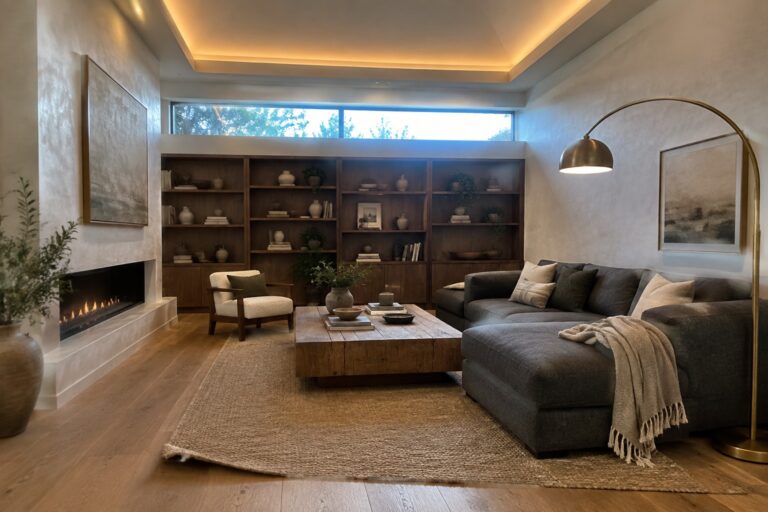
I have always noticed that the way light reaches the ceiling changes how a room settles once evening comes and the main fixtures are on.
In older homes especially the ceilings tend to swallow light unless there is some kind of accent built in.
Cove lighting often solves that problem without making the space feel artificial.
It is worth trying in a few rooms first.
I keep thinking back to a living room where the cove detail made the whole ceiling look higher and calmer at the same time.
Cove Lighting For High Ceilings
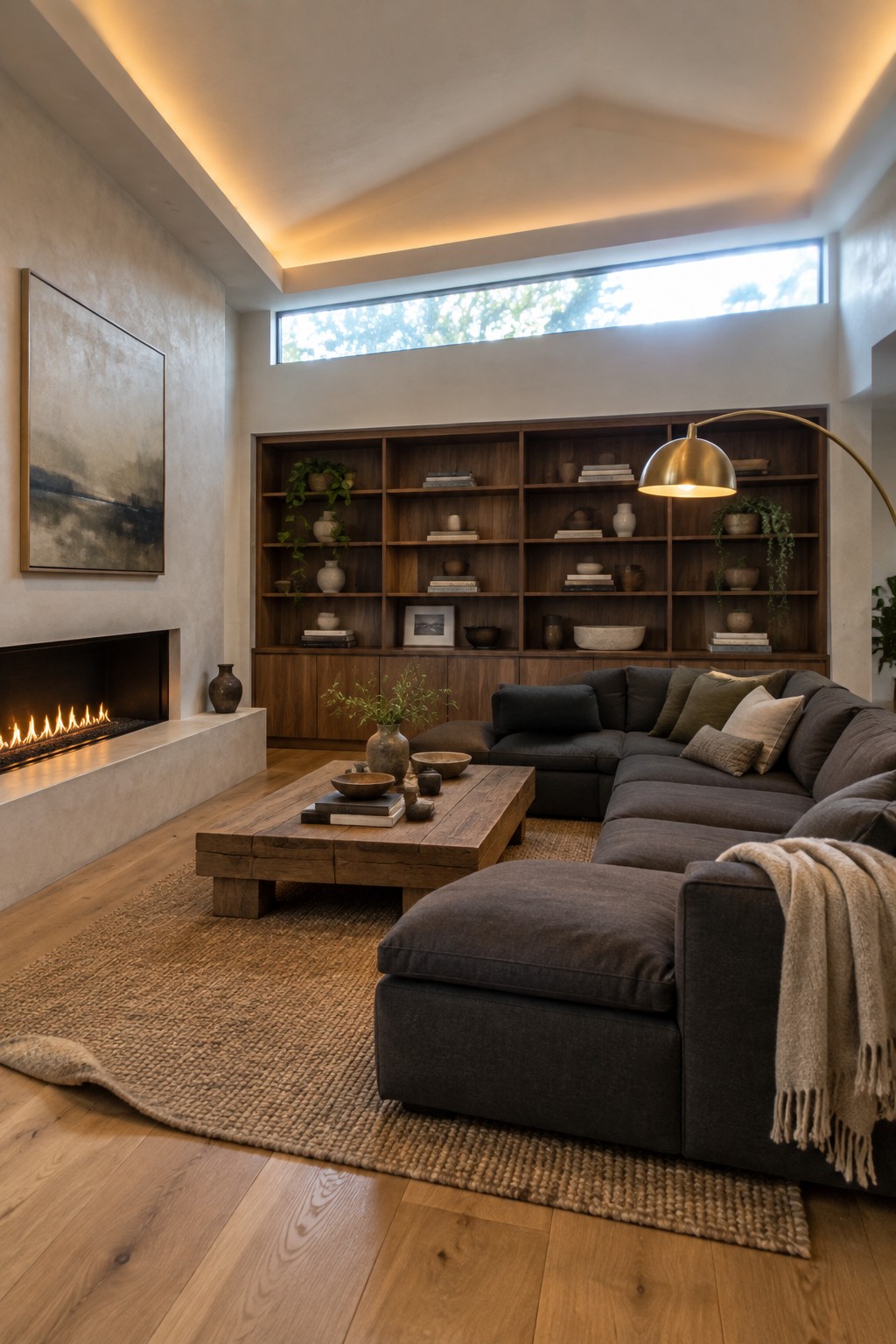
High ceilings often need more than a few pendant lights to feel finished. Cove lighting tucked along the upper edges creates a steady wash of light that follows the roofline and makes the whole space feel warmer at night.
This approach works best in rooms with simple ceiling shapes and open wall space above the furniture. It pairs well with wood tones and darker seating because the light stays soft and indirect rather than bouncing off every surface.
Cove Lighting In A Bedroom Tray Ceiling

Cove lighting gives bedrooms a quiet kind of brightness that feels easier on the eyes than a single overhead fixture. The light stays tucked away and washes across the ceiling instead of shining straight down, which helps the room stay calm even when you need a little visibility at night.
This works best in rooms that already have some ceiling depth, like a tray or recessed design. Keep the rest of the space simple with soft colors and fewer lamps so the ceiling glow can do most of the work without competing.
Cove Lighting In Coffered Ceilings

Cove lighting brings out the structure of a coffered ceiling without adding visual clutter. The hidden strips create a soft wash of light that fills the upper part of the room and keeps everything feeling even and calm, especially when the main lights are off.
This works best in dining rooms or living spaces where you want background light that does not compete with a table pendant. It suits homes with some ceiling height and simple trim details, and it pairs well with wood tones and natural textures that already feel warm.
Oversized Pendants In High Ceiling Kitchens

Large woven pendants make sense in kitchens with tall ceilings because they fill the vertical space without needing a lot of fixtures. They give off a soft, warm light that feels more inviting than rows of recessed cans alone, and the natural texture adds interest where plain drywall would feel flat.
Place them over an island so the bottom of the shade sits about 30 to 36 inches above the counter. They work best in rooms with light cabinet colors and simple trim, where the shape of the light can stand out without competing with busy details.
Cove Lighting Above Built-In Shelves

Cove lighting sits nicely above built-in bookshelves because it throws a gentle wash of light across the whole wall. The effect keeps the room feeling calm and makes it easier to spend time there without needing a bright ceiling fixture on all the time.
This setup works best in studies or home offices where the shelves run floor to ceiling. Keep the cove simple and run it along the top edge so the light bounces off the ceiling and softly highlights the books and objects below.
Cove Lighting in Hallways

Cove lighting gives hallways a quiet lift by washing the ceiling with a steady glow. It avoids the harsh downlight effect that often makes these narrow spaces feel smaller and more closed in.
This works especially well in older homes or any entry hallway where you want even light without adding visible fixtures. Keep the cove simple and let the rest of the space stay understated so the ceiling detail does the main job.
Cove Lighting Along the Ceiling Edge
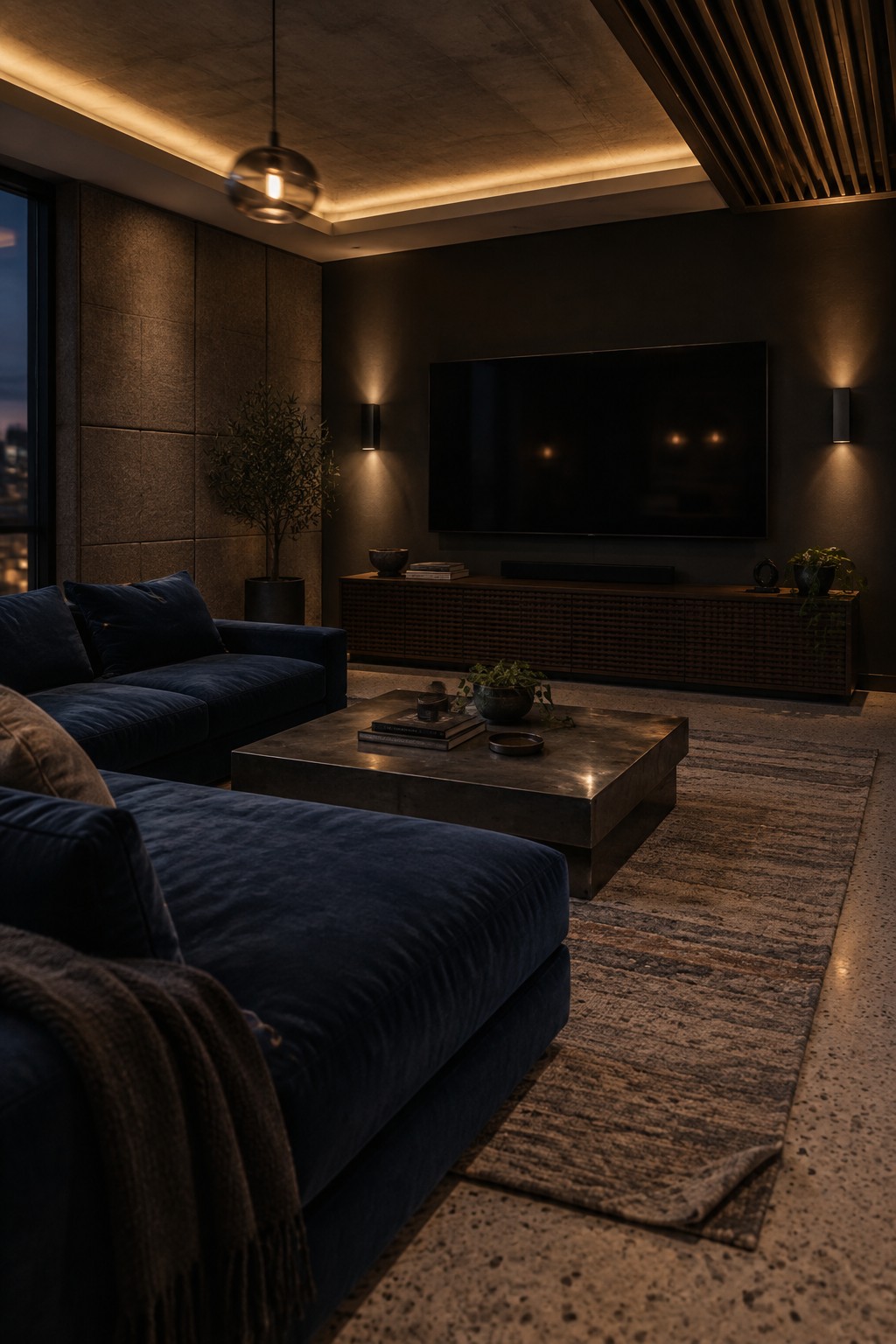
Cove lighting works well when you want a living room to feel calmer at night without relying on lots of lamps. The steady glow from the perimeter softens the ceiling and spreads light evenly across the space, which helps balance the darker furniture and walls.
This idea suits rooms with higher ceilings or textured finishes like concrete. Run the cove deep enough to hide the source and pair it with one or two warmer pendants so the overall light stays comfortable rather than flat.
Cove Lighting In A Nursery

Cove lighting gives a nursery a steady, low glow that stays out of the way at night. It runs along the top of the wall and bounces off the ceiling, so the room feels calm without extra lamps cluttering the floor or tables.
This works best in smaller rooms where you want even light but no bright spots. Keep the strip hidden behind a simple ledge or trim, and pair it with plain wall details so the focus stays on the soft wash of light rather than the fixture itself.
Cove Lighting Along the Vanity Ceiling
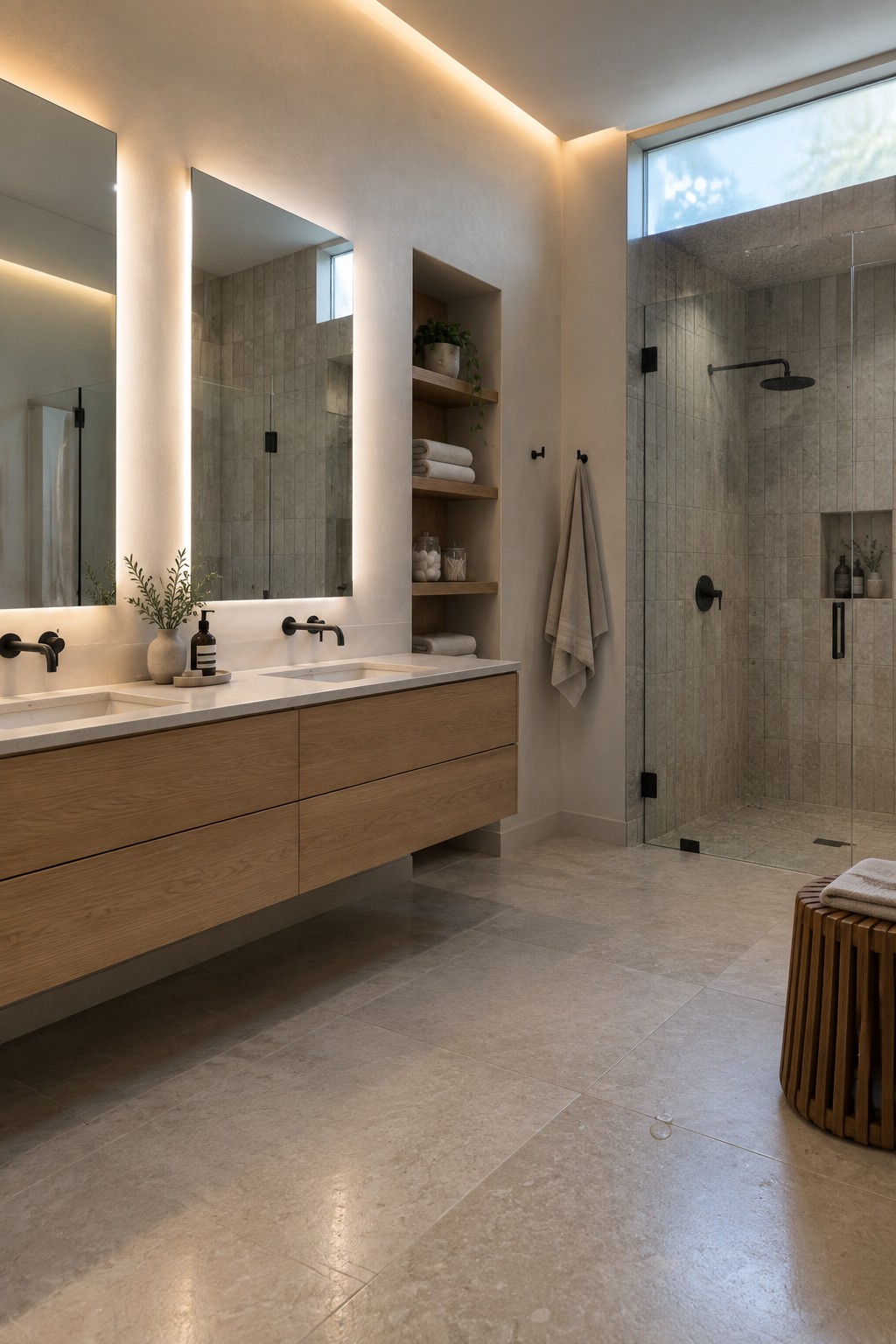
Cove lighting like this runs in a continuous line above the mirrors and gives the whole vanity area a soft, even glow. It cuts down on shadows at the sink and keeps the look simple since there are no visible fixtures hanging down. The light feels warmer and more finished than standard recessed cans alone.
This works best in bathrooms with a bit of ceiling height and a long counter. It suits modern or transitional homes where you want the lighting to feel built in rather than added on. Just make sure the cove is deep enough to hide the LED strip from view when you are standing at the vanity.
Cove Lighting Along Ceiling Edges
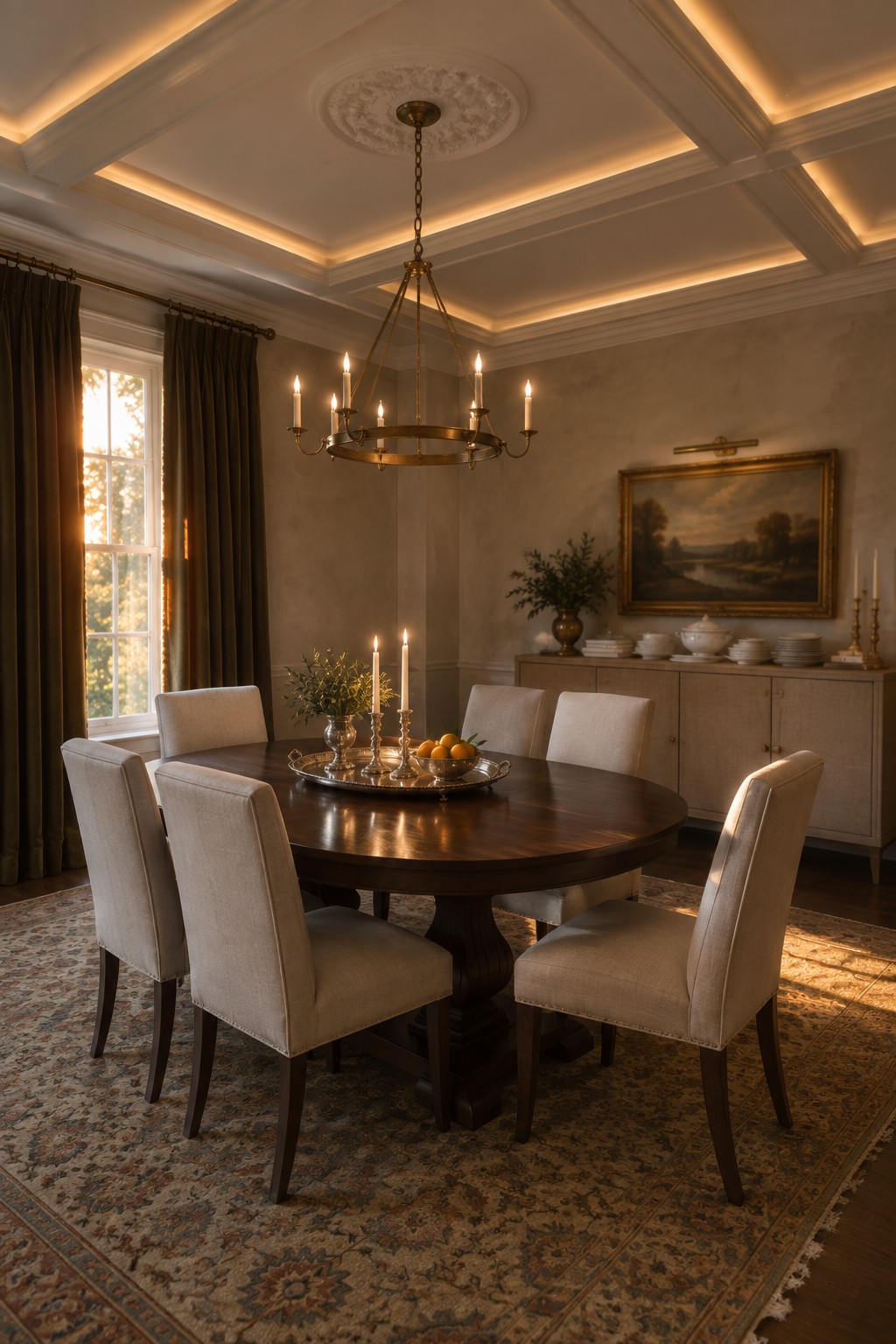
Cove lighting tucked into the ceiling molding gives a soft wash that makes a high ceiling feel even taller. It works quietly in the background and pairs well with a central fixture like a chandelier, so the room stays bright without feeling harsh.
This setup suits dining rooms with existing trim details or homes that need gentle ambient light in the evening. Keep the cove fairly narrow and use warm bulbs so the glow stays even and does not create bright spots on the wall.
Cove Lighting For A Calmer Bedroom Feel

Cove lighting runs along the ceiling edge and spreads a steady wash of light that feels much softer than a single overhead fixture. In a bedroom this matters because it keeps the space from feeling too bright at night while still giving enough light to move around comfortably.
It works best in rooms with plain walls and simple furniture, where you can let the light itself become the main feature. Keep the rest of the lighting low, like a pair of bedside lamps, so the cove stays the quiet background layer rather than competing with other sources.
Cove Lighting Along A Curved Ceiling

Cove lighting shows up well when the ceiling has some shape instead of staying flat. The curved ceiling here lets the light spread softly across the surface and gives the whole room a steadier glow without any bright spots or dark corners.
This approach works best in narrow or window-light rooms where you still want the space to feel finished. It keeps the ceiling looking clean while adding enough brightness for daily tasks, and it fits homes that want utility areas to feel less stark.
Cove Lighting Around a Closet Ceiling

One detail that works well here is the soft band of light running along the ceiling edge. It gives the whole space a gentle wash of warmth without relying on one bright fixture in the middle. That kind of perimeter lighting helps the room feel calm and evenly lit even when the main lights are off.
This approach suits custom closets or dressing rooms where you want clear visibility for clothes and accessories. It works best in spaces with enough ceiling depth to hide the source, and it pairs nicely with lower pendant lights for task areas. Just make sure the lighting is dimmable so you can adjust it for different times of day.
Cove Lighting In Tall Entryways

Cove lighting works especially well in tall foyers because it draws attention upward without adding bright overhead fixtures that can feel harsh. The soft glow along the top of the walls makes the height feel intentional rather than empty, and it keeps the space from looking dim once the sun goes down.
This approach suits homes with two-story entry halls or open staircases where you want a calm, even light. It works best when the ceiling has some depth to hide the strip, and it pairs nicely with a simple gallery wall or console below so the focus stays on the architecture rather than extra decoration.
Cove Lighting For A Soft Living Room Glow

Cove lighting works well in rooms like this because it spreads a steady glow across the ceiling without any harsh spots. The light stays tucked away, so the ceiling feels higher and the whole space stays calm even when the sun goes down.
It suits living rooms with simple architecture and neutral colors, since the light itself becomes the main feature. Keep the cove a few inches deep and use warm bulbs so the effect stays soft rather than bright or clinical.
Cove Lighting For Bathroom Ambient Lighting

Cove lighting works well when you want even, indirect light that does not rely on visible fixtures. Running it along the ceiling perimeter creates a soft wash that makes the whole room feel calmer and a little taller, especially in spaces with simple wall colors and darker lower surfaces.
This approach suits bathrooms or smaller rooms where you need reliable ambient light without adding clutter. It works best in new construction or during a remodel when you can build the recess into the ceiling, and it pairs easily with other low-profile fixtures if you want a bit more task lighting near the mirror.
Cove Lighting Along Exposed Beams

Cove lighting works especially well when you have wooden ceiling beams to highlight. The indirect glow softens the look of the wood and keeps the room feeling warm without needing lots of lamps. It also draws attention upward, which helps smaller or lower rooms feel a little taller.
This approach suits homes with visible rafters or beams where you want a calm, layered light at night. Keep the cove narrow and the light source hidden so the beams themselves stay the focus. Avoid bright white LEDs if you want the same soft tone shown here.
Cove Lighting In Kids Playrooms

Cove lighting gives a playroom a soft overhead glow without the glare of a central fixture. It spreads light evenly across the ceiling and down the walls, which helps the space feel calm even when toys are everywhere.
This works best in rooms with a bit of ceiling depth so the source stays hidden. Many family homes use it in play areas because it stays gentle on young eyes while still bright enough for reading or building on the floor.
Cove Lighting Along Built-In Bookshelves

Cove lighting tucked above tall bookshelves gives a steady, soft glow that fills the upper part of the room without extra lamps or harsh spots. It draws attention to the full height of the shelves and keeps the space feeling balanced and easy to be in after dark.
This works well in libraries or studies where the built-ins reach close to the ceiling. It suits homes with wood tones and darker finishes, and it helps the room feel warmer without needing much else.
Cove Lighting On A Curved Ceiling

Cove lighting works especially well when the ceiling has a gentle curve or wave to it. The light spreads evenly along the edge and gives the whole upper part of the room a soft, steady glow without any harsh lines or bright spots.
This approach suits quiet rooms where people sit on the floor or stay for longer periods. It pairs nicely with a skylight in the middle so the artificial light takes over smoothly once the sun fades. Keep the cove a few inches deep and use a warm bulb so the effect stays calm rather than dramatic.
Cove Lighting Along a Bathroom Ceiling

Cove lighting gives a bathroom a calm, even glow without needing extra fixtures on the ceiling. The light sits tucked into the edge detail and spreads softly across the surface, which helps the room feel a bit taller and less closed in.
This approach works well in smaller baths that already have trim or paneling. It pairs nicely with painted woodwork and keeps the overall look simple, though it does need enough depth in the ceiling to hide the strip properly.
Cove Lighting Along Kitchen Ceiling Edges
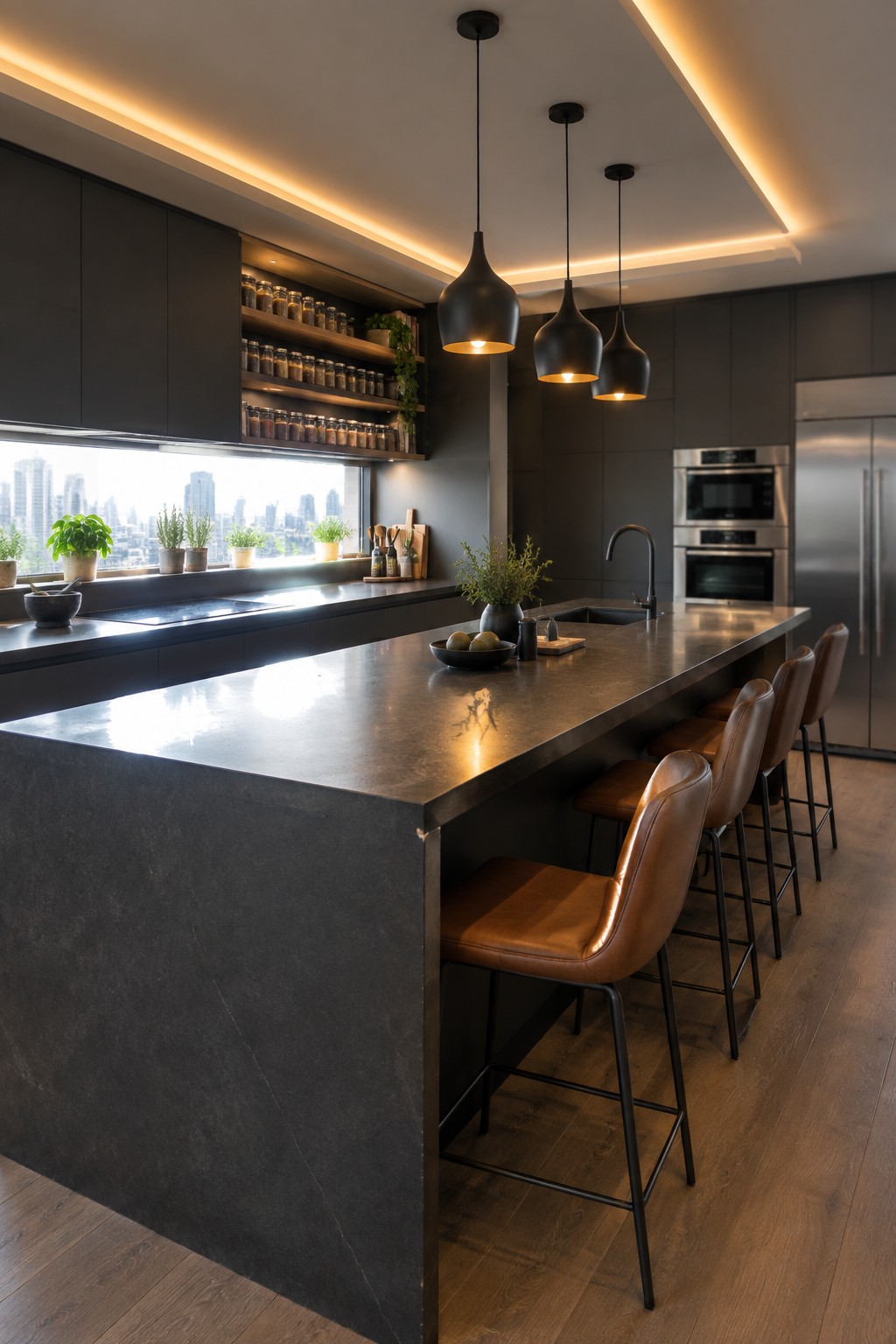
Cove lighting tucked into the perimeter of a kitchen ceiling adds a steady layer of ambient light that keeps the space from feeling flat after dark. It works especially well when the ceiling is set a bit higher than standard, because the glow draws the eye upward without any visible bulbs.
This setup suits open kitchens where you already have pendants or other fixtures over the island. Keep the recess shallow enough to hide the strip but deep enough for even spread, and test the color temperature so it blends with your other lights rather than fighting them.
Cove Lighting Along A Scalloped Ceiling

Cove lighting tucked behind a shaped ceiling edge gives a bathroom a gentle wash of light that feels calm and steady. The scalloped detail keeps the ceiling from feeling flat while the hidden source avoids the harshness of overhead fixtures.
This works best in rooms with some height where the light can bounce across the surface. Keep the ceiling form simple so the glow stays soft instead of turning into a busy focal point.
Frequently Asked Questions
Q: Can cove lighting work in rooms with lower ceilings? A: Keep the cove depth shallow and use slim LED strips to avoid taking up too much space. Position the light source higher up near the ceiling edge so the glow spreads out nicely. This setup still adds height without crowding the room.
Q: How do I handle corners when running the lights around the room? A: Miter the channels at 45 degrees for clean turns. Or use corner connectors if your kit includes them. Test the fit before securing everything in place.
Q: Will the lights collect dust over time? A: Dust builds up in coves so wipe the area every couple months. A soft cloth does the job without scratching anything.
Q: Can I add cove lighting myself or do I need a pro? A: Basic kits make this a weekend project for most people with some tools. Follow the instructions for mounting and wiring step by step. Call an electrician if you hit any electrical snags.
