


I’ve found that the way light travels across a wall can change how the whole room feels once the furniture is in place and the day to day use begins.
In my living room the far corners always stayed flat until I tried a few different placements and saw what actually held up once the lamps were turned off.
Linear strips give a steady line that can follow the shape of the space without taking up floor area or competing with the main seating.
Some placements end up looking better on paper than they do once you live with them for a week.
I usually test one or two ideas first on a single wall to see how the light spreads before committing to the rest of the house.
Linear LED Strips Under a Floating Shelf
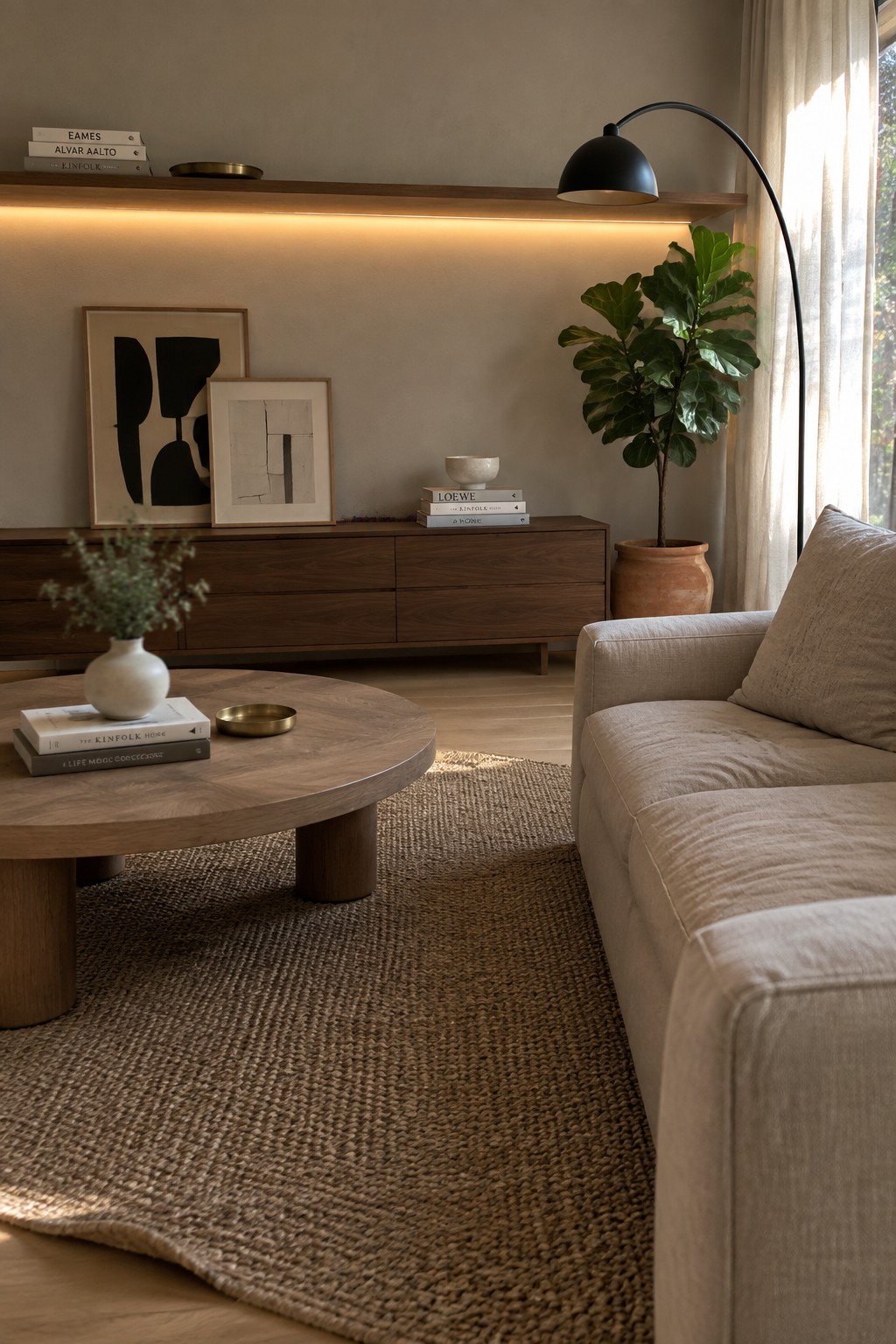
One simple way to add wall accent lighting is to run a linear LED strip along the bottom of a floating shelf. The light spreads upward in a soft band that feels calm rather than bright, and it keeps the focus on the wall surface instead of on a visible fixture.
This works best in rooms with light or mid-tone walls where you want a gentle background layer. Hide the strip behind a small lip on the shelf so the source stays out of sight, and use a warm color temperature to match wood tones and soft textiles.
LED Strips in a Recessed Wall Arch
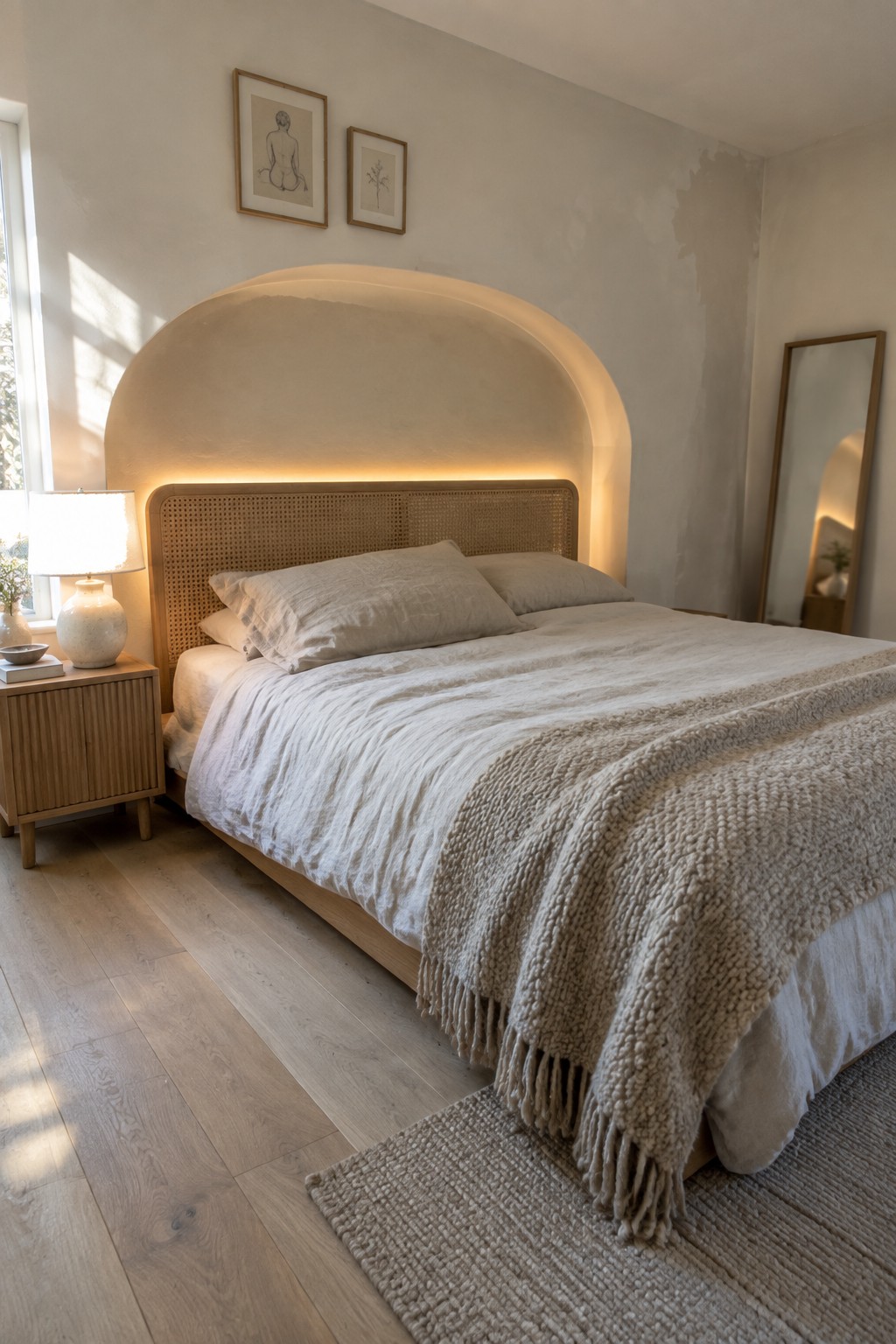
One simple way to add soft accent lighting is to run linear LED strips inside a recessed arch or niche. The light stays hidden but still fills the space with a gentle glow that makes the wall feel deeper and more interesting. It works especially well behind a bed where you want something calmer than a lamp but more intentional than leaving the wall bare.
This approach suits rooms with clean lines and built-in details. Keep the strips on a warm setting and place them along the back edge so the light washes evenly across the surface. It adds a quiet layer of light without needing extra fixtures or cluttering the room.
Under Cabinet Led Strips For Everyday Kitchen Lighting

Linear LED strips tucked under upper cabinets give a steady wash of light right where you need it most. The effect feels calm and useful at the same time, especially when the rest of the room leans on warmer wood tones and simple surfaces.
This setup works best in kitchens that already have a clean run of cabinetry and a light-colored backsplash to bounce the glow. Keep the strip hidden behind a small lip so the light stays soft rather than glaring, and choose a warm color temperature that matches your other fixtures.
Backlit Mirrors Using LED Strips
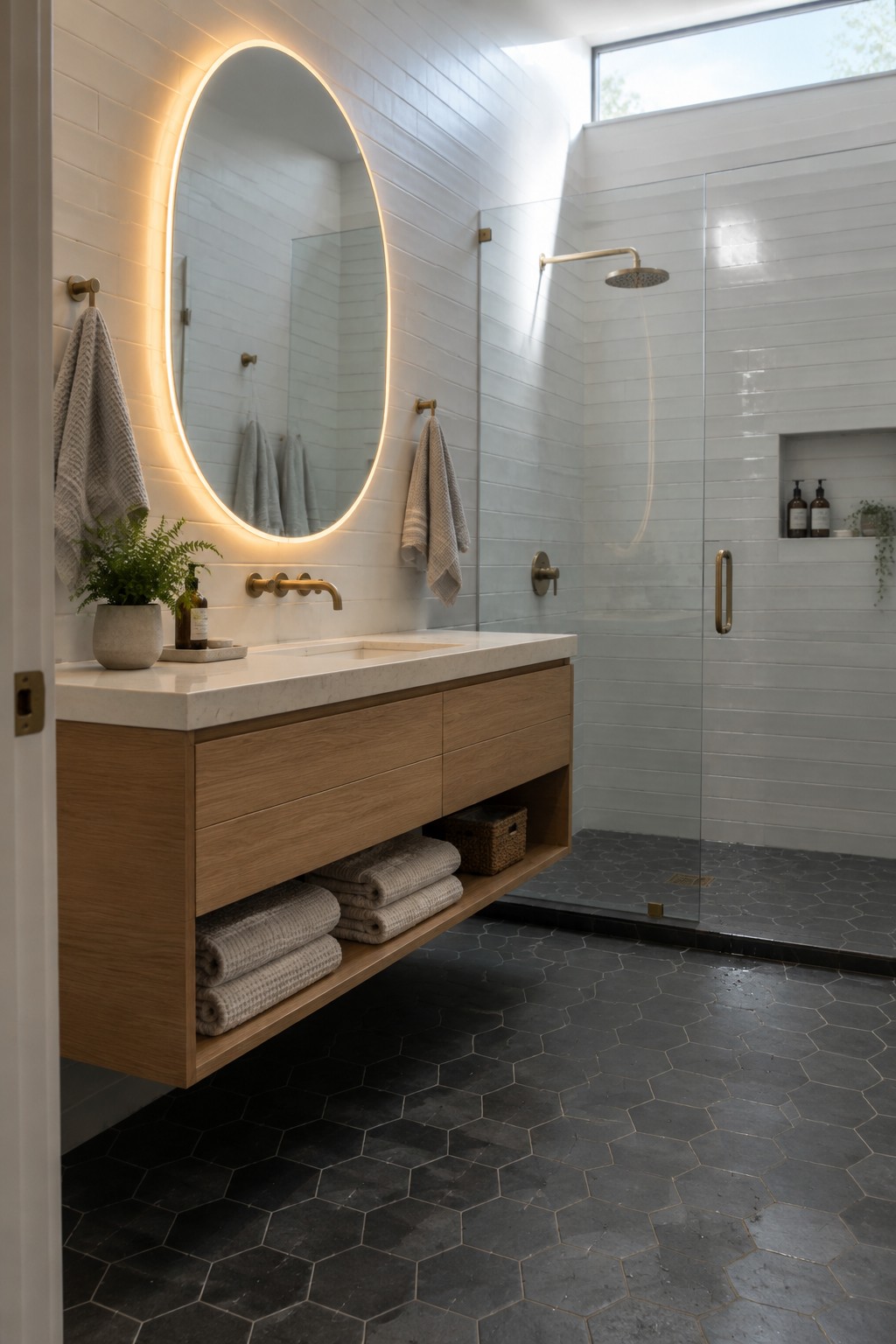
One simple way to add soft lighting in a bathroom is to run linear LED strips behind a mirror so the light glows around the edges. This creates even, low-glare illumination right where it is needed most and avoids the harsh feel of overhead fixtures alone.
The approach works especially well in smaller bathrooms or any space with white or light tile walls. Keep the strips on a dimmer so the glow can be adjusted for morning routines or evening wind-down.
Linear LED Strips In A Ceiling Cove

One idea worth copying is running linear LED strips inside a shallow ceiling cove. The light bounces off the ceiling plane and spreads evenly downward, giving the room a steady, low glow that feels calmer than a central fixture.
This works especially well in dining rooms or any space where people sit for longer periods. Keep the strips hidden from direct view and pair them with a dimmer so the brightness can be adjusted for different times of day.
Vertical LED Strips For Entryway Walls

Running a vertical LED strip along one wall gives a narrow entry a quiet lift without adding clutter. The light washes upward and makes the space feel taller and easier to move through, especially when you come in at the end of the day.
This approach suits older homes with existing paneling or any tight hallway where floor lamps would get in the way. Keep the strip narrow and tucked into a corner or beside a mirror so the glow stays soft and does not compete with other lights.
Linear LED Strips Behind Low Shelving

Running a linear LED strip along the back edge of low built-in shelving gives the wall a soft wash of light that feels calm rather than bright. The effect is simple and steady, and it avoids the need for extra lamps that might clutter the floor or get in the way.
This setup works best in rooms where you want gentle background light without drawing attention to the source. It suits painted walls that could use a little extra warmth and pairs well with low storage that already sits close to the floor.
Built-In Shelves With Under-Shelf LED Strips

Linear LED strips tucked under the top shelves give the whole wall a clean, useful glow without any extra lamps cluttering the desk. The light spreads evenly across the work surface and the items pinned to the wall, so the space feels brighter and more open even when the room is small.
This setup works best in a home office or study where you want steady task lighting without glare on a screen. Keep the strip set back a bit from the shelf edge so it stays hidden, and choose a warm white tone if the room gets a lot of natural light during the day.
Linear LED Strips Along Paneling
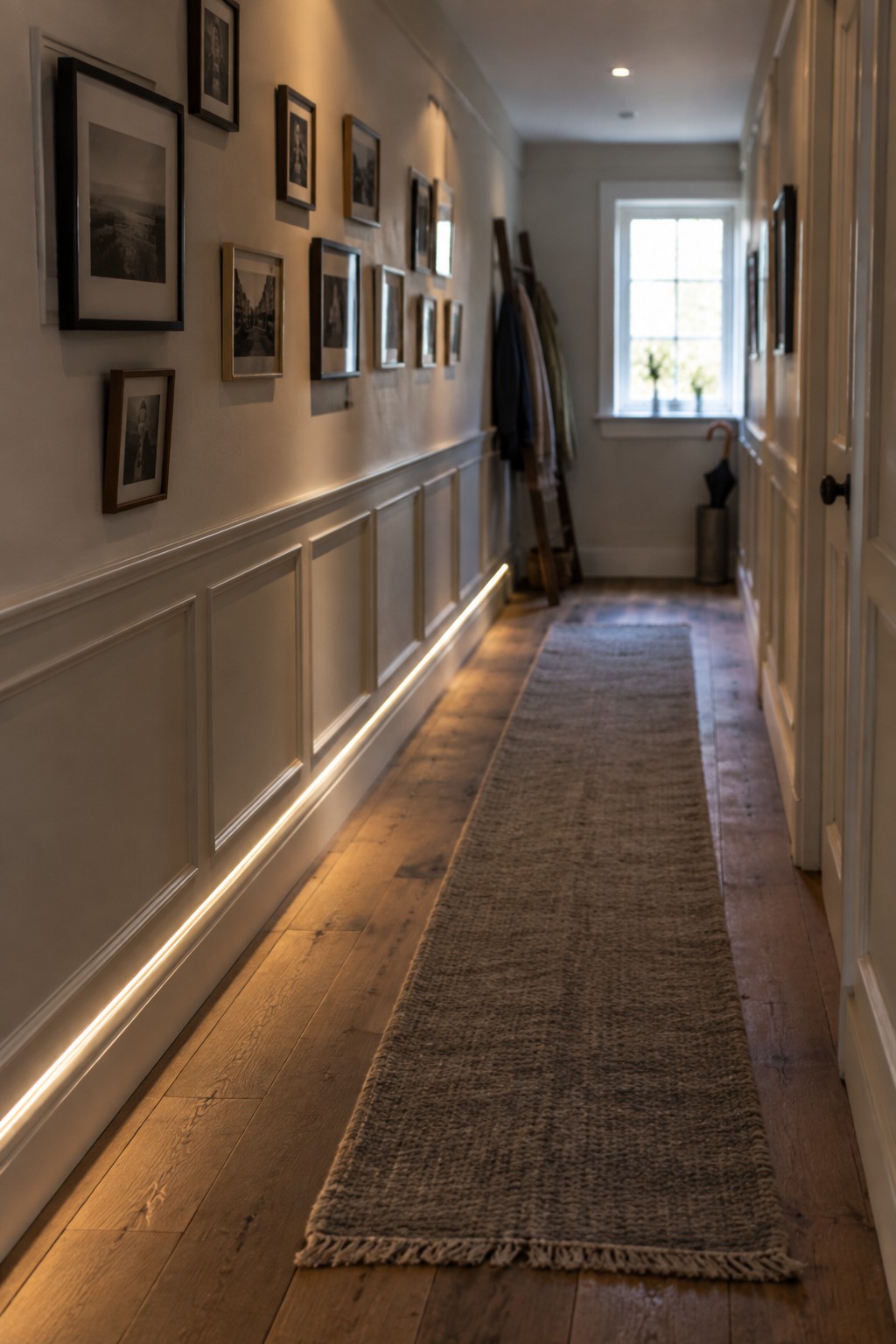
One simple way to add accent lighting in a hallway is to tuck a linear LED strip right along the bottom edge of the wainscoting. The light follows the wall line and gives a steady, low glow without adding lamps or fixtures that take up space.
This works best in older homes or narrow passages where you already have trim in place. It helps with nighttime navigation and keeps the look tidy, though you want the strip set in deep enough that it stays protected from feet and vacuum cleaners.
Linear LED Strips Above The Mirror
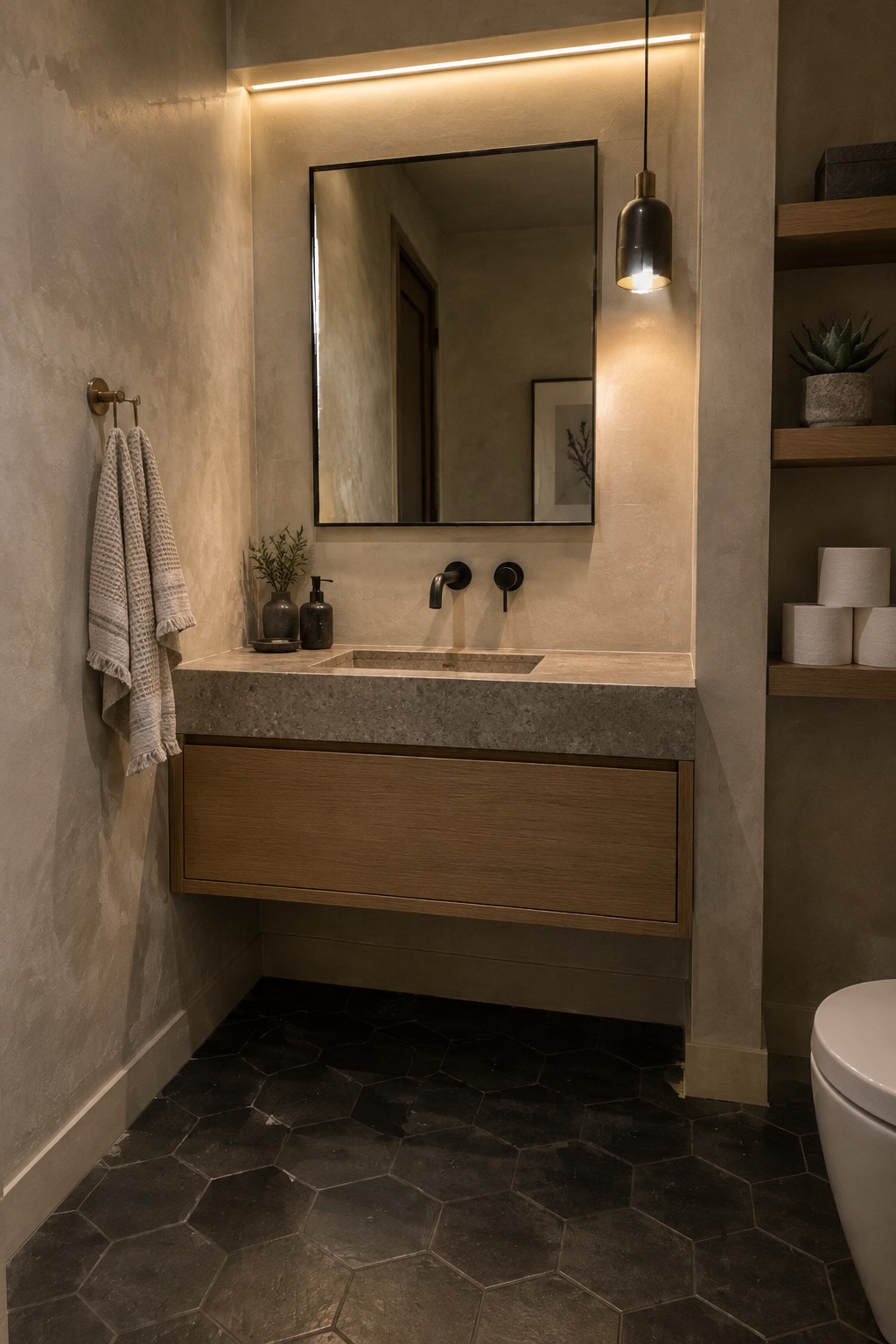
A linear LED strip tucked above the mirror gives the wall a soft wash of light that feels steady and calm. It works well on textured surfaces because the light spreads gently instead of creating hard spots or shadows.
This setup works best in bathrooms where you want even light for daily tasks without adding extra lamps or sconces. Run the strip inside a shallow channel or behind a thin ledge so the glow stays directed down the wall.
LED Strips Under Floating Media Cabinets

One simple way to add warmth to a media wall is to run a linear LED strip along the underside of the cabinet. The light creates a gentle line that lifts the cabinet off the floor and makes the whole unit feel more built in.
This works best in rooms where the media wall is the main focal point. Keep the strip recessed in a shallow channel so it stays hidden during the day, and choose a warm color temperature that matches other lamps in the space. It suits modern living rooms with clean cabinetry and darker finishes.
Linear LED Strips Behind the Headboard

One simple way to add wall accent lighting is to run a linear LED strip along the wall just above the headboard. The light creates a gentle glow that defines the bed area and keeps the room feeling calm at night without adding more lamps or fixtures.
This works well in bedrooms with plain walls and a straightforward headboard, since the strip stays mostly hidden and the light stays low and even. It suits smaller rooms especially, where you want soft lighting without cluttering the space with visible hardware.
Linear LED Strips Under Shelves

Linear LED strips tucked under shelves give closet storage a clean, usable glow without adding extra fixtures. In spaces with dark wood cabinetry, the light bounces off the contents and makes everything easier to see at a glance. It turns ordinary shelving into something that feels more finished and intentional.
This approach works best in walk-in closets or built-in storage where you want even illumination across folded items and accessories. Keep the strips on a warm or neutral setting so the light does not feel harsh, and run them along the full depth of each shelf for consistent coverage. It suits homes that already have custom cabinetry and need a simple lighting upgrade without rewiring the whole room.
Under-Shelf LED Strips For Built-In Accent Lighting

Running linear LED strips under floating shelves gives a quiet glow that lights up the wall and whatever sits on the shelves. It adds a soft layer of light without taking up space or adding more lamps.
This approach works well in dining nooks or small seating areas where you want the space to feel warmer at night. Hide the strips behind a small lip on the shelf and keep the color temperature warm so the light stays easy on the eyes.
Linear LED Strips Above Laundry Counters
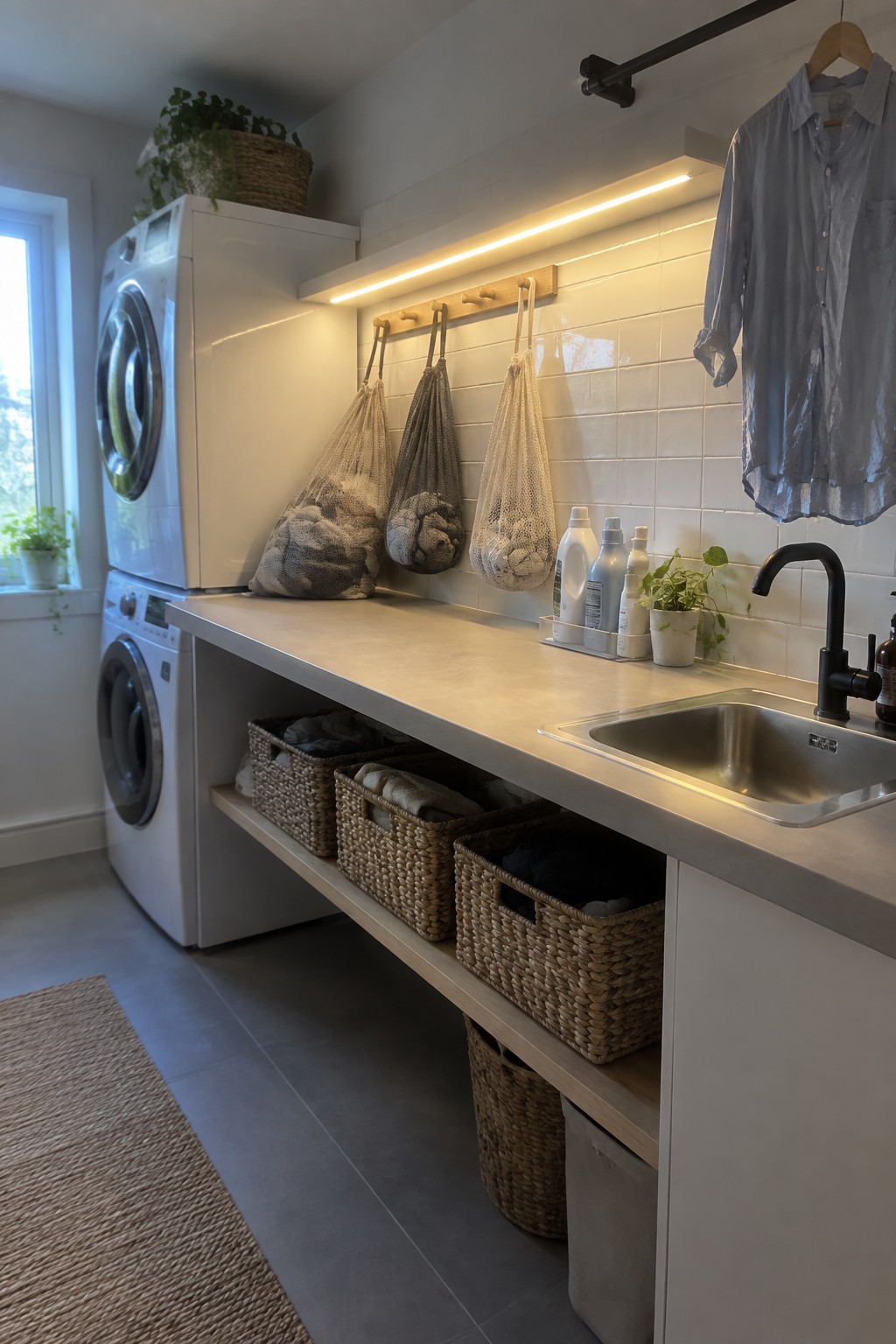
A linear LED strip mounted under a shelf gives steady light across a long work surface without needing extra lamps or fixtures. In spaces like laundry rooms this kind of lighting keeps the counter clear and still makes the whole area feel brighter and more finished. The even glow also helps the room look less like a plain utility space.
This approach works best in rooms where the counter runs along a wall and you already have some kind of overhang or open shelf above it. Keep the strip set back a bit so the light spreads out instead of shining straight down. Warm white LEDs usually feel more comfortable here than cool daylight tones.
Backlighting A Vanity Mirror With Linear LED Strips
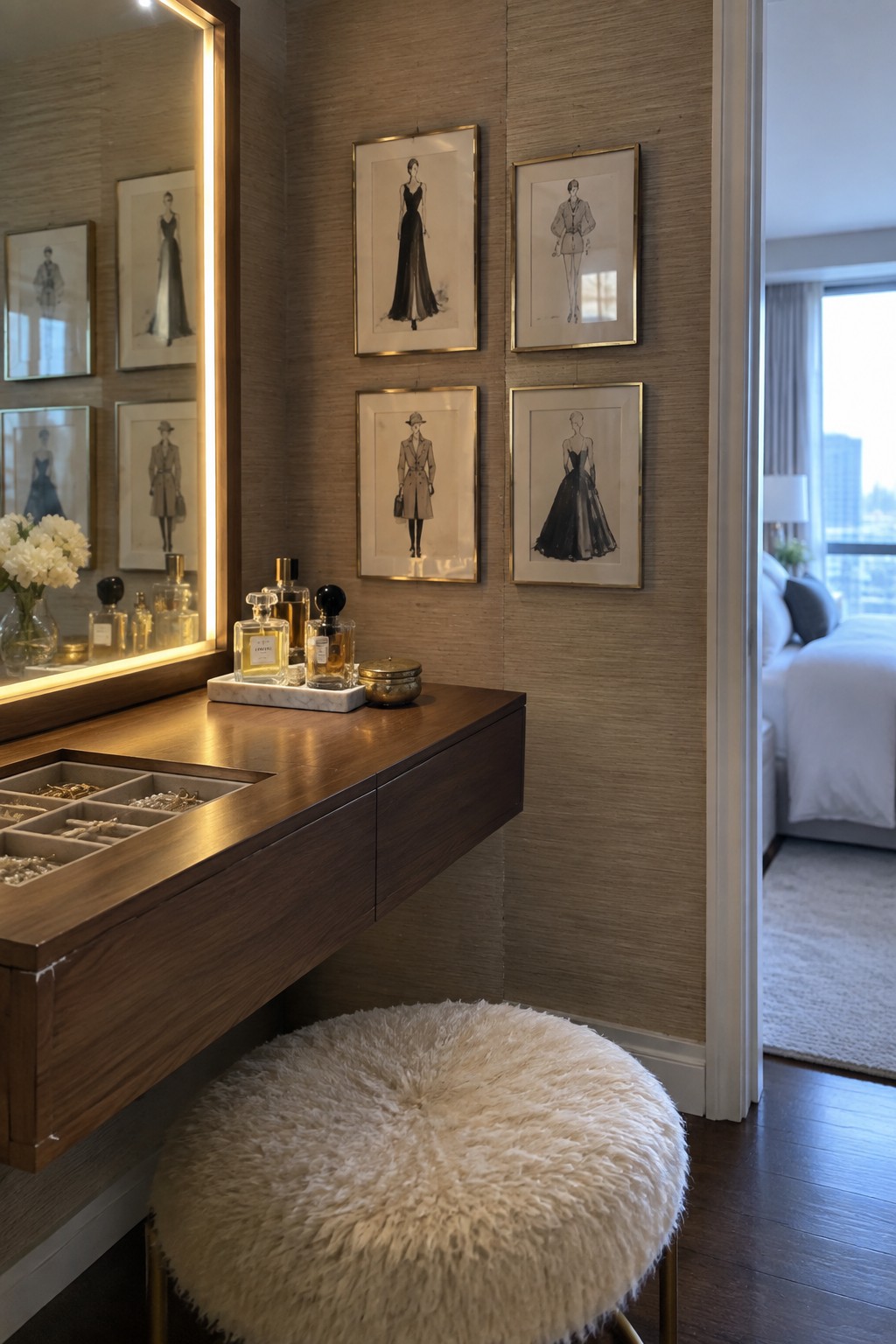
Many people add a thin LED strip right behind the edge of a mirror to create soft, even light for getting ready. It cuts down on shadows on the face and gives the whole corner a calmer feel without needing extra lamps or bright ceiling fixtures.
This approach works best in bedrooms or dressing areas where the mirror sits against a plain wall. Hide the strip behind a narrow frame or lip so the light glows outward instead of shining straight into the eyes.
Under-Shelf Linear LED Strips
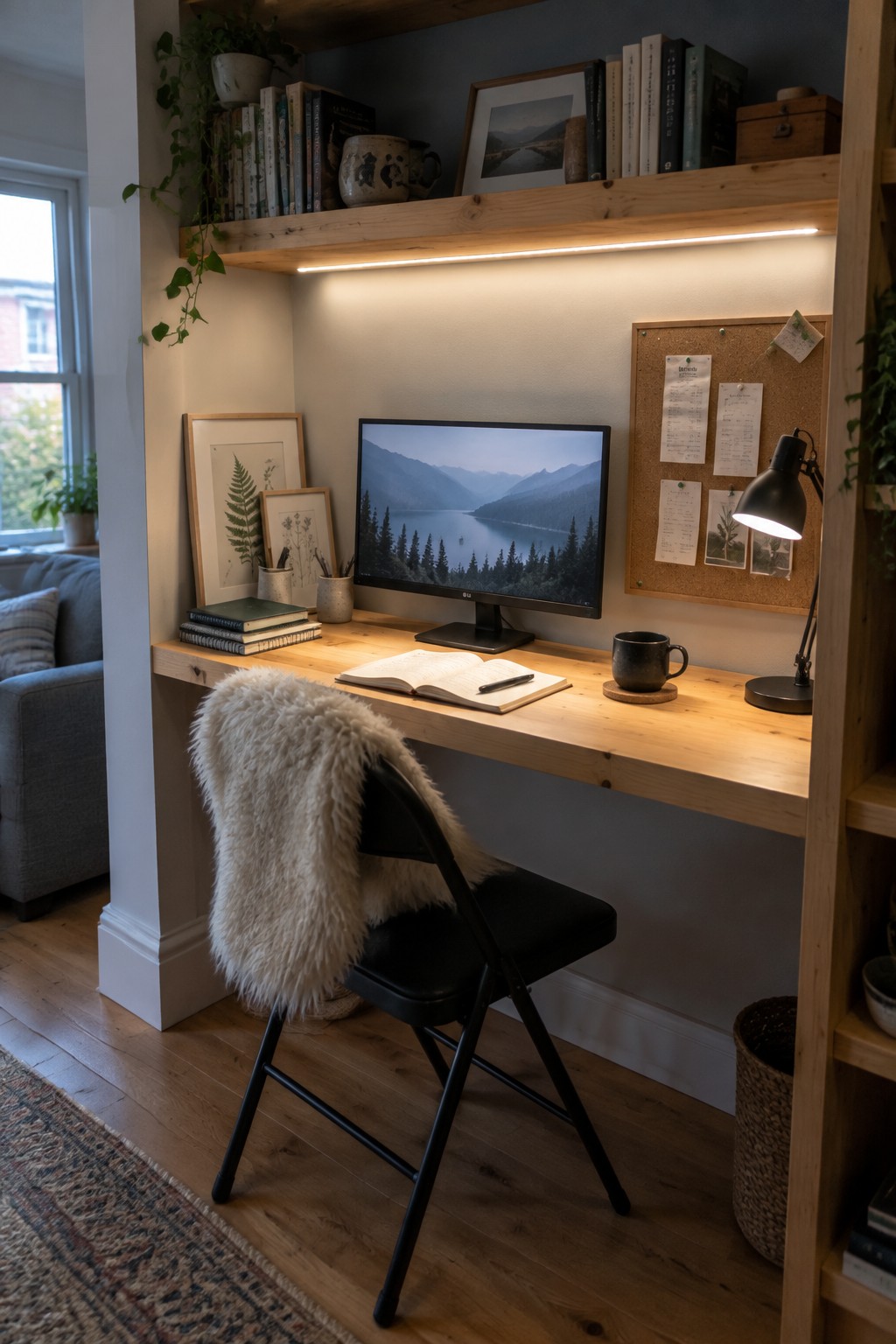
Many homes use a linear LED strip tucked under a shelf to light a desk area. It creates an even glow right where you need it, without adding another lamp or relying on ceiling fixtures that can feel too bright.
This approach works especially well in smaller workspaces or built-in nooks. Keep the strip close to the front edge of the shelf so the light reaches the work surface, and choose a warm color temperature if you want the wood tones in the room to feel softer.
Vertical LED Strips Along Built-In Shelves

Running a slim vertical LED strip down the side of a built-in bookshelf gives the whole wall a soft lift without adding extra lamps or fixtures. The light stays low and steady, so books and small objects catch a bit of warmth while the room keeps its evening calm.
This approach suits living rooms or studies where you already have deep shelving and want background light that feels built in rather than added on. Use a warm white strip tucked into a shallow channel so it stays hidden from most angles and does not compete with the wood or the objects on the shelves.
Frequently Asked Questions
Q: How do I keep the LED strips from peeling off after a few months?
A: Clean the wall surface with rubbing alcohol first to remove dust and oils. Press the strip down firmly in sections and let it sit overnight before turning the lights on. Recheck the edges after a week and press again if any lift appears.
Q: What color temperature works best behind a headboard or sofa?
A: Warm white around 2700K to 3000K creates a soft glow that feels inviting at night. Try a short test strip in the evening to see how it mixes with your room lamps. Cooler tones can feel harsh in those close spaces.
Q: Where do I hide the power supply without cutting into the wall?
A: Tuck the driver behind a floating shelf or inside a nearby bookcase. Run the low voltage wire along baseboards or under a rug to reach the strip. This setup stays out of sight while keeping everything easy to reach later.
