

Importance of Regular Battery Testing
You know how essential it is to keep your car running smoothly. Regular battery testing is a crucial part of vehicle maintenance that it’s easy to overlook. Here’s why it’s so important:
- Avoid Unexpected Breakdowns: Regular testing helps you catch potential issues before they leave you stranded on the side of the road.
- Prolong Battery Life: Identifying and addressing problems early can extend the life of your battery, saving you money in the long run.
- Ensure Reliable Starts: A healthy battery is key to ensuring your car starts reliably, especially in extreme weather conditions.
Don’t wait until it’s too late. Make battery testing a regular part of your vehicle maintenance routine to keep your car running smoothly.
Signs Your Car Battery Needs Testing
Diminished Cranking Power
- Slow engine crank can indicate a weakening battery.
- Difficulty starting your car might point to a low battery charge.
Electrical Malfunctions
- Dimming headlights when idling or accelerating.
- Flickering dashboard lights signal potential battery issues.
Age of the Battery
- Car batteries typically last 3-5 years.
- Older batteries are more prone to failure.
Extreme Weather
- Cold weather reduces battery power.
- Heat accelerates battery fluid evaporation.
Unusual Smells or Corrosion
- Foul odors near the battery can indicate a leaking or damaged cell.
- Corrosion on the battery terminals needs attention.
- Inconsistent power to electronic components.
- Radio or lights cutting out unexpectedly.
| Important Note: |
|---|
| It’s best to get your battery tested every 6 months or as recommended by your vehicle’s manual. |
Remember, keeping an eye out for these signs can help you catch battery issues early and avoid unexpected breakdowns.
Recommended Products

Catch Battery Problems Early: Featured in two videos by Project Farm, a popular YouTube channel with millions of subscribers, the ANCEL BA101 helps you quickly spot battery issues before they leave you stranded. It provides easy-to-understand readings for State of Health (SOH), State of Charge (SOC), voltage, current, CCA, plus cranking and charging system tests, so you can better understand your battery and help avoid unexpected breakdowns

[Car Battery Tester] You can easily test and inspect your 12V lead-acid battery with this TOPDON car battery tester. The SOH (State of Health), SOC (State of Charge), Voltage, Current, Rating, and numerous other understandable analytical data are provided by this battery tester. It is compatible with 100-2000CCA regular flooded, AGM flat plate/spiral, EFB, and GEL for their optimum performance.

Universal Battery Tester 12V / 24V: TopDiag BT300 battery load tester is able to detect the faults of car starting system and charging system, perform quick test and standard test, can test all automotive starter batteries, such as ordinary lead-acid batteries, AGM flat batteries. AGM spiral batteries and gel batteries. BT300 car battery checker can test most of the current battery standards, include: CCA, JIS, GB, SAE, MCA, CA, DIN, IEC, EN, BCI, etc. Notice: It's not compatible with 6V batteries and is not suitable for use with lithium batteries.
Locations for Car Battery Testing
When it comes to testing your car battery, there are several convenient locations where you can have this essential maintenance task done. Here are some common places to consider:
- Auto Repair Shops: Experienced mechanics at auto repair shops are well-equipped to test your car battery and provide recommendations if it needs to be replaced.
- Car Dealerships: Most car dealerships offer battery testing services as part of their routine maintenance checks when you bring your vehicle in for servicing.
- Auto Parts Stores: Many auto parts stores provide free battery testing services using specialized equipment to assess the health of your car battery.
- Battery Retailers: Stores that specialize in selling car batteries often offer complimentary battery testing to help you determine if it’s time for a replacement.
- Mobile Mechanics: Some mobile mechanics offer the convenience of coming to your location to test your car battery, saving you time and effort.
Remember, regular battery testing is key to ensuring the reliability of your vehicle. By knowing where to go for testing, you can stay proactive in maintaining your car’s battery health and avoid unexpected issues on the road.
Recommended Products

【PRECISE READOUTS & CLEAR DIGITAL DISPLAY】Bright LED display shows highly clear readings in any lighting condition, 0.1V resolution gives you reliable indication and shows you the voltage number easily & quickly. Bidirectional light emitting diode on the circuit board for easy battery load testing, red light indicates positive polarity, green light indicates negative polarity.

【Reliable Automotive Car Battery Tester】 KW208 is the most cost-effective battery load tester compared to other brands, it has all the functions you need and the lowest cost that you can afford. KW208 can test all 12V batteries(100-2000CCA) including regular flooded, AGM flat plate, AGM spiral or gel batteries. Provide overall analysis of batteries’ condition and help you know their status in advance before it dies. KW208 battery analyzer supports cranking and charging system tests also alternator and starter test. Conveniently store this car battery tester for batteries in your glove box or garage, ready for use whenever needed.
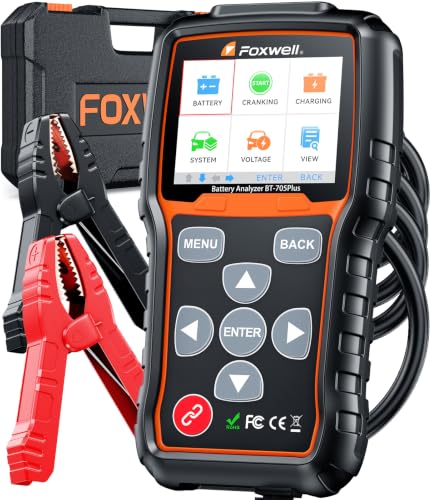
🏆Upgraded from the Original BT705 – The BT705 Plus is the enhanced, next-generation upgrade to the classic BT705—now delivering results up to 30% faster with a more powerful processor and refined algorithms. It provides higher accuracy even on low-voltage or nearly dead batteries, making it easier to spot weak batteries, alternator issues, and starting problems before they turn into breakdowns or towing bills.
DIY Battery Testing Methods
If you’re a hands-on car owner looking to save time and money with DIY Battery Testing Methods, here are some options for you:
- Multimeter Testing: Measure the voltage of your battery with a multimeter to ensure it’s within the recommended range.
- Visual Inspection: Look for any signs of corrosion, leaks, or physical damage on the battery terminals.
- Battery Load Test: Use a battery load tester to assess the overall health and performance of your battery under load.
- Hydrometer Test (for lead-acid batteries): Check the specific gravity of the electrolyte in each cell to determine the state of charge.
Keep these DIY methods in mind to stay proactive in maintaining your car’s battery health.
Conclusion
Ensuring your car battery is in top condition is essential for avoiding unexpected breakdowns. By staying proactive and getting your battery tested regularly, you can catch potential issues early. Whether you opt for professional testing at auto shops or choose to DIY with methods like using a multimeter or conducting a load test, taking care of your battery is a smart move. Remember, a well-maintained battery means a more reliable vehicle and fewer surprises on the road. So, make battery testing a routine part of your car maintenance to keep your vehicle running smoothly.
Frequently Asked Questions
Why is regular battery testing important for my vehicle?
Regular battery testing is essential to maintain your vehicle and prevent unexpected breakdowns. Signs indicating the need for testing include diminished cranking power, electrical malfunctions, the battery’s age, effects of extreme weather, unusual smells/corrosion, and inconsistent power to electronic components.
How often should I get my car battery tested?
It’s recommended to test your car battery every 6 months or as advised by your vehicle’s manual. Regular testing helps catch issues early and prevent unexpected breakdowns.
Where can I get my car battery tested?
You can have your car battery tested at various locations, including auto repair shops, car dealerships, auto parts stores, battery retailers, and mobile mechanics offering on-location testing services. Regular testing at these locations ensures your vehicle’s reliability and proactive maintenance of your battery health.
Are there DIY methods for testing my car battery?
Yes, there are DIY methods available for testing your car battery. You can use a multimeter to measure voltage, visually inspect for corrosion or damage, conduct a battery load test, and perform a hydrometer test for lead-acid batteries to assess health and performance. These DIY methods help you save time and money while maintaining your battery’s health.
