

Are you tired of running out of power when you need it most? If you rely on deep cycle batteries for your adventures or backup energy, choosing the right solar charger can make all the difference. With so many options available, it’s easy to feel overwhelmed.
Imagine heading out for a weekend camping trip, only to find your battery is dead because you didn’t have the right solar charger. This article will help you avoid that scenario by guiding you through the process of selecting the perfect solar charger size for your deep cycle battery. By the end, you’ll feel confident in your choice and ready to power up your devices wherever you go.
Key Takeaways
- Understand Battery Types: Familiarize yourself with different deep cycle battery types—Flooded Lead-Acid, AGM, Gel, and Lithium-Ion—and their specific maintenance and usage needs.
- Assess Energy Requirements: Calculate your daily energy consumption by listing devices, their power ratings, and usage times to determine the necessary energy output from your solar charger.
- Select Appropriate Charger Size: Choose a solar charger size based on your battery capacity (Ah) and daily energy consumption. A general guideline is 30-50W for 50Ah batteries, scaling up to 200-400W for 400Ah batteries.
- Consider Charging Time: Estimate the charging time by converting battery capacity to watt-hours and dividing it by the solar charger output. Adjust expectations for real-world conditions, such as sunlight availability.
- Ensure Voltage Compatibility: Match the solar charger voltage to your battery’s voltage (12V, 24V, etc.) to prevent potential damage and ensure optimal performance.
- Factor in Environmental Conditions: Be aware of weather impacts on solar efficiency and choose a charger that can withstand outdoor conditions, considering both wattage needs and durability.
Understanding Deep Cycle Batteries
Deep cycle batteries play a vital role in storing energy for various applications, especially in outdoor and backup scenarios. They provide stable power over extended periods, making them ideal for your outdoor adventures or emergency power sources.
Types of Deep Cycle Batteries
- Flooded Lead-Acid Batteries:
- Flooded lead-acid batteries are affordable and widely used. These batteries require regular maintenance, such as checking water levels and equalizing charges.
- Absorbent Glass Mat (AGM) Batteries:
- AGM batteries offer better performance in deep cycling. They’re sealed, maintenance-free, and can handle more charge cycles than flooded options.
- Gel Batteries:
- Gel batteries use a silica gel to immobilize the electrolyte. They’re less prone to leakage and can withstand varying temperatures, but they typically have a lower discharge rate.
- Lithium-Ion Batteries:
- Lithium-ion batteries provide high energy density and fast charging. They weigh less and last longer but come with a higher upfront cost.
- Capacity (Ah):
- Capacity, measured in amp-hours (Ah), indicates how much energy the battery can store. Choose a capacity that suits your energy needs, especially for long trips.
- Voltage:
- Common voltage ratings include 6V, 12V, and 24V. Ensure your charger matches your battery’s voltage for optimal charging efficiency.
- Deep Discharge Rate:
- Check how deeply you can discharge the battery without causing damage. Selecting a battery with a high discharge rate extends its usable life.
- Cycle Life:
- Inspect the cycle life, which indicates how many charge and discharge cycles the battery can handle. Higher cycles mean more longevity.
- Self-Discharge Rate:
- Self-discharge rates vary among battery types. Lower rates lead to less energy loss when the battery’s not in use, crucial for maintaining stored energy.
By understanding these aspects of deep cycle batteries, you can make a knowledgeable choice about the right solar charger size for your requirements.
Determining Your Energy Needs
Understanding your energy needs is crucial when selecting the right solar charger for your deep cycle battery. Assessing the energy consumption of your devices helps ensure they remain powered during outdoor activities or emergencies.
Recommended Products
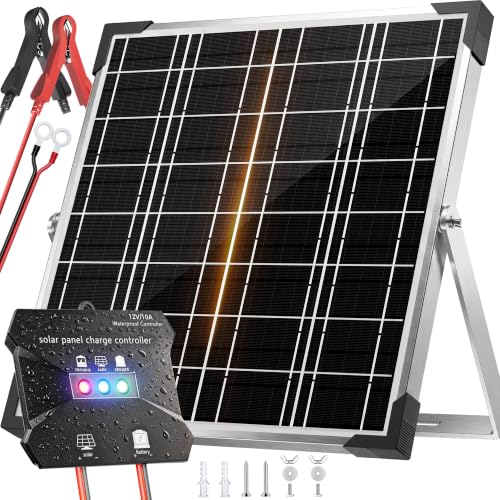
High-Efficiency MPPT Solar Charger - Advanced tracking technology delivers 20-30% faster charging for 12V batteries. A+ monocrystalline panels maximize power conversion. Perfect 20W solar trickle charger for cars, RVs, boats, and trailers. More sun captured, less time waiting.
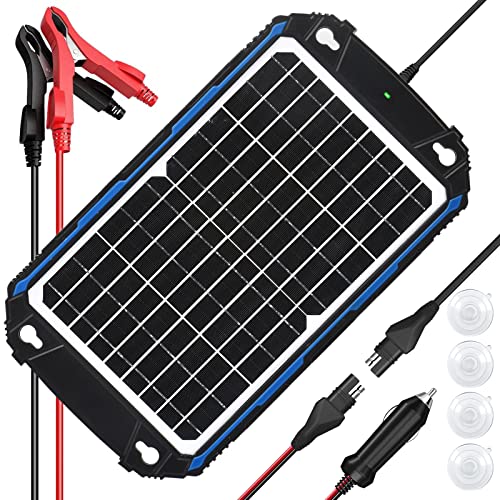
【Ultra-Smart MPPT Technology】This 12v solar panel battery charger is crafted with SUNER POWER's unique Ultra-Smart MPPT( Max Power Point Tracking) technology, the innovative MPPT allows to deliver high tracking efficiency of up to 99% and peak conversion efficiency of 98%, improving approximately 20%-30% utilization rate than other competitors

【High Conversion Rate】This 20W solar panel with monocrystalline A+ solar cell has an excellent cell efficiency of 21%-30%. Designed to charge and maintain 12V rechargeable batteries like LiFePO₄, Lithium Ion, AGM, SLA, GEL, EFB, MF, etc. Keep batteries in charged for trailer, tractor, truck, boat, motorcycle, RV, car, lawn mower, water pump, gate opener, electric fence, etc
Calculating Daily Energy Consumption
To calculate daily energy consumption, list your devices along with their power ratings in watts. Multiply the wattage by the number of hours each device runs daily. For example, if you use a 60-watt light bulb for 5 hours, it consumes 300 watt-hours (60W x 5h = 300Wh). Add the total watt-hours for all devices to find your daily energy consumption.
| Device | Power Rating (W) | Usage (h) | Daily Consumption (Wh) |
|---|---|---|---|
| Light Bulb | 60 | 5 | 300 |
| Phone Charger | 15 | 2 | 30 |
| Laptop Charger | 50 | 4 | 200 |
| Total | 530 |
Estimating Required Charging Time
Estimating required charging time depends on both the battery capacity and the solar charger output. For example, if you have a 100Ah battery and use a 100W solar charger, the time for a full charge is calculated as follows:
- Convert the battery capacity to watt-hours: 100Ah x 12V = 1200Wh.
- Divide the total watt-hours by the solar charger output: 1200Wh ÷ 100W = 12 hours.
Consider factors such as sunlight availability and charger efficiency. Adjust your expectations based on real-world conditions for optimal results.
Selecting the Right Solar Charger Size
Choosing the right solar charger size for a deep cycle battery ensures you maintain power for your devices during outdoor activities or emergencies. Understanding several key factors can simplify this selection.
Recommended Products
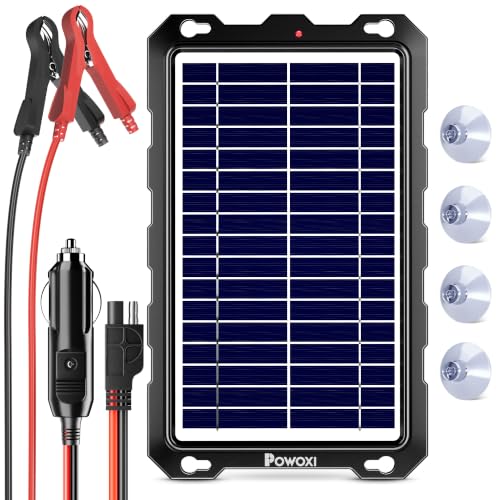
Upgrade Intelligent Charge Controller: Built-in internal protection system and smart fast charging Cooperate with Quality solar silicon material ensures high conversion and stable output the solar panel's energy conversion efficiency to 25-30%
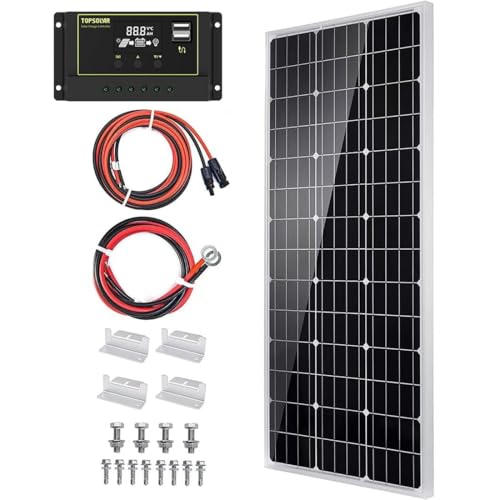
100W solar panel kits ideal for 12v battery charging, designed for RVs, cabins, homes, boats, caravan s, back-up and remote power use.

【 UltraSmart MPPT Technology 】This 12v solar panel battery charger is crafted with SUNER POWER's unique UltraSmart MPPT technology, so all of its core parts, including its mppt charge controller and solar panel are built using premium and durable materials. The innovative MPPT-Charge-Controller-Technology allows to deliver high tracking efficiency of up to 99% and peak conversion efficiency of 98%, improve approximately 20%-30% utilization rate than other competitors.
Factors Influencing Charger Size
- Battery Capacity: Measured in amp-hours (Ah), this determines how much energy the battery can store. A higher capacity battery generally requires a larger solar charger for optimal charging.
- Daily Energy Consumption: Calculate total watt-hours used daily by listing devices, their power ratings, and average usage hours. This figure dictates the energy output your solar charger must support.
- Sunlight Availability: If you’re in a shaded area or moving during the day, sunlight exposure fluctuates. Anticipate lower output leading to a need for a larger solar charger.
- Charger Efficiency: Not all chargers convert solar energy to battery power equally. A more efficient charger can reduce the size needed by maximizing energy harvested from sunlight.
- Discharge Rate: Batteries discharge at different rates. A deep discharge rate may indicate how often you’ll need to recharge, influencing charger size.
| Battery Capacity (Ah) | Recommended Solar Charger Size (W) |
|---|---|
| 50 | 30-50 |
| 100 | 50-100 |
| 200 | 100-200 |
| 400 | 200-400 |
Select a charger within these ranges based on your battery capacity and anticipated energy consumption. For example, if you have a 100Ah battery and consume 500Wh daily, opt for a 100W solar charger for effective charging.
Utilizing this information ensures that you choose the appropriate solar charger size, enhancing your energy management for outdoor adventures or backup power needs.
Additional Considerations
When choosing a solar charger for deep cycle batteries, consider specific factors that can significantly affect performance and usability.
Recommended Products

Efficient Monocrystalline Solar Panel: Our 12V monocrystalline solar panel boasts higher conversion efficiency compared to polycrystalline and amorphous panels of the same size

quantity 8 12V AGM Deep Cycle for 12V or 24V or 48V systems

When two or more in series connected batteries are in charging/discharging/free status.The battery voltas maybe become different.
Battery Voltage Compatibility
Ensure the solar charger matches the battery’s voltage. Common deep cycle battery voltages include 12V, 24V, and 48V. Using a charger with the wrong voltage can damage your battery. For example, if you have a 12V battery, use a 12V solar charger. Always check specifications to avoid compatibility issues.
Weather and Environmental Factors
Weather conditions impact solar charger efficiency. Heavy clouds or rain can reduce sunlight availability. When selecting a solar charger, assess your local climate. For instance, if you frequently camp in cloudy regions, opt for a charger with higher wattage to compensate for reduced energy capture. Additionally, consider the charger’s durability against extreme temperatures or moisture, ensuring it withstands outdoor use.
Conclusion
Choosing the right solar charger for your deep cycle battery can make all the difference in keeping your devices powered during outdoor adventures or emergencies. By understanding your energy needs and the characteristics of your battery, you can confidently select a charger that fits your requirements.
Remember to consider factors like battery capacity and sunlight availability to ensure optimal performance. With the right solar charger in hand, you’ll be ready to tackle any challenge without the worry of running out of power. Enjoy your adventures knowing you’ve got the energy you need to stay connected and safe!
Frequently Asked Questions
What is the importance of selecting the right solar charger for deep cycle batteries?
Selecting the right solar charger is crucial for ensuring your deep cycle batteries are efficiently charged, especially during outdoor activities or emergencies. An appropriate charger size helps to avoid running out of power unexpectedly, providing a reliable energy source for camping trips and backup applications.
What types of deep cycle batteries are commonly used?
Common types of deep cycle batteries include flooded lead-acid, AGM (Absorbent Glass Mat), gel, and lithium-ion. Each type has unique characteristics, maintenance requirements, and suitability for specific applications, making it essential to understand their differences before choosing one.
How do I determine my energy needs before choosing a solar charger?
To determine your energy needs, list all devices you plan to use, noting their power ratings (in watts) and how many hours you’ll use them each day. Multiply the wattage by the usage hours to calculate total daily energy consumption in watt-hours, guiding you in selecting the right solar charger.
What factors influence the size of the solar charger I need?
Key factors include battery capacity, daily energy consumption, sunlight availability, solar charger efficiency, and the discharge rate of the battery. Evaluating these elements helps you choose an appropriately sized charger to meet your energy demands.
How do I ensure the solar charger matches my battery’s voltage?
Always check the voltage rating of your deep cycle battery and choose a solar charger with a matching voltage. This compatibility is essential to prevent damage to the battery and ensure efficient charging.
How does weather affect solar charger efficiency?
Weather and environmental factors significantly impact solar charger efficiency. Cloudy or rainy conditions can reduce the amount of sunlight the charger receives, so it’s advisable to select chargers with higher wattage, especially for use in less sunny climates.
What are some additional considerations when choosing a solar charger?
In addition to voltage compatibility, consider the charger’s durability against extreme temperatures and moisture. Look for features like weatherproofing and reinforced structures, which are important for outdoor activities to ensure a reliable power source under various conditions.
