

Ever found yourself stuck with a new car battery that just won’t charge? Frustrating, right? Picture this: you’re all set to hit the road, but your car refuses to cooperate. Don’t worry, you’re not alone in this dilemma. In this article, we’ve got your back with practical solutions to get you back on track in no time.
Imagine the convenience of understanding why your new car battery isn’t charging and how to fix it without breaking a sweat. No more last-minute panic or unexpected delays on your journey. Our tips and insights will empower you to troubleshoot the issue like a pro, saving you time, money, and unnecessary stress. So, buckle up and let’s dive into unraveling the mystery behind your car battery woes.
Common Reasons for a New Car Battery Not Charging
If your new car battery isn’t charging as expected, several factors could be at play. Understanding these common reasons can help you diagnose the issue efficiently:
- Loose or Corroded Battery Connections: Ensure that the battery terminals are clean and securely attached.
- Faulty Alternator: A malfunctioning alternator may not be providing enough power to charge the battery.
- Defective Voltage Regulator: This component regulates the alternator’s output voltage; a faulty regulator can disrupt the charging process.
- Blown Fuse: A blown fuse in the charging system can prevent the battery from charging properly.
- Serpentine Belt Issues: If this belt, responsible for turning the alternator, is worn or broken, the battery may not charge.
Keep these common reasons in mind as you troubleshoot the charging issue with your new car battery.
How to Test if Your New Car Battery is Defective
To figure out if your new car battery is the root of your charging issues, there are a few simple tests you can perform. Follow these steps to understand if your new battery is defective:
- Visual inspection: Check for any signs of physical damage, leaks, or corrosion on the battery terminals.
- Voltage test: Use a multimeter to measure the voltage of your battery. A fully charged battery should read around 12.6 volts.
- Load test: This test helps determine if the battery can hold a charge under a load. You can perform this test using a handheld load tester.
- Electrolyte test: For non-sealed batteries, you can check the electrolyte level and condition using a hydrometer. Ensure the levels are within the recommended range.
- Professional inspection: If you don’t have the tools or experience, consider taking your new car battery to a professional mechanic for a thorough inspection.
By conducting these tests, you can quickly identify if your new car battery is defective and contributing to your charging issues. This can help you make an informed decision on the necessary steps to resolve the problem effectively.
Recommended Products

Catch Battery Problems Early: Featured in two videos by Project Farm, a popular YouTube channel with millions of subscribers, the ANCEL BA101 helps you quickly spot battery issues before they leave you stranded. It provides easy-to-understand readings for State of Health (SOH), State of Charge (SOC), voltage, current, CCA, plus cranking and charging system tests, so you can better understand your battery and help avoid unexpected breakdowns

【Reliable Automotive Car Battery Tester】 KW208 is the most cost-effective battery load tester compared to other brands, it has all the functions you need and the lowest cost that you can afford. KW208 can test all 12V batteries(100-2000CCA) including regular flooded, AGM flat plate, AGM spiral or gel batteries. Provide overall analysis of batteries’ condition and help you know their status in advance before it dies. KW208 battery analyzer supports cranking and charging system tests also alternator and starter test. Conveniently store this car battery tester for batteries in your glove box or garage, ready for use whenever needed.

【Reliable Car Battery Tester】: The alternator tester can accurately determine whether the car battery needs to be replaced or if there is a power outage, and at the same time evaluate the output status of the alternator, clearly presents real-time voltage data, battery health and charging status. It can effectively prevent the battery from being damaged due to overcharging or undercharging, and extend the battery's service life.
Steps to Troubleshoot a New Car Battery Not Charging
If you find yourself facing the frustrating issue of a new car battery not charging, don’t worry – there are steps you can take to diagnose and potentially resolve the issue. Let’s dive into the process to get your vehicle up and running smoothly again!
Recommended Products

✅【Car Battery Tester】 BR502 can test all 6V/12V/24V 100-2000CCA batteries including regular flooded, AGM flat plate, AGM spiral, or gel batteries, compatible with cars, SUVs, Pickups, Boats, Motorcycles and etc. Provide overall analysis of batteries’ health and help you know its status in advance before it dies.

🔥【A MUST HAVE TOOL IN YOUR GARAGE】 - With up-to-date testing technology, it provides a quick reading to determine whether a vehicle battery needs a jump or replacement and also the output status of the alternator. All you have to do is log in and play. Save your time and money.

[Car Battery Tester] You can easily test and inspect your 12V lead-acid battery with this TOPDON car battery tester. The SOH (State of Health), SOC (State of Charge), Voltage, Current, Rating, and numerous other understandable analytical data are provided by this battery tester. It is compatible with 100-2000CCA regular flooded, AGM flat plate/spiral, EFB, and GEL for their optimum performance.
1. Visual Inspection
- Check for any visible damage or corrosion on the battery terminals.
- Ensure all connections are clean and tight to guarantee optimal conductivity.
2. Voltage Check
- Utilize a multimeter to measure the voltage across the battery terminals.
- A fully charged battery should ideally read around 12.6 volts. Any reading significantly below this indicates a potential issue.
3. Load Test
- Perform a load test to assess the battery’s ability to deliver power under operating conditions.
- This test will determine if the battery can hold a charge and supply sufficient power to start the vehicle.
- If your battery is not maintenance-free, check the electrolyte levels in each cell.
- Ensure the levels are above the minimum line in each cell to prevent charging problems.
Whether you’re a seasoned DIY enthusiast or a beginner in the realm of automotive maintenance, following these steps will help you pinpoint the root cause of your new car battery not charging issue. By taking proactive steps to troubleshoot, you can potentially save time and money, keeping your vehicle on the road where it belongs.
When to Seek Professional Help
If you’ve gone through testing your new car battery and still encounter charging issues, it might be time to consider professional assistance. Here are indicators that it’s best to seek help:
- Repeated Charging Problems: If you consistently face issues despite following testing steps.
- Complex Electrical Systems: Modern vehicles have intricate electrical setups that may require specialized knowledge.
- Limited DIY Experience: If you’re unsure about handling car electrics, consulting an expert is wise.
Remember, when in doubt about your new car battery not charging, it’s prudent to reach out to a qualified mechanic or auto electrician.
Recommended Products
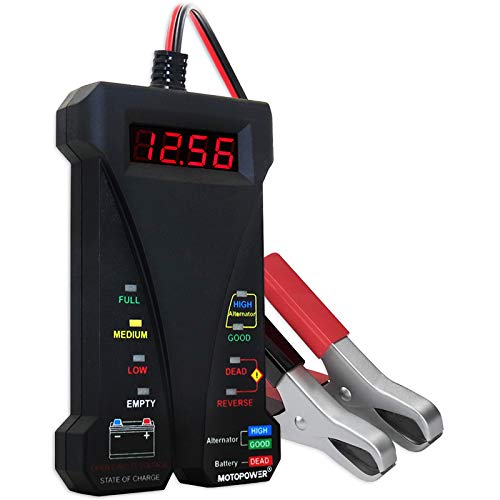
Effortless Operation - Boasting a “plug-and-test” design, there's no need for complex set-up procedures. Just connect it to the battery following simple steps. Without starting the vehicle, you can read the battery status, and after starting, quickly obtain the alternator status. Whether you're a professional mechanic or an ordinary car owner, you can easily use it to quickly determine if the battery needs jump - starting, replacement, or if the alternator output is normal.

1.5A FASTER CHARGING — Delivers a powerful 1.5A output, 50% faster than standard 1A chargers. One unit works as a car battery charger, battery maintainer, trickle charger, and battery desulfator.

Conclusion
Remember, diagnosing new car battery charging issues involves simple steps like visual inspection, voltage testing, and load testing. Tight connections and electrolyte levels are crucial factors to consider. If problems persist, seek professional assistance, especially with complex electrical systems or limited DIY experience. Consulting a qualified mechanic or auto electrician is the best course of action for ongoing or challenging issues. Stay proactive in maintaining your car’s battery health to ensure optimal performance on the road.
Frequently Asked Questions
What are common reasons for new car battery charging issues?
New car battery charging issues can stem from factors like a defective battery, loose connections, or complex electrical systems.
How can I test if my car battery is defective?
You can visually inspect the battery for damage, check voltage levels with a multimeter, conduct a load test, and examine electrolyte levels.
What steps can I take to address new car battery charging problems?
Ensure tight connections, perform a load test to assess power delivery, and check electrolyte levels if the battery is not maintenance-free.
When should I seek professional help for car battery issues?
Seek professional help if problems persist after basic tests, if you face repeated issues, have complex electrical systems, or lack DIY experience.
