

Are you tired of dealing with dead RV batteries when you’re out on the road? You’re not alone. Many RV enthusiasts face the challenge of keeping their batteries charged while enjoying the great outdoors. Understanding how many watts you need from your solar panels can make all the difference in your adventures.
Key Takeaways
- Understand Battery Types: Familiarize yourself with different RV battery types—lead-acid (flooded and AGM), lithium-ion, and gel batteries—to choose the best option for your needs.
- Determine Wattage Needs: Calculate the wattage required for solar panels based on battery capacity, daily power consumption, sunlight availability, and panel efficiency.
- Solar Components: A complete solar power system includes solar panels, a charge controller, batteries, an inverter, and mounting equipment—each plays a crucial role in maintaining battery health.
- Recommended Wattage Estimates: Use 100 watts of solar panels for a 100 Ah battery, 200 watts for a 200 Ah battery, and scale up according to your consumption needs and battery size for optimal performance.
- Real-World Application: Consider your specific power usage when choosing solar panel wattage. Personal usage patterns significantly influence how much wattage you need for consistent battery maintenance.
Understanding RV Batteries
RV batteries supply essential power for your travels. Knowing their types and maintenance can significantly enhance your RV experience.
Types of RV Batteries
- Lead-Acid Batteries: Commonly used due to affordability, these batteries come in two types:
- Flooded Lead-Acid: Require regular maintenance and topping off with distilled water. They typically provide a good balance of cost and performance.
- AGM (Absorbent Glass Mat): Sealed and maintenance-free, AGM batteries handle deeper discharges better and last longer but usually cost more.
- Lithium-Ion Batteries: Gaining popularity, lithium batteries are lightweight and can discharge more deeply than lead-acid options. They charge faster and have a longer lifespan, though initial costs are higher.
- Gel Batteries: A type of sealed lead-acid battery, gel batteries use a silica gel electrolyte. They are less prone to sulfation and overcharging, making them a durable choice for RVs.
- Regular Inspection: Check battery terminals for corrosion and ensure clean connections. Tighten loose connections to maintain effective power transfer.
- Charge Levels: Monitor voltage levels. Keeping batteries between 50% and 75% charge extends lifespan. Use a multimeter for accurate readings.
- Water Levels: For flooded lead-acid batteries, check water levels every few months. Fill with distilled water as needed. Avoid overfilling to prevent spills.
- Storage Practices: If storing your RV for an extended period, fully charge batteries before disconnecting them. Store batteries in a cool, dry place to avoid degradation.
- Equalization Charges: Regularly perform equalization charges on flooded lead-acid batteries to balance cell voltages and prevent sulfation, especially after deep discharges.
Solar Power for RVs
Solar power represents an efficient and eco-friendly way to keep your RV batteries charged. Utilizing solar panels can enhance your off-grid experience while providing consistent power for your devices.
Recommended Products

✔️【Waterproof Solar Charge Controller】IP67 waterproof, suitable for outdoor use. Automatically identify voltage, 12V Max power: 150W, 24V Max power: 300W. The maximum current is 10A. Compatible with various 12V/24V deep-cycle batteries, such as AGM, GEL, Flooded. Adopting brand MCU chips to realize fast intelligent control and ultra-low standby power consumption.
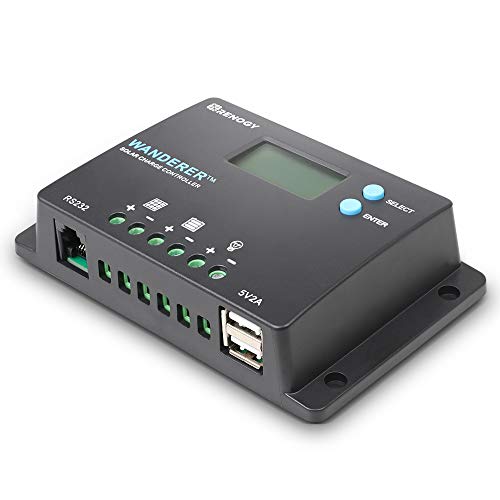
𝐒𝐦𝐚𝐫𝐭 𝟒-𝐒𝐭𝐚𝐠𝐞 12V/24V Solar Charge Controller: Renogy charge controller 𝐦𝐚𝐱𝐢𝐦𝐢𝐳𝐞𝐬 𝐁𝐚𝐭𝐭𝐞𝐫𝐲 𝐋𝐢𝐟𝐞 & 𝐒𝐨𝐥𝐚𝐫 𝐄𝐟𝐟𝐢𝐜𝐢𝐞𝐧𝐜𝐲, this advanced pwm solar charge controller utilizes intelligent 4-stage charging (Bulk/Boost/ Float/Equalization) to optimize power delivery for AGM, Gel, Flooded and Lithium batteries. RV solar charge controller prevents overcharging and gas buildup while 𝐚𝐜𝐡𝐢𝐞𝐯𝐢𝐧𝐠 𝟑𝟎% 𝐥𝐨𝐧𝐠𝐞𝐫 𝐛𝐚𝐭𝐭𝐞𝐫𝐲 𝐥𝐢𝐟𝐞𝐬𝐩𝐚𝐧 compared to basic charge controllers.

12V Universal Solar Charge Controller- Renogy Solar controller optimizes charging for 𝐋𝐢𝐭𝐡𝐢𝐮𝐦, 𝐀𝐆𝐌, 𝐆𝐞𝐥, & 𝐅𝐥𝐨𝐨𝐝𝐞𝐝 𝐛𝐚𝐭𝐭𝐞𝐫𝐢𝐞𝐬. Smart PWM solar panel controller technology auto-selects the perfect charging curve (𝐁𝐮𝐥𝐤/𝐁𝐨𝐨𝐬𝐭/ 𝐅𝐥𝐨𝐚𝐭/ 𝐄𝐪𝐮𝐚𝐥𝐢𝐳𝐚𝐭𝐢𝐨𝐧) for your RV, boat, or off-grid setup. Renewable energy controllers easily switch battery types and monitor real-time charging stages via intuitive LEDs, mmaximizing battery lifespan.
Benefits of Solar Energy
- Renewable Source: Solar energy relies on sunlight, so it’s available as long as the sun shines.
- Cost-Effective: Once installed, solar panels reduce reliance on costly fuel. You spend less on energy over time.
- Low Maintenance: Solar setups require minimal upkeep. Regular cleaning and occasional inspections keep them efficient.
- Quiet Operation: Unlike generators, solar panels operate silently, providing a peaceful camping experience.
- Environmentally Friendly: Using solar reduces your carbon footprint, promoting sustainable travel.
- Solar Panels: These capture sunlight and convert it into electricity. Choose panels rated between 100 to 400 watts, depending on your power needs.
- Charge Controller: This regulates the power flow from panels to batteries, preventing overcharging. A good controller ensures battery longevity.
- Batteries: Select high-capacity batteries that suit your power requirements. Lithium-ion batteries are lighter and charge faster than lead-acid options.
- Inverter: This converts the stored DC power into AC power for household appliances. Ensure it matches your total wattage needs.
- Mounting Equipment: Use brackets or a rack for secure installation of solar panels on your RV roof. This keeps them stable during travel.
These components work together to create an efficient solar power system for your RV, allowing you to enjoy your adventures without worrying about battery life.
Determining Wattage Needs
Determining the wattage required for solar panels to maintain your RV battery involves understanding several key factors. You need to consider your power consumption habits, battery capacity, and the amount of sunlight available.
Recommended Products
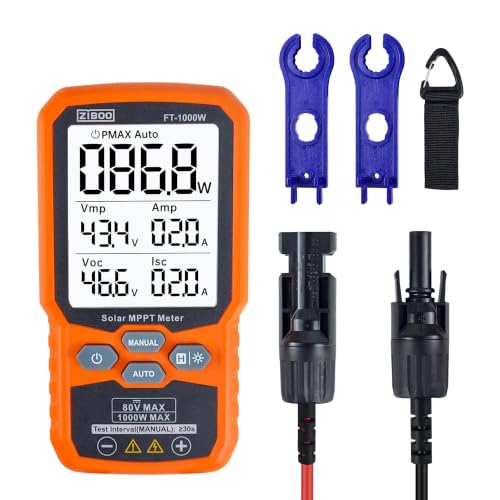
⚡ Professional-Grade PV Testing Measures maximum power (Pmax) up to 1000W, open-circuit voltage (Voc: 12-80V), and short-circuit current (Isc: 35A) with ±0.8% accuracy, ideal for validating solar panel performance in R&D, manufacturing, and field maintenance.


Comprehensive Measurement Capabilities: This multi-functional watt meter power analyzer accurately measures voltage, current (amp meter), power, discharge capacity, and time. It serves as both a solar panel tester and solar power meter, compatible with solar, wind, EV, and battery systems (voltage range: 4.8-60V).
Factors Affecting Wattage Requirements
- Battery Capacity: RV batteries come in various capacities, typically measured in amp-hours (Ah). Larger battery capacities demand more wattage from solar panels. For instance, a 100 Ah battery may require around 120 watts of solar power to maintain its charge.
- Daily Power Consumption: The total energy consumed daily directly influences wattage needs. For example, if you use 30 amp-hours daily, you’ll need approximately 360 watt-hours to replenish that amount effectively.
- Sunlight Availability: The number of sunlight hours you receive daily affects how much energy solar panels generate. In sunny areas, solar panels produce more energy. In contrast, less sunny regions may require more wattage to compensate.
- Panel Efficiency: Solar panel efficiency varies among brands and models. Higher efficiency panels convert more sunlight into usable energy, reducing the wattage needed.
Calculating Daily Power Consumption
To calculate your RV’s daily power consumption, follow these steps:
- List Appliances: Write down all the appliances and devices you use regularly, including lights, refrigerator, and electronics.
- Determine Power Ratings: Check the power ratings for each appliance, often found on labels or in user manuals. These ratings typically appear in watts.
- Estimate Usage: Estimate the number of hours each appliance operates daily. For instance, if you use a 60-watt bulb for 4 hours, that equals 240 watt-hours.
- Calculate Total Consumption: Add up the watt-hours for all appliances. For example, if you use a 120-watt refrigerator for 12 hours (1440 watt-hours) and several lights totaling 600 watt-hours, your total consumption reaches 2040 watt-hours.
- Account for Losses: Include factors like system losses and inefficiencies. Generally, estimate around 20% for conversion losses. Adjust your total watt-hour needs accordingly.
These calculations help you understand the wattage needed from solar panels, ensuring your RV battery maintains a healthy charge.
How Many Watt Solar Panel to Maintain RV Battery
Determining the required wattage for your solar panels ensures your RV battery remains charged and ready for use, especially on extended trips.
Recommended Products

【High Conversion Rate】This 20W solar panel with monocrystalline A+ solar cell has an excellent cell efficiency of 21%-30%. Designed to charge and maintain 12V rechargeable batteries like LiFePO₄, Lithium Ion, AGM, SLA, GEL, EFB, MF, etc. Keep batteries in charged for trailer, tractor, truck, boat, motorcycle, RV, car, lawn mower, water pump, gate opener, electric fence, etc
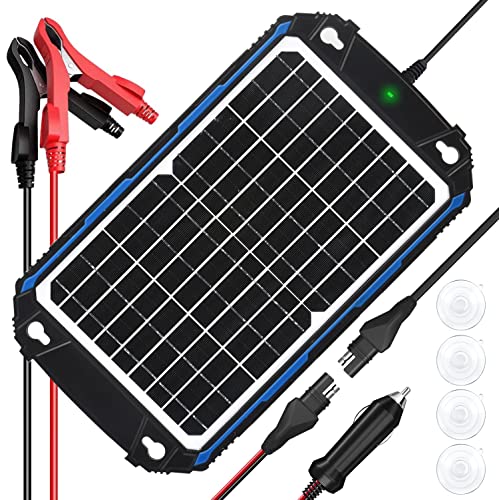
【Ultra-Smart MPPT Technology】This 12v solar panel battery charger is crafted with SUNER POWER's unique Ultra-Smart MPPT( Max Power Point Tracking) technology, the innovative MPPT allows to deliver high tracking efficiency of up to 99% and peak conversion efficiency of 98%, improving approximately 20%-30% utilization rate than other competitors
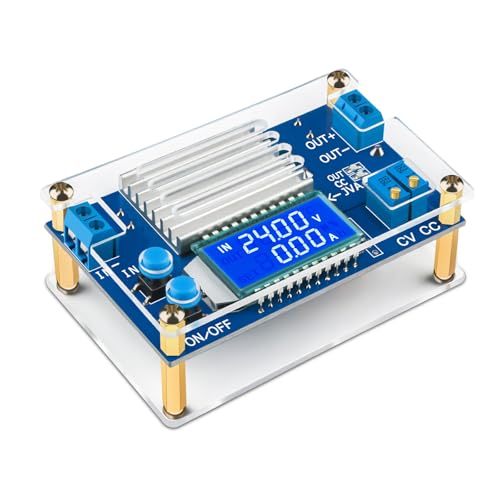
【Parameter】 DROK Power Supply Module input volt range is DC 5.3-32V; Output volt range is DC 1.2-32V which is variable. Output current can reach to 8A and Output Power can reach to 120W for long-time use. If enhance heat dissipation, this converter can reach 12A and 160W output.
Recommended Wattage for Different Battery Sizes
The required wattage depends on your RV battery size and daily power usage. Here’s a simple recommendation based on common battery capacities:
- 100 Ah Battery: 100 watts of solar panels typically maintain this battery. Consider 200 watts if you use high-draw appliances.
- 200 Ah Battery: 200 watts usually suffices for daily charge. Opt for 400 watts if power consumption is high.
- 300 Ah Battery: 300 watts often meets needs. Consider 600 watts in case of extended use or cloudy weather conditions.
- 400 Ah Battery: 400 watts generally maintains this battery size. For frequent heavy usage, aim for 800 watts.
These estimates reflect average usage and assume about four to six hours of effective sunlight daily.
Real-world Examples
Real-world scenarios demonstrate how wattage affects battery maintenance. For instance, if you camp often, here’s how different wattages play out:
- 100 Ah Battery Example: You use a fridge, lights, and phone chargers. A 100-watt panel can maintain your battery if your daily consumption is about 80 watts.
- 200 Ah Battery Example: Campers using a coffee maker and a TV find 200 watts efficient, especially with a sunny climate. This setup typically covers daily consumption of 160 watts.
- 300 Ah Battery Example: Off-grid enthusiasts often choose 300 watts for ample power. During overcast days, this setup can charge a battery that daily consumes 200 watts.
- 400 Ah Battery Example: Larger RVs with heavy power draw benefit from 400 watts or more. This ensures battery health while using multiple devices without hassle.
These examples highlight how personal usage patterns impact your solar panel wattage needed for maintaining your RV battery.
Conclusion
Choosing the right wattage for your solar panels is key to keeping your RV batteries charged and ready for adventure. By understanding your battery size and daily power needs you can make informed decisions that enhance your travels.
Remember that factors like sunlight availability and your specific usage patterns play a big role in determining the wattage you’ll need. Whether you’re a weekend warrior or a full-time RVer investing in the right solar setup can lead to a more enjoyable and worry-free experience on the road.
So get out there enjoy the freedom of the open road knowing your batteries are powered by the sun!
Frequently Asked Questions
What causes RV batteries to die?
Dead RV batteries often result from prolonged inactivity, faulty charging systems, or high power drain from appliances. Regular maintenance and proper usage can help prevent battery failure.
How do I know which type of RV battery to choose?
Consider your needs: lead-acid batteries are cost-effective but require more maintenance. Lithium-ion batteries last longer and are lighter but are pricier. Gel batteries offer safety against spills.
How can I maintain my RV batteries?
Regularly inspect battery connections, monitor charge and water levels, store batteries properly, and perform equalization charges to extend their lifespan and performance.
What are the benefits of solar power for RVs?
Solar power is renewable, cost-effective, low maintenance, and environmentally friendly. It provides a quiet energy source for charging RV batteries, enhancing your off-grid experience.
How do I calculate the wattage needed for solar panels?
Start by listing all appliances, note their power ratings, estimate daily usage, and consider system losses to determine total power consumption, which informs the wattage needed from solar panels.
What wattage do I need for different RV battery sizes?
A general guideline is 100 watts for a 100 Ah battery, 200 watts for 200 Ah, 300 watts for 300 Ah, and 400 watts for 400 Ah. Adjust for heavy usage or bad weather.
How do I ensure my batteries stay charged with solar power?
Install a solar power system with solar panels, charge controllers, and inverters. Monitor usage, ensure adequate sunlight, and select appropriate panel wattage to maintain optimal battery charge.
