

Ever hopped into your car, turned the key, and… nothing? It’s like your car decided to play a little game of hide and seek with you. You’re not alone in this frustrating situation. Sometimes, your car battery isn’t dead, but it just won’t cooperate. What gives?
Imagine being all set to hit the road, only to be met with silence when you try to start your car. It’s a common scenario that can leave you scratching your head. But fret not, as we’re here to unravel the mystery behind why your car battery is being a bit rebellious. This article will guide you through the possible reasons and solutions, so you can get back on the road in no time.
Corroded Battery Terminals
If your car’s battery is not dead but won’t turn over, one potential culprit could be Corroded Battery Terminals. Corrosion can build up over time on the battery terminals, inhibiting the flow of electricity needed to start the car.
Recommended Products

Fleet and Vehicle Maintenance

All-In-One - The ultimate battery terminal cleaning kit provides all the tools to clean and protect your battery from battery corrosion.

Specially designed to protect battery terminals from corrosion, a leading cause of hard starting and battery failure.
Identifying Corrosion
- Green or whiteish powdery substance on the battery terminals.
- Difficulty attaching jumper cables securely to the terminals.
- Clean the terminals using a mixture of baking soda and water.
- Scrub the terminals with a wire brush to remove corrosion.
- Apply petroleum jelly to the clean terminals to prevent future corrosion.
Remember, regular maintenance can help prevent corrosion from affecting your battery terminals.
Faulty Starter Motor
When dealing with a car that won’t turn over, a Faulty Starter Motor could be the culprit. If you hear a clicking sound when you try to start your vehicle, it might indicate issues with the starter motor.
- Check Connections: Ensure the connections to the starter motor are tight and free of corrosion.
- Test the Battery: Make sure the battery has enough charge to turn the starter motor.
- Listen for Sounds: If the starter motor makes a whining noise, it could signify a problem.
If you suspect a faulty starter motor, consulting a professional mechanic might be the best course of action.
Keep in mind that addressing issues promptly can prevent further complications with your vehicle.
Recommended Products

[Vehicle Fitment]: Compatible with Mazda 6 2005-2008 V6 3.0L --- Automatic Transmission

Compatible : 2002 2003 for LEXUS ES300 2004 2005 2006 for LEXUS ES330 2007 2008 2009 2010 2011 2012 2013 2014 2015 2016 2017 for LEXUS ES350 2015 2016 2017 for LEXUS NX200t 2004 2005 2006 for LEXUS RX330 2007 2008 2009 for LEXUS RX350 2005 2006 2007 2008 2009 2010 for Scion tC 2008 2009 2010 2011 2012 2013 2014 2015 for Scion xB 2005 2006 2007 2008 2009 2010 2011 2012 2013 2014 2015 2016 2017 for TOYOTA Avalon

【Professional】We have been specialized in manufacture on auto starter and parts of starter for more than 20 years. - Click into our shop to see more models.
Bad Ignition Switch
If your car battery seems fine but the engine won’t turn over, a faulty ignition switch could be to blame.
When the ignition switch fails, it can prevent the starter motor from receiving the signal to engage, leading to a no-start situation.
Signs of a Bad Ignition Switch
- No dashboard lights or accessories turning on when the key is turned
- Engine cranks but does not start
- Intermittent engine stalling while driving
Checking for Issues
To determine if the ignition switch is the culprit:
- Inspect the key for wear and tear.
- Try starting the car with a spare key if available.
- Check for any loose connections around the ignition switch.
Seeking Professional Help
If you suspect a bad ignition switch, it’s best to consult a qualified mechanic. Ignoring the issue could lead to further complications or sudden breakdowns on the road.
Remember, addressing problems promptly is key to maintaining your vehicle’s performance and longevity.
Weak Battery
If your car battery is not dead but won’t turn over, a Weak Battery could be the culprit. A weak battery may have enough power to run some electrical components but not deliver sufficient current to start the engine. Here are some signs that your battery might be weak:
- Dim headlights or interior lights.
- Clicking sounds when you turn the key in the ignition.
- Slow cranking when you attempt to start the engine.
- Check battery age: If your battery is more than 3-4 years old, it might be losing its charging capacity.
- Inspect for corrosion: Clean any corrosion on the battery terminals to ensure a good connection.
- Test the battery: Use a multimeter to check the voltage of the battery. A healthy battery should read around 12.6 volts.
- Jump-start your car: If your battery is weak, jump-starting the car might provide the extra power needed to start the engine.
- Consider battery replacement: If your battery continues to show signs of weakness, it might be time for a replacement.
Remember, a healthy battery is crucial for starting your car reliably. Regular maintenance and prompt replacement when needed can help you avoid unexpected issues.
Recommended Products
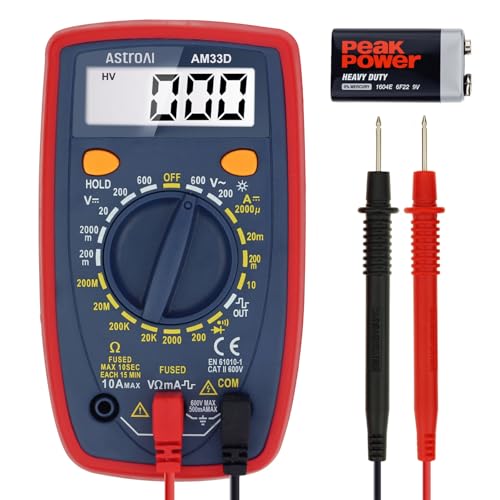
Additional Tips - The following incorrect operations may cause the multimeter not to show results: Firstly, the plugs of test leads are not fully inserted or not inserted into the correct sockets. Secondly, the manual rotary switch is not placed in the correct position. In addition, this meter can not test all AC Current and below 100mV AC Voltage. Please check the user manual carefully before measurement.
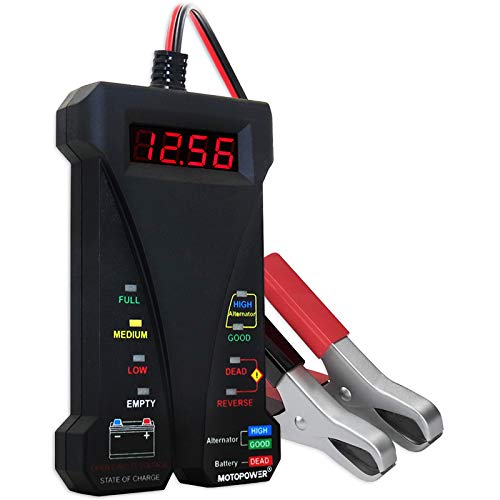
Effortless Operation - Boasting a “plug-and-test” design, there's no need for complex set-up procedures. Just connect it to the battery following simple steps. Without starting the vehicle, you can read the battery status, and after starting, quickly obtain the alternator status. Whether you're a professional mechanic or an ordinary car owner, you can easily use it to quickly determine if the battery needs jump - starting, replacement, or if the alternator output is normal.
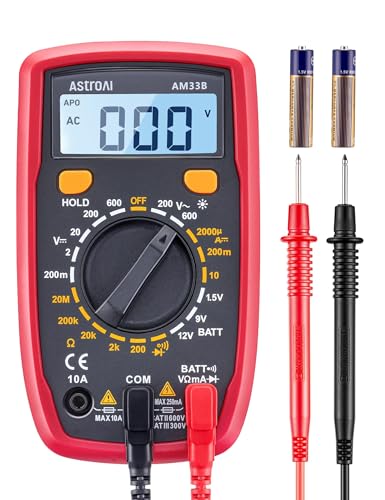
Versatile Digital Multimeter - Accurately measures AC/DC Voltage, DC Current, Resistance, and Diode. This Multimeter is a really useful tool for solving industrial and household electrical issues. Suitable for Household Outlets, Fuses, Batteries (including Vehicles), Automotive Circuit Troubleshooting, Charging Systems, Testing electronics in Cars etc.
Conclusion
Ensuring your car’s battery is in top condition is crucial for reliable vehicle performance. If your car won’t turn over but the battery isn’t dead, a weak battery could be the culprit. Look out for signs like dim lights and clicking sounds. Regular maintenance and timely battery replacements can save you from unexpected starting issues. Remember to check the battery’s age, inspect terminals for corrosion, and test with a multimeter if needed. Jump-starting your car may help temporarily, but if the weakness persists, consider replacing the battery. By staying proactive with your battery care, you can avoid the frustration of a car that won’t start when you need it most.
Frequently Asked Questions
Why is my car not starting even though the lights are working fine?
A weak battery might be the culprit. A weak battery can power some electrical components but not provide enough current to start the engine. Watch out for dim lights, clicking sounds when turning the key, and slow cranking as signs of a weak battery.
How can I determine if the battery is the reason my car won’t start?
Check the battery’s age, examine terminals for corrosion, and use a multimeter to test the battery’s capacity. If needed, jump-start the car. If the issue persists, consider a battery replacement.
How important is a healthy battery for starting a car reliably?
A healthy battery is crucial for starting your car consistently. Regular maintenance and timely replacements can prevent unexpected starting issues.
