

Ever found yourself running late, only to discover your car battery won’t start? Frustrating, right? We’ve all been there. But fear not, because in this article, we’ve got your back. We’ll share practical tips and insights to get your car up and running in no time.
Imagine this: It’s a busy morning, you hop in your car, turn the key, and… nothing. The dreaded silence that signals a dead battery. Don’t worry, we’ve all faced this inconvenience. But don’t fret – we’re here to guide you through troubleshooting and solutions to tackle this common issue.
By the end of this article, you’ll be equipped with the knowledge and know-how to handle a car battery that refuses to cooperate. Say goodbye to the stress of a non-starting vehicle and hello to smooth rides ahead. Let’s dive in and get you back on the road swiftly and hassle-free.
Check the Connections
When experiencing issues with your car’s battery, the first step is to check the connections. Here’s what you should do:
- Start by examining the battery terminals. Ensure they are clean and free from any corrosion.
- If you notice any buildup on the terminals, clean them using a battery cleaning brush or a mixture of baking soda and water.
- Make sure the terminals are securely connected to the battery posts. Tighten them if needed to establish a strong connection.
- Check the condition of the cables. Look for any fraying or damage. If you spot any issues, it’s important to replace the cables promptly.
By maintaining and inspecting the connections regularly, you can prevent starting issues related to poor electrical contact.
| Important Data | |
|---|---|
| Recommended cleaning frequency | Once a month |
| Recommended replacement interval | Every 3-5 years |
Test the Battery Voltage
When your car won’t start, testing the battery voltage can help you pinpoint the issue quickly. Follow these simple steps to check if your car battery has enough power:
- Get a multimeter: This tool will measure the voltage accurately.
- Turn off all accessories: Make sure everything is turned off to get an accurate reading.
- Connect the multimeter: Attach the red lead to the positive terminal and the black lead to the negative terminal.
- Check the voltage: A fully charged battery should read around 12.6 volts.
- Low voltage: Below 12.2 volts indicates a low or discharged battery that may need recharging or replacement.
Regularly testing your battery voltage can help you stay ahead of potential starting issues and ensure your car is always ready to go.
Jump-Start the Car
When your car won’t start due to a dead battery, one quick solution is jump-starting it. Here’s how you can do it yourself:
- Get a running car: Position it close to yours for the jump-start cables to reach both batteries.
- Turn off both engines and engage the parking brakes.
- Identify the positive and negative terminals on both batteries.
- Connect the jump-start cables correctly:
- Red clamp to the positive terminal.
- Black clamp to the negative terminal.
- Repeat the process on the dead battery.
- Start the working car and let it run for a few minutes.
- Try to start your car: If it works, let both cars run for a while to charge the dead battery.
Remember, improper jump-starting can damage your car’s electrical system. If your car still won’t start, it might be time for a new battery.
Testing Car Battery Voltage
To avoid future issues, regularly test your car battery’s voltage. A fully charged battery should read around 12.6 volts. Anything below 12.2 volts indicates a low or discharged battery. Regular checks can help proactively address starting problems and keep your car running smoothly.
Recommended Products

Catch Battery Problems Early: Featured in two videos by Project Farm, a popular YouTube channel with millions of subscribers, the ANCEL BA101 helps you quickly spot battery issues before they leave you stranded. It provides easy-to-understand readings for State of Health (SOH), State of Charge (SOC), voltage, current, CCA, plus cranking and charging system tests, so you can better understand your battery and help avoid unexpected breakdowns
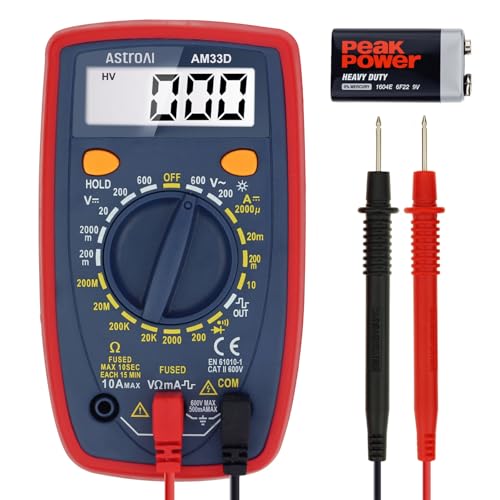
Additional Tips - The following incorrect operations may cause the multimeter not to show results: Firstly, the plugs of test leads are not fully inserted or not inserted into the correct sockets. Secondly, the manual rotary switch is not placed in the correct position. In addition, this meter can not test all AC Current and below 100mV AC Voltage. Please check the user manual carefully before measurement.

【PRECISE READOUTS & CLEAR DIGITAL DISPLAY】Bright LED display shows highly clear readings in any lighting condition, 0.1V resolution gives you reliable indication and shows you the voltage number easily & quickly. Bidirectional light emitting diode on the circuit board for easy battery load testing, red light indicates positive polarity, green light indicates negative polarity.
Visit a Mechanic
When your car battery is giving you trouble and won’t start, it’s time to seek professional help. A mechanic can diagnose the issue accurately, whether it’s a faulty battery, alternator, or starter. Getting expert advice can save you time and money in the long run.
Signs it’s Time to Visit a Mechanic:
- Despite jump-start attempts, the car still won’t start
- You notice corrosion on the battery terminals
- The battery is older than five years
Why Professional Help is Essential:
- Mechanics have specialized equipment to test the battery’s health
- They can identify underlying issues that may be causing the battery problem
- Improper handling of car batteries can be dangerous
- Follow their recommendations for repair or replacement
- Consider regular maintenance to prevent future battery issues
- Keep a record of battery checks for reference
Remember, a visit to the mechanic can provide you with peace of mind and ensure your car is back on the road in no time.
Conclusion
It’s crucial to remember that when your car battery is causing persistent issues, seeking help from a professional mechanic is the best course of action. Signs like the car still not starting, corrosion on battery terminals, or an old battery indicate the need for expert assistance. Mechanics have the necessary tools to accurately assess battery health and diagnose any underlying problems. By following their recommendations for repair or replacement, you can ensure your vehicle’s reliability. Regular maintenance and keeping track of battery checks are key to preventing future issues. Trusting a mechanic will give you peace of mind and get your car back on the road swiftly.
Frequently Asked Questions
When should I seek professional help for car battery issues?
If jump-starting your car doesn’t work, or you notice corrosion on the battery terminals, or your battery is old, it’s time to consult a mechanic. They have the right tools to test battery health accurately.
What are the benefits of consulting a mechanic for car battery problems?
Mechanics can diagnose underlying issues accurately, provide specialized testing, and offer recommendations for repair or replacement. Seeking professional help ensures the problem is addressed effectively.
Should I follow the mechanic’s suggestions for battery maintenance?
Yes, it’s crucial to follow the recommendations provided by the mechanic for battery maintenance. This helps in ensuring the longevity and performance of your car battery.
How often should I have my car battery checked by a professional?
Regularly scheduling battery checks with a mechanic is recommended. Keeping a record of these checks can help track the battery’s health and ensure timely interventions.
