

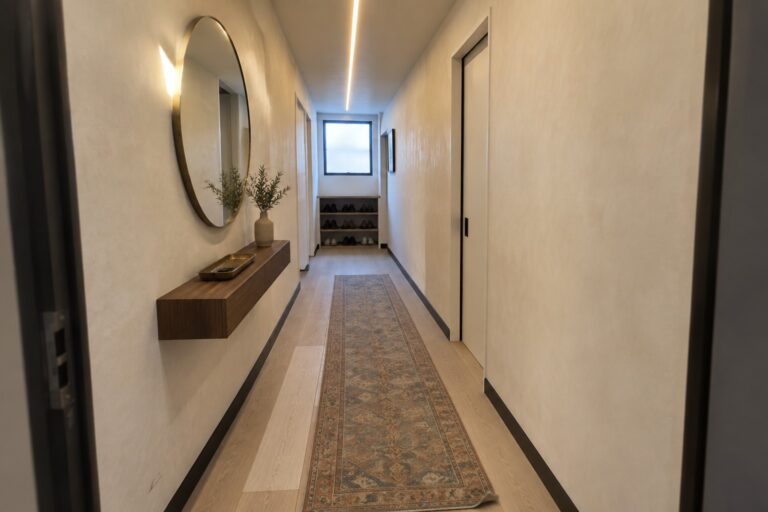
Hallways tend to feel more confined than other parts of the house when the ceilings run low and the walls sit close together.
I have noticed that the wrong overhead light can turn a simple walk from room to room into something awkward rather than functional.
Linear fixtures usually solve part of that problem by spreading light lengthwise without taking up extra height.
Still the real test comes when you live with the choice for a few weeks and see how it holds up in daily use.
I often try a single fixture in a side passage first to judge the actual effect before changing the main hallway.
Linear Lights Keep Narrow Hallways Bright Without Dropping the Ceiling
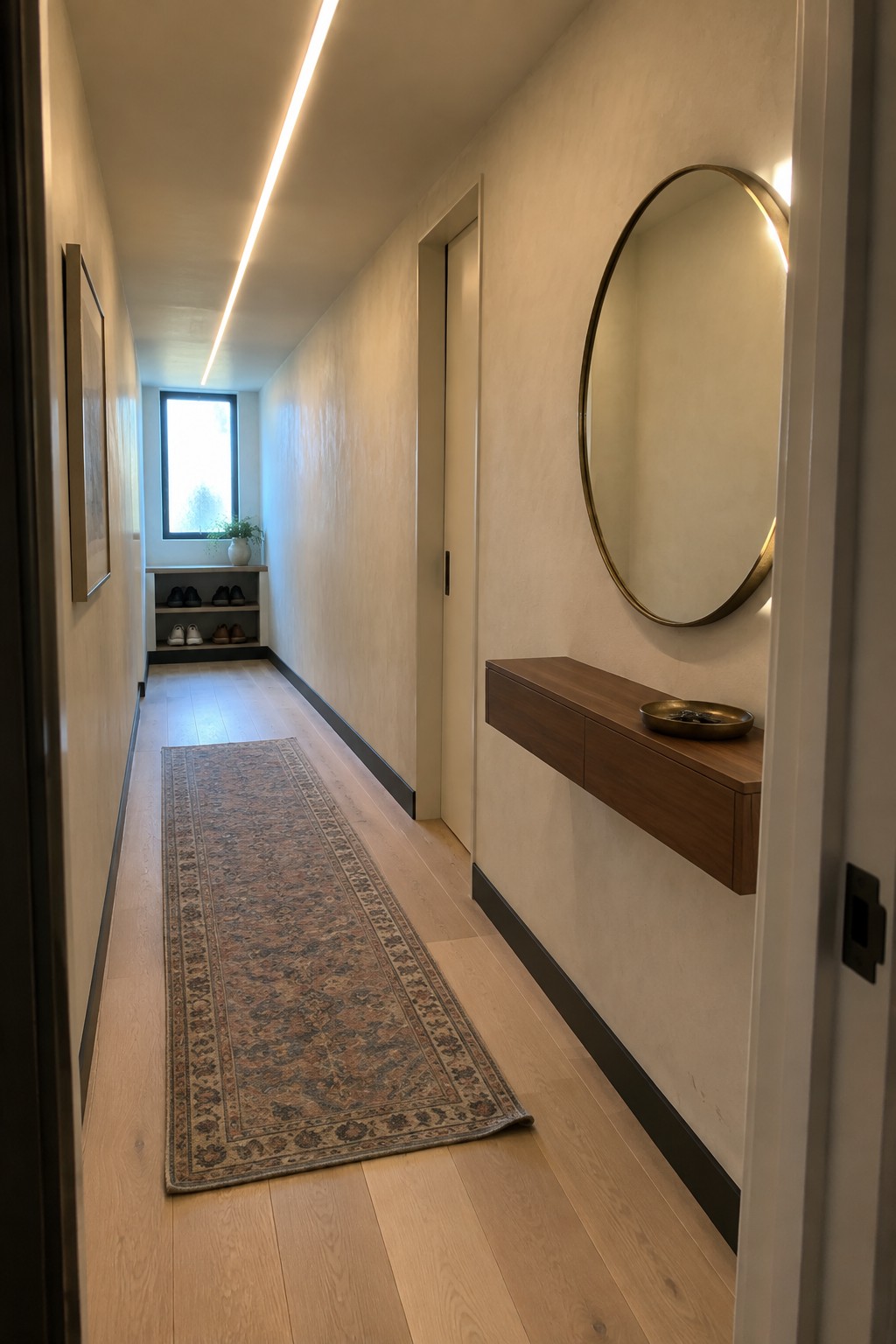
A long linear fixture running down the center of the ceiling works well in hallways that feel tight and dark. It spreads light evenly from above instead of relying on wall sconces or fixtures that hang lower and crowd the space.
This setup suits older homes or apartments with standard ceiling heights where you want to avoid anything bulky. Place the light on a dimmer so it can stay soft in the evening, and keep the finish simple so it blends into the ceiling rather than standing out.
Mount Linear Lights Flat Against The Ceiling
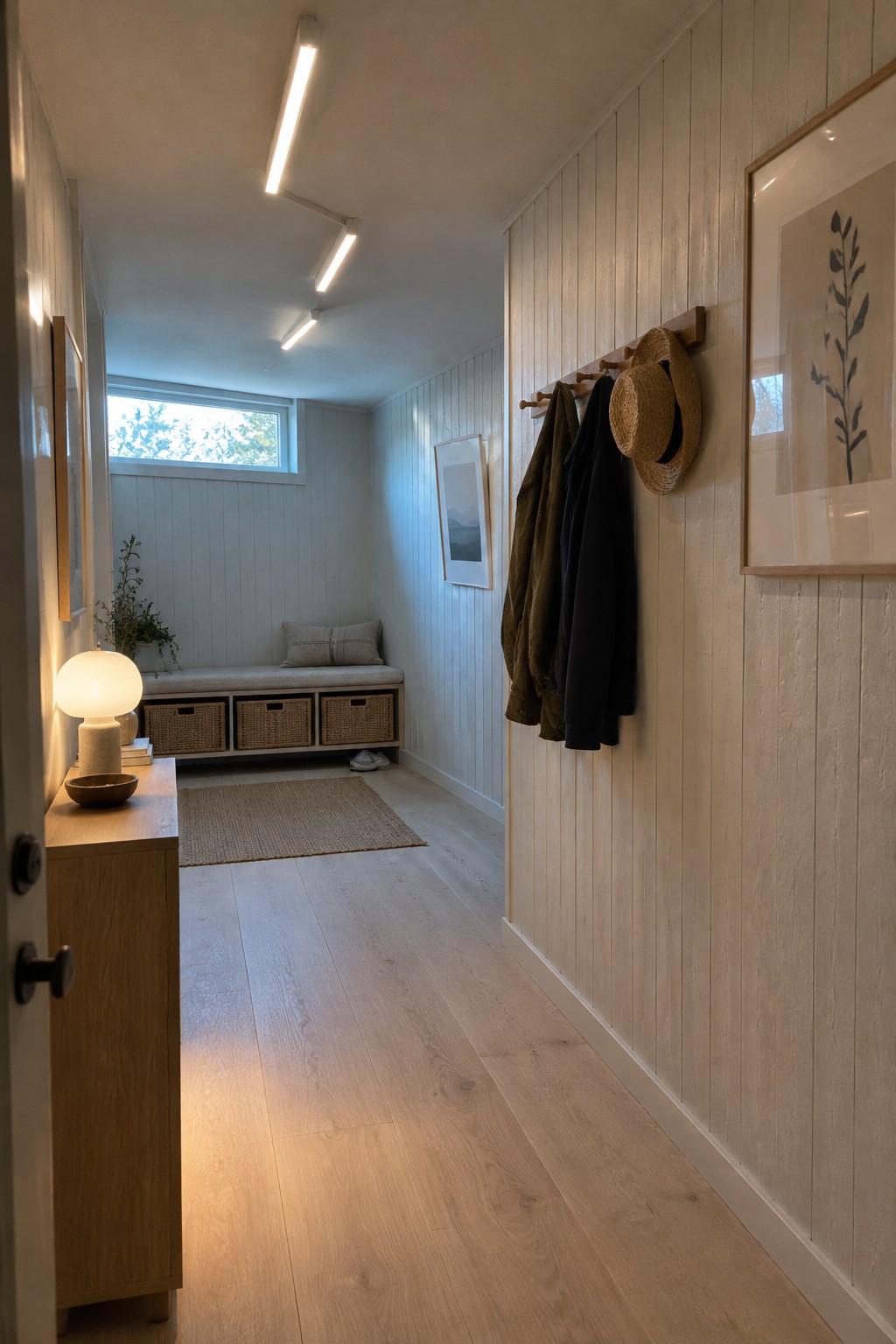
In a narrow hallway with low ceilings, mounting linear fixtures directly to the surface gives you even light without losing headroom. The long, slim shape spreads illumination down the whole length of the space and avoids the bulk of a hanging pendant or bulky shade.
This setup suits older homes or small entries where every inch counts. Stick with simple, low-profile models in a warm tone, and keep the rest of the hallway light in color so the corridor feels wider rather than closed in.
Hang a Linear Fixture Through the Hallway
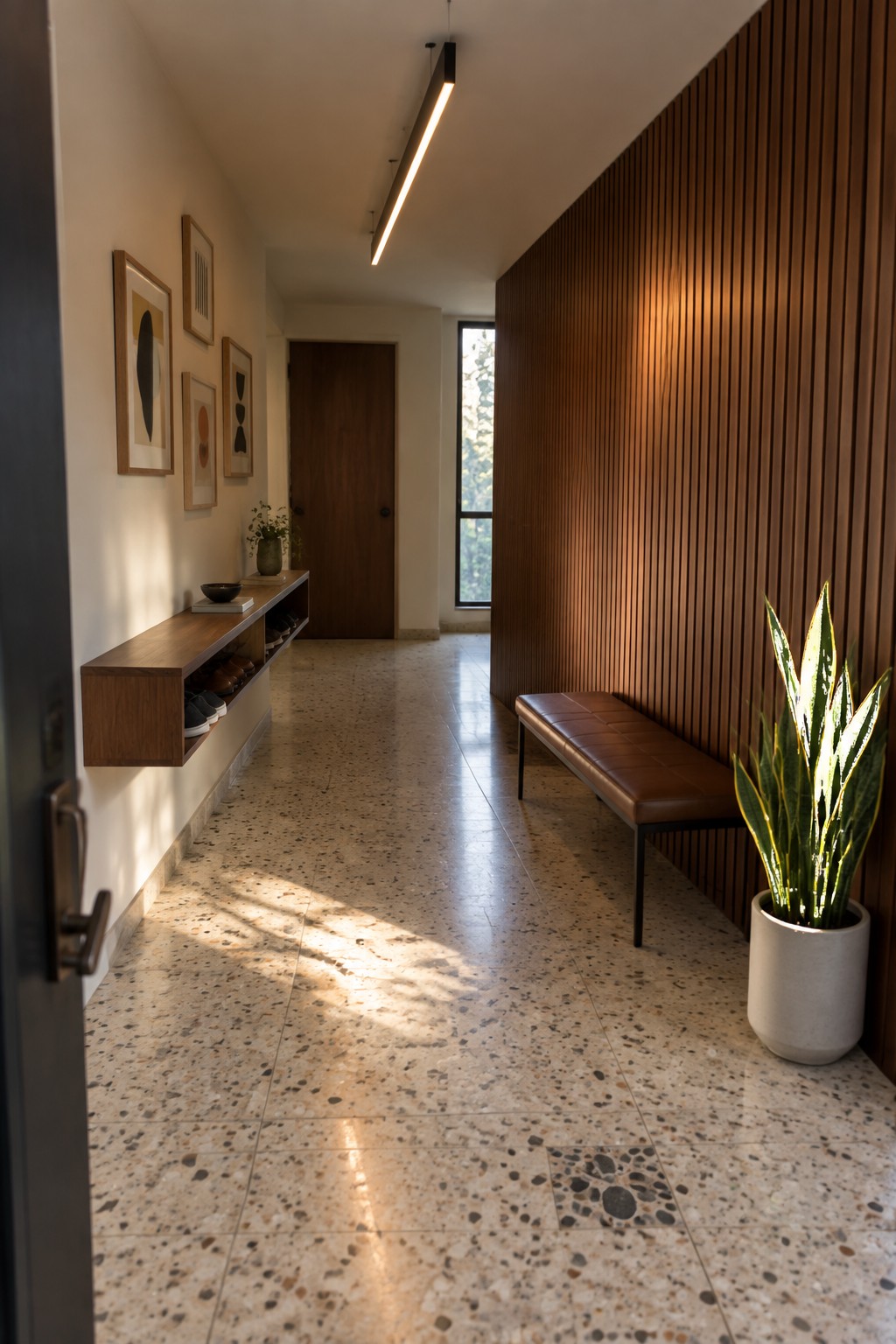
A long linear light works well in hallways because it spreads light evenly without needing multiple fixtures or taking up floor space. It keeps the ceiling clear and the path open, which matters most in narrow or low-ceiling homes where every inch counts.
Place the fixture so it runs the full length of the hall and sits a few inches below the ceiling. This setup suits apartments and smaller homes where you want simple lighting that does not feel heavy or block movement.
Linear Track Lighting Along the Hallway Ceiling
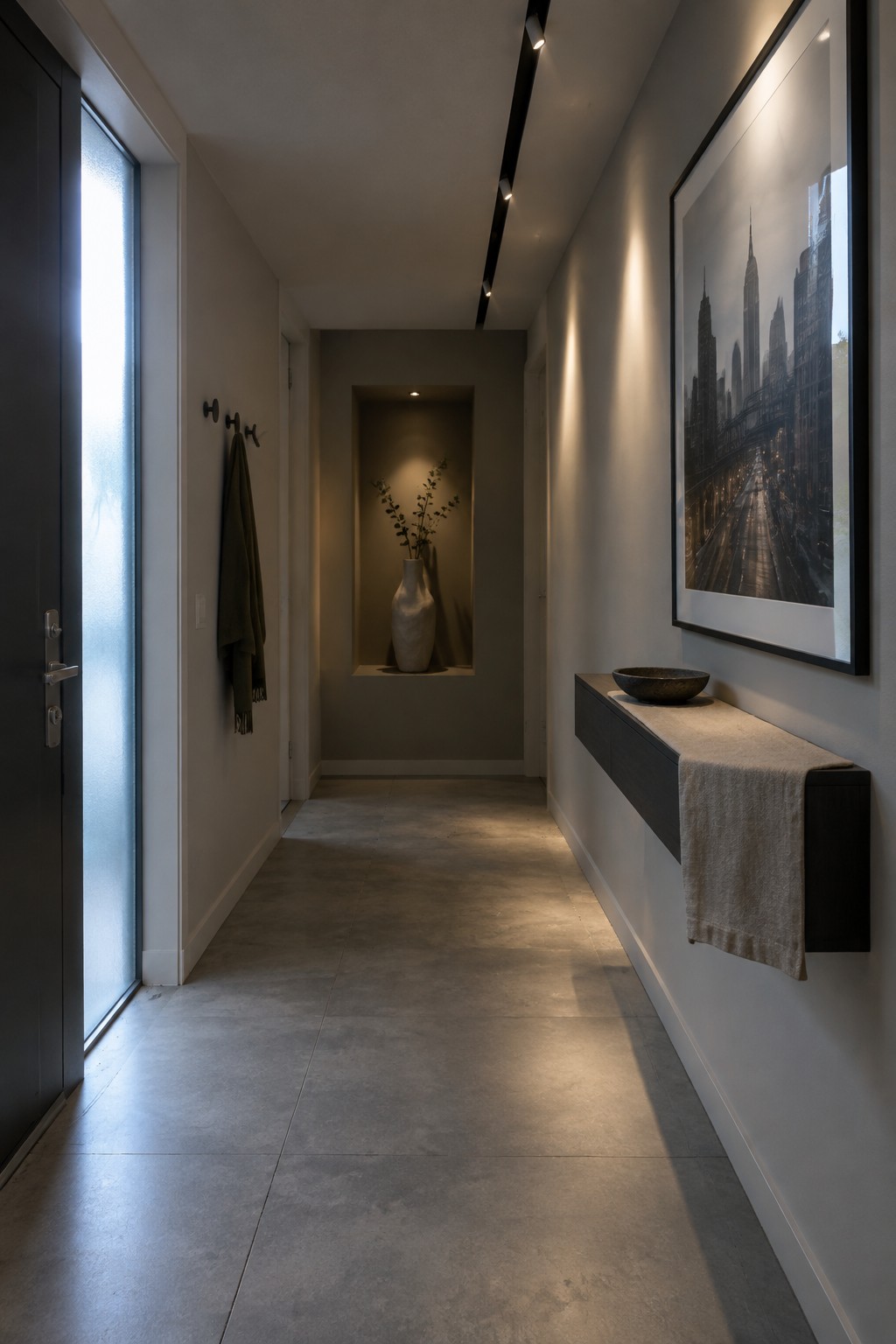
A narrow hallway often feels cramped when you add multiple fixtures or anything that drops down from the ceiling. Running one long linear track keeps the light source high and out of the way while still giving you even coverage from one end to the other.
This setup works best in apartments or homes where the hallway is tight and the ceiling height is limited. Aim the individual heads toward the walls or floor as needed, and you get useful light without visual clutter or extra hardware.
Linear Fixtures Brighten Narrow Hallways Without Adding Bulk
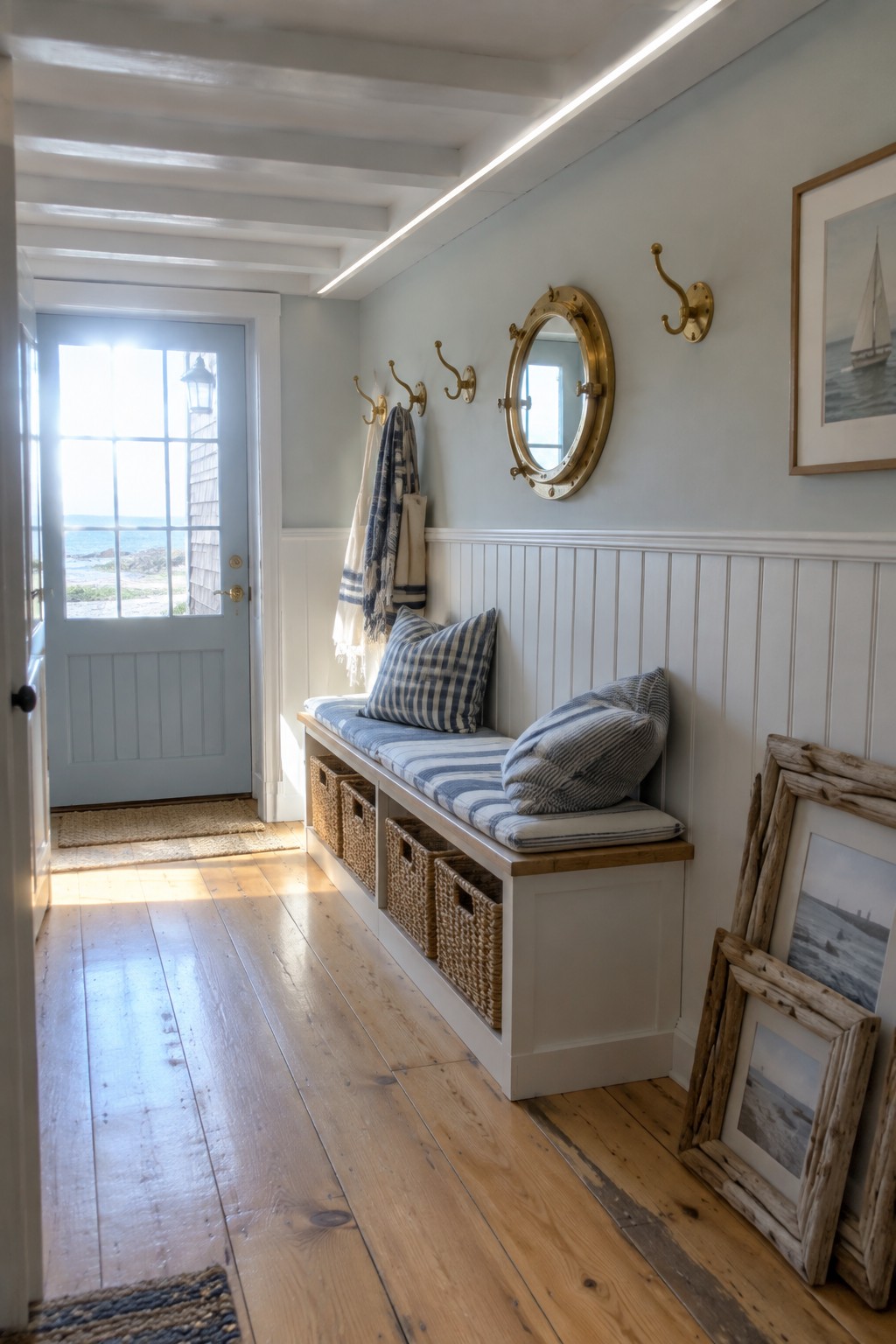
A long linear light mounted flush along the ceiling gives steady light through a tight hallway without hanging down or crowding the space. It works especially well when ceilings are already low and you need one clean line instead of several smaller fixtures.
This setup fits homes with simple trim and painted wood floors. Run the fixture the full length of the hall and keep the housing slim so it stays out of the way while still lighting the bench area and door at the far end.
Linear Fixtures That Sit Close To The Ceiling
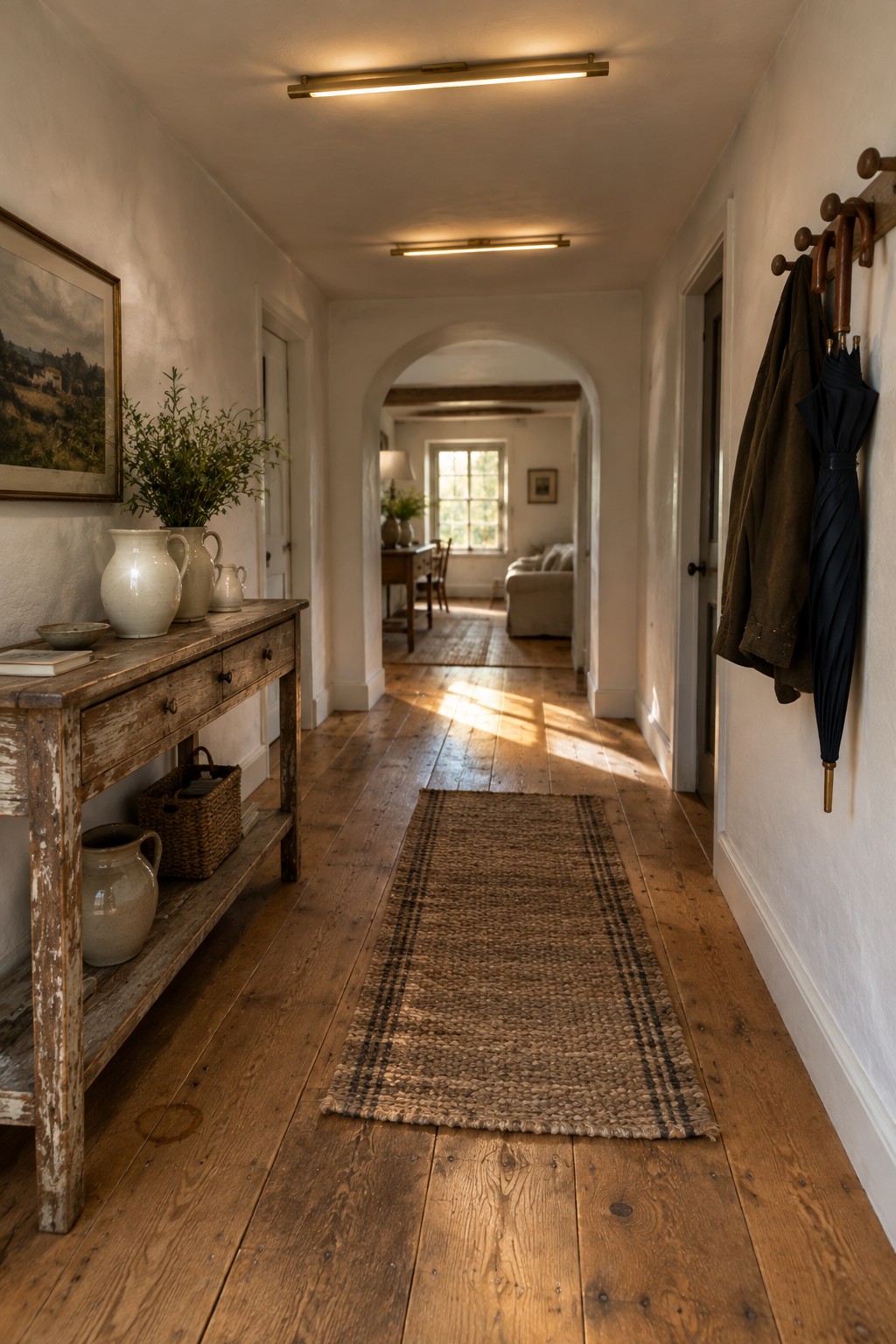
Linear fixtures mounted flat against the ceiling work well in hallways that do not have much height to spare. They spread light evenly along the length of the space without hanging down and making the hallway feel tighter.
This approach suits older homes and cottages where the original ceilings are already low. Keep the fixtures simple and place them in a straight line so the hallway stays practical and easy to walk through at any time of day.
Linear Lighting Along The Hallway Ceiling
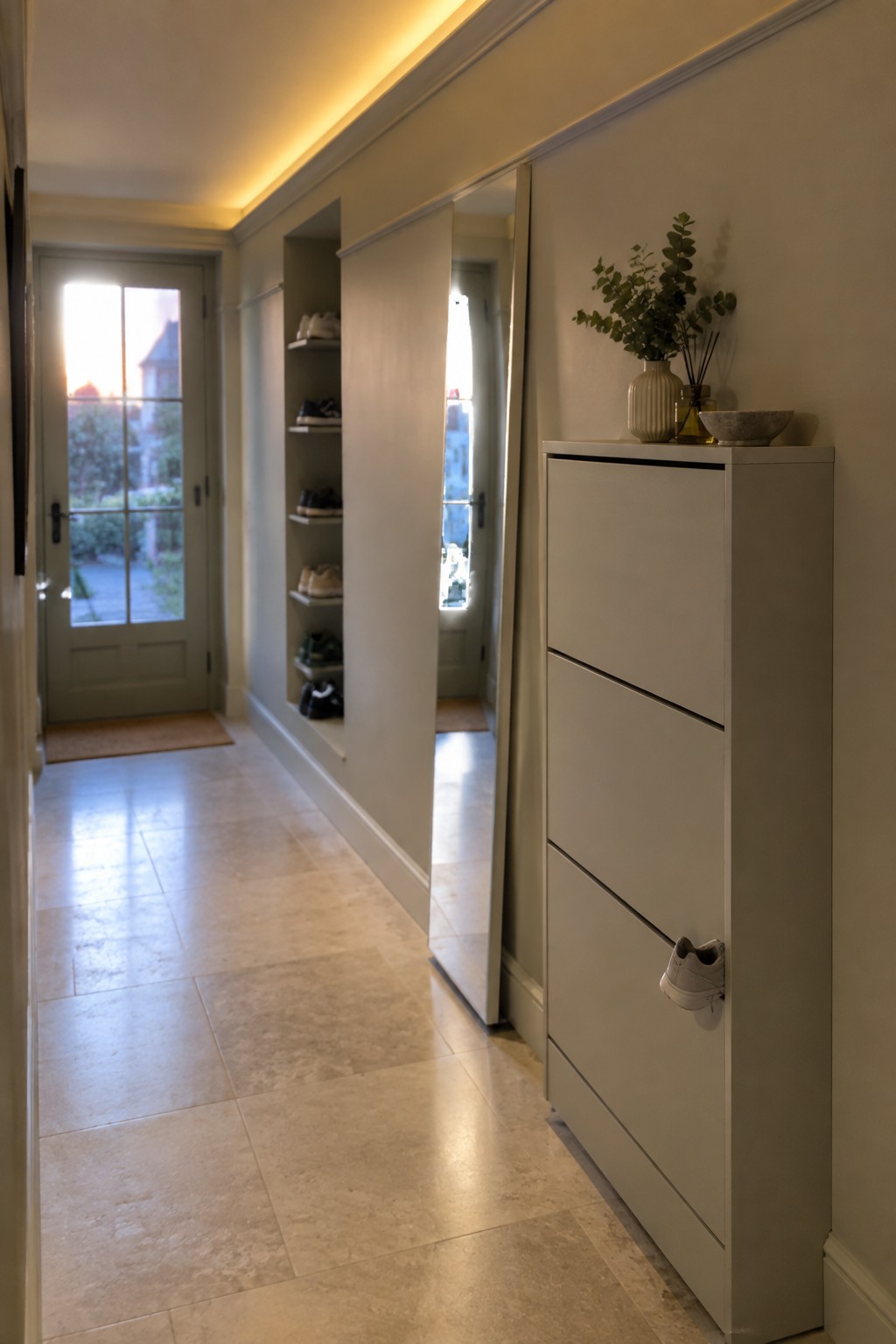
Running a linear fixture right where the wall meets the ceiling gives a narrow hallway even light without dropping anything into the walking space. The glow travels the full length and keeps the low ceiling from feeling any tighter than it already is.
This approach works best in homes with tight passages that already use built-in shelves for shoes or other storage. It leaves the floor and walls clear while still making the whole stretch feel brighter and easier to move through.
Linear Fixtures for Narrow Hallways
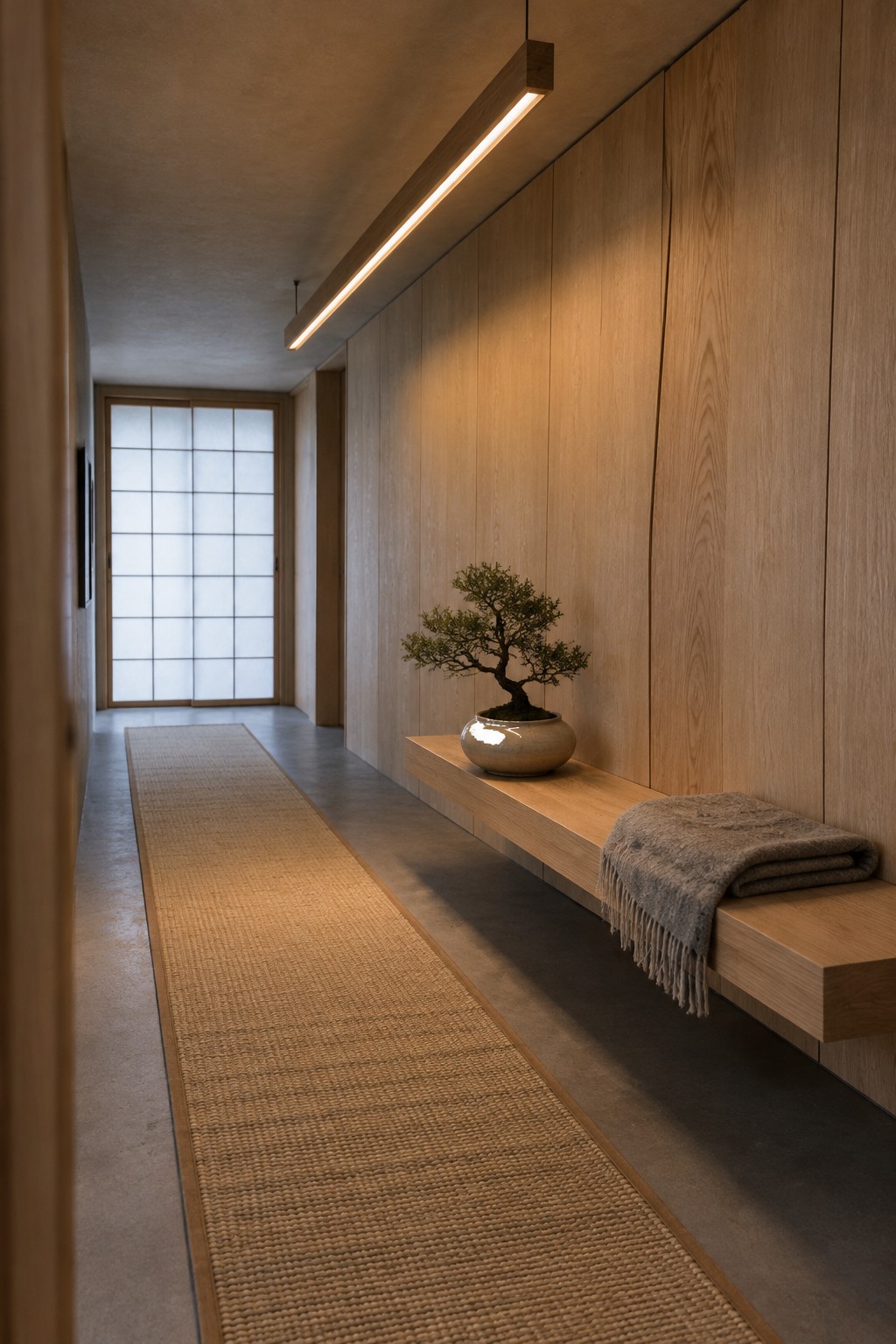
A long linear light mounted right to the ceiling gives steady light down a tight hallway without hanging low or crowding the walls. It keeps the walkway open and works especially well when ceilings sit lower than usual.
This approach suits simple homes where you want even lighting but do not have room for side sconces or multiple fixtures. Keep the fixture narrow and centered so it does not feel heavy overhead.
Run Linear Fixtures Along the Ceiling

Linear fixtures are a practical choice for narrow hallways because they spread light evenly without adding bulk. The single long fixture in this brick hallway keeps the space bright from end to end while leaving the low ceiling clear.
This setup works best in older homes or tight passages where you need steady light but do not want multiple lamps or heavy fixtures hanging down. Keep the line simple and pair it with a bench or hooks only if the width allows.
Linear Fixtures In Hallways With Low Ceilings
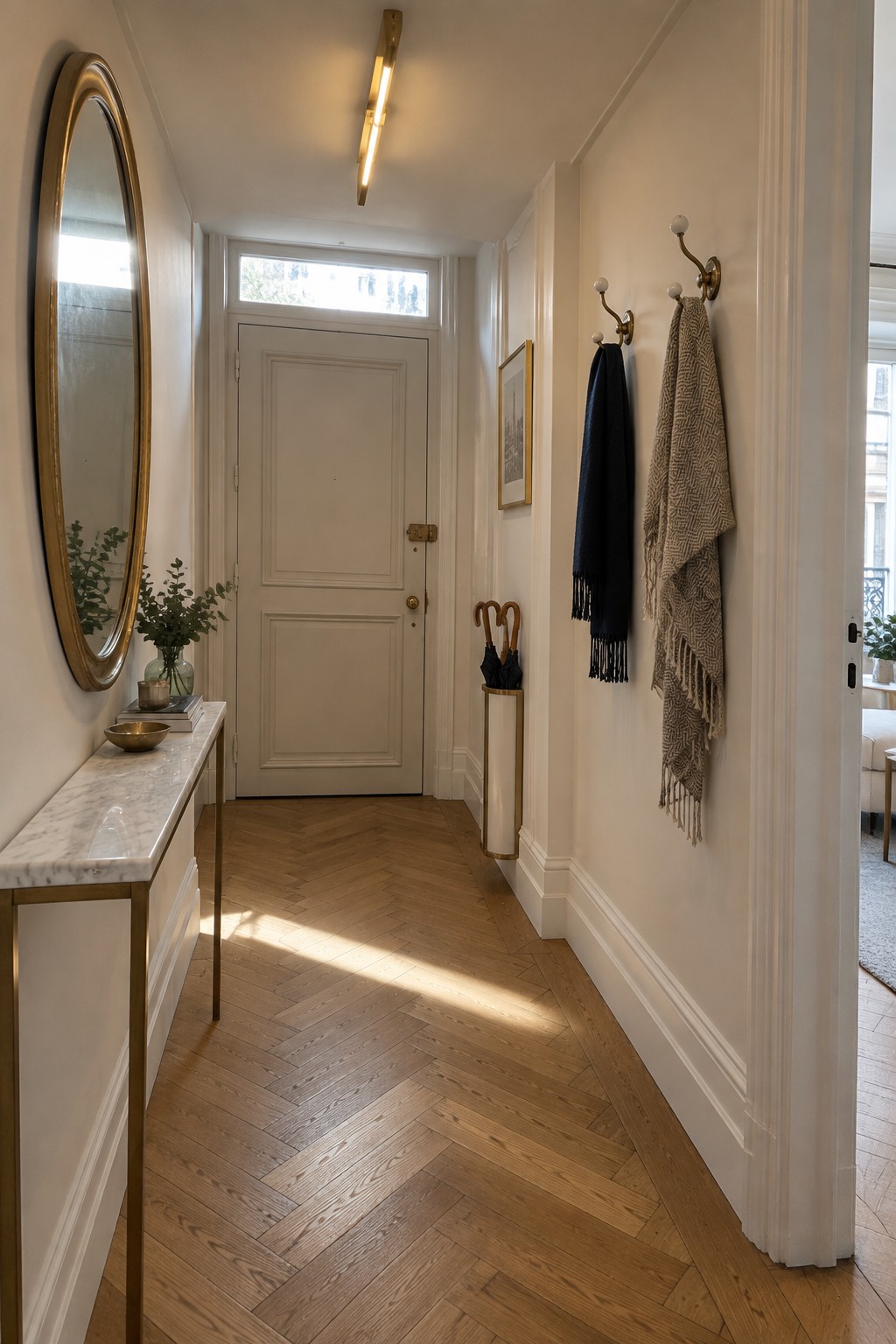
A slim linear fixture mounted flat against the ceiling works well in narrow hallways because it spreads light evenly along the full length without dropping down and cutting into the headroom. This keeps the space feeling open even when the ceiling is already low and the walls sit close together.
This approach suits older apartments or homes where hallways run long and tight. Keep the fixture narrow and simple in finish so it sits quietly against the ceiling, and make sure the light output is strong enough to reach both ends of the corridor without needing extra fixtures.
Linear Fixtures Work Well in Narrow Hallways
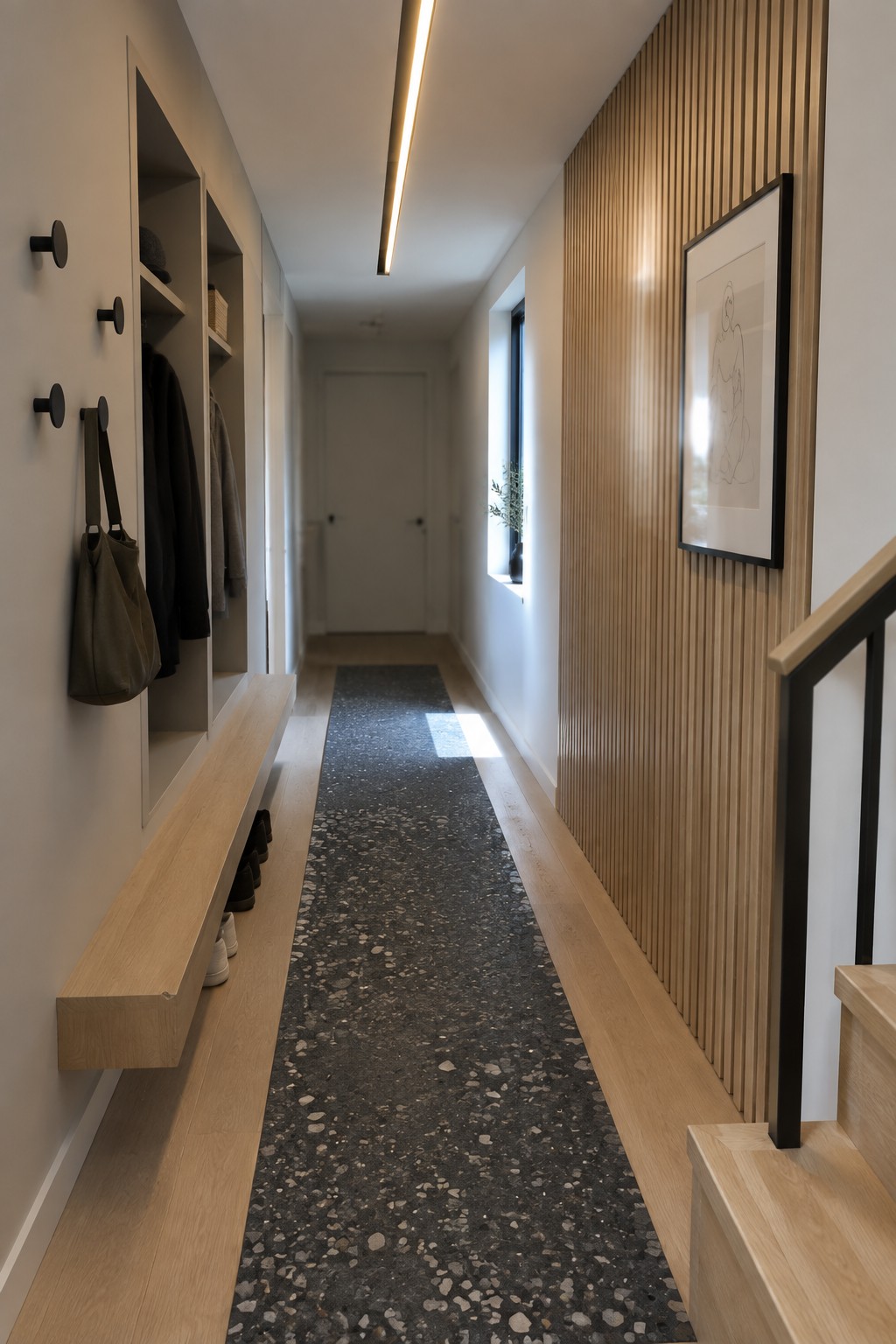
A long linear light running down the ceiling keeps the whole hallway bright without adding bulk or taking up headroom. It works especially well when the space is tight and you need even light from one end to the other instead of multiple smaller fixtures.
This setup suits homes with low ceilings and limited width. Center the fixture over the walkway and keep the finish simple so it blends with the ceiling rather than drawing attention to the narrow proportions.
Linear Lighting Along the Upper Wall for Low-Ceiling Hallways
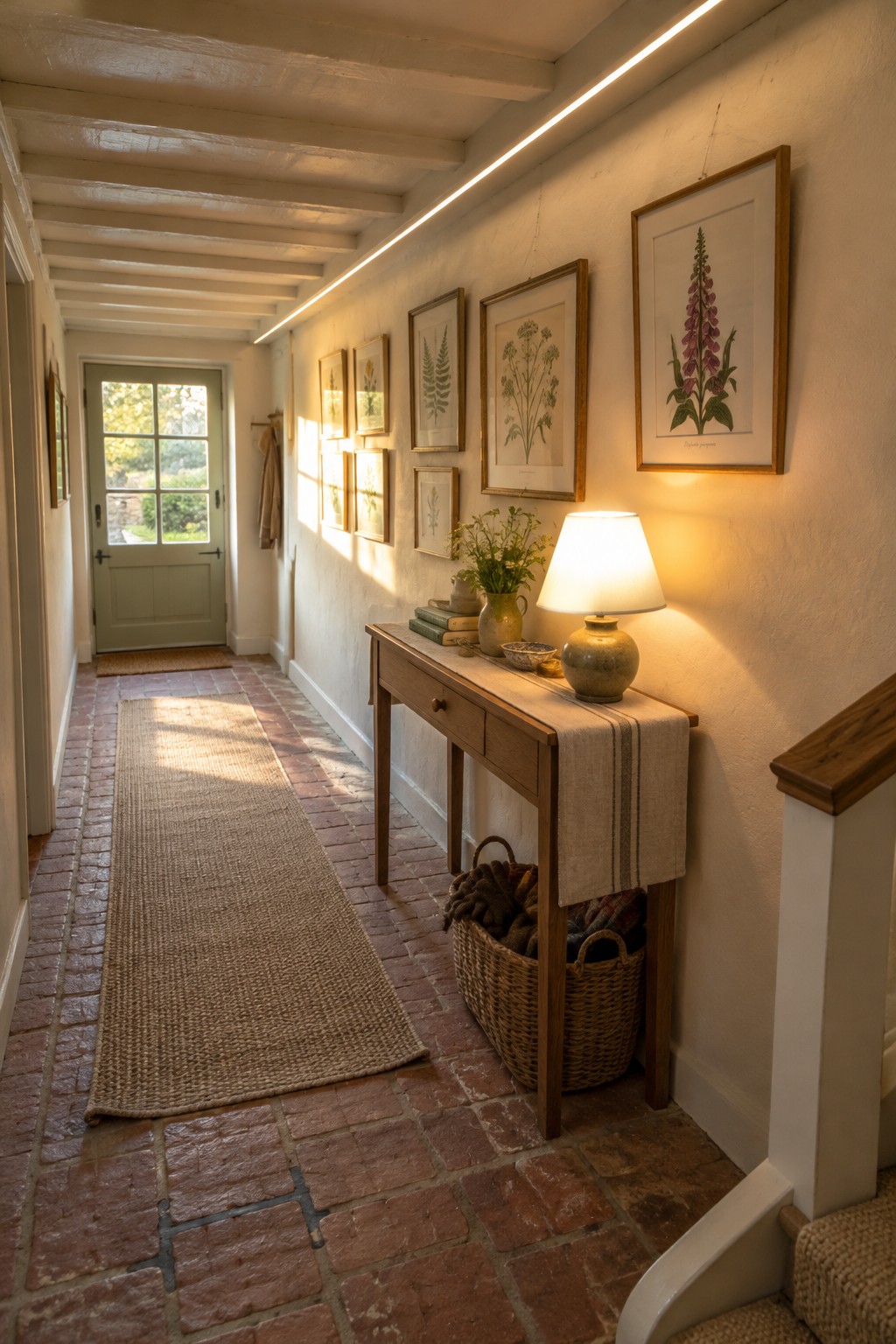
A linear fixture mounted high along the wall gives even light through a tight hallway while leaving headroom untouched. This setup works well when ceilings already feel low and you need the space to stay open rather than crowded with hanging lights.
It suits older homes or small cottages where corridors run long and narrow. Place the fixture close to the ceiling so the beam spreads wide, and keep any furniture along the wall low and slim so the path stays clear.
Linear Fixtures That Run the Length
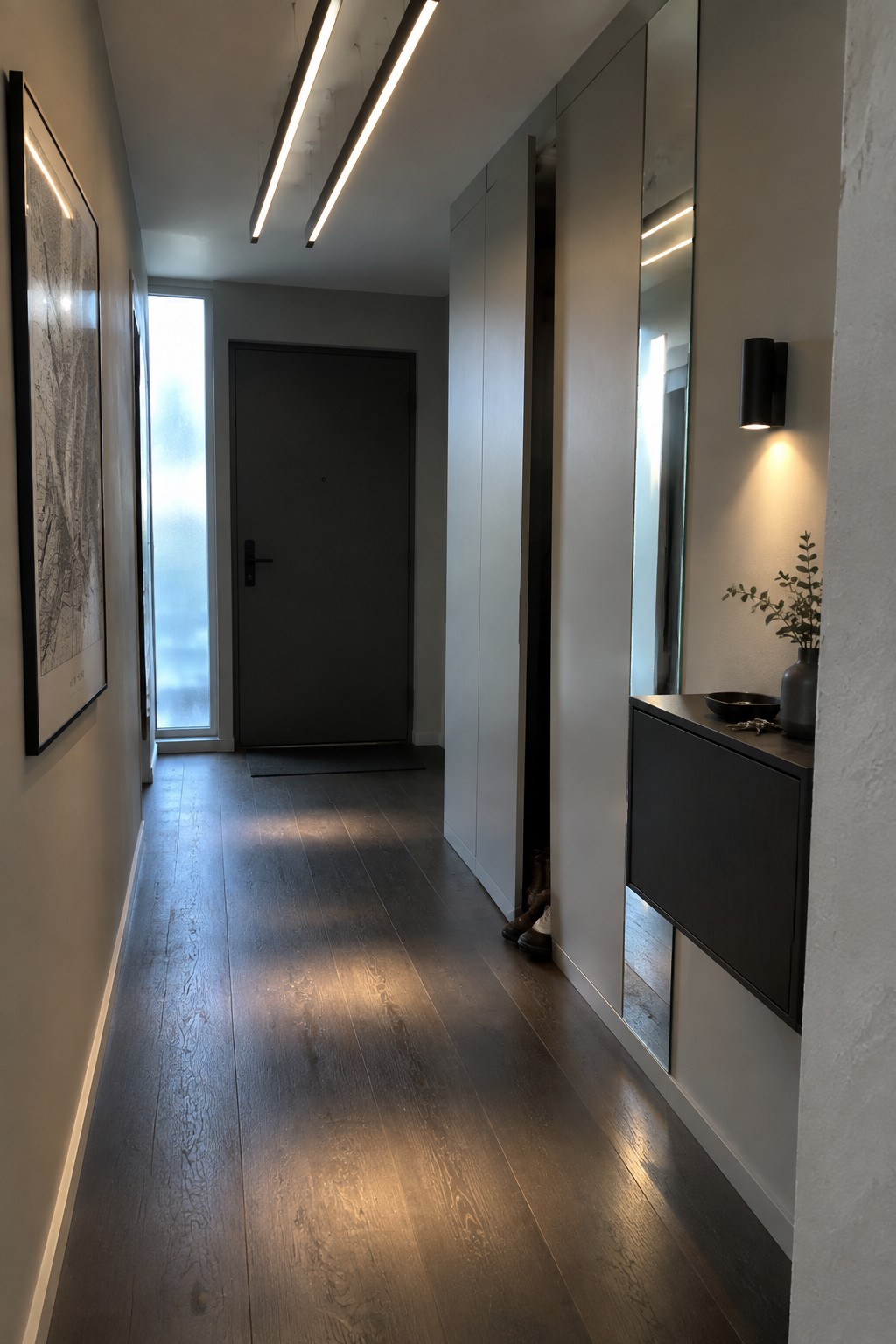
Narrow hallways with low ceilings often end up with either dim corners or fixtures that hang too low and feel in the way. Long linear lights solve this by spreading light evenly down the whole space while staying slim and simple overhead.
Keep the drop short so the fixtures stay well above head height, and space two or three in a row for steady coverage. This approach works especially well in modern or minimalist homes where you want clean lines and no extra visual clutter along the walls.
Run a Linear Fixture Down the Hallway Ceiling
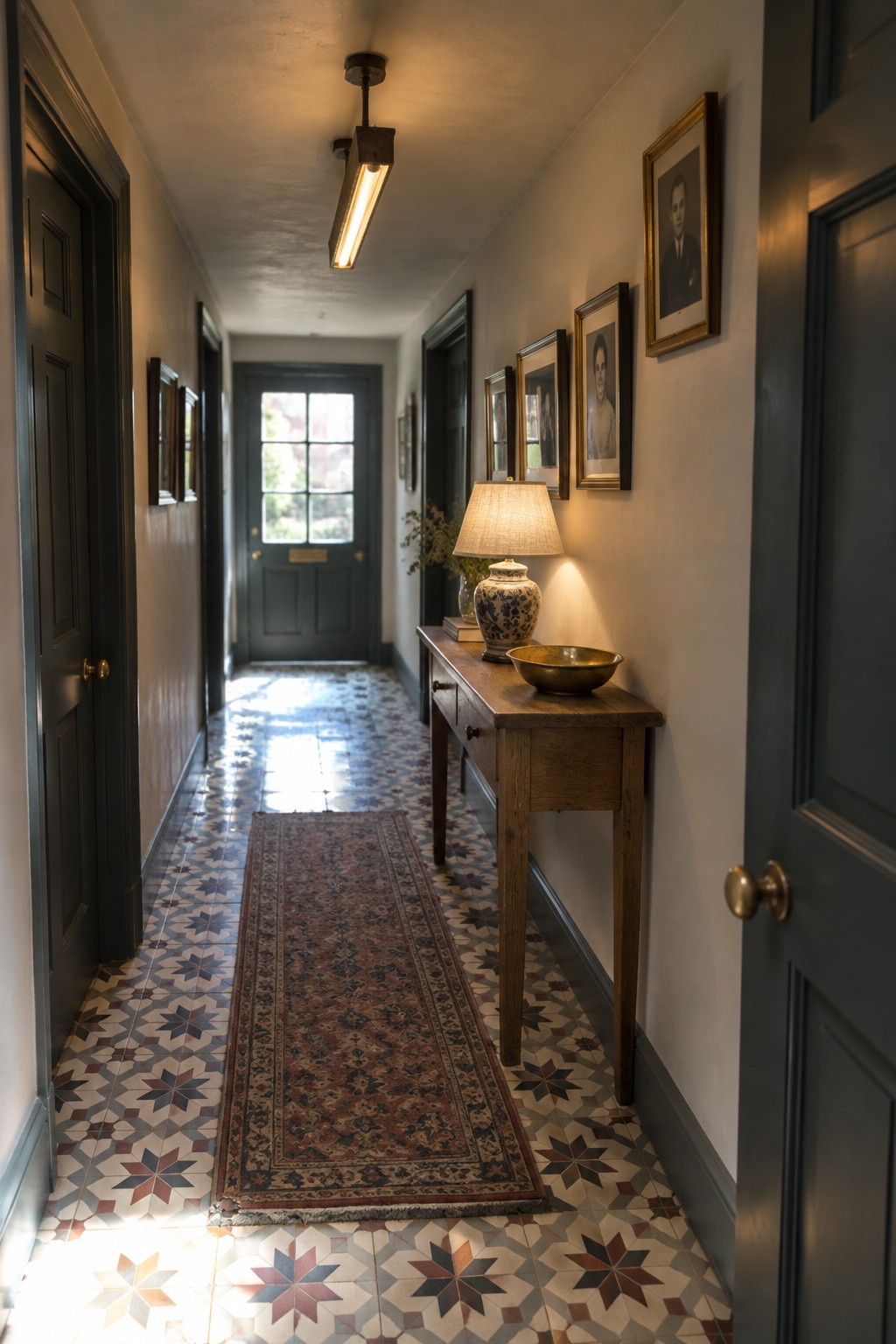
A linear fixture works especially well in narrow hallways because it spreads light evenly without taking up much vertical room. In spaces with low ceilings, this keeps the path clear and avoids the cramped feeling that comes from multiple smaller lights or anything that hangs too low.
This approach suits older homes or small layouts where the hallway already feels tight. Keep the fixture simple and centered so it does not compete with doorways or wall details.
Linear Fixtures Work in Low Hallway Ceilings

A long linear light hung from the ceiling gives even light along a narrow hallway without taking up headroom. It keeps the space open when ceilings sit low and walls stay close together.
Run the fixture down the center of the hallway and pick one with a simple shade so the light spreads evenly. This setup works best in older homes or apartments where you want to avoid anything that hangs too low or blocks the path.
Linear Fixtures Brighten Narrow Hallways
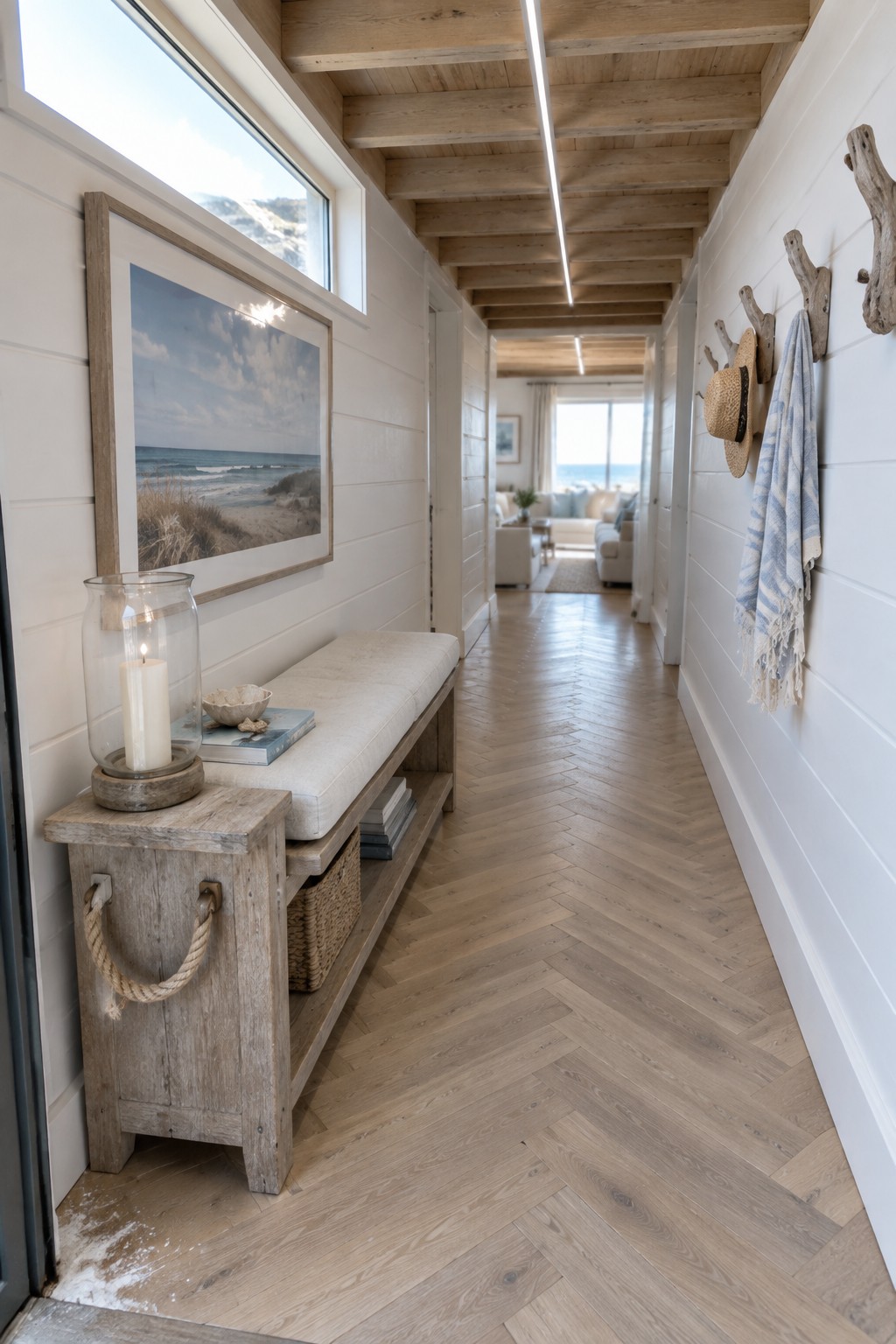
A long linear light mounted along the ceiling gives even coverage in a tight hallway without dropping the height or adding bulk on the walls. It works especially well when the space already feels closed in and you need light that travels the full length.
This setup suits homes with simple floor plans where the hallway leads to main living areas. Stick with a slim profile and enough brightness to prevent dark spots at either end.
Suspend Linear Pendants Down the Hallway
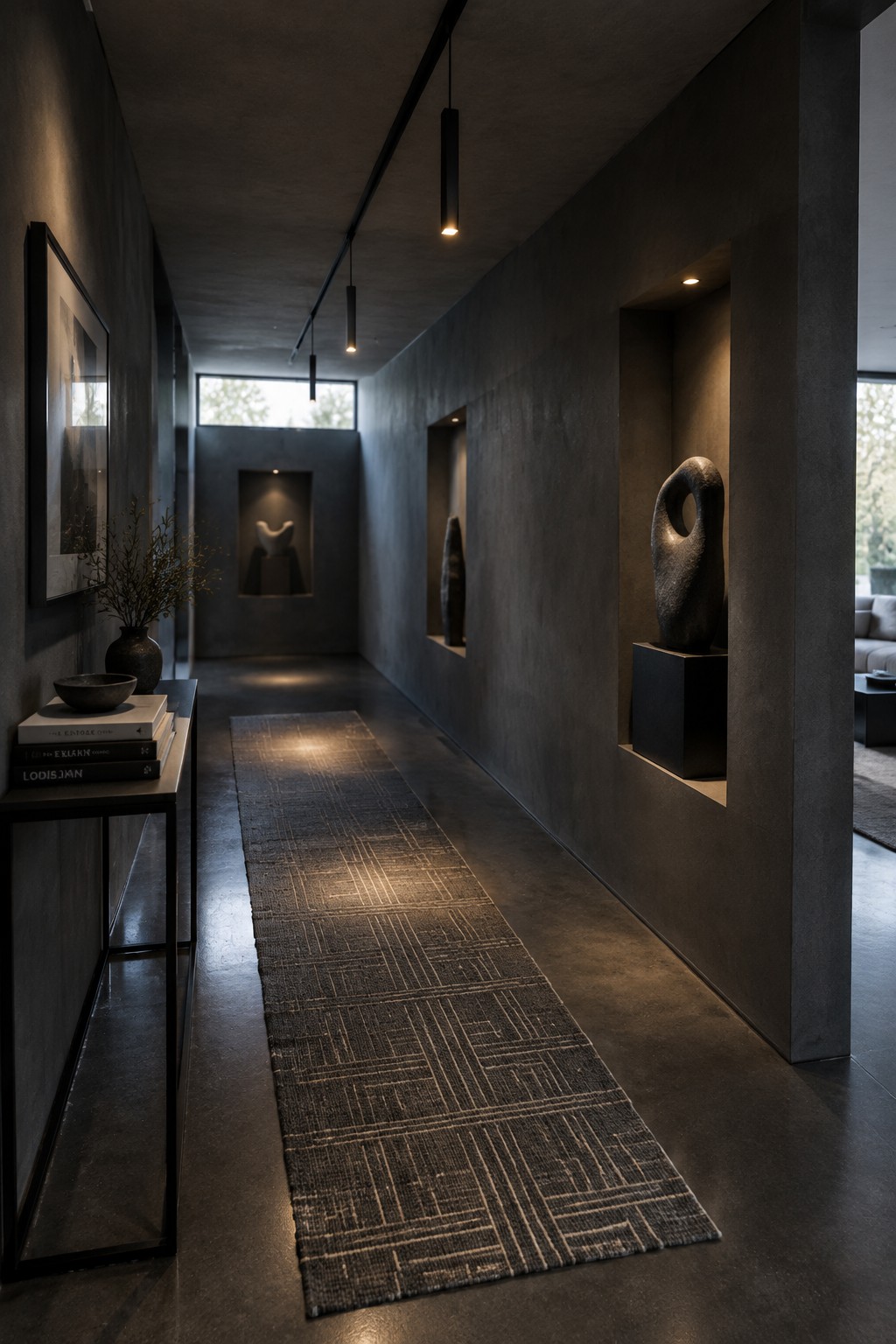
A row of slim pendant fixtures on a ceiling track works well in narrow hallways because it leaves the walls and floor completely clear. The lights focus illumination right where you need it without adding bulk or requiring extra furniture for lamps.
This approach suits low-ceiling homes that still want a bit of height and rhythm in the lighting. Keep the pendants in a straight line above a runner so the path stays easy to navigate and the overall look stays simple.
Run Linear Lights Along the Ceiling Edge
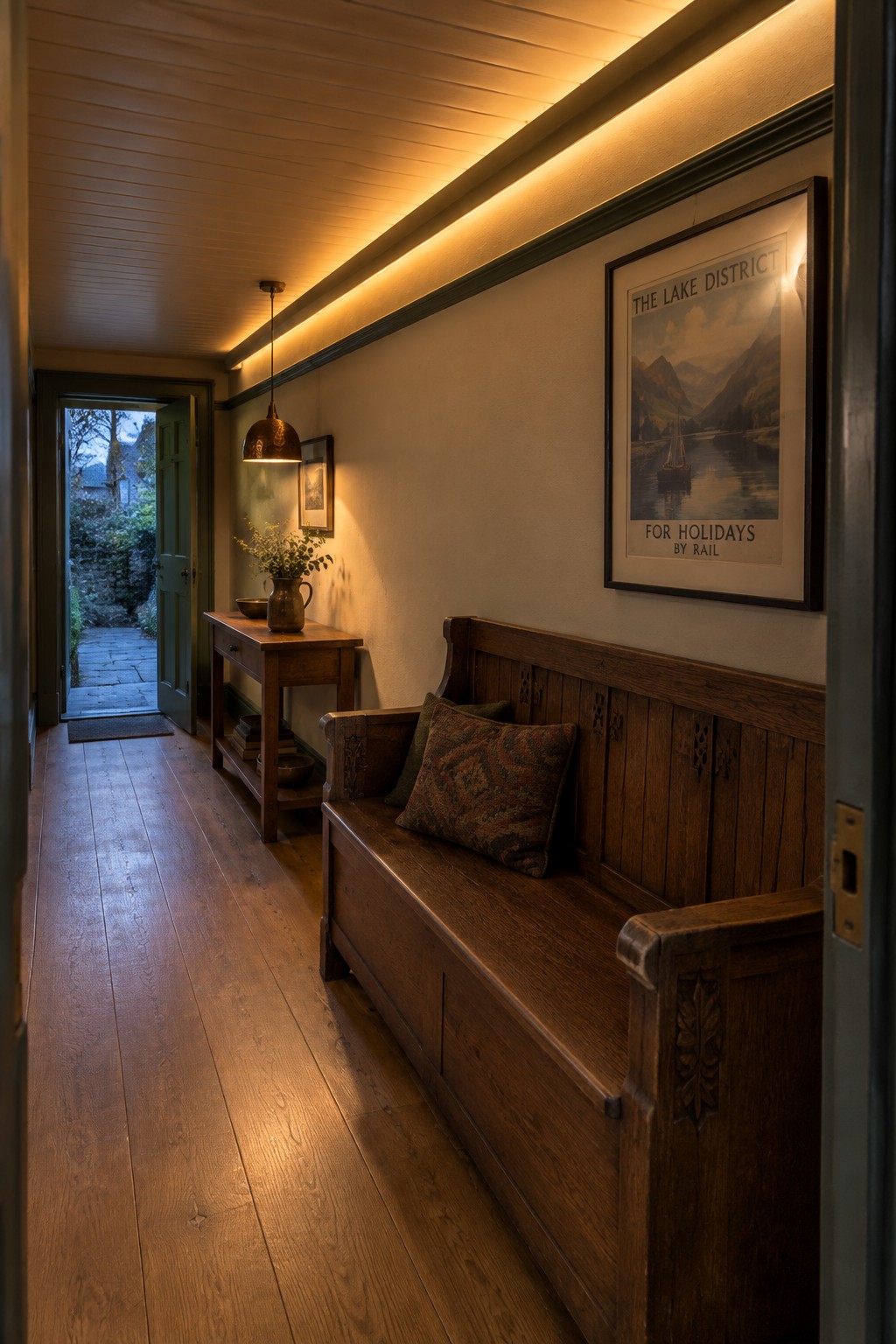
Linear lighting tucked into the upper trim works well in hallways where ceilings already feel low. It spreads a steady wash of light without dropping a bulky fixture into the middle of the walkway or cutting into headroom. The glow stays out of the way while still making the space feel brighter and wider.
This approach suits older homes or narrow passages where every inch counts. Keep the strip simple and warm, and pair it with one small pendant if you need a bit of focused light near a bench or table. Avoid bright cool tones that can make the space feel stark.
Run Linear Lights Along the Hallway Ceiling
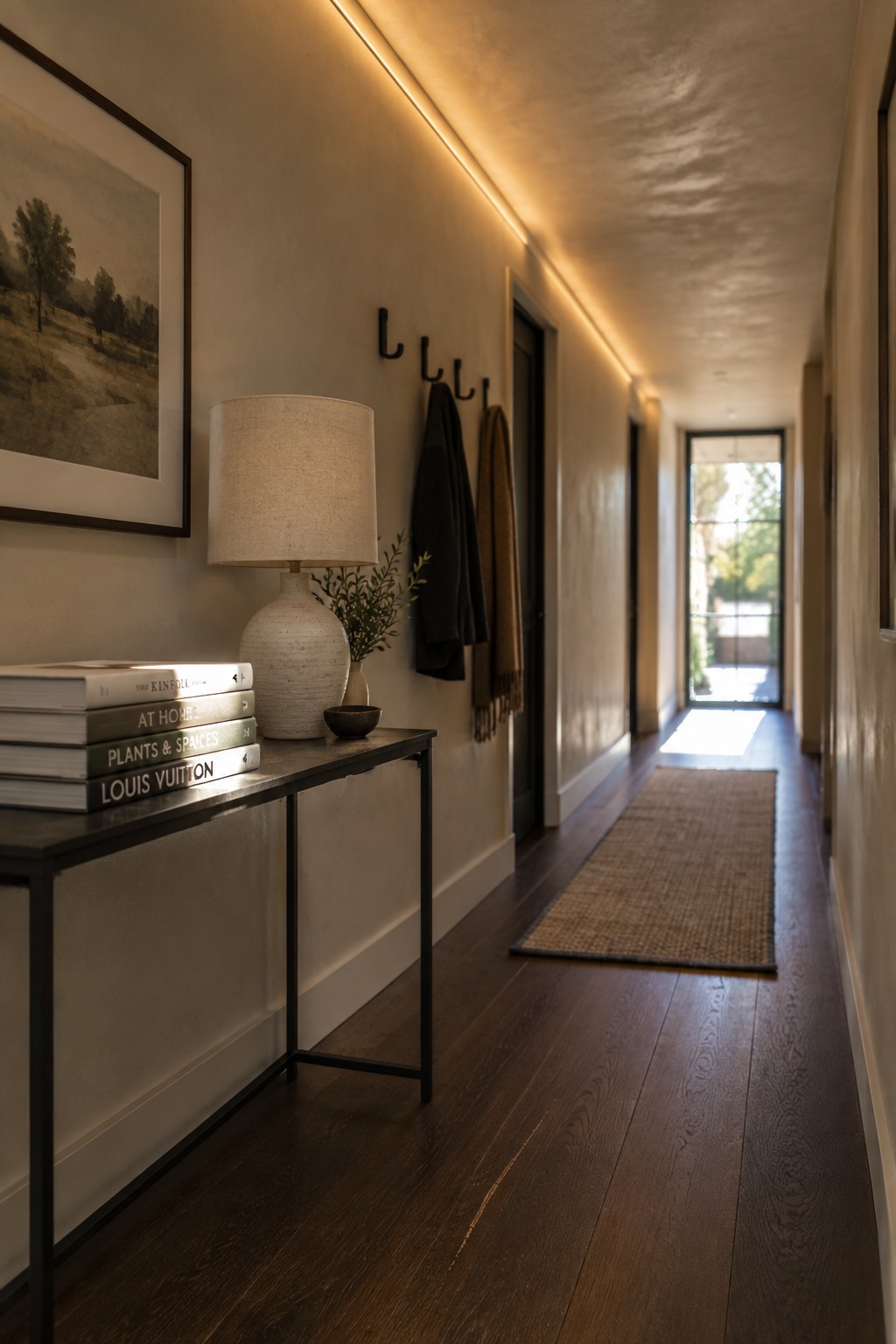
Low ceilings in hallways often make the space feel tighter than it really is. A slim linear fixture tucked right up against the ceiling spreads light evenly without dropping down or adding bulk.
This approach works best in older homes or narrow corridors where every inch counts. Keep the line simple and let it run the full length so the floor stays open and walking through feels easier.
Linear Fixtures Keep Narrow Hallways Bright

A long linear fixture mounted right to the ceiling works well in hallways that run tight and feel closed in. It spreads light evenly from one end to the other without adding bulk or taking up wall space that might already be used for hooks or shelves.
This setup fits homes with lower ceilings or older layouts where you need practical light but do not want extra lamps or sconces crowding the walls. Keep the fixture simple and close to the ceiling so it stays out of the way while still doing its job.
Linear Ceiling Lights Suit Narrow Hallways
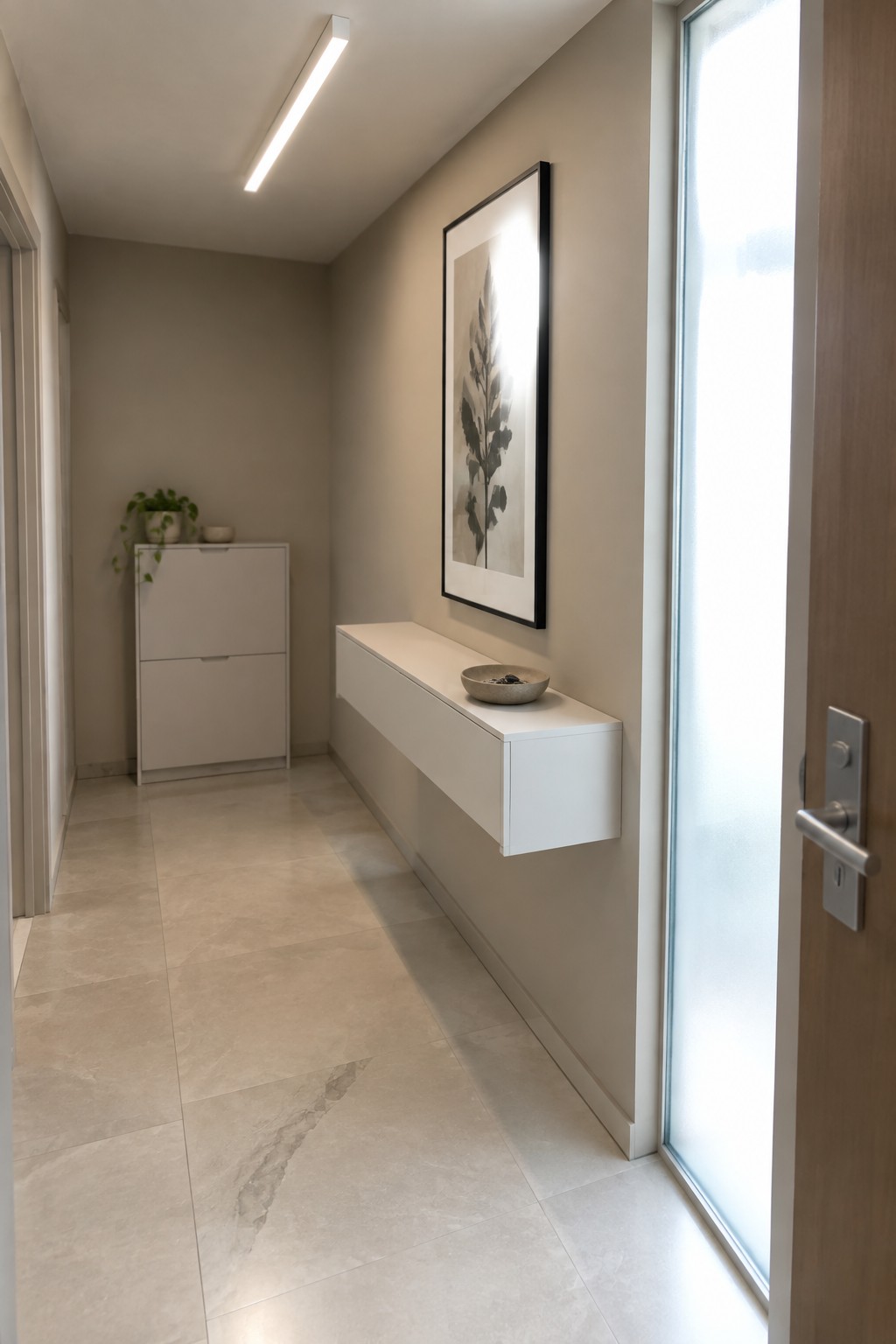
A linear fixture mounted flat to the ceiling gives steady light along the full length of a hallway without dropping down into the space. This keeps the path clear and works especially well when the ceiling height is limited and the walls sit close together.
It fits homes that already use simple built-ins or floating storage, since the light stays out of the way and does not compete with anything mounted lower on the wall. Center the fixture and choose a slim profile so the hallway still feels open rather than crowded.
Run Linear Lighting Along a Hallway Beam

A narrow hallway with low ceilings can feel cramped when you add hanging lights or bulky fixtures. Running a simple linear light under a wooden beam keeps the ceiling clear and spreads light evenly from one end to the other without taking up any headroom.
This approach works best in older homes or beach cottages where hallways are long and tight. Keep the beam light in color so it blends with the ceiling, and use a warm LED strip that stays hidden but still brightens the whole path.
Run Linear Fixtures Down the Hallway
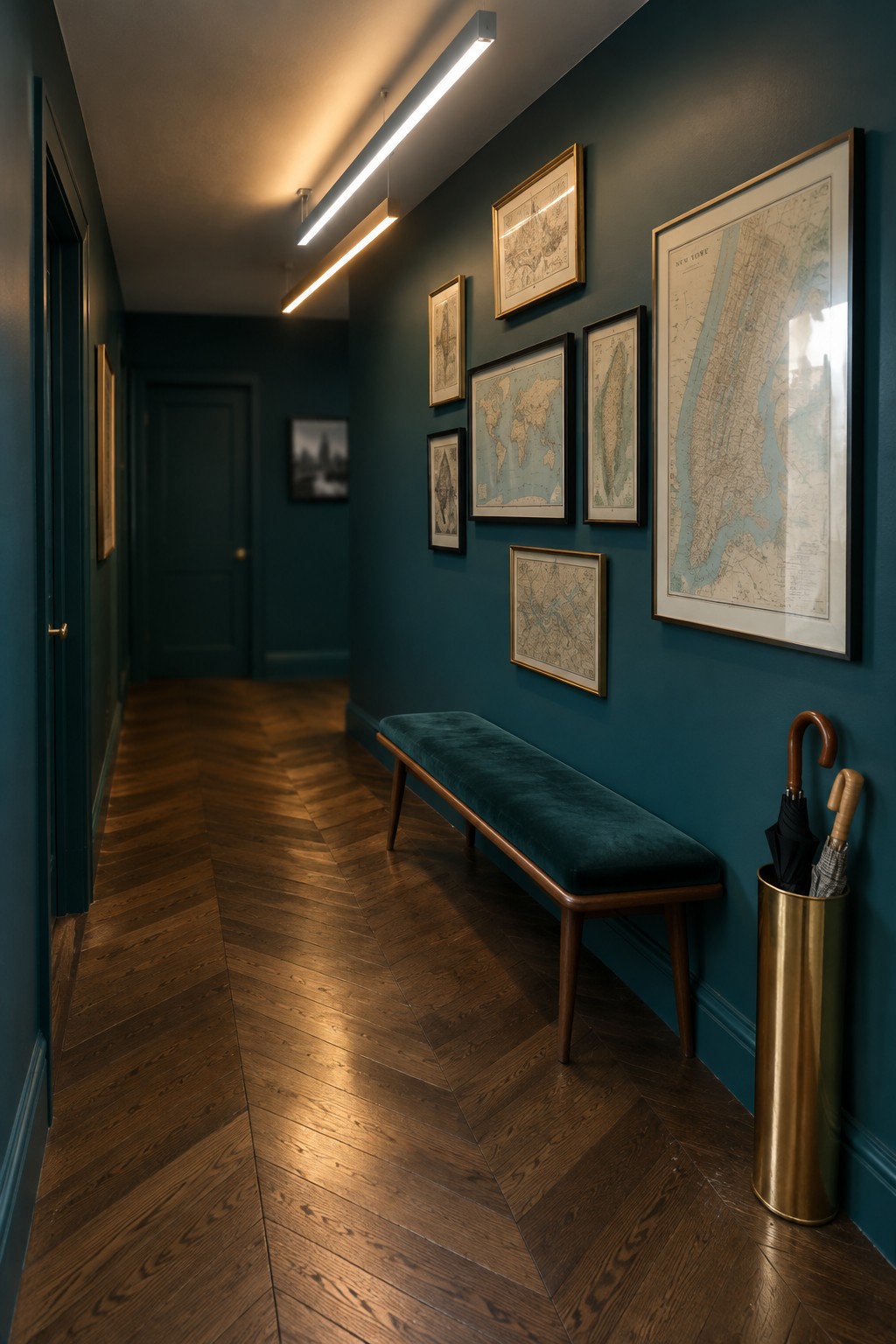
Linear fixtures work well in hallways because they deliver steady light without needing multiple lamps or bulky shades that eat into already tight space. In a narrow run like this one, a pair of long overhead lights keeps the path bright from end to end while leaving the walls free for simple seating or art.
They suit homes with low ceilings because the slim shape stays close to the surface and does not drop visual height the way pendants or clusters can. Place them centered along the length, keep the finish simple, and pair them with a bench or hooks so the hallway stays useful without feeling crowded.
Linear Wall Sconces For Low Ceiling Hallways
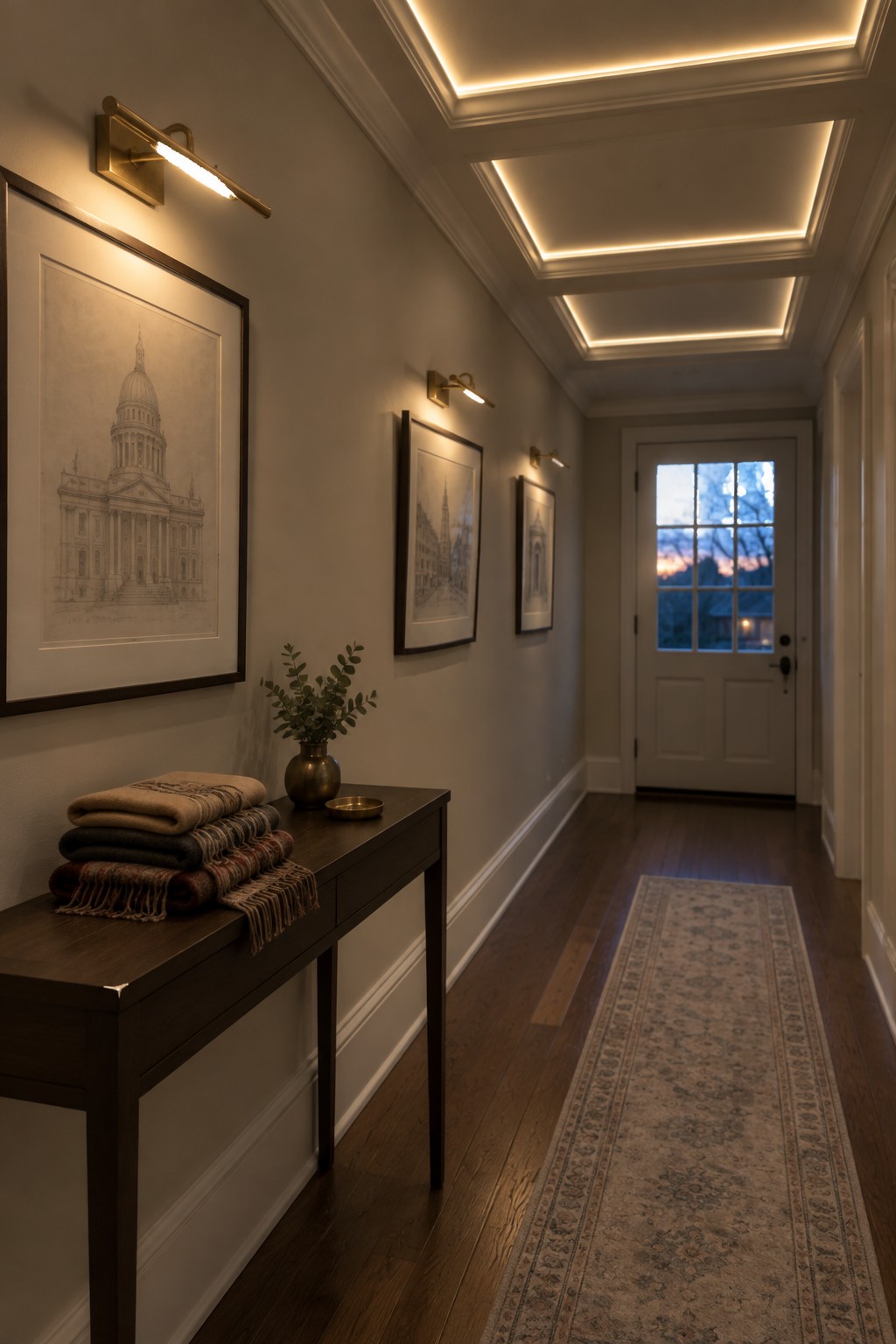
Wall sconces with a slim linear shape give you steady light along a hallway without forcing you to lower the ceiling any further. In spaces where the overhead height is already tight, these fixtures sit flat against the wall and spread light sideways instead of hanging down into the walkway.
They suit older homes or any narrow corridor where you want even coverage without multiple ceiling cutouts. Keep the sconces at a consistent height and pair them with a simple runner so the floor stays clear and the path feels wider than it is.
Linear Lighting for Tight Pantry-Style Hallways

A long linear light works well in tight hallways because it spreads light evenly along the length of the space without adding bulk. In rooms like this one, where shelves line both sides and floor space is limited, the fixture stays out of the way while still making the area feel usable and bright.
This approach suits older homes or any narrow passage with lower ceilings. Keep the fixture slim and centered, and use light paint on the walls so the light bounces around rather than getting absorbed. It is a simple way to avoid wall sconces that might crowd the walkway.
Frequently Asked Questions
Q: How far down from the ceiling should the linear fixture hang in a really tight hallway? A: Keep it flush or just an inch or two below. Anything lower starts to eat into headroom and makes the space feel narrower as you walk through.
Q: What if the light ends up too harsh along the walls? A: Pick a fixture with a diffuser cover. It spreads the beam evenly so you avoid bright spots that make the low ceiling stand out more.
Q: Can I add these lights if the hallway already has a ceiling fan? A: Swap the fan for a simple flush mount linear instead. The fan usually blocks good light placement and adds unnecessary bulk overhead.
