

Ever had that moment when your car hesitates to start, leaving you wondering what’s going on? It’s like your car is playing hard to get, even though the battery isn’t dead. Frustrating, right? Don’t worry, we’ve all been there. But why does this happen, and more importantly, how can you fix it without breaking a sweat?
Check Battery Connection
If your car hesitates to start even when the battery isn’t dead, the issue could be related to the battery connection. Loose or corroded connections can prevent the battery from delivering power efficiently to start the engine properly.
- Loose Connections: Check if the battery terminals are tightly secured. Loose connections can disrupt the flow of electricity and cause starting issues. Ensure the terminals are clean, tight, and free of corrosion.
- Corrosion: Inspect the battery terminals for any signs of corrosion, which can impede the transfer of power. If you notice corrosion, using a mixture of baking soda and water to clean the terminals can help improve the connection.
Remember, before handling the battery or electrical components, always disconnect the negative terminal first to avoid any safety hazards.
Inspect Starter Motor
When experiencing issues with your car’s Starting, it’s essential to inspect the starter motor as it plays a crucial role in initiating your vehicle’s engine. Here are some steps to guide you through this process:
- Locate the starter motor: It’s typically found near the front or back of the engine. Refer to your car’s manual if unsure.
- Visual inspection: Check for any visible signs of damage, such as frayed wires or loose connections.
- Testing the starter: Use a multimeter to test the starter motor’s voltage. A healthy starter typically shows around 12.6 volts.
- Listen for unusual sounds: If you hear a clicking noise when turning the key, it could indicate a faulty starter motor.
A malfunctioning starter motor can lead to your car hesitating to start, even if the battery is in good condition. By inspecting this crucial component, you can potentially pinpoint and address the underlying issue.
Test Alternator Output
When troubleshooting starting issues in your car, testing the alternator output is crucial. The alternator plays a key role in charging the battery while the engine runs. Here’s how you can check the alternator output:
- Start your car and let it run for a few minutes.
- Use a multimeter to measure voltage across the battery terminals.
- A healthy alternator should provide a reading between 13.5 and 14.5 volts.
- Low voltage readings may indicate an issue with the alternator that could be affecting the battery’s ability to hold charge.
- Inconsistent voltage output can lead to irregular charging, potentially causing starting problems.
By verifying the alternator output, you can ensure that your battery receives the necessary charge to function properly and avoid hesitation when starting your car.
Recommended Products
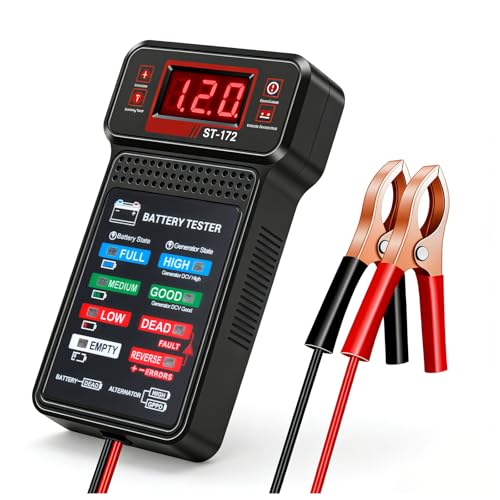
LED Indicator & LCD Display: Battery tester automotive designed with digital LCD display to show real-time voltage values, and color-coded LED indicators to show intuitively battery health status, help you to quickly grasp status of vehicle battery and accurately determine whether it is abnormal

【Specifications】Case Material: Aluminum; Amperage: 150 AMP; Voltage: 12 V; Pulley Groove Quantity: 6; Terminal Quantity: 3; Rotation Direction: Clockwise; Cooling Method: Air; Same as OE; Number of Pieces: 1;

[CAR BATTERY TESTER] You may wonder if the battery needs to be replaced or just needs recharging. Our car battery checker tell you the battery health by battery and alternator test. Save your trip and money by avoiding sending good batteries to car manufacturers.
Check Fuel System
When your car hesitates to start, the fuel system could also be a culprit. Insufficient fuel reaching the engine can cause starting issues. Here’s what you can do:
- Check Fuel Levels: Ensure you have enough fuel in the tank.
- Inspect Fuel Lines: Look for leaks or blockages that may be affecting fuel flow.
- Test Fuel Pump: Check if the fuel pump is working correctly by listening for a humming noise when you turn the ignition key.
- Replace Fuel Filter: A clogged fuel filter can impede fuel delivery; consider replacing it if needed.
Addressing these fuel system components can help ensure your car starts smoothly.
Replace Spark Plugs
Wondering why your car hesitates to start even though the battery’s not dead? It might be time to look at your spark plugs. Over time, spark plugs can wear out, leading to poor ignition and difficulty starting your vehicle. Here’s what you can do:
- Check your owner’s manual for the recommended replacement interval for your spark plugs. It’s typically between 30,000 to 100,000 miles.
- Inspect your spark plugs for signs of wear, such as carbon buildup or worn electrodes. Damaged spark plugs can cause misfires and lead to starting issues.
- Replace spark plugs in sets to ensure balanced performance across all cylinders.
- Use a spark plug gap tool to set the gap to the manufacturer’s specifications. Incorrect gaps can affect engine performance.
- Consider upgrading to iridium or platinum spark plugs for improved durability and longevity.
By replacing your spark plugs at the recommended intervals, you can ensure optimal ignition performance and potentially resolve starting issues related to spark plug wear.
Conclusion
Ensuring your car’s alternator output and fuel system are in good condition is crucial when dealing with starting problems. Additionally, regularly checking and replacing spark plugs can prevent ignition issues. By following the recommended maintenance schedule and inspecting spark plugs for wear, you can maintain optimal ignition performance. Remember to replace spark plugs in sets, set the gap correctly, and consider upgraded options for better results. By taking these steps, you can address starting issues related to spark plug wear and keep your car running smoothly.
Frequently Asked Questions
Why is testing the alternator output important when troubleshooting starting issues in a car?
Testing the alternator output is crucial because it ensures the battery is being properly charged while the car is running, providing the necessary power for ignition and other electrical components to function correctly.
Why should I check the fuel system when my car is having starting problems?
Checking the fuel system is essential because issues like fuel pump failure or clogged fuel filters can lead to inadequate fuel delivery to the engine, resulting in starting difficulties.
How do worn-out spark plugs contribute to starting problems in a car?
Worn-out spark plugs can cause ignition issues due to inadequate spark generation, leading to misfires, rough idling, and difficulty starting the engine.
What are some key tips for maintaining spark plugs to ensure optimal ignition performance?
Key tips include checking the owner’s manual for replacement intervals, inspecting spark plugs for wear, replacing them in sets, setting the gap correctly, and considering upgraded options for improved performance.
