

Are you thinking about setting up a 100W solar panel system? You’re not alone. Many people want to harness solar energy for their homes or RVs but often get stuck figuring out the right battery size to go with it.
Key Takeaways
- Understand Solar Output: A 100W solar panel can generate around 400-500 watt-hours daily under ideal conditions, depending on sunlight availability.
- Calculate Energy Needs: Determine total daily watt-hours based on all devices you plan to power; this dictates the required battery size.
- Battery Sizing Formula: Use the formula: Required Battery Size (in Ah) = (Daily Energy Usage (Wh) / Battery Voltage (V)) * Safety Factor (for inefficiencies).
- Consider Depth of Discharge (DoD): Select a battery that aligns with your DoD preferences, impacting the effective capacity and overall battery size.
- Account for Efficiency Losses: Factor in 10-20% energy loss during charging and discharging when calculating battery requirements.
- Choose the Right Battery Type: Options include AGM, lithium-ion, gel, or flooded lead-acid, each with unique characteristics suited for different energy needs and preferences.
Understanding Solar Panel Power
Understanding the power output from a 100W solar panel is essential for optimizing your solar energy system. The output largely depends on several factors, including sunlight availability, angle of the panel, and efficiency.
Solar Panel Output
A 100W solar panel generates a maximum of 100 watts under ideal conditions. This means, during peak sunlight hours, you can expect around 400-500 watt-hours per day if you receive about 5 hours of good sunlight.
Energy Needs Calculation
To determine the appropriate battery size, calculate your energy needs. Start by listing all the devices you plan to power with your solar setup. For example, if you want to run a laptop (60W), a light bulb (10W), and a small fridge (40W), your total power requirement adds up to 110W.
Battery Sizing Formula
Use the following formula to estimate your battery capacity:
- Daily Energy Usage (in Wh) = Total wattage of devices * Total hours of usage.
- Required Battery Size (in Ah) = (Daily Energy Usage / Battery voltage) * safety factor.
For instance, if you plan to run 110W for 5 hours, your daily usage is 550Wh. If your battery functions at 12V and you include a safety factor of 1.2 for inefficiencies, your required battery size would be approximately 55Ah.
Example Scenario
Let’s say you decide on a 100W solar panel and want to run a laptop and a light for 5 hours each day.
- Laptop: 60W * 5 hours = 300Wh
- Light: 10W * 5 hours = 50Wh
- Total: 350Wh daily usage
Using the battery formula:
- Required battery size = (350Wh / 12V) * 1.2 = 35Ah
Conclusion on Sizing Your Battery
Use this information to select a battery that meets or exceeds the calculated size. Common options include AGM, lithium-ion, or gel batteries. Keep in mind that larger batteries can store more energy, allowing for extended use during cloudy weather or nighttime.
By understanding solar panel power and properly sizing your battery, you’ll maximize the benefits of your solar energy system.
Importance of Battery Size
Battery size plays a crucial role in the efficiency and effectiveness of your 100W solar panel system. An appropriately sized battery enables adequate energy storage, ensuring you have power when sunlight isn’t available. Understanding battery size helps maximize your system’s performance and meets your specific energy demands.
Recommended Products

【Efficient Performance】This Starter Kit can generate an average of 500Wh of electricity per day (varies with sunlight). The solar panel boasts a 22.5% cell efficiency, 1.3% higher than other counterparts. Each panel dispatched from our facility undergoes 100% EL testing, ensuring that your panel is completely free from any hidden cracks.
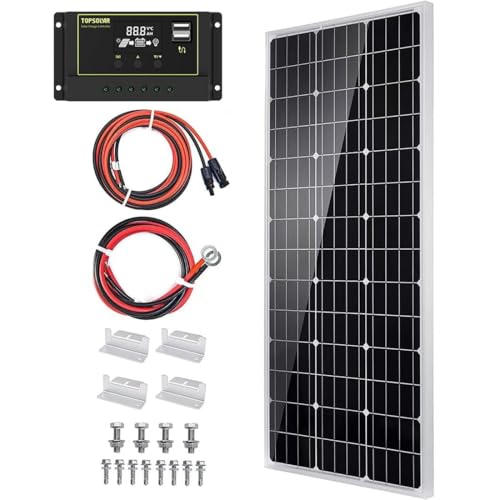
100W solar panel kits ideal for 12v battery charging, designed for RVs, cabins, homes, boats, caravan s, back-up and remote power use.

⚡ Ultra-Lightweight & Ultra-Portable: 100W Foldable Solar Panel Weighing only 4.1lbs (1.85kg) with a sleek 0.59-inch profile, this solar charger is engineered for ultimate portability. It folds down to a compact 12.99 x 10.43 x 2.17" (330x265x55mm) and includes a premium carry bag, making it effortless to transport during camping, hiking, or road trips. The generous unfolded size of 45.47 x 26.18" ensures maximum power capture while remaining easy to handle.
Factors Influencing Battery Size
- Energy Needs: Assess your total daily energy consumption from devices you plan to power. List their wattage and usage duration to calculate total watt-hours.
- Autonomy Days: Determine how many days of backup power you’ll need. If your location experiences cloudy days, account for additional days in your calculations.
- Depth of Discharge (DoD): Batteries should not be fully discharged. Aim for a DoD between 50-80%, depending on battery type. This factor reduces the effective capacity, directly impacting your battery size.
- Efficiency Losses: Expect some energy loss during charging and discharging. Consider around 10-20% for efficiency losses in your calculations.
- Solar Charging Capacity: Ensure your battery can handle the charge from your solar panel. A 100W panel may deliver around 20-25 amps during peak sunlight, influencing battery selection.
- AGM Batteries: Absorbed Glass Mat batteries are sealed and maintenance-free. They offer decent performance and a standard DoD of 50%. Select AGM batteries for reliable and consistent use in moderate energy setups.
- Lithium-Ion Batteries: Known for higher efficiency and longer lifespans, lithium-ion batteries allow a deeper discharge of up to 80-90%. Although they carry a higher upfront cost, their longevity and performance may justify the investment.
- Gel Batteries: These batteries provide a good balance between lifespan and cost. They feature a 50% DoD and are less prone to sulfation, making them suitable for various solar applications.
- Flooded Lead Acid Batteries: These batteries require regular maintenance and can discharge only up to 50%. While inexpensive upfront, consider the ongoing maintenance needs and shorter lifespan when choosing this type.
Understanding these factors and battery types equips you to make informed decisions, optimizing your solar system for your specific energy needs.
Calculating Battery Size for a 100W Solar Panel
Calculating the right battery size for your 100W solar panel system involves understanding your energy needs and applying specific formulas. This ensures that you select an appropriate battery that meets your power requirements.
Recommended Products
![[Upgraded] 30A Solar Charge Controller, Black Solar Panel Battery Intelligent Regulator with Dual USB Port 12V/24V PWM Auto Paremeter Adjustable LCD Display (30a)](https://m.media-amazon.com/images/I/41M0gMi3O2L._SL500_.jpg)
UPGRADED SOLAR PANEL CONTROLLER: Compatible with 12V 24V system.This solar charge controller helps you manage the working of solar panels and battery in solar systems automatically with the build-in industrial microcontroller. You don't need to reset it when the battery runs out cause it will memorize various parameters set by the user. You can also charge your mobile phone, tablet, PCs through Dual USB output 5V/2.5A (max)

Perfect for off grid 12 volt batteries charging system and a variety of DC applications, designed for maintaining 12 volt batteries in car, RVs, cabins, boats, marine, battery operated gates, back-up power and remote power use.

【Long-Lasting 1920Wh Energy & 4000+ Cycles】Power your devices longer with a substantial 1920Wh of reliable energy. DUMFUME 12v 150ah lifepo4 battery is engineered for endurance, delivering over 4,000 cycles (to 80% capacity) and a service life that far surpasses traditional lead-acid batteries. 12 Volt 150Ah lithium iron battery makes it a cost-effective, long-term power solution for your RV adventures, solar energy storage, and off-grid systems.
Formula for Sizing Batteries
To calculate the necessary battery capacity, use this formula:
[
\text{Battery Capacity (Ah)} = \frac{\text{Total Daily Energy Consumption (Wh)}}{\text{Battery Voltage (V)} \times \text{Depth of Discharge (DoD)}}
]
- Total Daily Energy Consumption (Wh): Add up the watt-hours of all devices you plan to power.
- Battery Voltage (V): Typically, this is either 12V or 24V for most solar systems.
- Depth of Discharge (DoD): Use a fraction that indicates the amount of battery capacity utilized. For example, a 50% DoD means you use half of the battery’s capacity; thus, multiply the capacity by 0.5.
This formula provides a solid starting point for determining the battery size you’ll need for a reliable solar power setup.
Example Calculation
Let’s work through an example to clarify this process:
- Daily Energy Consumption: If you plan to power a 12V light (10W) for 5 hours and a 20W pump for 2 hours, your total daily energy consumption is:
- Light: 10W * 5 hours = 50Wh
- Pump: 20W * 2 hours = 40Wh
- Total: 50Wh + 40Wh = 90Wh
- Using the Formula: With a 12V battery and a DoD of 0.5, your battery size calculation becomes:
[
\text{Battery Capacity (Ah)} = \frac{90Wh}{12V \times 0.5} = \frac{90Wh}{6V} = 15Ah
] - Selecting the Battery: Choose a battery rated at least 15Ah or higher to account for any efficiency losses during charging and discharging.
This calculation ensures that your battery can effectively power your devices while providing some cushion for longer usage or cloudy days.
Recommendations for Battery Size
Choosing the right battery size for your 100W solar panel system requires careful consideration of your energy needs and battery specifications. Here’s how to make an informed decision.
Recommended Products

ECI Power: A brand for everyone with the goal of providing an open avenue for all to know that safe lithium power should not be cost-prohibitive nor outside the scope of your project.

【20A Smart Controller】This 20A Smart Controller with LCD screen. Built-in USB and Type-C ports add convenient charging options for small electronic devices during camping, travel. It helps protect your battery from overcharge, overvoltage, overcurrent, short circuit, reverse polarity, and overheating.

【COMPACT SIZE, EASY TO CARRY】 Folds down to 21×20×1in and weighs just 6lb, making this 100W panel lightweight and convenient to pack, move, or mount for road trips, vans, and emergency backup.
Best Practices for Choosing Batteries
- Calculate Your Energy Needs: List all devices you’ll use. Add up their wattage to find total daily usage in watt-hours.
- Consider Depth of Discharge (DoD): Choose a battery type that matches your DoD preferences. AGM and gel batteries often suggest a 50% DoD, while lithium-ion batteries can go up to 80-90%.
- Factor in Autonomy Days: Determine how many days you want to run your devices without sunlight. Multiply your total daily usage by these autonomy days for your battery size.
- Account for Efficiency Losses: Know that charging and discharging processes aren’t 100% efficient. Typically, assume a loss of 10-20%. Add this factor to your battery calculation.
- Choose the Right Voltage: Standard options include 12V or 24V batteries. A 12V battery is common for a 100W solar setup.
- AGM Batteries: Maintenance-free, ideal for moderate energy setups. A 100Ah AGM battery provides ample storage for daily energy needs, offering around 1200 watt-hours of usable capacity.
- Lithium-Ion Batteries: High efficiency and longer lifespan make them a top choice. A 100Ah lithium-ion battery can deliver up to 3000-5000 cycles, maximizing your investment.
- Gel Batteries: These batteries offer a balanced option between lifespan and cost. A 100Ah gel battery provides reliable performance for daily use.
- Flooded Lead-Acid Batteries: These require regular maintenance but are cost-effective. A 100Ah flooded lead-acid battery delivers solid performance if you don’t mind extra care.
By following these recommendations and choosing the right battery type, you can optimize your 100W solar panel system for your energy needs.
Conclusion
Choosing the right battery size for your 100W solar panel system is key to maximizing its performance. By understanding your energy needs and considering factors like depth of discharge and autonomy days, you can ensure your setup runs smoothly.
Remember to weigh the benefits of different battery types to find the best fit for your lifestyle. Whether you opt for AGM, lithium-ion, gel, or flooded lead-acid batteries, taking the time to calculate and select the right battery will enhance your solar experience. Enjoy the freedom and sustainability that comes with harnessing solar energy!
Frequently Asked Questions
What is a 100W solar panel system used for?
A 100W solar panel system is ideal for powering small appliances, lights, and charging devices in homes or recreational vehicles (RVs). It harnesses solar energy to provide sustainable power, reducing reliance on traditional electricity sources.
How much energy can a 100W solar panel produce daily?
Under ideal conditions, a 100W solar panel can generate approximately 400-500 watt-hours per day. This output can vary based on factors like sunlight availability and the panel’s efficiency.
How do I calculate my energy needs for a solar panel system?
To calculate your energy needs, list all devices you plan to power and their daily watt-hour consumption. Sum these values to determine your total daily energy consumption, which will help in selecting the appropriate battery size.
What factors determine the right battery size for a solar setup?
Key factors include total daily energy consumption, desired autonomy days for backup power, depth of discharge (DoD), charging efficiency losses, and the solar charging capacity of the battery.
What types of batteries are suitable for a 100W solar panel system?
Common battery types include AGM, lithium-ion, gel, and flooded lead-acid. AGM batteries are maintenance-free, lithium-ion offers higher efficiency, gel provides a cost-effective lifespan, and flooded lead-acid requires regular upkeep.
How do I determine the required battery capacity for my setup?
Calculate the necessary battery capacity using the formula: (Total daily energy consumption ÷ Battery voltage) ÷ Depth of discharge (DoD). Adjust for efficiency losses and select a battery that meets or exceeds this capacity.
Why is depth of discharge (DoD) important?
Depth of discharge (DoD) affects battery lifespan and performance. A lower DoD extends battery life but reduces available power, while a higher DoD allows for more energy use but can shorten battery life if used excessively.
What is the significance of autonomy days in a solar battery system?
Autonomy days refer to the number of days the battery can supply power without solar charging. Considering autonomy days helps ensure you have sufficient backup power during periods of low sunlight, enhancing system reliability.
Can I mix different types of batteries in my solar system?
It’s not recommended to mix different battery types or chemistries in a solar system. Mixing can lead to uneven charging, reduced efficiency, and potential damage to the batteries. It’s best to use identical batteries for optimal performance.
How often should I check my solar panel system?
Routine checks are recommended every few months. Monitoring battery levels, cleaning the panels, and ensuring connections are secure can help maintain efficiency and prolong the life of your solar panel system.
