

Have you ever found yourself in the great outdoors, enjoying nature, only to realize your gadgets are running low on power? Connecting a solar panel to a leisure battery can be a game-changer. It lets you harness the sun’s energy, ensuring you stay connected and powered up while camping or on a road trip.
In this article, you’ll learn how to easily set up a solar panel with your leisure battery. We’ll cover the steps you need to take and the tools required, so you can enjoy worry-free adventures. By the end, you’ll have the knowledge to keep your devices charged and your fun uninterrupted.
Key Takeaways
- Understand Leisure Batteries: Choose the right leisure battery type—lead-acid, AGM, or lithium—based on your power requirements and budget for optimal performance.
- Know Solar Panel Components: Familiarize yourself with essential solar panel components including solar cells, inverters, and charge controllers to ensure effective setup.
- Gather Necessary Equipment: Before connecting, collect crucial tools like MC4 connectors, battery cables, a charge controller, and a multimeter to facilitate a smooth installation.
- Follow Step-by-Step Connection: Adhere to a structured guide, including preparing the battery, connecting the charge controller and solar panel, and securing all connections for reliable operation.
- Optimize Solar Panel Positioning: Position the solar panel for maximum sunlight exposure, adjusting its angle and securing it against wind and weather for better performance.
- Conduct Regular Maintenance: Periodically inspect the solar panel and connections, cleaning surfaces and replacing worn components to ensure continuous efficiency.
Understanding Solar Panels and Leisure Batteries
Understanding the relationship between solar panels and leisure batteries is crucial for maximizing your outdoor experiences. Here’s a breakdown of each component.
What Is a Leisure Battery?
A leisure battery is designed for deep discharge applications. Unlike regular car batteries, it can be drained and recharged multiple times without damage. Leisure batteries supply power for various devices like lights, refrigerators, and other electronics. Common types include:
- Lead Acid Batteries: Affordable and widely used, but heavier and less efficient.
- AGM Batteries: Sealed and can handle deep discharges better than lead-acid.
- Lithium Batteries: Lightweight, with a longer lifespan and higher efficiency, but typically more expensive.
Select a leisure battery according to your power needs, device requirements, and budget.
How Solar Panels Work
Solar panels convert sunlight into electricity using photovoltaic cells. Sunlight strikes these cells, exciting electrons and generating direct current (DC) electricity. The process involves several key components:
- Solar Cells: The basic units that capture sunlight and produce electricity.
- Inverter: Converts DC electricity into alternating current (AC) for home use. For connecting to a leisure battery, DC is often more useful.
- Charge Controller: Regulates the voltage and current coming from the solar panels to prevent overcharging the battery.
You can determine the right size of a solar panel system by calculating your power consumption. Use the wattage of your devices and the number of hours you plan to use them to find your total daily power requirement. With this information, choose a solar panel that meets or exceeds this output for effective charging of your leisure battery.
Necessary Equipment for Connection
To connect a solar panel to a leisure battery, you need specific tools and components. Having the right equipment ensures a smooth installation, helping you power your adventures effectively.
Recommended Products

✔️【Waterproof Solar Charge Controller】IP67 waterproof, suitable for outdoor use. Automatically identify voltage, 12V Max power: 150W, 24V Max power: 300W. The maximum current is 10A. Compatible with various 12V/24V deep-cycle batteries, such as AGM, GEL, Flooded. Adopting brand MCU chips to realize fast intelligent control and ultra-low standby power consumption.

【High Conversion Rate】This 20W solar panel with monocrystalline A+ solar cell has an excellent cell efficiency of 21%-30%. Designed to charge and maintain 12V rechargeable batteries like LiFePO₄, Lithium Ion, AGM, SLA, GEL, EFB, MF, etc. Keep batteries in charged for trailer, tractor, truck, boat, motorcycle, RV, car, lawn mower, water pump, gate opener, electric fence, etc
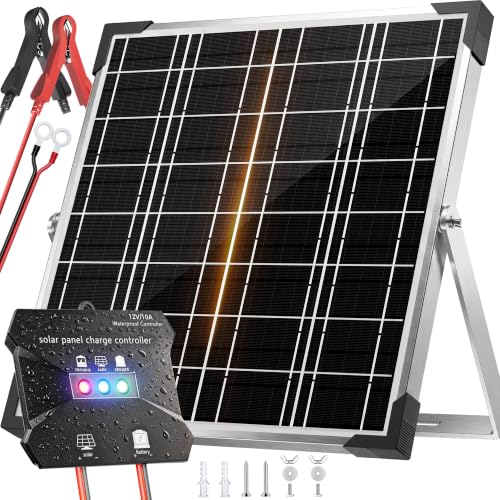
High-Efficiency MPPT Solar Charger - Advanced tracking technology delivers 20-30% faster charging for 12V batteries. A+ monocrystalline panels maximize power conversion. Perfect 20W solar trickle charger for cars, RVs, boats, and trailers. More sun captured, less time waiting.
Types of Solar Panels
- Monocrystalline Panels: These panels are efficient and space-saving. They perform well even in low-light conditions, making them a solid choice for outdoor settings.
- Polycrystalline Panels: These options are typically more affordable but less efficient. They require more space, which may matter in tight setups.
- Thin-Film Panels: These lightweight panels are flexible and portable. While they’re less efficient than crystalline options, they work well for unconventional spaces.
- MC4 Connectors: These are standard connectors for solar panel systems. They ensure a secure connection that can handle outdoor conditions.
- Battery Cables: Use thick, durable cables to connect the battery to the solar charge controller. This minimizes power loss and ensures safety.
- Solar Charge Controller: This device manages the power coming from the solar panel to the battery. It prevents overcharging and enhances battery life.
- Anderson Connectors: These connectors are useful for high-current applications. They make connections easy and safe for your setup.
By gathering these items, you prepare for a successful and efficient connection between your solar panel and leisure battery.
Step-by-Step Guide to Connecting
Connecting a solar panel to a leisure battery involves several straightforward steps. Follow this guide to ensure a successful setup.
Preparing the Battery
- Select Your Battery
Choose a leisure battery suitable for your needs. Popular options include lead acid, AGM, and lithium batteries. - Inspect the Battery
Check the battery for any signs of damage, corrosion, or leakage. A healthy battery ensures optimal performance. - Clean the Terminals
Use a wire brush to clean the battery terminals. This step prevents poor connections that could affect charging.
Connecting the Solar Panel
- Gather Necessary Tools
Collect your tools: MC4 connectors, battery cables, a charge controller, and a screwdriver. Having everything ready simplifies the process. - Connect the Charge Controller
First, connect your charge controller to the battery. Positive (+) connects to the positive terminal and negative (-) to the negative terminal. Ensure a tight fit. - Attach the Solar Panel
Connect the solar panel to the charge controller using MC4 connectors. Match positive to positive and negative to negative. - Secure All Connections
Double-check all connections. Loosely attached wires may cause charging issues or even damage.
- Check Indicators
Look for LED indicators on the charge controller. Green lights indicate a successful connection and charging, while red flags indicate issues. - Measure Voltage
Use a multimeter to measure voltage at the battery terminals. A reading between 13.0 and 13.8 volts usually signifies proper charging. - Observe Charging
Monitor the system over time to ensure that the battery charges as expected. Watch for any irregularities in performance.
Following these structured steps ensures a reliable solar setup for your leisure activities.
Tips for Optimal Performance
Maximize the efficiency of your solar panel and leisure battery setup with these practical tips.
Positioning the Solar Panel
Select an unobstructed location for your solar panel. Aim for a spot with direct sunlight exposure for six to eight hours daily. Tilt the panel to match the sun’s angle, which varies by season and location. Adjust according to the time of day; the sun moves, and so should your panel position if possible. Secure the panel firmly to withstand wind and weather conditions. Consider placing it at a height to avoid blockages from trees or structures.
Maintenance and Troubleshooting
Inspect your solar panel regularly for dirt or debris. Clean the surface with water and a soft cloth to maintain efficiency. Check connections and cables for wear and tear; replace any damaged components promptly. Monitor the charge controller indicators for any unusual readings. If the battery isn’t charging as expected, confirm that the solar panel is receiving adequate sunlight. Adjust positioning if necessary. If problems persist, consult the user manual or reach out to an expert for assistance.
Conclusion
You’ve now got the know-how to connect a solar panel to your leisure battery and keep your devices charged during your outdoor adventures. With the right setup and a little maintenance, you can enjoy the great outdoors without worrying about running out of power.
Remember to position your solar panel for maximum sunlight and check your connections regularly. Embracing solar energy not only enhances your experience but also contributes to a more sustainable way of enjoying nature.
So gear up and get ready to explore with confidence knowing you’ve got a reliable power source by your side. Happy adventuring!
Frequently Asked Questions
What is a leisure battery?
A leisure battery is specifically designed to provide power for recreational use, such as camping or road trips. Unlike a regular car battery, it can be discharged and recharged multiple times without damage. Common types include lead acid, AGM (Absorbent Glass Mat), and lithium batteries, each catering to different needs and efficiency levels.
How do solar panels work?
Solar panels convert sunlight into electricity using photovoltaic cells. When sunlight hits these cells, it generates direct current (DC) electricity, which is then transformed into usable energy by the inverter. A charge controller regulates this energy flow to ensure the battery receives proper charging without overloading.
What equipment do I need to connect a solar panel to a leisure battery?
To connect a solar panel to a leisure battery, you’ll need several components, including the solar panel itself, a charge controller, battery cables, MC4 connectors, and Anderson connectors. It’s essential to have the right tools for installation, like wrenches and wire cutters, to ensure proper connections.
How do I determine the size of my solar panel system?
To determine the appropriate size for your solar panel system, calculate your power consumption by estimating the wattage of devices you’ll be using and how long they’ll run each day. This helps you select a solar panel that can effectively match your energy demands while enjoying your outdoor activities.
What are the best practices for solar panel maintenance?
For optimal performance, regularly clean your solar panel to remove dirt and debris, which can block sunlight. Check connections and cables for wear, ensuring they remain secure. Also, inspect the charge controller’s indicators to monitor charging performance, making adjustments if necessary to maintain an effective energy setup.
