

Have you ever wondered how long it takes to charge a 100Ah battery using a 200W solar panel? You’re not alone. Many people rely on solar energy for everything from RV adventures to off-grid living, and understanding charging times can make all the difference in planning your setup.
Imagine you’re ready for a weekend getaway, but you’re unsure if your solar panel can fully charge your battery in time. Knowing the answer can help you avoid unexpected power shortages and keep your devices running smoothly. This article will break down the charging process so you can confidently manage your energy needs and get the most out of your solar setup.
Key Takeaways
- Battery Capacity Understanding: A 100Ah battery stores significant energy, influencing how quickly it can be charged using a solar panel.
- Solar Panel Output Calculation: A 200W solar panel generates approximately 16.67 amps, allowing a full charge of a 100Ah battery in ideal conditions (6 to 8 hours).
- Impact of Environmental Factors: Actual charging times vary due to sunlight intensity, panel orientation, temperature, panel age, and shading.
- Efficiency Considerations: System efficiency losses (20-30%) can extend charging times to 8-10 hours or more under less-than-ideal conditions.
- Utilizing Real-World Scenarios: Factor in your battery’s current state and the surrounding environment to better estimate actual charging times and manage energy needs effectively.
- Optimal Setup Planning: Maximize solar panel efficiency by maintaining proper angles, cleanliness, and considering seasonal changes to enhance overall performance.
Understanding Battery Capacity
Battery capacity directly influences how long it takes to charge your battery using a solar panel. A 100Ah battery can store 100 amp-hours of electricity, which determines how much energy it can provide over time.
Amp-Hour Rating
Amp-hour (Ah) rating measures the battery’s capacity. A 100Ah battery delivers 1 amp of current for 100 hours or 100 amps for 1 hour. This rating helps you understand how long your battery can supply power. If you’re running devices that draw 10 amps, your battery provides power for about 10 hours under optimal conditions.
Power Requirements
Power requirements are crucial for calculating charging times. A 200W solar panel produces approximately 16.67 amps (200W divided by 12V). If your panel receives plenty of sunlight, it can charge your 100Ah battery from 0 to full in about 6 to 8 hours, assuming efficiency factors like temperature and shading. When assessing your energy needs, consider factors like daily consumption, how much sunlight your solar panel receives, and the efficiency rate of the system to optimize your setup.
Solar Panel Fundamentals
Understanding solar panel fundamentals is essential for optimizing your battery charging process. You can significantly enhance your energy management by knowing how solar panels work and what factors impact their performance.
Recommended Products
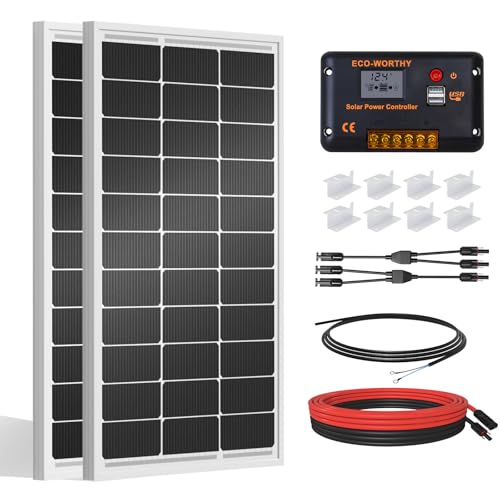
[Wide Application]: Daily Output 800wh/day under 4 hours full sunshine condition. Perfect for RV, Caravan, Marine, Camper, Electric scooter, Golf Carts, Power wheels, Trolling motor, Tool trailer, Backup power supply for cabin shed home etc.

【High Efficiency Solar Power】200W high-efficiency foldable solar panel delivers reliable charging performance for 12V batteries, portable power stations, and off-grid systems.

【Complete and Easy】This Renogy 200W Solar Panel Kit, perfect for 12 Volt Systems. The included cables, Z - brackets, and pre - drilled holes on the back frame of the renogy solar panels allow fast and secure mounting. The rv solar panel kit can meet your further power needs by adding more of the same solar panels to expand up to 400W. It also comes as a complete solar panel kit with battery and inverter options available for a more comprehensive power solution.
Solar Panel Output
Solar panels have a specified power output, measured in watts. In this case, a 200W solar panel can typically generate around 16.67 amps under ideal conditions. Your charging times depend on this output. For a 100Ah battery, if conditions are perfect—such as direct sunlight and no shading—it can take about 6 to 8 hours to charge from empty to full. This charging time assumes the panel operates at peak efficiency, delivering the maximum output throughout the day.
Factors Affecting Solar Panel Efficiency
Several factors impact the efficiency of solar panels:
- Sunlight Intensity: Direct sunlight increases output. Cloud cover or obstructions can reduce efficiency.
- Panel Orientation: Position panels toward the sun for optimal exposure. Adjust angles seasonally for better performance.
- Temperature: Solar panels operate efficiently within a specific temperature range. Extreme heat can decrease output.
- Panel Age: Older panels may generate less power than new ones. Regular maintenance can prolong efficiency.
- Shading: Even partial shading from trees or buildings can drastically reduce energy output.
Keeping these variables in mind helps you better plan your solar setup and charging times. By maximizing solar panel efficiency, you can ensure your 100Ah battery charges effectively and meets your energy needs during your adventures.
Calculating Charge Time
Understanding charge time helps you manage your energy needs effectively. A few calculations can provide clarity on how long it takes to charge a 100Ah battery with a 200W solar panel.
Recommended Products

Warning: This 12 volt 80 amp lithium battery charger is not waterproof - not suitable for Marine environments such as boats, ships, yachts, trolling motors, etc.

Warning: This 14.6 volt 20 amp lithium battery charger is not waterproof - not suitable for Marine environments such as boats, ships, yachts, trolling motors, etc.
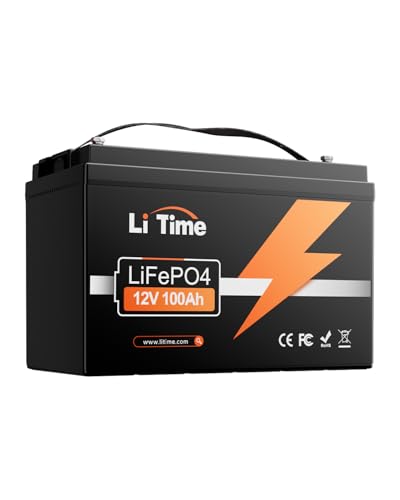
Longer Battery Life & Safe Use: Built-in 100A BMS prevents overcharge/over-discharge/short circuits/over-voltage/over-current/over-temperature, boosting safety & lifespan.
Basic Formula for Charging
To determine charge time, use this formula:
[
\text{Charge Time (hours)} = \frac{\text{Battery Capacity (Ah)}}{\text{Solar Panel Output (A)}}
]
For a 100Ah battery and a 200W solar panel:
- Convert solar panel watts to amps:
[
\text{Panel Output (A)} = \frac{\text{Watts}}{\text{Voltage}}
]
Assuming a 12V system:
[
200W \div 12V = 16.67A
] - Apply the formula:
[
\text{Charge Time} = \frac{100Ah}{16.67A} \approx 6 \text{ hours}
]
This calculation assumes ideal conditions, meaning maximum sunlight and no losses.
Real-World Considerations
Consider these factors that affect real-world charge times:
- Sunlight Availability: Full sunlight only happens part of the day. If clouds cover the sun, charging times increase.
- System Efficiency: Not all energy makes it to the battery. Factors like solar panel angle and wiring losses can reduce efficiency by 20-30%. You might charge closer to 8-10 hours under less-than-ideal conditions.
- Battery State: Starting from a partially charged battery means less time required. Calculate based on the remaining capacity.
- Temperature Effects: Extreme temperatures can affect battery performance and solar panel efficiency. Keep panels clean and clear of debris for optimal performance.
By considering these variables, you can better estimate charging time and effectively plan your solar energy usage during your adventures.
Practical Example
Charging a 100Ah battery with a 200W solar panel can be straightforward if you understand the process and variables involved.
Recommended Products

【Superior MPPT Technology】 This 100A MPPT solar controller is equipped with an advanced MPPT maximum power point tracking technology algorithm. It automatically recognizes 12V/24V/36V/48V systems and features dual USB 5V charging ports. The controller can swiftly track the maximum power point of the PV array in any environment, ensuring a tracking efficiency of no less than 99.5%. This significantly enhances the energy utilization in the solar system.
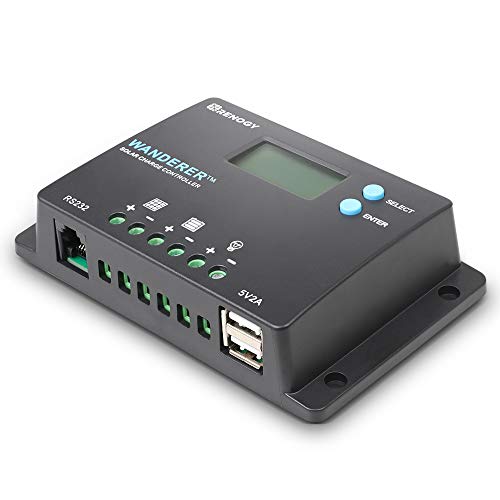
𝐒𝐦𝐚𝐫𝐭 𝟒-𝐒𝐭𝐚𝐠𝐞 12V/24V Solar Charge Controller: Renogy charge controller 𝐦𝐚𝐱𝐢𝐦𝐢𝐳𝐞𝐬 𝐁𝐚𝐭𝐭𝐞𝐫𝐲 𝐋𝐢𝐟𝐞 & 𝐒𝐨𝐥𝐚𝐫 𝐄𝐟𝐟𝐢𝐜𝐢𝐞𝐧𝐜𝐲, this advanced pwm solar charge controller utilizes intelligent 4-stage charging (Bulk/Boost/ Float/Equalization) to optimize power delivery for AGM, Gel, Flooded and Lithium batteries. RV solar charge controller prevents overcharging and gas buildup while 𝐚𝐜𝐡𝐢𝐞𝐯𝐢𝐧𝐠 𝟑𝟎% 𝐥𝐨𝐧𝐠𝐞𝐫 𝐛𝐚𝐭𝐭𝐞𝐫𝐲 𝐥𝐢𝐟𝐞𝐬𝐩𝐚𝐧 compared to basic charge controllers.
![[Upgraded] 30A PWM Solar Charge Controller with Auto Parameter LCD Display](https://m.media-amazon.com/images/I/41opvkWthjL._SL500_.jpg)
【UPGRADED SOLAR CONTROLLER】This solar charge controller helps you manage the working of solar panels and batteries in solar systems automatically with the build-in industrial microcontroller. You don't need to reset it when the battery runs out cause it will memorize various parameters set by the user
Scenario Analysis
Consider a scenario where you have a fully depleted 100Ah battery and a 200W solar panel connected to it. Under ideal conditions, the solar panel produces about 16.67 amps. Using the formula:
Charge Time (hours) = Battery Capacity (Ah) / Solar Panel Output (A),
you calculate:
Charge Time = 100Ah / 16.67A ≈ 6 hours.
This time assumes maximum sunlight exposure and optimal conditions.
Variable Factors
Several factors can affect charging time:
- Sunlight Intensity: Less sunlight directly leads to lower output. On cloudy days, your charging time increases.
- Panel Orientation: An improperly angled solar panel may not harness maximum sunlight. Angle panels toward the sun for optimal performance.
- Temperature: Extreme temperatures can affect solar panel efficiency. Solar panels operate best at moderate temperatures.
- Battery State: If the battery isn’t fully depleted, charging time decreases. It’s more efficient to charge from a partially drained state.
- System Efficiency: Inverters and charge controllers introduce energy losses. Ensure good quality components to minimize these losses.
Taking these variable factors into account, you can better estimate the actual charging time and adjust your expectations according to real-world conditions.
Conclusion
Understanding how long it takes to charge your 100Ah battery with a 200W solar panel can make all the difference during your adventures. By keeping an eye on factors like sunlight availability and system efficiency, you can optimize your solar setup to meet your energy needs.
Remember to account for real-world conditions that might affect charging times. With a bit of planning and knowledge, you’ll ensure your battery stays charged and your devices remain powered. Enjoy your time outdoors knowing you’re well-equipped to handle your energy requirements!
Frequently Asked Questions
How long does it take to charge a 100Ah battery with a 200W solar panel?
Charging a 100Ah battery using a 200W solar panel can take approximately 6 to 8 hours under ideal sunlight conditions. This is based on the panel producing around 16.67 amps.
What factors affect the charging time of a solar battery?
Charging time can be influenced by several factors, including sunlight intensity, panel orientation, temperature, battery state, and system efficiency. These variables can impact how quickly your battery charges.
How can I calculate the charging time for my solar battery?
You can calculate the charging time using the formula: Charge Time (hours) = Battery Capacity (Ah) / Solar Panel Output (A). For a 100Ah battery and a 200W panel, the ideal charge time is around 6 hours.
Why is it important to understand charging times?
Understanding charging times helps you manage energy needs effectively. It ensures devices remain operational during trips and helps avoid power shortages.
How does the current draw affect my battery’s duration?
The current draw of connected devices directly impacts how long your 100Ah battery can supply power. For example, if devices draw 10 amps, the battery can last approximately 10 hours under optimal conditions.
