


I’ve noticed over the years that minimalist living rooms only truly work when the lighting shapes how the space feels throughout the day. In actual homes, it’s that soft glow on clean lines and open floors that turns a bare room into something calm and usable, not cold or empty. I once shifted a floor lamp in my own setup, and it changed how we gathered there without adding a single extra piece. Folks usually spot the light first, the way it warms neutral tones or casts gentle shadows on textured walls. These setups give practical ways to borrow and adapt that balance for your own room.
Arched Floor Lamp in a Minimalist Living Room
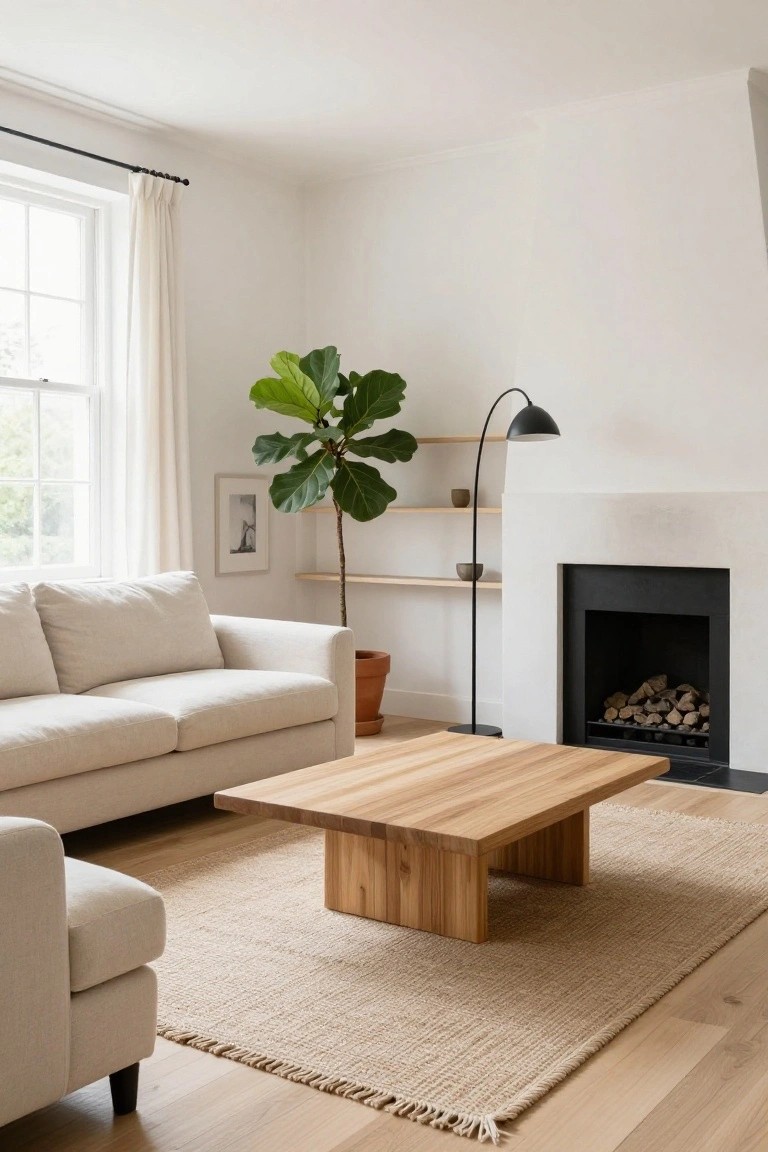
One simple way to handle lighting in a minimalist living room is with an arched floor lamp like this black one. It curves right over the seating area from a corner spot, giving you good light for reading or relaxing without crowding the surfaces. Paired with big windows and sheer curtains, it keeps things bright but not harsh during the day.
Put one near a sofa or plant stand in a small to medium room with white walls and wood floors. It suits homes where you want flexible light that moves if needed. Just make sure the base sits steady on the rug or floor so it doesn’t tip.
Exposed Wood Beams Warm Neutral Rooms

Those dark wooden beams running across the ceiling catch your eye right away. They bring some real warmth to the pale walls and gray sofa without cluttering things up. In a minimalist setup like this, that wood detail makes the space feel lived-in and steady, especially with soft light filtering through shoji screens.
You can pull this off in older homes with vaulted ceilings or even new builds if you expose some timbers. Keep furniture low and simple, like a round coffee table in matching wood tones. It suits quiet family rooms or spots for relaxing. Just avoid painting the beams, let the natural grain show.
Curved Sofas Add Organic Comfort
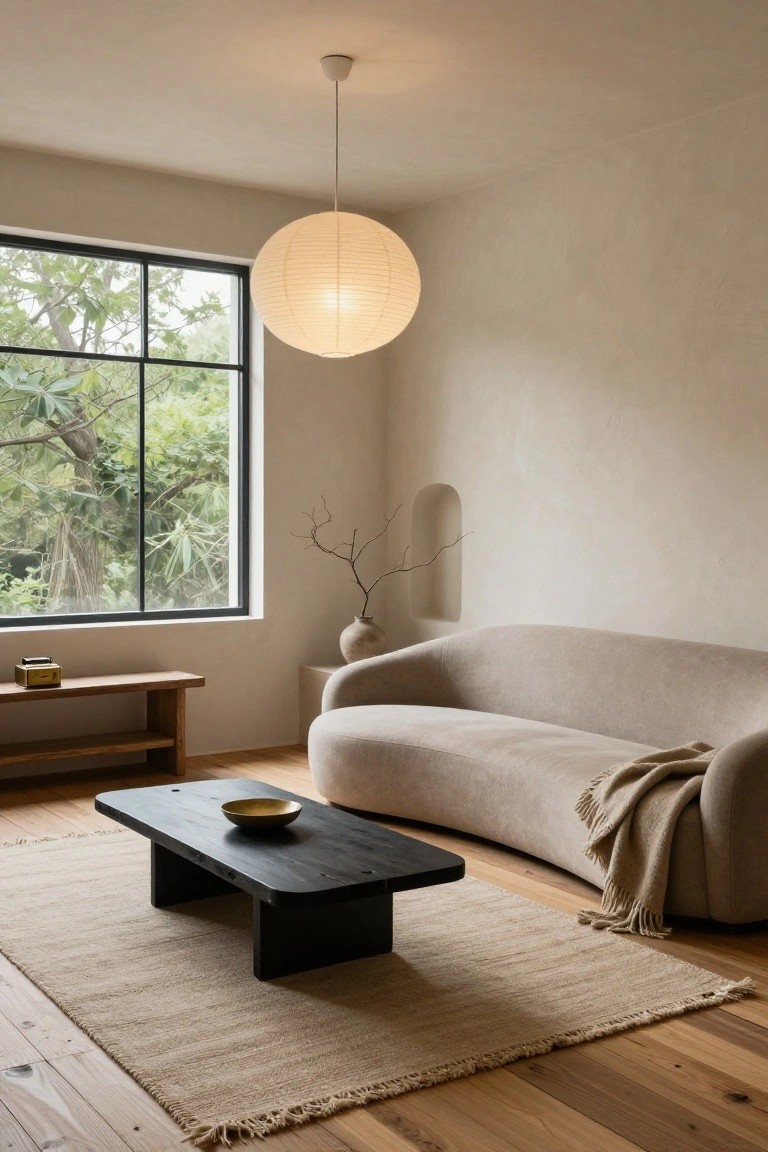
A curved sofa like this one brings a gentle, welcoming shape to an otherwise spare room. Its plush form hugs the space without overwhelming it, working well next to simple pieces such as a low black coffee table and a wooden bench. The overhead paper lantern keeps light soft, letting the sofa’s lines stand out quietly.
This approach fits living rooms with plenty of natural light from big windows. It suits homes aiming for calm over fuss. Stick to neutrals on walls and floors… and skip sharp edges elsewhere to let the curve do its thing.
Mixing Black Shelves with Warm Wood

This living room pulls off a nice mix with its tall black shelving unit stuffed with books and records right next to warm wood chairs and coffee table. The dark shelves give some needed weight against the light walls and creamy sofas. Natural light from the window bounces around nicely, making the wood tones pop without overwhelming the calm feel.
Put black shelves like this in your own setup for storage that doesn’t shout. They work best by a window or fireplace in medium-sized rooms. Match the wood pieces underneath for flow, and don’t overfill the shelves… keeps it looking airy and easy.
Exposed Wood Beams Over White Shiplap

Exposed wood beams running across a white ceiling like this give a minimalist living room some needed texture and warmth. The shiplap walls stay bright and simple, but those rough-hewn beams pull in a bit of farmhouse feel without overwhelming the clean lines. It’s a quiet way to add character that most rooms can use.
This works well in homes with higher ceilings or older structures where beams are already there. Just keep the rest light, like a pale sofa and wood table that echoes the beams. Skip dark paints nearby, or the room might feel closed in.
Birdcage Pendant Lighting
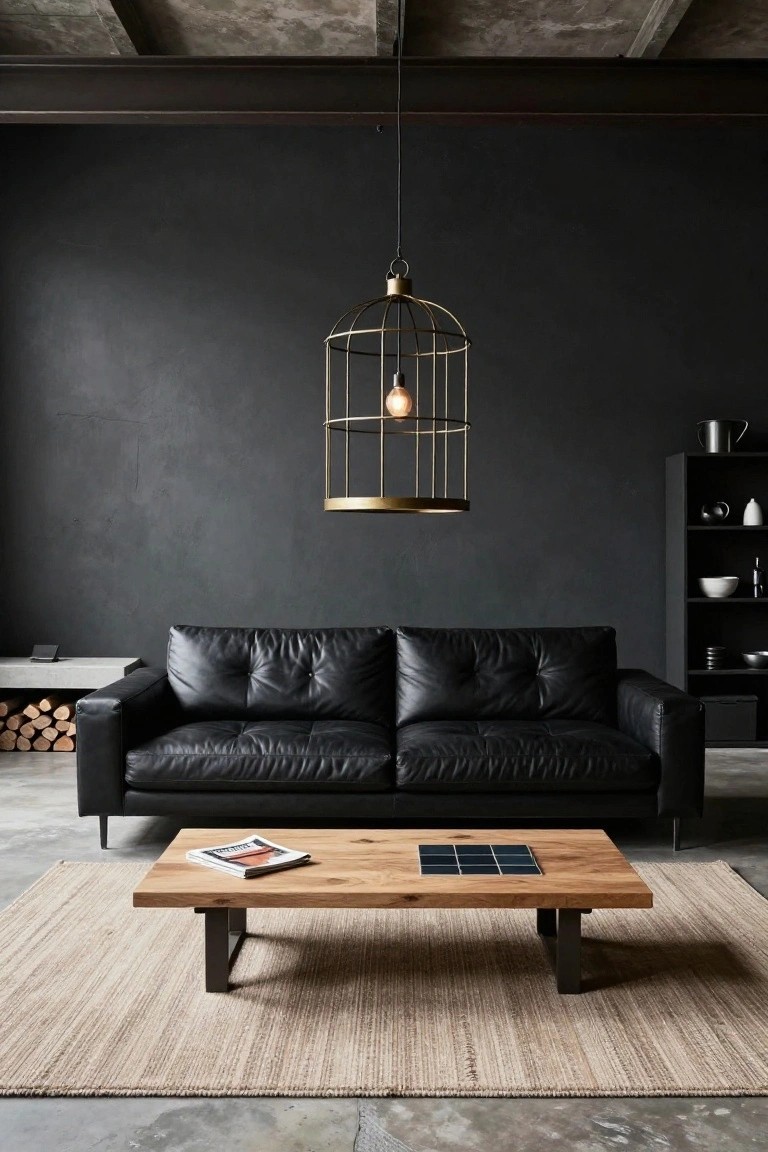
A simple gold birdcage pendant drops right into the middle of this dark living room. It lights up the black leather sofa below without filling the space too much. That one fixture does a lot against moody walls and concrete floors.
Hang something like this over your main seating spot if you have tall ceilings. It fits industrial or loft-style homes best. Just pick a size that matches the room scale… too small and it gets lost.
Indoor-Outdoor Flow with Large Glass Doors

Big sliding glass doors like these make a living room feel twice as big. They let in all that natural light from the ocean, and you end up with a calm space where the view just flows right in. The white sofa sits low, the wood coffee table looks easy, and those rattan chairs outside carry the same relaxed feel inside. It’s simple minimalism that works because it borrows from nature.
Try this in any home with a decent view, maybe a patio or yard. Coastal spots are perfect, but it fits modern apartments too if you have a balcony. Keep furniture neutral and low, and use sheer linen curtains for shade on hot days. One thing, the outdoor area needs to stay neat or it shows.
Lighting Dark Rooms with One Floor Lamp

A single black floor lamp can transform a charcoal-gray living room into something cozy and usable. Here the conical shade casts a focused glow over the sofas and coffee table, picking out textures without harsh shadows. Sheer white curtains help too, letting in just enough daylight to keep it from feeling cave-like.
This works best in smaller spaces or rooms with limited windows. Set the lamp right in the seating zone, maybe between two chairs or couches. Go for a warm bulb if your walls are super dark… and test it at night to make sure it reaches everywhere you need.
Sheer Curtains Let in Soft Light
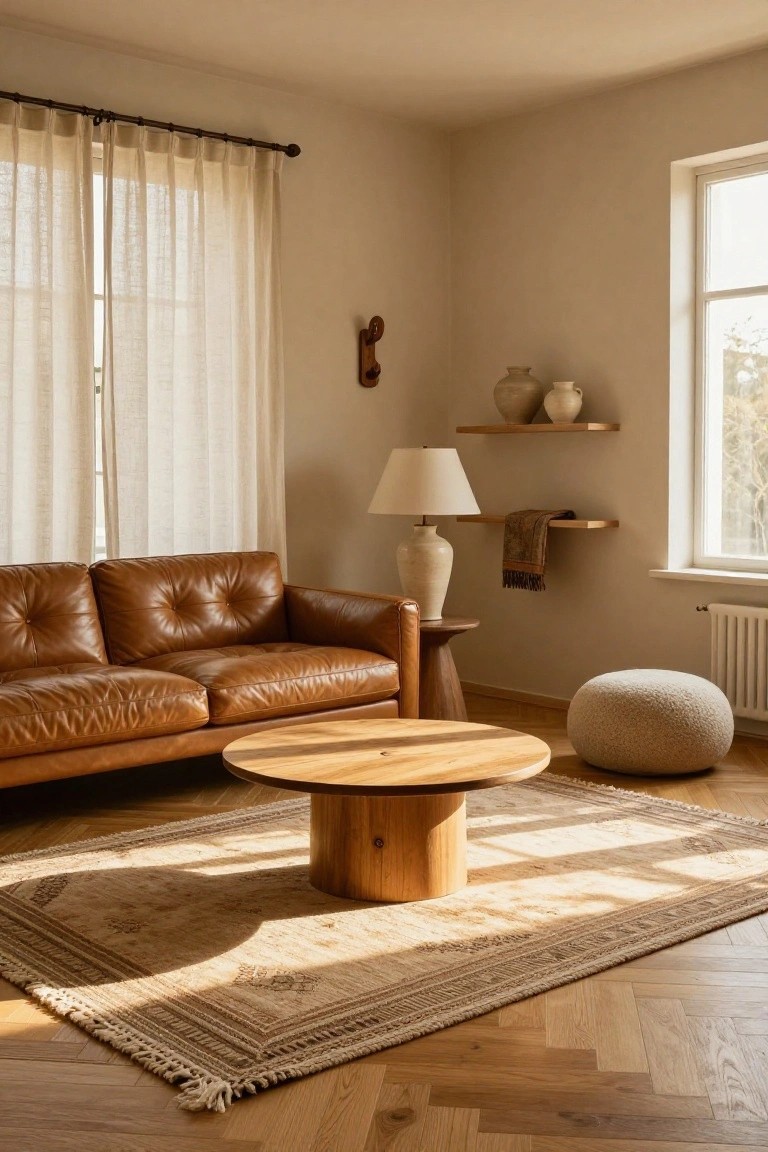
Sheer linen curtains like these work wonders in a minimalist living room. They filter the sunlight just right, so you get that warm glow across the tan leather sofa and wooden coffee table without any glare. It keeps the space feeling open and calm, especially with neutral walls and simple wood floors.
Hang them on plain rods high up to make the windows look taller. This setup suits rooms with big windows facing the sun. Skip heavy fabrics here. It fits older homes or apartments wanting a timeless feel without much fuss.
Clean Marble Fireplace Hearths
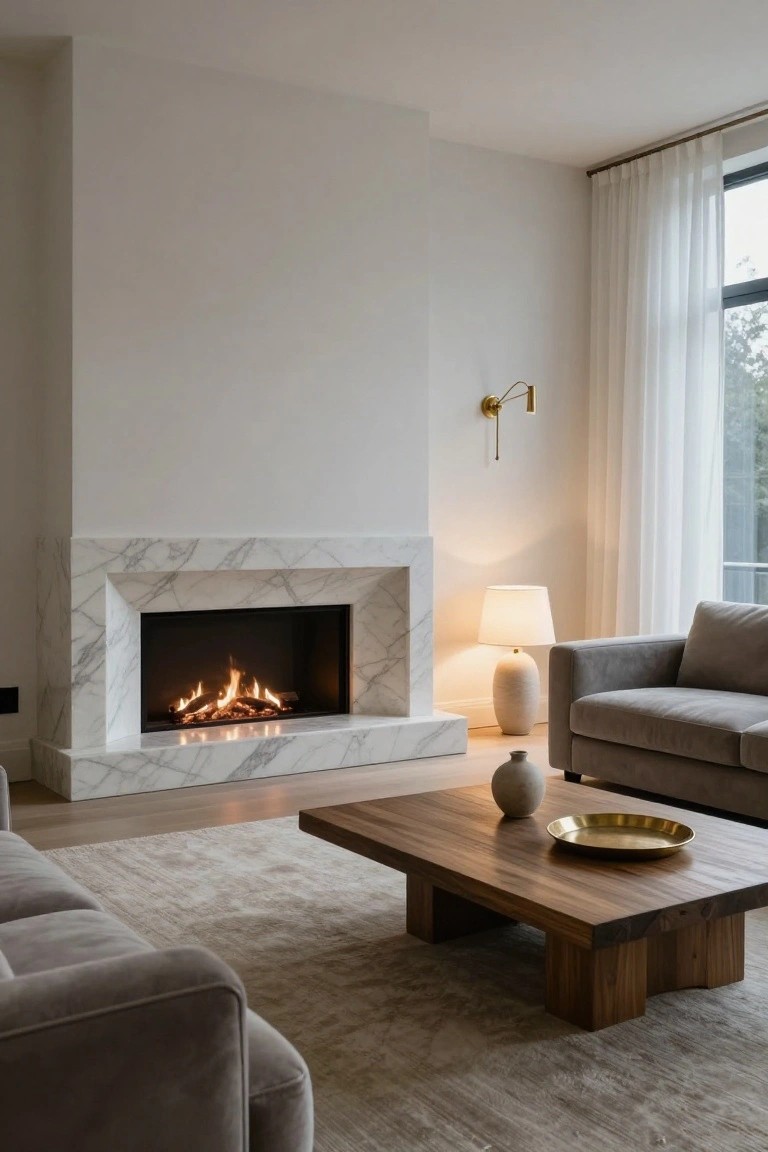
A marble fireplace like this one keeps things simple and elegant in a minimalist living room. The white marble with subtle veining forms a low, clean surround that draws the eye without overwhelming the space. It sits flush against plain walls, letting the fire’s glow add just enough warmth on cooler evenings.
This setup works best in open-plan rooms with lots of natural light from big windows. Use it where you want a focal point that feels timeless, not trendy. Go for light marble to avoid darkening the room, and keep furniture low-key like a gray sofa and wood table nearby. Watch for spots near seating so everyone can enjoy the fire.
Rattan Pendant for Soft Room Light

A rattan pendant like the one here hangs right over the sofa area. It spreads a gentle glow that fits perfect with gray walls and simple furniture. The woven shade cuts the harshness from a bulb, making the space feel easy on the eyes even at night. Wood tones on the table and shelf pick up that natural vibe too.
Put one in a compact living room where you read or relax. It suits rentals or older apartments with plain windows. Keep the bulb warm, not too strong, and center it over your main spot. Just watch it doesn’t swing too low over heads.
Oak Kitchen Island with Black Pendant Lights

One simple way to add focus to a minimalist living room is hanging black pendant lights over a light oak kitchen island. The dark cones stand out against the warm wood cabinets and white counters. They pull your eye right to the center of the space without overwhelming the clean lines. Natural light from nearby windows keeps everything bright. And that subtle contrast feels timeless.
Try this in open-plan homes where kitchen and living blend together. It works best in smaller spots since the pendants define the island without crowding the room. Pair with a neutral sofa nearby for balance. Just keep the bulbs soft so the light stays even… no harsh spots. Suits modern apartments or airy family houses.
High Ceilings with Exposed Wooden Beams

Exposed wooden beams like these stretch across a high white ceiling, bringing some needed texture and warmth to an otherwise plain space. They show off the building’s bones without overwhelming the clean lines of the gray sofa or low wooden coffee table below. In a minimalist setup, that rustic overhead detail stops things from feeling too stark.
Try this in older homes or lofts where you can uncover original beams. It suits open living areas with tall ceilings best, especially if you keep the rest simple. Just make sure the wood tone fits your floors, or it might pull focus the wrong way.
Blending Indoor and Outdoor Spaces

Big sliding doors flung open pull the garden straight into this living room. Tall monsteras and potted greens line up inside and out, so the whole area feels connected and alive. It keeps the space simple and bright without much furniture getting in the way.
Try this in a room with good southern light or a courtyard view. Pick doors with slim black frames for that clean look, and add a few large-leaf plants to echo what’s outside. It suits smaller homes best… makes them feel twice as big. Just watch for bugs coming in on breezy days.
Tall Floor Lamp for Cozy Light

A tall floor lamp like this one, with its wooden base and soft fabric shade, throws a gentle glow right over the sofa. It works so well here because it keeps things simple in a minimalist room. No overhead lights needed. The light pools just where you sit, making the space feel lived-in without any fuss.
Put one in your own living room corner, next to a low sofa or chair. It suits neutral walls and dark furniture best, especially if you have a fireplace nearby for that extra warmth. Just make sure the shade diffuses the light… nothing harsh. Fits most homes, even rentals.
Curved Sofa in the Corner Nook
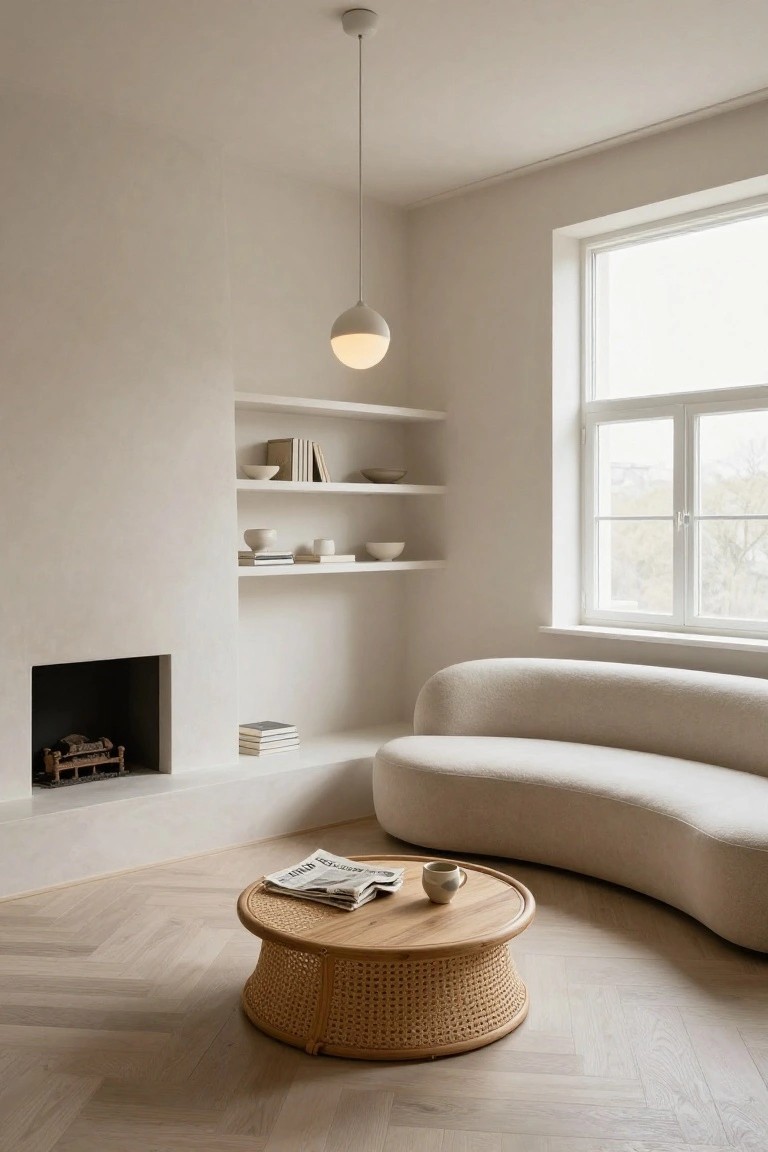
A curved sofa like this one fits right into the corner by the fireplace. It softens the straight lines of the walls and shelves. The cream fabric blends with pale walls and floor. That setup keeps the room quiet and open. Soft light from the hanging globe helps it all feel relaxed.
Put one in your living room if there’s an awkward corner. It works best with neutral tones and simple shelves nearby. Good for apartments or homes with not much space. Skip bold colors or too many pillows. Just add a low table for drinks.
Minimalist Recessed Fireplace Wall
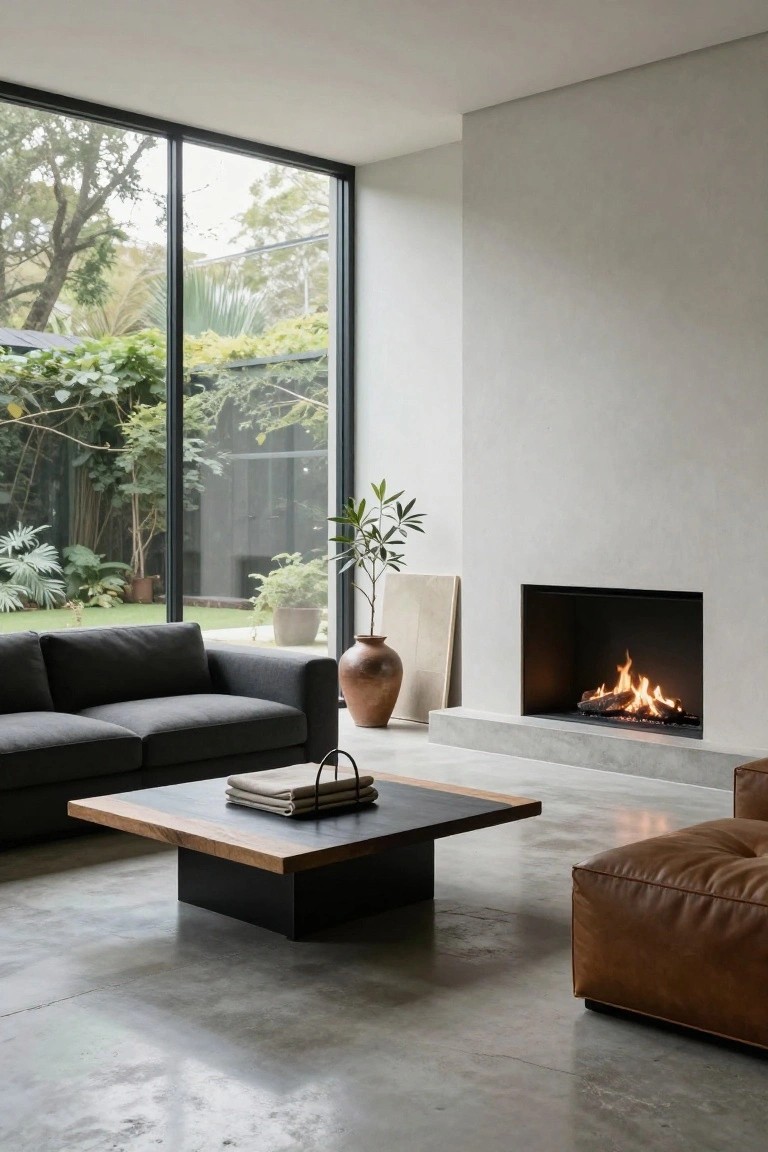
A recessed gas fireplace like this one keeps things simple and modern. It’s built right into a smooth white wall with a low concrete hearth that doesn’t stick out or grab too much attention. The flames provide a soft glow that warms up the neutral space without overwhelming it. Paired with polished concrete floors, it grounds the room nicely.
This setup works best in open living areas where you want a focal point but not a big distraction. It suits contemporary homes with lots of natural light from nearby windows. Go for low furniture around it to keep the flow open, and stick to earthy pots or simple shelves nearby for balance. Just make sure the hearth material matches your floor to avoid any visual breaks.
Corner Banquette Seating

A simple L-shaped sofa runs along two walls here, framing a round stone table right in the center. It turns a plain nook into a spot for coffee or quiet talks. That wooden shelf above holds just a few family photos and pots, keeping the look light and lived-in.
This works well in tight spaces like apartments or open-plan homes. Go for gray fabric that’s easy to clean, add a rug underneath, and skip extra chairs. It suits modern setups… but watch the scale so the table doesn’t overwhelm.
Large Art as a Living Room Focal Point
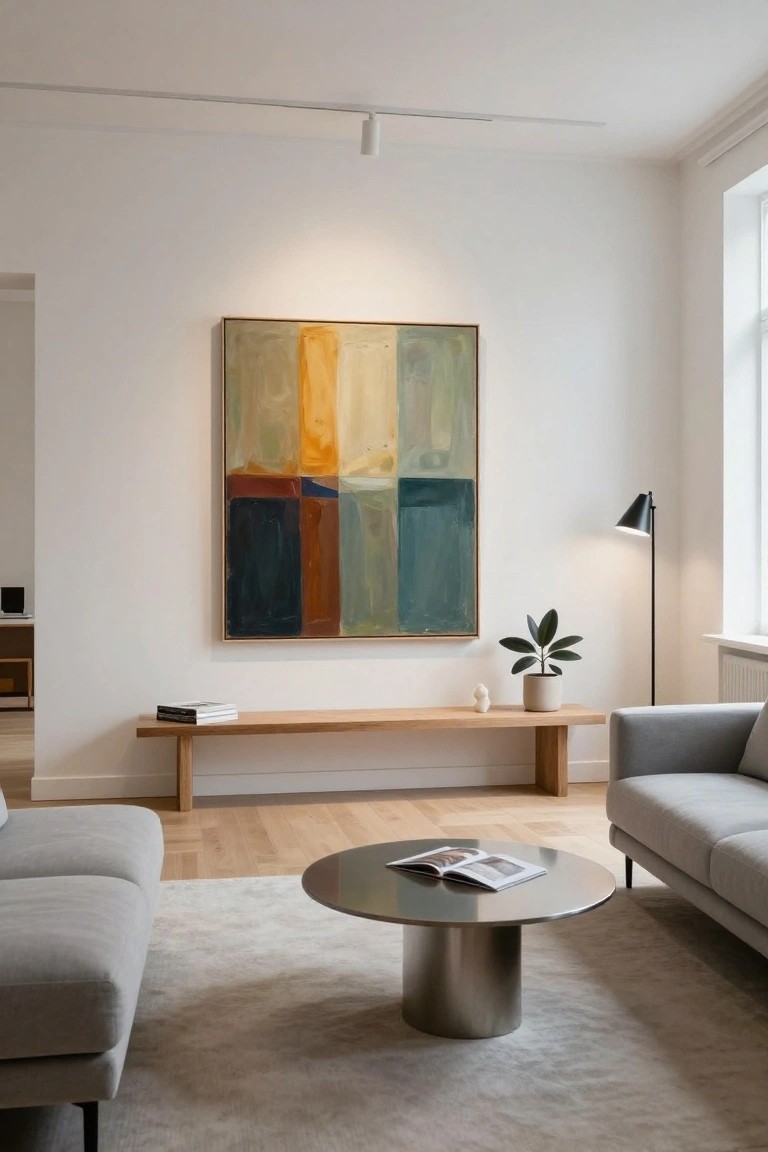
A single big painting can anchor a minimalist living room like nothing else. Here, the abstract piece with its blocks of yellow, green, and rust fills the white wall perfectly. Track lighting from above picks out the colors just right, while a slim floor lamp adds soft glow to the seating area below. It pulls your eye in without cluttering the space.
This works best in open-plan rooms or apartments with high ceilings. Hang the art at eye level, about a third up from a wood bench or console if you have one. Choose colors in the painting that nod to your floors or upholstery… keeps everything tied together. Skip busy frames; let the canvas stand out.
Dark Wood Paneling in Minimalist Rooms

Dark wood paneling covers one wall here, running right into the built-in cabinets. It gives the room a solid, grounded feel that keeps things from looking too stark or empty. The black finish on the vertical boards picks up the wood grain nicely, and with light spilling in from the tall window, it stays warm instead of cave-like.
Try this in a living room that gets decent daylight. Stick to pale furniture like that cream sofa, and add just a few wood pieces for balance, maybe a round table. It suits apartments or open-plan homes where you need some weight on one side without much fuss. Skip it if your space is super small or north-facing.
Ladder Shelf Storage in a Corner

A leaning wooden ladder shelf works great in this living room corner. It holds folded linens, a few books, and a simple vase up off the floor. This keeps everyday stuff handy without crowding the space, which fits right into a minimalist setup.
Place one near a sofa or window in smaller rooms. It goes with light walls and wood floors best. Check that it’s steady, especially if you have kids around.
Warm Wood Furniture Warms Minimal Rooms

A low oak coffee table with leather straps sits right in front of a tan leather sofa. That wood grain pulls your eye and adds real warmth against the cool, rough plaster walls. The concrete floor stays simple underneath. It makes the whole space feel lived-in without clutter.
Put this in a city apartment or a small family room where you want calm but not stark. Go for lighter oak if your walls are dark. Skip heavy stains. Just let the natural tones do their thing… it fits most any modern setup.
Exposed Ceiling Beams Warm a Minimal Space
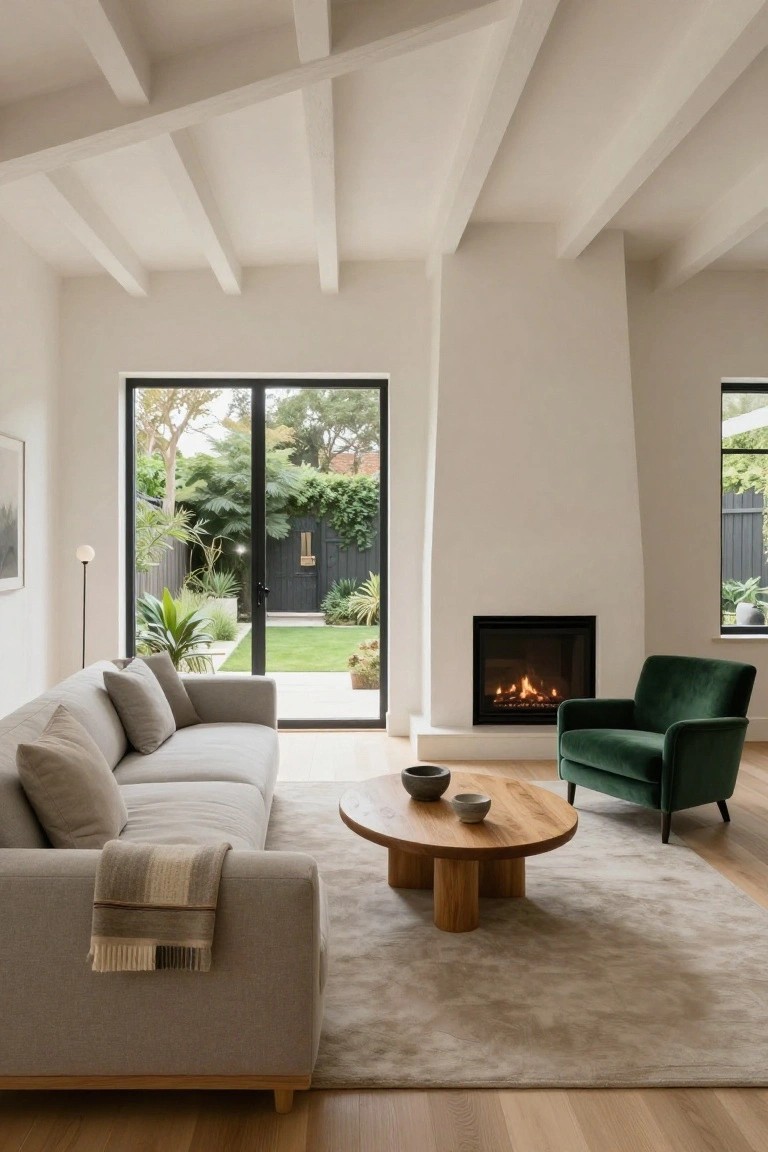
Those exposed wooden beams running across the ceiling catch your eye right away in a room like this. They add real texture and a touch of natural warmth to the plain white walls and open feel, without cluttering things up. It’s a simple way to make minimalist design feel lived-in and comfortable.
This works best in living rooms with good natural light or high ceilings, like ones that connect to a yard through big doors. Go for light-stained beams to match oak floors, and it fits modern homes or clean renovations. One thing… keep the rest of the room neutral so the beams stand out just enough.
Frequently Asked Questions
Q: How do I layer lights in a small minimalist living room without it feeling crowded?
A: Start with one overhead fixture for overall glow. Add a slim floor lamp in the corner and a single table light. Keep sources low-profile so they blend right into the walls.
Q: Do I really need expensive fixtures to nail that timeless look?
A: Grab simple shapes from budget spots like IKEA or thrift shops. Clean lines in neutral finishes do the heavy lifting. You get pro results on a dime.
Q: What kind of bulbs create that cozy minimalist glow?
A: Pick warm white LEDs at 2700K. They cast a soft, inviting light that warms up bare spaces. Ditch harsh brights, and your room shifts instantly.
Q: Can I mix bulb colors for more interest?
A: Layer one warm ambient bulb with cooler accents on shelves. The contrast adds subtle depth without chaos. Test at night to see the magic.
