

Are you unsure if your solar battery is performing at its best? Many people face this challenge, especially when relying on solar energy for their daily needs. A healthy battery is crucial for maximizing your system’s efficiency and ensuring you get the most out of your investment.
Key Takeaways
- Understand Battery Types: Familiarize yourself with different solar battery types—lead-acid, lithium-ion, flow, and nickel-cadmium—to choose the best option for your needs.
- Monitor Battery Health: Regular monitoring of your solar battery’s health enhances performance, increases longevity, and reduces overall maintenance costs.
- Spot Signs of Deterioration: Recognize key indicators of battery health issues, such as swelling, leaks, corrosion, and reduced capacity, to address problems early.
- Utilize Testing Methods: Employ voltage testing, capacity testing, and specific gravity testing to accurately assess your solar battery’s condition and efficiency.
- Equip Yourself: Use essential tools like a multimeter, battery tester, and hydrometer for effective assessment and maintenance of your solar battery health.
- Prioritize Maintenance: Regular care and timely replacements safeguard your investment in solar energy and ensure a reliable power supply.
Understanding Solar Batteries
Solar batteries store energy generated by solar panels, providing power when sunlight isn’t available. Knowing about the different types of solar batteries and their health is crucial for maintaining an efficient system.
Types of Solar Batteries
- Lead-Acid Batteries:
- Commonly used, offering affordability and reliability.
- Available in two types: flooded and sealed, each with distinct maintenance needs.
- Lithium-Ion Batteries:
- Gaining popularity for efficiency and longevity.
- Lightweight and compact, often providing a longer life cycle compared to lead-acid.
- Flow Batteries:
- Utilizes liquid electrolyte solutions for energy storage.
- Suitable for large-scale applications and offers high scalability.
- Nickel-Cadmium Batteries:
- Known for high discharge rates and durability.
- Often used in industrial settings, but less common in residential systems.
Importance of Battery Health
Good battery health ensures consistent energy supply and maximizes your solar energy system’s efficiency. A well-maintained battery leads to:
- Increased Longevity: Healthy batteries last longer, reducing replacement costs.
- Enhanced Performance: Properly functioning batteries deliver power effectively during peak usage times.
- Cost Savings: Efficient batteries lower your electricity bills by utilizing more solar energy.
Prioritizing battery health leads to a more reliable and cost-effective solar energy system, safeguarding your investment in renewable energy. Regular monitoring and maintenance protect your batteries, helping you enjoy the benefits of solar power for years to come.
Signs of Deteriorating Battery Health
Identifying signs of deteriorating battery health helps ensure your solar power system operates efficiently. Regularly checking these indicators makes it easier to address issues before they escalate.
Recommended Products

Stops Battery Corrosion - Stops corrosion for the life of your battery, making all surfaces impenetrable to corrosion-causing acid fumes.

【What You Get:】 10Pcs per pack of 2/0 Guage (AWG) 3/8" marine grade tinned copper lugs ring terminals closed end termination ring terminals with 10 Pcs 3:1 Dual Wall Adhesive Heat Shrink Tubing Tube for your work(5pcs Black and 5pcs Red).

What You Get : 10 battery corrosion-resistant washers, including 5x red and 5 x green.
Physical Indicators
- Bulging or Swelling: Look for physical deformation on the battery casing. Bulging often signifies internal damage.
- Leaking Electrolyte: Check for any visible liquid around the battery. Leaks may indicate a serious problem requiring immediate attention.
- Corrosion: Inspect terminals for signs of corrosion, such as a white, powdery substance. Corroded terminals can affect performance.
- Unusual Smells: Be aware of any strange odors coming from the battery, like rotten eggs. This scent can signal dangerous gas leaks.
- Reduced Capacity: Monitor how much energy the battery can store. A noticeable decrease in capacity could mean it’s aging.
- Longer Charging Times: Notice if the battery takes longer to fully charge compared to past experiences. This change highlights declining efficiency.
- Frequent Depth of Discharge: Pay attention to how often you deplete the battery. Frequent deep discharges can accelerate deterioration.
- Inconsistent Power Delivery: Observe fluctuations in power supply. If you experience irregular performance, the battery might be losing its effectiveness.
Methods to Check Solar Battery Health
Checking the health of your solar battery is crucial for optimal performance. Here are some effective methods to assess your battery’s condition.
Recommended Products

【7 Modes Display Monitor】 DROK USB Tester is equipped with digital color LED display screen, which can be switched between 7 display modes. This multimeter can be used to measure voltage, current, power, capacity. Through the 7 modes, you can clearly see the voltage, current, capacity and power during charging. Only 1 button to switch the display mode, simple and handy.

【7 Modes Display Monitor】 DROK USB Tester is equipped with digital color LED display screen, which can be switched between 7 display modes. This multimeter can be used to measure voltage, current, power, capacity. Through the 7 modes, you can clearly see the voltage, current, capacity and power during charging. Only 1 button to switch the display mode, simple and handy.

Multi-function Battery Monitor with Clear Display: this battery indicator features a crisp display that cycles between voltage reading and battery percentage with a simple press of the front button; Easily toggle the backlight, set sleep mode, and select your specific battery type (Li-ion, Lead-Acid, etc.) for unparalleled accuracy and control; The package includes 1 battery meter
Voltage Testing
Voltage testing measures the battery’s electrical output. Use a digital multimeter to check the voltage of your battery.
- Turn off the solar system.
- Connect the multimeter leads: Attach the red lead to the positive terminal and the black lead to the negative terminal.
- Read the voltage: Compare the measured voltage to the manufacturer’s specifications. A healthy battery should typically show 12.6 volts or higher for fully charged batteries.
If the voltage falls significantly below this level, it may indicate a loss in capacity.
Capacity Testing
Capacity testing evaluates how much energy the battery can store. This method provides insight into how well the battery holds a charge.
- Fully charge the battery.
- Disconnect it from the system: Ensure the battery is isolated to prevent power draw from your solar setup.
- Discharge the battery: Use a resistive load or a specific battery tester to safely discharge the battery at a set rate.
- Measure discharge duration: Time how long it takes for the battery to reach a predetermined voltage (usually 10.5 volts for lead-acid batteries).
Compare the time taken to the battery’s rated capacity. If it discharges too quickly, it likely needs replacement.
Specific Gravity Testing
Specific gravity testing is essential for lead-acid batteries, as it provides a direct read on the electrolyte’s concentration.
- Obtain a hydrometer: Get a suitable hydrometer designed for battery use.
- Extract a sample of electrolyte: Carefully remove the filler cap and draw electrolyte from one cell.
- Submerge the hydrometer: Insert the hydrometer into the electrolyte.
- Read the specific gravity: A healthy battery should show readings between 1.265 and 1.300.
Repeat this process for each cell in the battery. If readings vary significantly among the cells, it indicates imbalanced cells that may require attention.
Regularly performing these tests can help you maintain your solar battery’s health, ensuring it operates efficiently and lasts longer.
Tools and Equipment Needed
You need specific tools to effectively check your solar battery’s health. These tools help you measure battery performance accurately and ensure longevity.
Recommended Products

PARAMETER --- measuring voltage DC 4.5V-100V; current 0-50A.
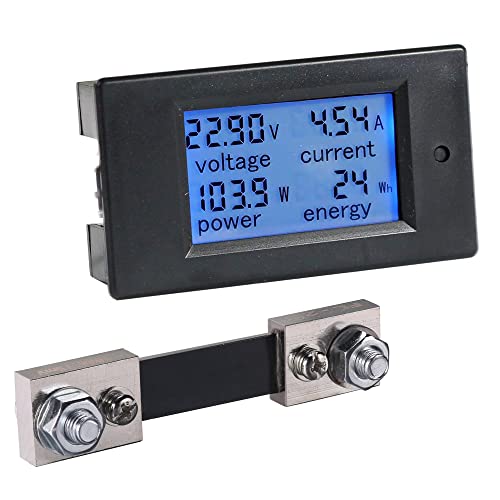
Test range: Voltage: DC 8~100V; Current: 0~100A; Power: 0~10kW; Energy: 0~9999kWh

Accurately Test Full Features: Accurately measures AC/DC voltage, DC current, resistance, continuity test, diode and batteries.
Multimeter
A multimeter is essential for voltage testing. This tool measures electrical output, providing key insights into your battery’s condition. To use it, follow these steps:
- Set the multimeter to the DC voltage setting.
- Connect the red probe to the positive terminal and the black probe to the negative terminal.
- Read the voltage display. It should align with the manufacturer’s specifications.
If the reading is significantly lower, it can indicate potential issues with battery health.
Battery Tester
A battery tester specializes in assessing battery performance under load. This tool evaluates how well the battery maintains voltage when it’s used. Using a battery tester involves:
- Disconnecting the battery from the solar system.
- Connecting the tester’s clamps to the positive and negative terminals.
- Activating the tester and reviewing the results.
Most testers provide clear indicators, showing whether the battery maintains its charge as expected or if it requires attention.
Hydrometer
For lead-acid batteries, a hydrometer is crucial for checking electrolyte concentration. This device gives insights into the state of charge and overall battery health. To use a hydrometer, you need to:
- Remove the cap from each cell.
- Insert the hydrometer into the electrolyte solution.
- Note the floating marker, which indicates specific gravity.
A reading below the recommended range can signify a need for maintenance or replacement.
Conclusion
Keeping an eye on your solar battery’s health is key to ensuring your solar energy system runs smoothly. By regularly checking for physical signs of wear and conducting tests like voltage and capacity evaluations, you can catch potential issues early.
Using the right tools makes this process easier and more effective. With a little effort and attention, you can maintain your battery’s performance and extend its lifespan. This not only safeguards your investment but also enhances the efficiency of your solar setup. So stay proactive and enjoy the benefits of clean energy for years to come.
Frequently Asked Questions
What is the significance of solar battery health?
Maintaining solar battery health is crucial for maximizing the efficiency of a solar energy system. A healthy battery ensures better performance, longevity, and cost savings, enabling users to get the most out of their solar investments.
What types of solar batteries are there?
There are several types of solar batteries: lead-acid, lithium-ion, flow, and nickel-cadmium. Each type comes with unique characteristics suited for different applications, affecting longevity and performance in solar energy systems.
How can I tell if my solar battery is deteriorating?
Signs of battery deterioration include physical issues such as bulging, leaks, corrosion, and unusual smells. Additionally, reduced capacity, longer charging times, and inconsistent power delivery are key indicators of declining performance.
What methods can I use to check my solar battery health?
You can check solar battery health using voltage testing with a multimeter, capacity testing by discharging the battery, and specific gravity testing, especially for lead-acid batteries. These methods help assess the battery’s performance and longevity.
What tools do I need to check solar battery health?
Essential tools include a digital multimeter for voltage testing, a battery tester for performance assessment under load, and a hydrometer for checking electrolyte concentration in lead-acid batteries. Proper use of these tools ensures accurate performance measurement.
